








![Long term benefits of obesity surgery [part 2] Mr Pratik Sufi](https://bittertruth.uk/wp-content/uploads/2025/06/sufi.jpg)
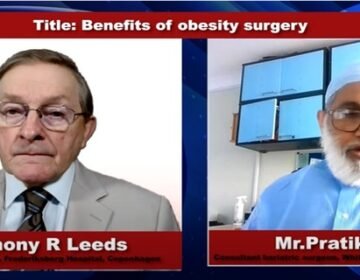
Long term benefits of obesity surgery [part 2] Mr Pratik Sufi | Health Chat with Dr Anthony Leeds
Bittertruth Series 5 Episode 6
Health chat with Dr Anthony R Leeds
Title: Long term benefits of obesity surgery [part 2]
Mr Pratik Sufi, Consultant bariatric surgeon, Whittington Hospital, London, England.
In this episode Mr Sufi, a London-based bariatric surgery continues his conversation about the benefits of bariatric surgery, looking in a little more detail into very long-term benefits.
The high global burden of obesity-related diseases requires that a portfolio of interventions is needed. Energy-restricted diets of conventional foods can deliver weight losses of 5kg and occasionally 10kg in the long term and bariatric surgery can deliver weight losses of the order of 25kg and above with long-term maintenance of a large proportion of the weight lost. We have been lacking an offering to deliver the middle range of weight losses of 5 to 25kg to achieve many of the benefits such as diabetes remission (see: Prof Lean’s commentary at: Update-on-diabetes-remission ) osteoarthritis (see Prof Simpson’s discussion at this link ) and kidney disease (See Dr Adrian Brown’s recent health chat at kidney-disease-in-people-with-diabetes ). Total diet replacement (TDR) diets (‘soups and shakes’ diets) providing just over 800kcal/d are proven to deliver weight losses of 10-15kg and multiple health benefits. Recently introduced drugs newly licensed for weight loss such as GLP-1 agonist drugs can deliver weight losses of 20-30kg and so are helping to fill that gap between conventional diet and bariatric surgery, along with ‘soups and shakes’ diets.
However, all interventions offered through orthodox health-care channels must be safe and cost effective with evidence of long-term safety. Conventional diets are safe unless they are inadequate in terms of nutritional composition. Soups and shakes diets are scientifically formulated to meet government and EU regulations ensuring correct nutritional composition, and are proven safe, clinically effective in delivering diabetes remission and other health benefits with evidence up to 5 years, and cost-effective by the conventional criteria applied by regulatory bodies. Soups and shakes diets delivered digitally are now being rolled out across the UK. Medications for weight loss tend currently to be expensive, and access is somewhat limited within state health care systems where duration of treatment is limited to two years, but they are potent drugs with mechanisms that are largely understood and deliver good weight losses and health benefits. After two years there is a risk of some weight regain as might be expected.
In contrast, bariatric surgery meets most expectations for a potent intervention including long term evidence of efficacy. The different types of surgery are applied in many centres around the globe, they have proven safety records (the rates of adverse events are published) and are cost-effective provided that eligible people meet the strict criteria of suitability and accept the need for life-long monitoring. They do however require a highly competent surgical and allied health team working in a reliable well-resourced environment where high dependency beds (needed for a few hours or a day or so after surgery) are reliably available in sufficient number. Variation in availability of these critical requirements probably accounts for why some countries such as Sweden, France and the Czech Republic can more closely meet demand than the United Kingdom.
Data From the Swedish Obesity Subjects study showed that more than 20 years after surgery life expectancy was 3 years longer in the surgery treated group than in the control group of people with obesity who had been treated with conventional non-surgery treatment. After more than 26 years following surgery those who initially had diabetes and who had moved into diabetes remission by 2 years after bariatric surgery showed a significantly reduced mortality from heart disease compared to those who had not moved into remission.
Dr Leeds asked about the help that can be offered to very heavy individuals, noting that surveys showed that the numbers of people in the UK with super obesity was much larger than realised. In addition to incurring high health care costs such individuals also placed demands on social services and local authorities for extra housing related costs. Bariatric surgery clearly has a place to play in helping those people who have moved up into this super obese group.
Despite the clear evidence for a new role for potent anti-obesity drugs, Mr Sufi said he thought there would be a continuing role for bariatric surgery in obesity management. Aware that final year students and new graduates in Lahore and in other schools in Pakistan were interested in Mr Sufi’s views, Dr Leeds asked if Mr Sufi would recommend progressing towards a surgical career including bariatric surgery. He responded that he encouraged new graduates to pursue such a career choice.
Weblinks to useful resources are given below.
—ooOOoo—
Previous episode: At this link
UK
Weight-loss-surgery
Managing obesity / surgery
Sweden
Life Expectancy after Bariatric Surgery in the Swedish Obese Subjects Study
USA
Bariatric-surgery
Obesity-in-america
Canada
Bariatric-surgery
Pakistan
Bariatric-surgery
Malaysia, see page 55
CPG_Management_of_Obesity
Singapore
Bariatric-and-metabolic-surgery
Hong Kong
Weight-management-and-metabolic-surgery-clinic
–ooOOoo–

![Long term benefits of obesity surgery [part 2] Mr Pratik Sufi](https://bittertruth.uk/wp-content/uploads/2025/06/sufi-360x280.jpg)