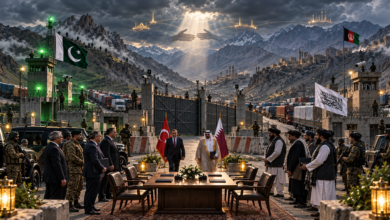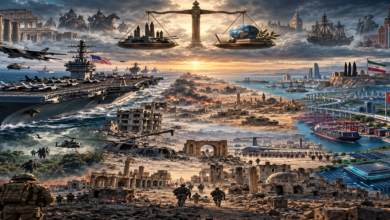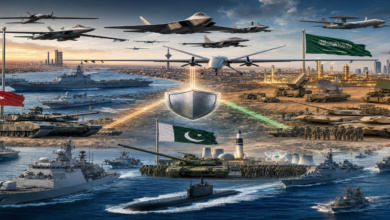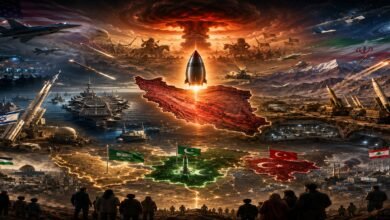
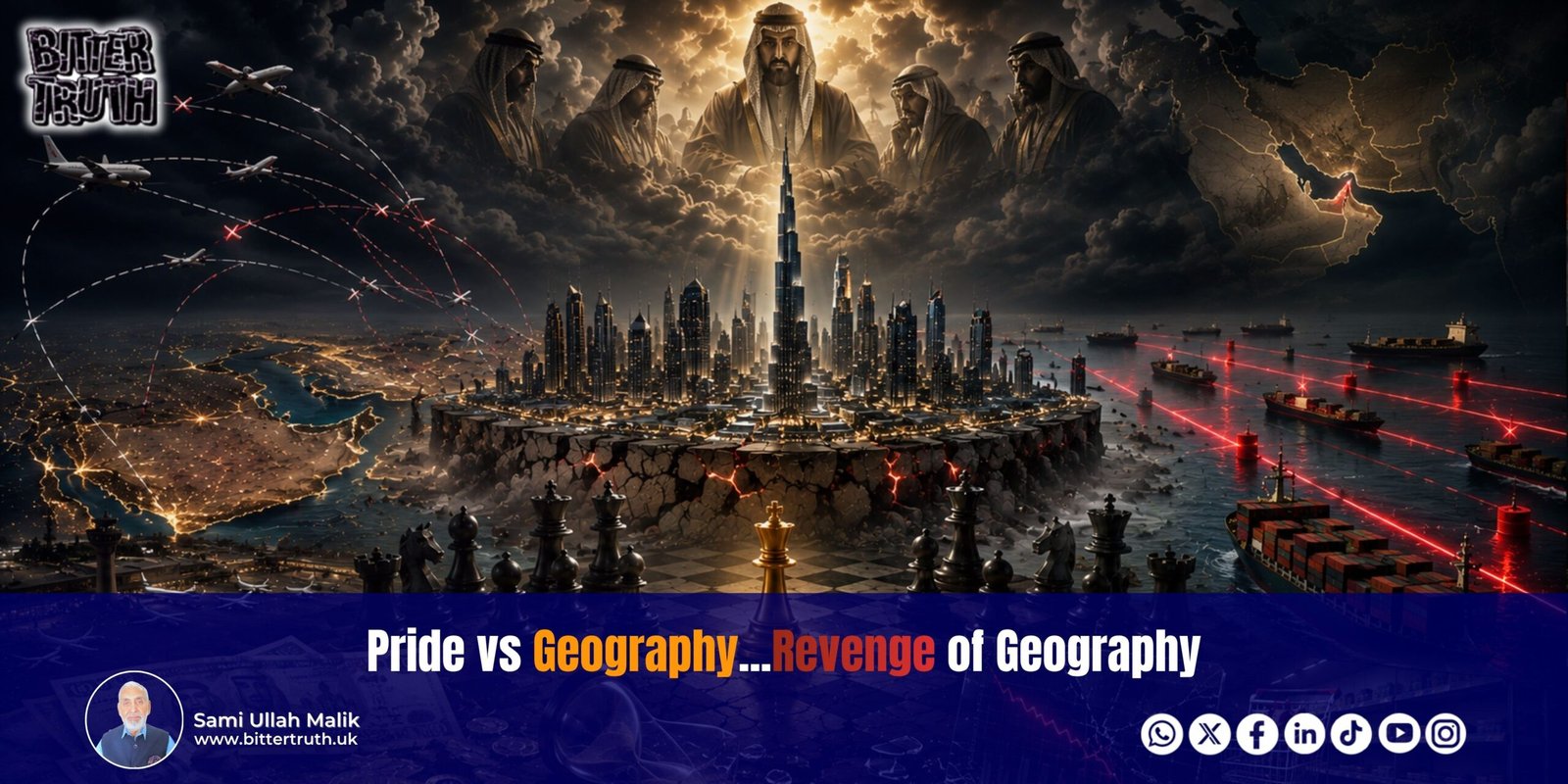
Pride vs Geography
Revenge of Geography

Pride, Power, and the Unforgiving Grammar of History
The age in which we live does not merely conceal events within its breast; it preserves, with an almost judicial patience, the chronicles of arrogance—and the inevitable reckonings that follow in its wake. When the pages of history are turned, one does not hear only the distant thunder of wars; one feels, too, the sharp fragments of shattered pride pressing through the parchment. It is an eternal law—unyielding, incorruptible—one that neither bows before empire nor is bartered away for wealth.
Pride, in this sense, is not merely a moral blemish; it is a claim—an audacious encroachment upon a province that, by its very nature, admits no rival. In the language of sacred tradition, majesty belongs to the Divine alone, as a cloak that none may presume to touch without transgression. If even the smallest affront between men is not lightly forgiven, how then could it be imagined that a state, a power, or a treasury might reach towards that mantle of supremacy and remain unscathed?
It is precisely this subtle yet formidable truth that appears to have been forgotten amidst the glittering skyline of Dubai—among its glass towers, its engineered islands, and its carefully curated illusions of permanence. When wealth is mistaken for destiny, and power is assumed to be perpetual, reality begins to recede. The United Arab Emirates, together with its confident allies, seems to have succumbed to this very illusion: that capital is a fortress, and global connectivity an impregnable shield.
Yet history offers a sterner lesson. Whenever man has stepped into the arena of grandeur, he has been reminded—often abruptly—of his proportion. The palaces of Pharaoh and the treasures of Qarun stand not as monuments of triumph, but as emblems of warning. If, today, a new chapter appears to be unfolding in the Middle East, it is but a contemporary rendering of that ancient truth.
What follows, therefore, is not merely a political analysis, but a mirror—one in which we may discern, all at once, the intoxication of power, the deceit of pride, and the quiet retribution of fate.
Time, as ever, conceals within itself a gathering storm of unspoken narratives. When such storms break upon the surface, the annals of history are often stained with consequence, and nations are made to reckon with the price of their own decisions. Across the Middle Eastern horizon, as the clouds of conflict have begun to assemble, there has descended—curiously—a dense and foreboding silence. It is in such silences, before the first report of cannon or the first manoeuvre of force, that the destinies of nations are inscribed. What we witness today bears the markings of such a conflict: a war less of gunpowder than of design, less of spectacle than of calculation.
When the United Arab Emirates chose to step away from the ranks of OPEC, the decision was presented as measured, rational, and economic in nature. Yet beneath this composed exterior lay a far more volatile field of political reverberations. It was, in essence, a move upon the grand chessboard of geopolitics—one in which the pieces advanced, but the delicacy of the board itself was insufficiently reckoned with. Like a stone cast into still waters, the act produced ripples whose reach extended far beyond their point of origin.
Saudi Arabia—long the axis of regional equilibrium and the guardian of the petrodollar’s vital artery—did not interpret this departure as a mere divergence of policy. It perceived, rather, the outline of a strategic challenge—if not a gesture that bordered on provocation.
The Emirates, perhaps, assumed that its capital, its infrastructure, and its global networks would suffice to navigate any turbulence. Yet in doing so, it overlooked a more fundamental reality: that geography—silent though it may be—remains the most decisive of forces. It is not merely an enabler of movement; it is an arbiter of constraint. It opens pathways, but it can close them with equal finality; it forges proximity yet imposes isolation.
Geography, indeed, is that quiet sovereign which not only delineates borders but determines the rise and fall of powers. And it was at this juncture that the difficulties of the UAE began to emerge. In the brilliance of its wealth, it had momentarily forgotten the severity of its geography. When reality came knocking, it found the state unprepared.
This ought to have been the moment of realisation—that in international relations, it is not friendship but interest that speaks. Yet, as is so often the case, by the time the lesson becomes clear, the opportunity to act upon it has already passed.
For in the theatre of global politics, friendship is a graceful word, but a conditional one. So long as interests align, relations remain cordial; once they diverge, those same relations become burdensome, if not untenable.
Thus, when the UAE sought to stabilise its currency through a swap arrangement with the United States, it did so in the expectation that a long-standing ally would respond in kind. What it received, however, was not a reply in words, but in silence—a silence profound, deliberate, and eloquent in its restraint. For there are moments in statecraft when silence speaks with a clarity that words cannot rival.
The United States, ever the custodian of its own interests, could scarcely be expected to imperil a strategic pillar such as Saudi Arabia for the sake of a comparatively youthful and luxury-driven state. For Washington, Saudi Arabia is not merely an ally; it is a cornerstone of the global energy order. The architecture of the petrodollar rests upon this relationship, and such a foundation is not lightly disturbed.
It was here, once more, that the lesson should have been unmistakable: that in international relations, it is not sentiment but interest that endures. Yet by the time this truth revealed itself, the illusion had already begun to dissolve.
What happened next was sharp in its description. The UAE, perhaps sooner than expected, recognized that no alliance in global politics is permanent, except one based on interests. In fact, this moment marked the silent beginning of its diplomatic isolation. The networks it had long considered secure began to dissolve in the harsh light of reality, revealing themselves as mirages.
Airspace has long been regarded as the very emblem of freedom. Yet when that space is withdrawn, freedom itself is transformed into confinement. When Saudi Arabia, under the pretext of security, restricted its airspace, it did more than impose a technical limitation—it applied pressure at a vital point.
For the UAE, this was no minor administrative inconvenience; it was a strategic constriction. Flights that once traversed the skies with ease now faced extended routes, mounting costs, and dwindling passenger confidence. The journey from Dubai to London—once a matter of seven hours—became an ordeal of fourteen.
Such measures are seldom accidental. They are instruments—precise, calculated, and deeply consequential. Dubai, long celebrated as a global aviation hub, began, in that moment, to feel the erosion of its advantage. Longer routes, higher expenditures, and declining traffic combined to deliver a blow not merely to logistics, but to the very economic vitality upon which the city’s global stature depends.
The Silent Reversal of a Mirage: Trade, Hunger, Currency, and the Grammar of Isolation
This was not merely the closure of an aerial corridor; it was, in truth, a quiet withdrawal from the very gates of global commerce, tourism, and competitive relevance. What appeared on the surface as a logistical constraint revealed itself, in essence, as a strategic disengagement of far wider consequence. The luxury hotels, once animated by an unbroken tide of international visitors, began to stand in eerie stillness. Their lobbies remained lit, yet the warmth of life—the subtle hum of human presence—had dissipated.
Dubai, which until yesterday had embodied the language of aspiration, suddenly assumed the form of a question rather than an answer. Once hailed as a city of light, it began to resemble an isolated isle of glass and ambition—architecturally resplendent, yet emotionally subdued. Its illuminated skyline, once a symbol of triumph, now appeared to cast a long and silent lament over a future grown uncertain.
History, if it teaches anything with clarity, insists that wars are not confined to the battlefield. Their decisive moments unfold equally in the domains of economy, food security, and logistical endurance. For conflict, it must be remembered, is not always waged through gunpowder; at times, bread itself becomes a weapon of statecraft. The United Arab Emirates, reliant upon external sources for nearly seventy per cent of its food supply, found this vulnerability exposed with abrupt severity when terrestrial supply routes were disrupted. The consequence was immediate: inflation surged like an uncontained tide across markets that had long been accustomed to stability.
When land corridors were obstructed, shortages in essential commodities emerged with unsettling speed. Prices began to rise with an almost defiant disregard for restraint, and a society long habituated to abundance found itself suddenly confronting the discipline of necessity. It served as a sobering reminder that developmental models devoid of self-sufficiency are inherently fragile; they may glitter in times of ease, but they fracture under pressure. Within a single week, a four-hundred per cent surge in prices laid bare the structural delicacy upon which the economic edifice rested.
Supermarkets introduced rationing; cafés began to close; tables that once reflected the rhythm of prosperity now stood empty. These were not merely economic indicators but symbolic testimonies to an uncomfortable truth: that prosperity built without resilience is, at its core, an illusion waiting to be tested. Hunger, always a silent intruder in the affairs of nations, began to assert its presence—not with violence, but with gradual, inexorable certainty.
In the realm of political economy, currency is not merely a medium of exchange; it is the pulse of sovereignty itself. When pressure mounted upon the dirham, the foundational stability of the UAE’s financial architecture began to tremble. What followed was not a mere fluctuation, but a systemic unease that rippled through the entire structure of confidence. Foreign reserves dwindled at an alarming pace, and the aura of certainty that once surrounded the economy began to erode.
The state, in its effort to defend the currency, began expending reserves at a rate that could only be likened to a man attempting to draw water endlessly from a receding sea. The metaphor, though simple, captures the futility of resisting structural economic gravity without adequate buffers of strategic depth.
At this juncture, the choices available were neither comfortable nor benign. One path led towards liberalising the currency, thereby exposing public savings to market volatility; the other towards imposing stringent capital controls, effectively insulating the economy at the cost of international financial integration. Neither path preserved the illusion of continuity. The so-called “Dubai miracle,” once celebrated as a model of modern prosperity, began to resemble a fragile narrative—an elegant fiction that future generations might one day struggle to believe.
It was at this point that reality, long suppressed beneath layers of confidence, began to dismantle illusion with quiet precision. Both available trajectories led, in their own way, towards structural contraction rather than expansion.
In the theatre of international relations, isolation is not merely a condition; it is a slow-acting poison. The UAE found itself increasingly encircled by the consequences of its strategic positioning. Allies receded one by one; those who remained adopted the cautious language of distance. Egypt and Bahrain aligned more closely with Riyadh; Israel, guided by its own calculus of interest, refrained from meaningful commitment. The Abraham Accords, once heralded as a diplomatic triumph, now began to resemble a constraining framework rather than an enabling one.
Even the political symbolism of high-level visits—such as that of Netanyahu—added further combustible material to an already volatile perception across the Muslim world. The perception of dual alignment and strategic inconsistency generated unease, and with it, a growing erosion of trust. It was a moment that, in retrospect, demanded recalibration; yet history rarely affords the luxury of delayed clarity.
Perhaps the most ironic turn came from Qatar. Once subjected to isolation in 2017, it now re-emerged not as a peripheral actor, but as an increasingly central node within a reconfigured regional order. By opening airspace and facilitating diplomatic recalibration, it transformed past marginalisation into present relevance. The UAE, by contrast, found itself gradually displaced from the centre of gravity towards the margins of influence. The shift was subtle in form but profound in implication—one from which recovery is seldom straightforward.
As external pressures intensified, internal fissures began to surface. A society composed of multiple nationalities and overlapping identities started to exhibit signs of strain. Dual affiliations among citizens, historical family linkages with neighbouring states, and the accelerating withdrawal of expatriate populations all contributed to a growing sense of demographic and social instability. Airports, once emblematic of relentless motion and global connectivity, began to reflect stillness. It was as though a city, once breathing in rhythm with the world, had begun to lose its breath.
Every crisis, by its nature, eventually converges upon a point of decision. The UAE now found itself within such a threshold. A forty-five-day economic squeeze proved sufficient to unsettle reserves, weaken currency stability, and erode collective confidence. Hope, once abundant, began to thin into uncertainty.
Even diplomatic overtures—such as appeals for mediation through Pakistan—reflected the growing recognition of constraint. Yet the responses received were measured, distant, and lacking in urgency. The geopolitical choreography had already entered its final phase, where outcomes are determined less by negotiation and more by accumulated momentum.
Ultimately, what history so often demonstrates came to pass once again: those who overextend must eventually concede ground. The return to OPEC, the acceptance of heavier transit costs, and the absorption of reputational and strategic losses all became the price of miscalculation. The central lesson, etched unmistakably into this sequence of events, is that economic grandeur alone cannot substitute for strategic depth. Wealth may construct skylines, but it cannot engineer geography; capital may accelerate growth, but it cannot override the logic of position.
In the final analysis, the UAE’s experience stands as a reminder that power divorced from prudence is inherently unstable. Strategic resilience, not financial display, remains the true currency of endurance in international affairs. The illusion of strength, when unaccompanied by structural foresight, eventually yields to the quiet authority of reality.
The Final Reckoning: Chessboards of Power, the Silence of Empires, and the Immutable Verdict of History On the ever-shifting chessboard of global politics, the pieces are in constant motion. No position is permanent, no alliance immune to recalibration. In recent years, the triangular geometry of influence between the United States, China, and Iran has undergone a subtle yet unmistakable transformation—one that has quietly redrawn the strategic map of the wider region.
In the aftermath of the Trump–Chinese leadership engagement, the opening of the Strait of Hormuz to China came to symbolise more than a transactional adjustment; it marked a broader reconfiguration in the architecture of global power. Iran, once subjected to sustained diplomatic and economic pressure, now found itself seated at the negotiating table not as a weakened participant, but as a considerably more assured actor, wielding leverage rather than merely absorbing it.
Against this evolving backdrop, the United Arab Emirates witnessed the gradual unravelling of the very assumptions upon which it had anchored its strategic expectations. The pieces upon which it had placed its confidence began, one by one, to shift—some receding, others realigning elsewhere. What had once appeared a carefully navigated game of strategy increasingly resembled a contest slipping beyond its control. A state which had imagined itself as a pivotal player in the theatre of global affairs found itself, almost imperceptibly at first, reduced to the status of a far more vulnerable piece upon the board.
And then came the quiet.
A stillness settled over the scene—heavy, almost metaphysical in its weight. The clamour that once signified strength and influence gradually dissolved into an unsettling silence. The courtyards of perceived power felt vacant; voices that once projected authority faded into obscurity; and assertions of dominance were reduced to echoes without audience.
There are moments in history when sound itself appears to retreat, when the language of assertion gives way to the grammar of absence. It was in such a moment that what may be described—metaphorically yet tellingly—as the “palaces of authority” stood desolate. The word Horchopo, whether taken as slogan or symbol, captures precisely this condition: not merely collapse, but the tragic dissonance that arises when pride collides with reality and finds no reconciliation.
This narrative, in its deeper resonance, reiterates an enduring historical truth: that history does not consistently favour the powerful; rather, it ultimately vindicates the prudent. Civilisations that construct their grandeur upon sand, however dazzling their architecture, remain perpetually vulnerable to the slightest gust of historical change. Structures of appearance may withstand admiration, but they rarely withstand time.
It is in this sense that pride reveals itself not as strength but as precarity. The wheel of history does not cease its turning; it advances without sentiment, indifferent to aspiration or denial. Those who fail to move in accordance with its rhythm are not merely left behind—they are, in due course, swept beneath its momentum.
When history delivers its verdict, it does so without embellishment and without indulgence. It is devoid of emotional persuasion and immune to rhetorical appeal. It inscribes truth with the austere ink of consequence, and once written, such truth resists erasure. The glittering nights of Dubai, its towering skylines, and its meticulously curated aura of global fascination—all recede into irrelevance the moment the axis of fate tilts in a different direction.
Once again, the narrative returns to an elemental principle: that pride, in its absolute form, belongs only to the Divine. To appropriate it, in any human or political sense, is to construct the foundations of one’s own undoing. If even in the realm of interpersonal conduct the violation of another’s dignity is deemed an unforgivable trespass, then how can it be imagined that states, alliances, or systems may encroach upon the mantle of divine majesty without consequence?
It is precisely here that history assumes its most austere role—not as commentator, but as adjudicator. Its punishment is neither theatrical nor immediate; it is silent, cumulative, and irrevocable. No artillery is required, no missile exchange necessary. Instead, through the coordinated pressures of geography, economics, and diplomacy, a form of siege emerges that is far more constricting than conventional warfare.
The so-called “miracle” of Dubai, when it began to tremble, did not signal the failure of buildings or infrastructure alone—it signalled the disintegration of an idea: the belief that wealth is capable of purchasing immunity from structural reality. Yet the truth remains more severe. Wealth may construct cities, but it cannot design geography; power may erect towers, but it cannot suspend the laws of strategic position; survival is secured not through capital accumulation, but through humility before reality.
Ultimately, this is not the story of a single state, but the articulation of a broader principle—one that applies with equal force to all political entities that allow pride to precede prudence. Within the court of history, there are no advocates and no appeals. There are only actions laid bare, and judgments irrevocably pronounced.
And when such judgments are delivered, an echo invariably returns across time: that whoever dares to encroach upon the mantle of divine majesty does not remain secure from consequence.
This is the law of nature, the verdict of history, and the essence of this entire narrative. In its final analysis, this is not merely the account of a nation, but the exposition of a principle—an enduring axiom that power must always remain tethered to reality, not detached into the realm of aspiration unchecked by constraint. The entire account stands as a mirror: one in which ambition, vulnerability, and miscalculation are reflected with uncompromising clarity.
It is not solely the story of the United Arab Emirates; it is the story of any state that becomes intoxicated with power and, in that intoxication, forgets the discipline of reality. Nations that allow emotion or pride to dictate their strategic posture inevitably find themselves summoned before history’s unyielding tribunal.
And history, as ever, delivers its judgment—not in debate, but in decree. Its pen does not absolve; it records. And what is once inscribed within its pages cannot, and does not, fade.