Pakistan: The Unfinished Covenant
Nation, Covenant, Reckoning

There are dates which merely occupy a square upon the calendar, and there are dates which pass beyond chronology and enter the moral memory of a people.
6 September 1965 belongs to the latter order.
It was not merely a day of artillery, armoured columns, contested skies and embattled frontiers. It was one of those grave hours in which a nation discovers whether its existence rests upon geography alone, or upon something deeper: a shared memory, a common fidelity, and the willingness of ordinary men and women to place a cause larger than themselves above comfort, fear and even life.
On that day, Pakistan’s defence was not confined to the battlefield.
There was a front around Lahore.
There was another across the plains of Sialkot.
There was a front in the air.
But there was also a front in every Pakistani home.
Somewhere, a mother straightened the uniform of a son whom she had once carried in her arms and accompanied him to the threshold.
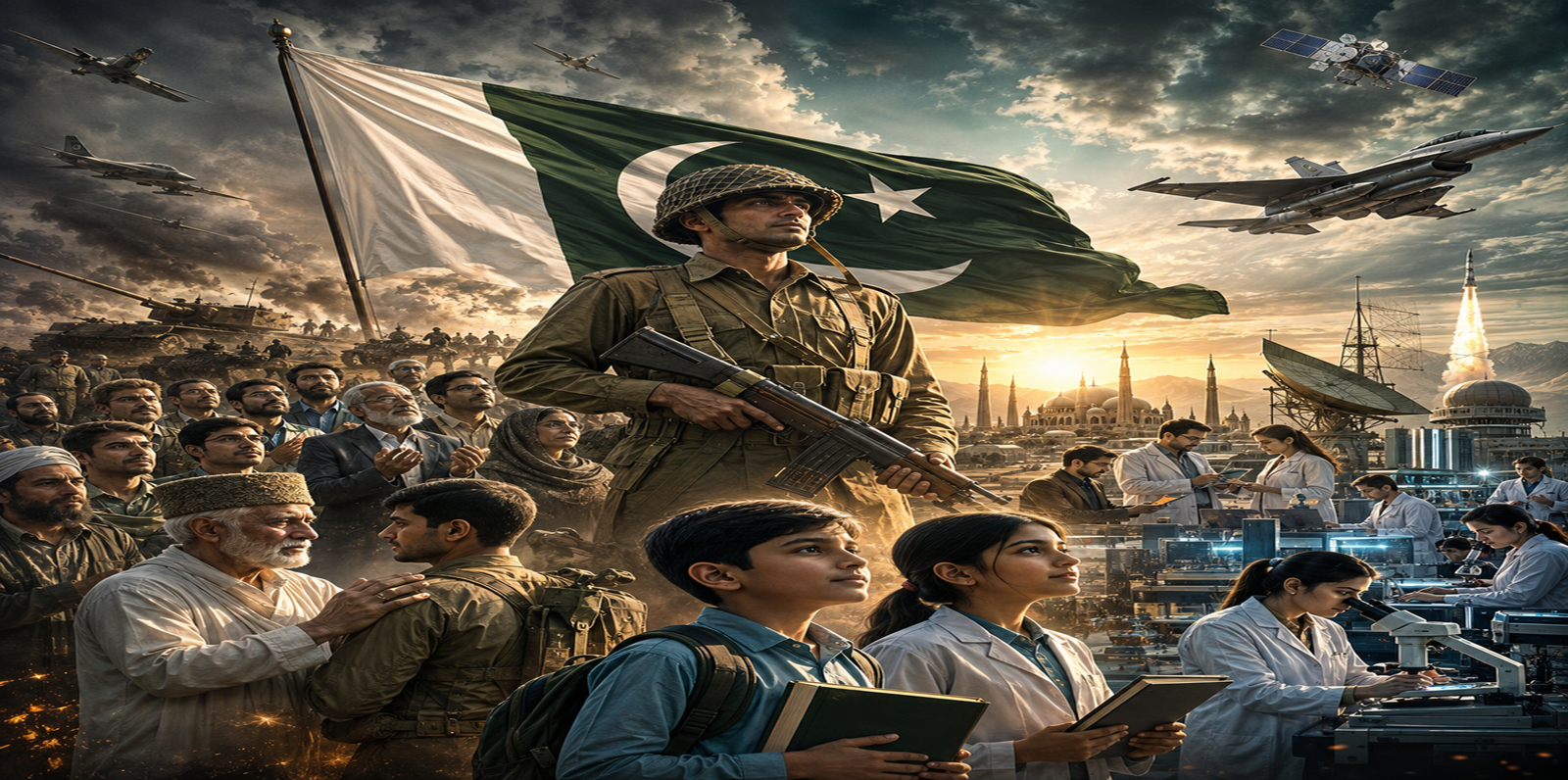
Somewhere, an ageing father placed his hand upon his son’s shoulder, gave him a blessing, and forced back tears lest paternal grief weaken a soldier’s resolve.
Somewhere, a wife bade farewell to a husband with a smile summoned from the deepest reserves of courage.
Children gathered around wireless sets, scarcely understanding the vocabulary of war yet instinctively aware that history had entered their homes.
Young men queued to donate blood. Doctors and nurses prepared for the wounded. Workers, teachers, traders, students and labourers discovered that citizenship could suddenly become a form of service.
It was a strange and solemn hour.
There was fear, certainly; but something stood above fear.
There was danger; but something proved greater than danger.
There were prayers in homes, supplications in mosques, service in hospitals, resolve in the streets and soldiers upon the frontier who knew that behind them stood not merely a government, but a people.
Perhaps this is the truest foundation of national defence:
The moment at which the soldier in the trench knows that every citizen behind him regards the struggle as his own.
Of What Substance Were Those Mothers Made?
When the events of September 1965 are recalled, memory naturally turns towards aircraft, tanks, guns, trenches and the celebrated names of military history.
Yet history is impoverished when it records only the visible instruments of battle.
Let us, for a moment, turn from the battlefield to the doorway of the ordinary Pakistani home.
Consider the mother.
She had watched over a child through fevered nights. She had heard his first words, witnessed his first uncertain steps, worried over his smallest wound and built in silence a thousand hopes for his future.
Then came a day when the country called for that son.
What passes through the heart of a mother when the child who constitutes an entire world to her must walk away towards danger?
Perhaps she placed her hand upon his head and said, in words or in spirit:
Go, my son. Pakistan has need of you.
Such a sentence is easily written. It is not easily lived.
To surrender to the defence of one’s country the person around whom one’s private universe has been built is more than an act of sacrifice. It belongs to that realm of human devotion which language can approach but never fully possess.
And what of the fathers?
Men who had waited to see their sons grow strong perhaps discovered, in one terrible instant, that those very shoulders must now bear a share of the nation’s burden.
What of the wives who saw the lamps of their households depart towards the frontier?
What of the children who could not comprehend war but understood that their fathers had gone away because something precious had to be protected?
These are the quiet figures seldom marked upon military maps.
Yet without them, no history of war is complete.
Thus, 6 September is not solely a day upon which soldiers are remembered. It is also an inheritance of maternal fortitude, paternal restraint, the endurance of women, the innocent prayers of children, the ardour of youth and the collective dignity of a people who discovered that sacrifice has many uniforms, most of which are never seen upon parade.
What Was the Most Formidable Weapon of 1965?
Was it the tank?
The artillery piece?
The fighter aircraft?
The rifle?
All were indispensable.
But the most formidable weapon may have been something for which no armoury could issue a serial number:
national cohesion.
In moments of existential danger, the secondary identities by which societies so often divide themselves may suddenly lose their tyranny.
The question ceases to be: Which province are you from?
What language do you speak?
To which sect, party, class or community do you belong?
A greater question takes command:
Does Pakistan require something of us?
And the answer, in that hour, was simple:
Yes.
That was enough.
Private disagreement yielded to public duty.
Pakistan moved to the foreground; lesser quarrels receded.
History repeatedly demonstrates that when a people become capable of placing a common purpose above faction, doors which had appeared permanently barred may begin to open.
This, perhaps, is among the most enduring lessons of 6 September.
For national defence is not only the defence of a line upon a map.
A country must also defend its moral purpose.
Its institutions.
Its educational inheritance.
Its economy.
Its social cohesion.
Its commitment to truth.
Its justice.
And, above all, the covenant from which it derives its understanding of itself.
Pakistan — More Than a Piece of Territory
In Pakistan’s collective memory, the birth of the state has long possessed a spiritual resonance extending beyond ordinary political chronology.
The association of independence with the closing days of Ramadan, and in popular consciousness with the blessed atmosphere of that sacred month, has nourished across generations the conviction that Pakistan was not conceived merely as another territorial rearrangement upon the map of a departing empire.
There was a larger aspiration.
There was the idea of a homeland in which Muslims might live with dignity according to their faith, civilisation and collective moral principles; a society in which man would not become the slave of another man, power would submit to law, the weak would not be abandoned before the strong, knowledge would be regarded as a form of worship, public office as a trust, and the ethical teachings of the Qur’an and Sunnah as a discipline of national conscience rather than ornaments of rhetoric.
Our political and spiritual vocabulary has often expressed that aspiration in the language of supplication:
O Lord, grant us a land in which men may be delivered from servitude to men, so that they may live in freedom under obedience to You alone.
Whether uttered from a pulpit, remembered within a family, or transmitted through national memory, the true worth of such an aspiration cannot lie in the grandeur of the slogan.
It must lie in the quality of the society built beneath it.
Pakistan was never meant to signify merely the waving of a green flag.
Its deeper promise was that justice might become so visible that even outsiders would be compelled to acknowledge it.
That rulers should regard themselves not as master’s but as trustees.
That the public treasury should never become private property.
That the rights of the orphan and the powerless should be protected by the same moral principle that governs the conduct of the state.
That learning and inquiry should occupy the place naturally implied by the very first Qur’anic command:
Iqra — Read.
That honesty should enter commerce.
Justice should inhabit the courtroom.
Ethics should restrain politics.
Self-reliance should inform economic policy.
Research should dignify education.
And power should be accompanied by mercy.
That was, and remains, the nobler meaning of the national project.
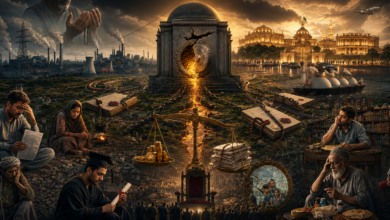
Yet How Faithful Have We Been to Our Covenant?
The question is uncomfortable.
But nations do not endure by listening only to hymns in their own praise.
A mature nation must possess the courage to look into the mirror even when the reflection is unflattering.
We must therefore ask ourselves:
Have we fashioned this country in accordance with the highest purpose to which we so often appeal?
Has public trust always taken precedence over private interest?
Has justice been equally available to the powerful and the powerless?
Have knowledge, science, research and technological competence truly been treated as national priorities?
Have we consistently placed Pakistan above faction, sect, language, patronage and personal advantage?
Have we honoured the Qur’anic injunction of awfu bil-‘ahd — fulfil the covenant?
Or have we too often broken faith with our own declared principles?
These questions cannot be answered merely by pointing towards rulers.
A state is not shaped by rulers alone.
A society builds the state which eventually governs it.
The man who accepts a bribe bears responsibility, but so does the man who offers one.
The merchant who deceives.
The student who cheats.
The official who subverts merit.
The citizen who believes law should bind everyone except himself.
The demagogue who turns disagreement into hatred.
The person who circulates falsehood without inquiry.
And, most gravely, the holder of public office who converts an entrusted authority into private advantage.
All participate, in different degrees, in the making or unmaking of public morality.
If Pakistan is a covenant, then we are all parties to it.
This is perhaps the harder patriotism: not to praise one’s country when drums are sounding, but to discipline oneself when no one is watching.
And Yet, O Lord, Your Mercy Has Not Deserted Us
Here the story of Pakistan assumes another, remarkable dimension.
We have made grave mistakes.
We have stumbled through political crises.
We have endured economic frailty.
We have weakened one another through division.
We have squandered opportunities which history rarely offers twice.
Yet the country endures.
And it has not merely endured.
It has crossed thresholds which, at earlier moments, would have appeared scarcely attainable.
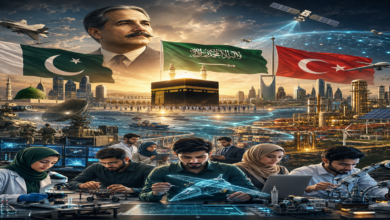
A state born amidst shortage and upheaval gradually produced scientists, engineers and institutions of strategic research.
It developed indigenous defence capabilities.
It acquired expertise in missile technology, aviation, radar, naval systems and a range of advanced military sciences.
Most consequentially, Pakistan became a nuclear-armed state.
In May 1998, the country publicly demonstrated its nuclear capability and altered the strategic balance of South Asia.
But this achievement should never be understood as a celebration of war.
Its responsible meaning is altogether more serious.
The highest purpose of strategic deterrence is not to glorify the destruction of an adversary.
It is to make aggression so dangerous, so irrational and so prohibitively costly that war itself is prevented.
The finest victory of deterrence is the battle that never has to be fought.
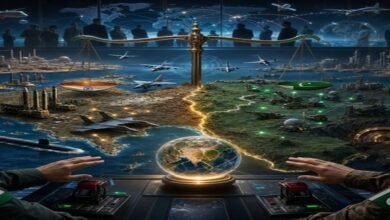
Modern warfare has compressed time with terrifying efficiency.
Missiles, drones, cyber capabilities, artificial intelligence, satellite surveillance and increasingly sophisticated command systems have narrowed the interval between warning and consequence.
In such a world, national power cannot safely be measured by the number of weapons in an arsenal.
A secure Pakistan requires more than weapons.
It requires:
minds prepared for the future;
an economy capable of sustaining sovereignty;
industries that can stand upon their own feet;
science at the frontier of knowledge;
a people sufficiently united to resist manipulation;
leadership governed by moral restraint;
and a defence doctrine strong enough to deter war, yet responsible enough not to worship it.
The purpose of strength must be peace with dignity.
Otherwise, strength itself becomes another form of weakness.
To the Young Pakistani of Today: The Soldier of 1965 Is Still Calling You
A young person may reasonably ask:
What has a war fought more than six decades ago to do with me?
The answer is: a very great deal.
The battlefield has changed.
The duty has not.
In 1965, a young Pakistani stood in a trench.
Today, you may have to stand at the frontier of knowledge.
He defended a physical border.
You must help defend Pakistan’s future.
He faced gunfire.
You must confront ignorance, corruption, dishonesty, intellectual dependence, extremism, despair and the seductions of mediocrity.
He carried a rifle.
Your weapons may be a book, a computer, a laboratory, a workshop, a business, a profession, an invention, a research paper or a disciplined character.
Pakistan today requires millions of young men and women prepared to make a quieter but no less consequential declaration:
I shall not cheat.
I shall not advance by fraud.
I shall not mistake shortcuts for achievement.
I shall learn from the world without becoming intellectually dependent upon it.
I shall master technology and, where possible, create it rather than merely consume it.
I shall build enterprises.
I shall pursue research.
I shall turn skill into national value.
I shall disagree without hatred.
I shall love my language, province and inheritance without despising those of another Pakistani.
I shall allow faith to become character, not merely slogan.
I shall try to leave my country stronger than I found it.
If a generation were to make such commitments seriously, that would constitute a Defence Day for the twenty-first century.
To the Daughters of Pakistan: This Country Is Yours No Less
The moral history of 1965 cannot be told honestly if courage is narrated only in masculine terms.
Pakistani women have borne the burden of every national trial.
They have given sons to the country.
Sustained husbands through adversity.
Cared for the wounded.
Held families together.
Preserved education.
Maintained dignity in deprivation.
And, perhaps most importantly, shaped the minds of the generations that followed.
Today, the frontier at which a Pakistani woman serves her country may be a university.
A hospital.
A research laboratory.
A classroom.
A courtroom.
A business.
A technology firm.
A public institution.
Or the home in which the moral grammar of the next generation is first taught.
Nations are not fashioned upon borders alone.
They are also fashioned in the lap of a mother.
A mother who teaches a child that service to Pakistan consists not merely in patriotic vocabulary but in honesty, knowledge, competence, discipline and compassion may be shaping the destiny of a country more profoundly than she will ever know.
To the Elderly Pakistani: You Are Our Living Archive
Those who witnessed the early decades of Pakistan possess something which no archive can wholly preserve.
Some remember the upheaval of Partition.
Some heard the air-raid sirens of 1965.
Some remember families gathered around radio sets.
Some recall a social atmosphere in which material resources were fewer, yet neighbourliness could sometimes appear richer.
To the younger generation, such people are not merely relics of another age.
They are repositories of national memory.
Tell the young what freedom cost.
Tell them that states do not emerge from maps alone.
A homeland is made of remembered graves, migrations, sacrifices, prayers, languages, cultures, affections and responsibilities inherited by people who did not personally pay the original price.
Tell them, too, that reverence for the past must never become an excuse for failing the future.
Memory is valuable only when it becomes instruction.
The Most Dangerous War May Not Be Fought at the Frontier
Pakistan today faces dangers that do not resemble the conventional battlefields of the twentieth century.
There is a war against hope.
A war against intellectual independence.
A war of false information.
A war of economic dependency.
A war against educational excellence.
A crisis of institutional confidence.
A corrosion of character.
These wars seldom announce themselves with artillery.
There may be no air-raid siren.
No column of smoke.
No soldier visible in a trench.
Yet a society can be hollowed from within long before an enemy crosses its frontier.
When young people cease to believe that honest effort can alter their condition, something of the nation has already been defeated.
When merit becomes irrelevant, something has been defeated.
When the brightest student comes to regard departure from the country as the sole conceivable definition of success, something has been defeated.
When we make every national failure the responsibility of some mysterious “other” while refusing to examine ourselves, something has been defeated.
The defence required in such an age is therefore broader than military readiness.
Pakistan needs another kind of soldier.
If you are a teacher, teach with integrity.
If you are a doctor, regard the patient as a trust.
If you are a trader, keep your measure honest.
If you are a civil servant, remember that the citizen’s time is not your personal property.
If you are a politician, regard authority as service rather than possession.
If you are a journalist, treat truth as an entrusted responsibility.
If you are a religious scholar, heal divisions rather than inflame them.
If you are young, equip yourself with knowledge and skill.
Not everyone will stand in a trench.
But everyone occupies a post.
When Will Pakistan Be Truly Unassailable?
Will it be when we possess the most advanced missiles?
No.
When we possess nuclear weapons?
No.
When our armed forces are strong?
Their strength is indispensable, but by itself it is not enough.
Pakistan will approach genuine security when military strength is accompanied by economic strength.
When national defence is matched by national education.
When the frontier is secure and the courtroom commands confidence.
When the missile is sophisticated and the university is equally sophisticated.
When nuclear capability exists alongside self-reliance in energy, industry, agriculture and technology.
When the mosque is full and the marketplace is honest.
When the Qur’an is recited beautifully and its ethics are visible in public dealings.
When we unite against external danger but are equally prepared to defend the rights of one another.
That is the larger meaning of defence.
Military defence.
Intellectual defence.
Economic defence.
Moral defence.
Civilisational defence.
A state protected in only one of these dimensions remains vulnerable in all the others.
6 September Does Not Ask Every Generation for Blood; It Asks Every Generation for Character
There is no virtue in desiring perpetual conflict.
The greatness of a country is not measured by how often it goes to war.
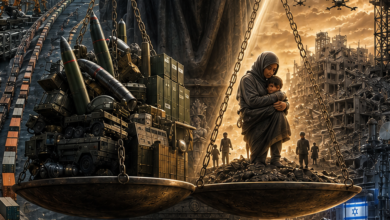
It is measured, in part, by whether it can become so capable, so coherent, so just and so formidable that war against it becomes an act of folly.
Our dead did not sacrifice themselves so that every generation after them should remain permanently upon a battlefield.
They died so that those who followed might live free, secure and at peace.
For that reason, the greatest tribute to a fallen soldier cannot consist solely of wreaths, ceremonies and speeches.
It must lie in building the country for which he died.
A Pakistan in which the child of a fallen soldier is not denied justice.
Where the gifted son of a poor family is not condemned by poverty.
Where a daughter may live and work in safety.
Where a farmer retains dignity.
Where a teacher is honoured.
Where the scientist is given the means to explore.
Where the young are offered possibility rather than despair.
Where law does not lower its eyes before wealth or rank.
Only then may we approach the graves of those who died and hope that our words of gratitude are supported by evidence.
O Lord, Make Us Again a People Worthy of the Trust
O Allah,
before You we acknowledge our failings.
You granted us a homeland, and we have not always valued it as we should.
You granted us resources, and we have not always used them wisely.
You gave us talent, and too often we exhausted it in quarrel.
You preserved us through moments of danger, yet we have not always prevailed over our own weaknesses.
O Lord,
restore to us the heart that becomes one in adversity.
Give us the moral courage to recognise our own errors.
Grant us knowledge that frees us from dependency.
Grant us leadership that understands public office as a trust.
Raise among us a generation which contributes to the world rather than merely demands from it.
Give us science which serves humanity.
Give us strength under which the oppressed may find security.
Give us a defence so credible that war is restrained.
Give us an economy strong enough to protect the independence of our decisions.
And give us such character that before the world speaks of our power,
it speaks of our justice.
The Covenant of the Present
On 6 September, let us not say only:
We are proud of our martyrs.
Let us also say:
We are indebted to them.
Let us not merely declare:
Pakistan shall endure.
Let us ask:
What am I doing today to make its endurance worthy?
Do not merely raise the flag.
Write Pakistan upon your conduct.
Do not merely listen to the patriotic song.
Make your profession an act of national service.
Do not merely catalogue the weakness of adversaries.
Have the courage to confront your own.
Do not merely take pride in nuclear capability.
Help build such intellectual, economic, technological and moral strength that Pakistan commands respect for the totality of its civilisation.
For one day our generation, too, will become history.
The children of today will grow older.
And they will ask us:
When Pakistan faced difficulty, what were you doing?
Shall we tell them:
We were fighting one another?
We were manufacturing hatred?
We had surrendered to despair?
Or shall we be able to say:
We helped Pakistan stand again.
We made education a form of power.
We restored dignity to research.
We gave young people reason to hope.
We built industries.
We created technologies.
We learned to disagree without dismembering the national community.
We remembered the covenant which we had so often invoked before God.
And we delivered to those who followed a Pakistan which was not merely large upon a map,
but large in character.
Soldiers and martyrs of September 1965,
from the silence of your graves there still seems to arise a question:
Is Pakistan secure?
We answer:
Yes. Upon its frontiers your successors still stand watch.
You ask:
Is Pakistan strong?
We answer:
It possesses defensive capabilities beyond much that could have been imagined in your own time.
Then perhaps comes the final and more difficult question:
But is the nation for which we gave our lives equally strong?
And there—
our eloquence falters.
For that question cannot be answered by speeches.
Our schools will answer it.
Our courts will answer it.
Our universities will answer it.
Our markets will answer it.
Our institutions will answer it.
Our conduct will answer it.
Our young people will answer it.
History will answer it.
So let 6 September cease to be merely an annual recollection of the past.
Let it become a covenant with the future.
Let us resolve that Pakistan shall never be made smaller than the interests of a person, a party, a sect, a province, a language or a generation.
Let us bind faith to character.
Patriotism to labour.
Freedom to self-reliance.
Defence to knowledge.
Power to justice.
And Pakistan to the larger moral purpose for which earlier generations dreamed, migrated, suffered and sacrificed.
Then perhaps there may come a day when the world will look upon Pakistan and see not merely a nuclear state, nor merely a strategically situated country, nor merely a nation that survived difficult decades.
It may say instead:
Here were a people who learned from their mistakes.
Who remembered their covenant.
Who created strength with their own hands.
Who overcame the tyranny of internal division.
Who possessed power without becoming intoxicated by it.
And who chose peace without surrendering dignity.
Perhaps then the prayer of a nation will acquire a new meaning.
Perhaps then our children, reading of 6 September, will not say merely:
Our forefathers were great.
They will be able to add:
They preserved the homeland—
and we built the Pakistan of which they had dreamed.
Pakistan is not merely our soil.
It is an inheritance held in trust from those who died, a prayer transmitted by those who came before us, the sacrifice of mothers, the endurance of fathers, the future of children, and a collective responsibility before God.
Hold fast to that trust.
Do not permit it to be consumed by the fire of faction.
Do not surrender it to despair.
Do not abandon it to ignorance.
Do not permit it to be chained by dependency, debt or intellectual servitude.
Give Pakistan your knowledge.
Give it your ability.
Give it your integrity.
Give it your labour.
Give it your prayer.
For once, somewhere upon a frontier, a soldier surrendered his present so that we might possess a future.
The duty now falls to us: to use our present to build Pakistan’s tomorrow.
Pakistan Paindabad.