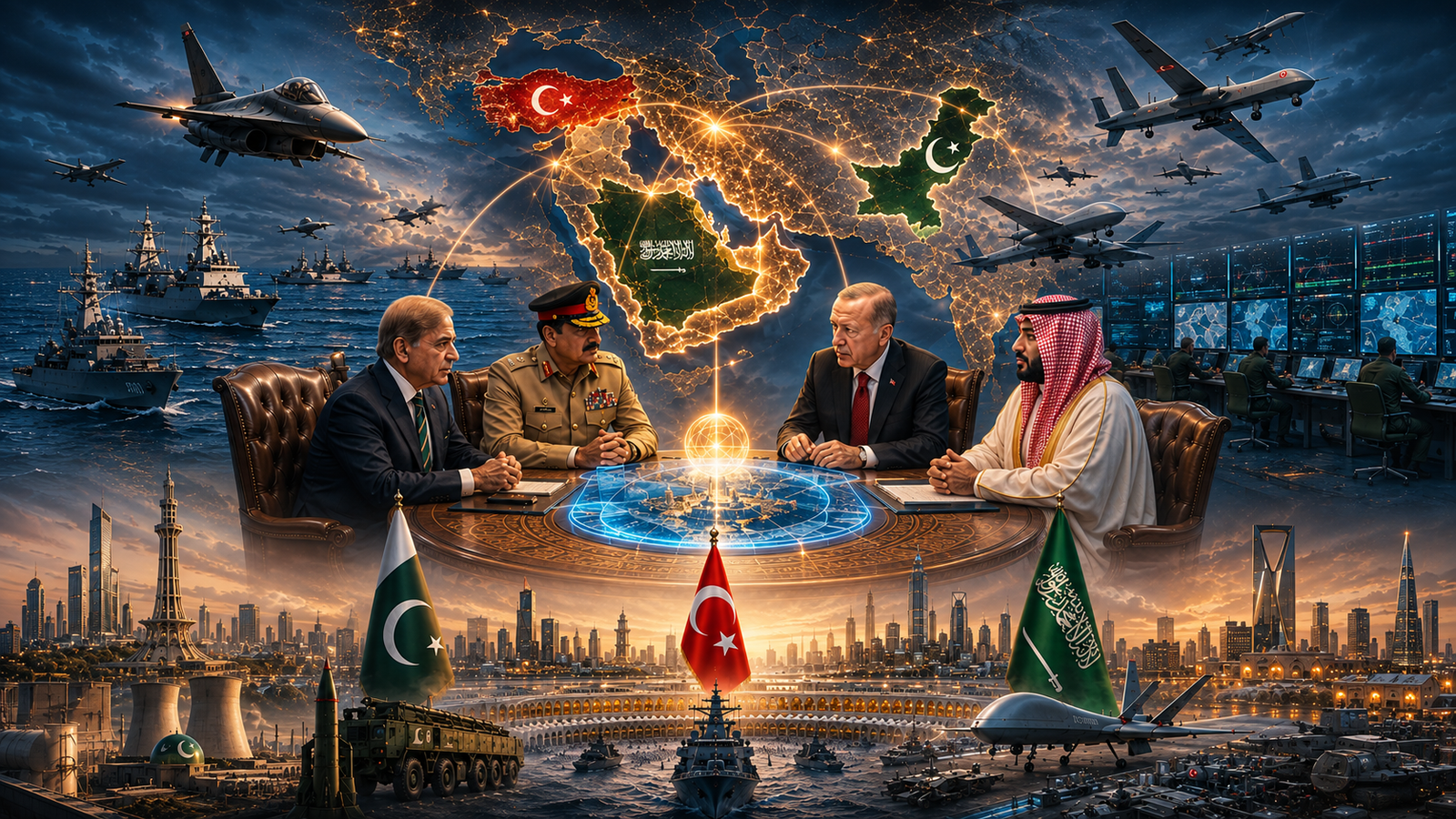
Jeddah’s Silent Diplomacy: The Hidden Architecture of a New Regional Order
Jeddah 2026: A Meeting That Could Reshape the Strategic Map

Prelude: The Echo of Unity — Jeddah’s Hour of Decision and the Destiny of the Ummah
History has never been merely a lifeless procession of events. It is, rather, a vast and enduring chronicle in which the whispers of bygone ages, the struggles of civilisations, and the aspirations of nations are preserved with remarkable fidelity. The diplomatic activity now unfolding upon the shores of the Red Sea in Jeddah is not simply another routine engagement of statesmen; it may well represent the opening chapter of a new historical narrative — one whose consequences could shape the strategic trajectory of the Muslim world for years to come.
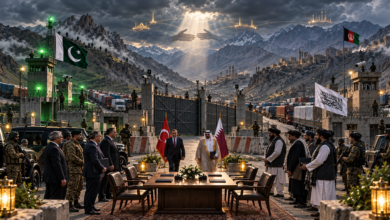
The gathering of Pakistani Prime Minister Muhammad Shehbaz Sharif, Field Marshal Asim Munir, Turkish President Recep Tayyip Erdogan, and Saudi Crown Prince Mohammed bin Salman around a single table marks a pivotal moment in the long march of history. This is not just a meeting of individuals, but a collaboration between three geographical spheres, three centers of influence, and three distinct but interconnected civilizational traditions. If these forces achieve true unity of purpose, they could lay the foundation for a new balance stretching from the heart of the Middle East to the strategic crossroads of South Asia.
Viewed through the prism of the timeless wisdom of the Qur’an, the significance of such a moment acquires an even deeper resonance:
“وَاعْتَصِمُوا بِحَبْلِ اللَّهِ جَمِيعًا وَلَا تَفَرَّقُوا”
(Surah Aal-e-Imran: 103)
“Hold fast, all together, to the rope of Allah, and do not become divided.”
The message is clear: unity has always been the source of strength, while fragmentation has been the prelude to weakness.
If one looks into the mirror of history, from the era of the Rightly Guided Caliphate to the grandeur of the Ottoman civilisation, one finds that the enduring strength of the Muslim world has repeatedly rested upon the pillars of intellectual cohesion, collective purpose, and shared endeavour. The possibility of a trilateral understanding emerging in Jeddah appears, therefore, as a serious attempt to rediscover a tradition of cooperation that has long remained dormant — as though the wheel of history is preparing to enter a new cycle.
The moment unfolding in Jeddah thus appears to carry a question far greater than the confines of diplomacy itself: can the Muslim world once again gather its scattered fragments, transform them into a coherent force, and reclaim a position of dignity, influence, and strategic relevance in the international order?
The Jeddah Meeting: An Emerging Convergence of Diplomacy, Wisdom and Power
The Jeddah gathering may seem like a formal diplomatic session, but there is a deep strategic movement going on behind the scenes. A trilateral defense pact between Pakistan, Turkey and Saudi Arabia has been under wraps and under the veil of secrecy for the past year, but its formal announcement was finally made yesterday in Mecca, as if in the shadow of the Kaaba. However, its echoes are clearly being felt in diplomatic circles. This potential agreement will not be a mere defense document, but the foundation has been laid for an alliance in which military power, political insight and strategic coordination will come together to form a coherent force. In this context, diplomacy seems to be moving beyond its traditional boundaries and presenting a new definition of power, where practical cooperation and common interests have also been added to the weight of words.
Western strategic observers, particularly institutions such as the Carnegie Middle East Center and Chatham House, have viewed such developments through the lens of an emerging “Muslim Strategic Bloc”. Their assessments suggest that, should such cooperation mature into a structured alliance, it could possess the capacity not only to reshape the balance of influence in the region but also to introduce new dimensions into the relationships of these states with global powers, including the United States, China, and Russia.
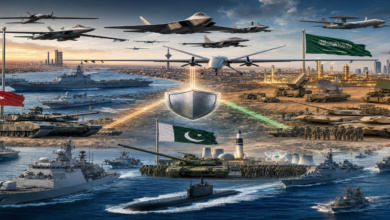
Furthermore, the nature of this prospective partnership would not necessarily remain confined to traditional military cooperation. It could encompass intelligence-sharing mechanisms, joint military exercises, collaboration in defence production, and broader strategic coordination. In this sense, the initiative points towards the possible evolution of a wider security architecture — one in which regional stability, strategic autonomy, and collective resilience occupy a central place.
Thus, the Jeddah meeting should not be interpreted merely as another episode in diplomatic engagement. Rather, it may represent the opening movement in a wider transformation of global strategic calculations — a moment in which the Muslim world could potentially emerge, for the first time in decades, as a more organised, coordinated, and influential actor in international affairs.
Diplomatic Silence: The Language of Prudence, Strategy and Hidden Intent
The statement issued by the Foreign Office may, on the surface, appear cautious and conventional; yet beneath its carefully measured words lies a deeper strategic significance. The reference to discussions on regional and international matters during Prime Minister Shehbaz Sharif’s visit to Saudi Arabia from 6 to 8 August points towards a broader strategic framework, in which defence cooperation and long-term strategic alignment appear to occupy a central position.
In the intricate world of international relations, silence is not merely the absence of speech; it is often a deliberate and meaningful form of communication. The wisdom of restraint has long been recognised as an essential element of statecraft. In this context, the guidance of the Qur’an also carries profound relevance:
“وَإِذَا خَاطَبَهُمُ الْجَاهِلُونَ قَالُوا سَلَامًا”
“And when the ignorant address them harshly, they respond with words of peace.”
The essence of this teaching lies in the understanding that wisdom does not demand that every thought be immediately transformed into a public declaration; rather, true prudence requires patience, timing, and the discernment to allow events to mature before they are revealed.
This diplomatic caution reflects a well-established strategic practice, described by Western analysts as “Strategic Ambiguity” — a deliberate veil of uncertainty designed to protect major initiatives from premature exposure. During the Cold War, both Washington and Moscow frequently relied upon discreet diplomacy, where decisions of profound consequence were carefully shaped away from public scrutiny before eventually emerging at a moment deemed most advantageous.
History itself demonstrates that great alliances are rarely born overnight. They first take form in the
realm of ideas, gradually evolve through diplomatic engagement, and ultimately crystallise into practical arrangements. The Jeddah meeting appears to represent another significant link in this gradual chain of strategic development, where silence itself may be revealing the seriousness, complexity, and depth of the decisions being contemplated.
Thus, the diplomatic quiet surrounding this initiative should not be mistaken for uncertainty or absence of direction. Rather, it reflects a phase in which wisdom is being valued above rhetoric, preparation above proclamation, and strategic calculation above immediate political spectacle.
Historical Context: From the Journey of Dialogue to Strategic Reality — The Continuity of Treaties and Alliances
The possibility of a trilateral defence arrangement is not the product of a sudden political impulse or a temporary regional necessity. Rather, it appears to be the culmination of an extended diplomatic journey, sustained consultations, and the changing realities of the regional order. The emphasis placed in January by Türkiye’s Foreign Minister Hakan Fidan on the need for a “comprehensive platform” represented an early indication of a broader strategic vision — a vision that now appears to be moving gradually towards practical expression.
The confirmation by Pakistan’s Minister of State for Defence Production that, following a year of negotiations, a draft agreement had been prepared indicates that the concept has progressed beyond the stage of diplomatic discussion and entered a more advanced phase of consideration. Major strategic decisions between states are seldom created through sudden announcements; rather, they emerge through quiet diplomacy, continuous consultation, and the patient construction of mutual confidence. It is precisely this gradual process that appears to lie behind the evolving framework of this prospective partnership.
It is equally important to recognise that Pakistan and Saudi Arabia already possess a longstanding history of defence and security cooperation, providing a substantial foundation upon which any new arrangement could be built. Their relationship, shaped over decades by shared interests, mutual trust, and strategic understanding, has created a platform upon which broader cooperation may now be envisioned.
In this context, the proposed trilateral agreement does not merely appear to represent the beginning of a new journey; rather, it may be understood as the extension of an existing path — a path whose foundations have already been laid through years of partnership, confidence-building, and common strategic interests.
Thus, the diplomatic quiet surrounding this initiative should not be mistaken for uncertainty or absence of direction. Rather, it reflects a phase in which wisdom is being valued above rhetoric, preparation above proclamation, and strategic calculation above immediate political spectacle.
The Lessons of History: Treaties as Turning Points in the Destiny of Nations
A careful examination of the pages of history reveals that treaties are not always merely instruments of political necessity; at times, they become defining moments that determine the direction of generations yet to come. Within Islamic history, the Treaty of Hudaybiyyah stands as a profound example of this enduring principle. At the time of its conclusion, some perceived it as a difficult compromise, perhaps even a moment of apparent concession. Yet the passage of time demonstrated that it was, in fact, an act of remarkable wisdom, strategic patience, and far-sighted judgement — a decision that opened the gates to possibilities previously unseen.
Viewed through this historical lens, contemporary defence cooperation may also be understood as part of the same enduring pattern. Durable relationships between states are never forged in a single moment; rather, they are constructed gradually through the accumulation of trust, the alignment of interests, and the patient cultivation of sustained engagement.
In this context, the prospective trilateral partnership between Pakistan, Türkiye, and Saudi Arabia appears to represent a stage in a broader process of strategic evolution — a point where the experiences of the past, the necessities of the present, and the strategic demands of the future are converging. It is as though this proposed arrangement represents a new branch emerging from a tree whose roots have already sunk deep into the soil of history, confidence, and mutual cooperation.
A Changing Global Landscape: New Axes of Power and the Imperative of Unity
The Middle East today stands at a delicate crossroads in international affairs — a moment in which traditional balances of power are undergoing rapid transformation and new regional as well as global partnerships are beginning to take shape. Over recent years, tensions between Iran and the United States, the crisis in Gaza, conflicts in Syria and Yemen, shifting energy dynamics, and the intensifying competition among major powers have collectively reshaped the political landscape of the region.
In such circumstances, the Muslim world faces a fundamental question: what form of collective strategy should it adopt in order to safeguard its interests amid the changing architecture of global power? In the contemporary era, geographical proximity alone is no longer sufficient. It is political vision, economic strength, defence capability, and diplomatic coordination that enable nations to exercise meaningful influence within the international order.
Global politics is gradually moving beyond the traditional framework of a unipolar system towards a more complex multipolar world order, in which regional powers and strategic partnerships are increasingly shaping international decisions. Analyses by institutions such as the RAND Corporation and the Brookings Institution have likewise suggested that regional alliances and cooperative frameworks are likely to become among the principal pillars of global politics in the decades ahead.
Within this broader context, a potential partnership between Pakistan, Türkiye, and Saudi Arabia may be viewed as an emerging “Regional Power Axis” — an alignment in which three distinct forms of strength converge. Pakistan’s nuclear capability and military experience, Türkiye’s defence expertise and diplomatic influence, and Saudi Arabia’s economic and energy resources, if brought together under a coherent strategic vision, could create a new equation of regional balance.
Such a partnership would not remain confined to the boundaries of the Middle East alone. Its implications could extend across South Asia, Central Asia, and the wider sphere of international diplomacy. The significance of this emerging cooperation lies not in the pursuit of confrontation, but in the advancement of equilibrium — a vision in which regional nations work together to preserve sovereignty, security, and shared interests.
The changing global landscape therefore highlights a fundamental truth of the twenty-first century: those nations that will shape the future are not necessarily those that seek dominance through isolation, but those that embrace cooperation over division, collective wisdom over individual strength, and long-term vision over temporary advantage.
Türkiye and Saudi Arabia: From Estrangement to Understanding — A New Interpretation of Relations
The chronicles of history bear witness to a simple yet profound reality: relations between states are never permanently fixed. Circumstances evolve, priorities shift, and the demands of the international environment transform with time. These very changes can sometimes create distance between nations, yet at other moments they open the door to renewed understanding and cooperation. The relationship between Türkiye and Saudi Arabia represents a striking example of this historical dynamic.
Following the tragic killing of Jamal Khashoggi, diplomatic tensions emerged between the two countries, giving rise to a prolonged period of political coolness. However, with the passage of time, a more pragmatic understanding gradually prevailed — that in international affairs, neither perpetual hostility nor permanent friendship is the defining reality. Rather, national interests, regional stability, and mutual necessities often prove to be the more decisive forces shaping relations between states.
The restoration of ties between Türkiye and Saudi Arabia today is not merely the outcome of a temporary political accommodation; it reflects a deeper strategic realisation. Both nations have recognised that, in a rapidly changing global environment, nurturing shared opportunities is a wiser course than allowing past disagreements to overshadow future possibilities.
This reconciliation recalls those chapters of history when different Muslim states, despite internal disagreements, continued to cooperate within the sphere of common interests in the face of greater challenges. The history of Andalusia, too, offers examples of periods when political differences existed alongside remarkable cultural, intellectual, and civilisational exchanges that brought societies closer together.
The present age demands the same wisdom: that the bitterness of yesterday should not be permitted to eclipse the possibilities of tomorrow. The improvement in Türkiye-Saudi relations demonstrates that visionary leadership does not remain imprisoned by the burdens of history; rather, it seeks new pathways towards the future.
Thus, this reconciliation represents far more than the restoration of relations between two states. It symbolises a wider truth of international politics: influence, stability, and strategic weight belong to those nations that possess the wisdom to preserve the possibility of cooperation even amid differences.
Türkiye’s Vision: From Unity to Stability — The Search for a Broader Regional Platform
Türkiye’s interest in a possible trilateral partnership is not confined merely to a limited arrangement of defence cooperation; rather, it appears to be rooted in a broader regional vision. Ankara understands that the challenges confronting the Middle East are not derived solely from military conflicts, but also from deeper issues of mistrust, political fragmentation, and the absence of a shared strategic framework.
According to defence analysts, Türkiye’s objective is to contribute towards the creation of a regional platform where diverse powers can move beyond their differences and cooperate in pursuit of security, stability, and common interests. If Pakistan, Saudi Arabia, Türkiye, and potentially other significant regional states such as Egypt were to draw closer within a shared framework, such an arrangement could emerge not only as a force of defence but also as a more influential diplomatic voice.
At first glance, such an ambition may appear idealistic; yet history has repeatedly demonstrated that great alliances are always born first as ideas before circumstances transform them into realities. The alliances established in Europe after the Second World War, as well as the regional partnerships that have emerged across Asia, illustrate a fundamental historical truth: shared interests can, at decisive moments, bring diverse nations together upon an entirely new path.
Türkiye’s Vision: From Unity to Stability — The Pursuit of a Broader Regional Balance
Türkiye’s vision must be understood within this wider strategic context. It is not merely a project of military cooperation; rather, it represents an endeavour to seek a new regional equilibrium in which diplomacy, defence, economics, and political influence reinforce one another. Within the foreign policy outlook of President Recep Tayyip Erdoğan, there has been a consistent emphasis on Türkiye’s role as a pivotal state — a bridge connecting Europe, the Middle East, and Asia, and a power capable of shaping conversations across these interconnected regions.
Some Western analysts describe this approach through the phrase “Neo-Ottoman Strategic Outlook”. Although the term carries different political interpretations and is sometimes used within contested debates, its central argument remains that Türkiye seeks to transform its historical legacy, geographical position, and civilisational significance into a modern diplomatic and strategic role.
The reality is that, in the contemporary age, regional challenges cannot be resolved solely through the intervention of external powers. Nations of the region must also recognise their collective responsibilities and their capacity to shape their own destiny. It is in this sense that Türkiye’s vision points towards a new regional philosophy — one in which unity is pursued not as a means of domination, but as a pathway towards stability; and power is employed not for confrontation, but for balance and security.
Türkiye’s Defence Industry: From Importer to Exporter — The Rise of Strategic Self-Reliance
The evolution of Türkiye’s defence industry stands as one of the most remarkable examples in the modern era of national self-reliance, technological advancement, and strategic determination. There was a time when Türkiye depended heavily upon external sources to fulfil its defence requirements. Yet through sustained planning, investment in technology, and the cultivation of indigenous capabilities, the country has reached a stage where it is not only striving to meet its own defence needs but has also emerged as an increasingly significant exporter within the global defence market.
This transformation is not merely a story of expanded military production; it represents a broader strategic philosophy. The Qur’an states:
“وَأَعِدُّوا لَهُم مَّا اسْتَطَعْتُم مِّنْ قُوَّةٍ”
(Surah Al-Anfal: 60)
“And prepare against them whatever strength you are able to muster.”
This principle reflects the idea that nations must strengthen their capabilities in order to safeguard peace, security, and sovereignty. Türkiye has sought to interpret this concept in accordance with the demands of the modern era by advancing defence research, indigenous production, and technological innovation.
In particular, Turkish-made combat drones have attracted global attention after demonstrating their operational effectiveness in conflicts and theatres such as Ukraine, Syria, and Libya. Their success has illustrated a fundamental transformation in the nature of warfare: modern conflict is no longer determined solely by the size of conventional armies or the quantity of traditional weaponry. Technology, artificial intelligence, surveillance systems, and cost-effective precision capabilities have become equally decisive instruments of strategic power.
The evolution of Türkiye’s defence industry may therefore become a significant component of any prospective trilateral partnership, as modern defence cooperation is no longer restricted merely to military agreements. It now extends into areas such as research collaboration, industrial production, technological exchange, and joint defence initiatives.
Thus, Türkiye’s defence sector is gradually transforming into a strategic instrument that enables the country not only to pursue greater autonomy in regional affairs but also to secure a more influential position within the global balance of power. Its journey serves as a reminder that nations which embrace knowledge, innovation, and self-reliance are better equipped to carve their own place in an ever-changing international landscape.
The SIPRI Report: Beyond the Numbers — Türkiye’s Expanding Defence Influence
In the modern era, defence strength is no longer measured solely by troop numbers, conventional weapons, or the size of military expenditure. The true measure of strategic capability increasingly lies in technology, research, innovation, indigenous production, and national self-sufficiency. Within this broader framework, the defence industry rankings published by the Stockholm International Peace Research Institute (SIPRI) provide an important indication of Türkiye’s growing capabilities.
The presence of Turkish defence companies in SIPRI’s assessments represents far more than a collection of statistics; it reflects a profound transformation. The global standing of companies such as Aselsan, Baykar, and other Turkish enterprises demonstrates that Türkiye has travelled a considerable distance in the field of defence production and is no longer merely a nation seeking to fulfil its own requirements, but an emerging participant in the international defence marketplace.
This progress forms part of a wider strategic policy aimed at reducing external dependence, encouraging domestic research and investing in advanced defence technologies. The very meaning of power has changed in the twenty-first century. A state possessing technological capability, research capacity, and a robust defence-industrial base is better positioned to make independent decisions within the complex arena of global politics.
The transformation of Türkiye’s defence industry could also serve as a significant element within a prospective trilateral partnership. Contemporary defence cooperation is no longer limited to the supply of weapons; it increasingly encompasses joint research, technology transfer, industrial collaboration, and shared production capabilities. In this regard, Türkiye’s expanding defence capacity could become a “force multiplier” for any emerging strategic framework.
Thus, SIPRI’s rankings should not be viewed merely as an international league table, but as a reflection of a deeper reality: Türkiye has moved along the path of defence self-sufficiency, evolving from a consumer of military technology into a creator and exporter of strategic capabilities. This transformation carries significance not only for Türkiye itself but also for the wider reconfiguration of regional power dynamics.
The Perspective of Western Think Tanks
Analysts at the Atlantic Council have suggested that such an alliance could become a potential “game changer”, particularly if its scope expands beyond defence cooperation to include economic and energy partnerships.
Similarly, the Council on Foreign Relations has viewed such developments as a possible balancing force capable of influencing the distribution of power within the Middle East.
However, some Western observers have also expressed reservations, arguing that such an alignment could potentially reduce traditional Western influence in the region and contribute to a more independent regional strategic posture.
Qur’anic Principles and Political Wisdom
Within Islamic teachings, the principles of unity, justice, and strength hold a central place. If a prospective agreement is shaped in accordance with these principles, it would represent not merely a defence arrangement, but a broader ethical and civilisational endeavour.
It is precisely this dimension that could distinguish such cooperation from many other alliances in global politics — by combining strategic interests with a deeper sense of shared values and collective responsibility.
Future Prospects: Alliance or Trial?
Every significant alliance carries within it both opportunities and challenges. A trilateral arrangement of this nature would inevitably face obstacles, including internal differences, international pressures, and the complexities of regional politics.
Yet if its leadership proceeds with vision, patience, and strategic wisdom, this partnership could potentially mark a new chapter in regional history.
Conclusion: A New Horizon Emerging from Jeddah
It appears that the Jeddah meeting may represent far more than a temporary diplomatic engagement. It could become the prelude to a new era in which the Muslim world seeks to rediscover a measure of its lost cohesion and strategic confidence.
Should such an agreement succeed, it would not merely constitute a defence partnership; it could become a symbol of intellectual awakening, civilisational renewal, and political self-determination.
Perhaps, in the pages of history yet to be written, this moment will be remembered with a simple but profound description:
That this was the hour when scattered forces began searching for a common centre — and perhaps succeeded in finding one.