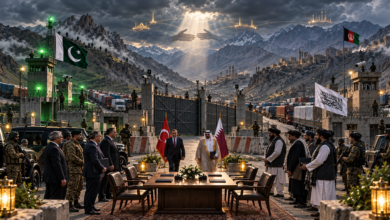
Nuclear Shadows: The Fragile Peace of South Asia
Silent Weapons, Uncertain Peace

When the pages of human history are turned with a contemplative hand, one does not encounter merely the clangour of steel or the acrid trace of gunpowder lingering in the margins. Rather, there emerges—subtle yet inexorable—an unseen equilibrium: a quiet arbiter of nations, at once the custodian of their endurance and the silent judge of their ascent and decline. This balance has, at various turns, concealed itself behind the veil of fear, adorned itself in the robes of prudence, and at moments revealed its full majesty through the stern countenance of power, inscribing upon the ages the fate of peoples and polities alike.
In our present age, this elusive force has assumed a new and formidable form—that of nuclear capability. It is a shadow that looms even over the firmament of peace, casting a solemn gravity upon it, while simultaneously sustaining, within the human mind, the ever-present spectre of war as a subdued yet persistent unease. It is not merely an instrument of destruction; rather, it is a complex constellation of intent, apprehension, and possibility that has fundamentally altered the temperament and trajectory of global politics.
South Asia—once a cradle of civilisations, a theatre of intellectual ferment, and a repository of profound historical experience—now finds itself navigating a particularly delicate moment within this nuclear equilibrium. Here, power is no longer reducible to the crude arithmetic of force. It has evolved into a disciplined, intricate, and multi-layered strategic calculus: a domain in which each step is measured with exacting care, every silence is laden with meaning, and each movement carries within it a new strategic dimension.
This region can no longer be confined within the narrow limits of geography. It has become an integral component of a wider global tableau, wherein every military or strategic gesture possesses the potential to ripple across the currents of international politics. In this theatre, fear and hope, caution and resolve, deliberation and balance are engaged in a continuous and subtle contest—one that not only defines the present but also sketches the contours of the future.
Thus, the nuclear balance of South Asia is not a mere matter of counting warheads. It is, rather, an intellectual, moral, and strategic trial—one in which success does not hinge upon the ostentation of power, but upon its restraint, its comprehension, and its responsible stewardship.
The recent report by SIPRI, noting India’s deployment of twelve additional nuclear warheads, is not to be dismissed as a simple numerical augmentation. It signifies, in truth, a development of deeper strategic consequence. In the nuclear domain, the significance of armaments lies less in their quantity than in their readiness, deployment posture, and capacity for rapid utilisation. Viewed in this light, the development invites a series of searching questions—not only for regional actors but for the wider international community. Is this progression a response to defensive imperatives, or does it reflect a broader ambition to recalibrate the regional and even global balance of power?
To interpret such deployments solely through the lens of statistics would be to overlook their substantive strategic implications. In essence, they represent an assertion of capability, an enhancement of rapid-response potential, and the embodiment of a defence doctrine that prioritises operational readiness over mere accumulation. Modern warfare is not determined by the volume of weaponry alone; it is shaped by preparedness, technological sophistication, the robustness of command and control systems, and the capacity for timely and decisive action.
For this reason, the deployment of nuclear warheads must also be understood as a form of communication—one that transcends the military sphere and resonates within diplomatic and political arenas. Such developments possess the capacity to influence the balance of power, mutual confidence, and the strategic dispositions of the future. In a region as sensitive as South Asia, where two nuclear-armed states stand in close proximity, each new deployment ceases to be a purely military decision; it becomes entwined with broader questions of peace, stability, and regional security.
The Stockholm International Peace Research Institute (SIPRI), based in Sweden, is widely regarded as a reputable authority in the study of global peace, security, and defence affairs. Its reports command considerable attention among policymakers, defence analysts, and scholars across the world. Yet it is equally important to recognise that much of SIPRI’s research rests upon open-source data, publicly available information, and analytical estimations. Consequently, its findings offer informed approximations rather than definitive accounts of any state’s full nuclear capabilities.
In its 2025 report, SIPRI observed that while India continues to expand its nuclear programme, missile systems, and broader defence capabilities, Pakistan, on the other hand, is engaged in the modernisation of its delivery systems. Notably, the report indicates that Pakistan has not increased the number of its nuclear warheads—an observation that suggests a strategic orientation focused less on numerical expansion and more on maintaining credible deterrence, preserving strategic balance, and adapting to an evolving security environment.
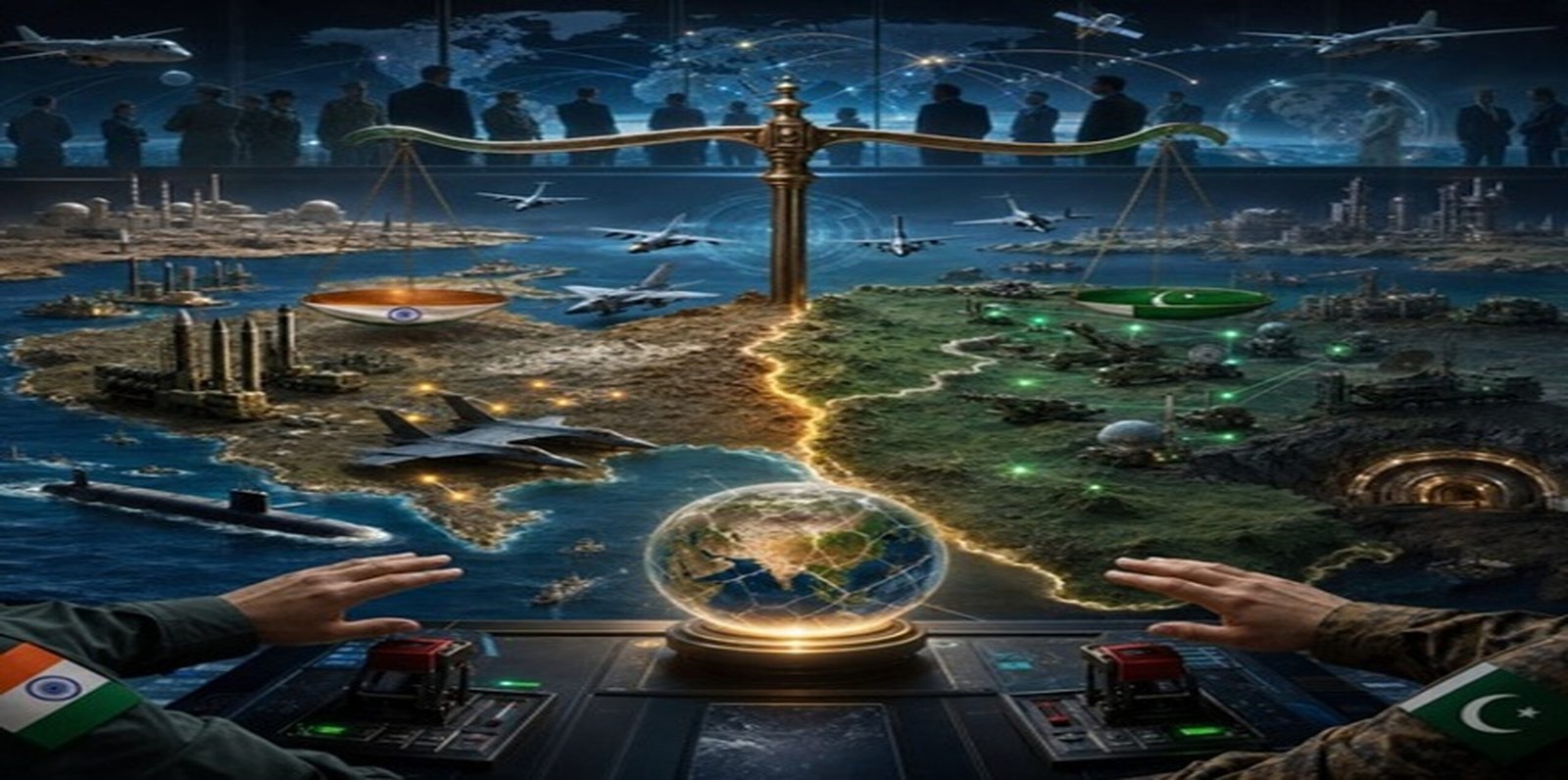
Indeed, the report brings into relief two distinct defence philosophies in South Asia. On one side lies India’s trajectory, characterised by the expansion of nuclear capabilities, the development of long-range delivery systems, and an evident aspiration to emerge as a major strategic power on the global stage. On the other stands Pakistan’s policy framework, anchored in the principle of minimum credible deterrence—a posture that emphasises sufficiency, reliability, and strategic restraint.
To regard the SIPRI report as merely a compilation of figures would, therefore, be a grave misreading. It is, in essence, a reflection of the shifting strategic landscape of South Asia—one in which the pursuit of power, the imperatives of defence, regional anxieties, and the intricate dynamics of global politics converge and intertwine.
According to SIPRI, Pakistan accumulated fissile material during 2025—a development that some observers interpret within the context of long-term defence planning. It would, however, be misleading to construe this as indicative of any immediate expansion of nuclear weaponry or an acceleration of an arms race. Rather, it may be more accurately understood as part of a cautious and measured strategy aimed at preserving defensive capability amidst a changing regional security environment. Fissile material, in this sense, constitutes a silent strategic reserve—an asset that, while dormant, retains the potential to reinforce national defence should circumstances so require.
The brief military flare-up between Pakistan and India in May 2025 served as a stark reminder of the fragile equilibrium that underpins the nuclear environment of South Asia. Though the confrontation remained contained, and both states exercised a discernible measure of restraint—diplomatic as well as military—to prevent its escalation, the episode nevertheless illuminated a sobering truth: that even a minor crisis between two nuclear-armed powers may swiftly assume a gravity that commands global concern.
It was, in essence, a moment of reckoning. For the true test of nuclear capability lies not in the mere possession of arms, but in the discipline, prudence, and sense of responsibility displayed in moments of strain. The peace of South Asia rests upon this delicate balance—one in which preparedness for defence must coexist, almost paradoxically, with an unyielding commitment to the avoidance of war.
This juncture also provides an intellectual bridge to the broader strategic discourse and offers a natural progression into the subsequent findings of the report. According to the latest assessment, Pakistan accumulated fissile material during 2025—an action that certain defence observers interpret within the framework of long-term strategic planning. To view this development solely through the prism of nuclear expansion or an arms race would, however, be to oversimplify a far more intricate reality. Rather, it may be understood as part of a cautious and calibrated approach, designed to sustain defensive capability and prepare for the uncertainties of an evolving regional security environment.
Fissile material, within any nuclear programme, constitutes a critical strategic component—one that may, when circumstances demand, reinforce a nation’s defensive posture. Yet its significance cannot be measured by quantity alone. It must be assessed in relation to its intended use, its regulation, the integrity of command-and-control structures, and the broader architecture of national defence policy. It is for this reason that nuclear-armed states do not define their strength by the mere accumulation of weapons, but by the equilibrium they maintain, the credibility they project, and the deterrent effect they sustain.
The events of May 2025, revisited in this light, acquire a deeper resonance. They reaffirm the fundamental principle that the essence of nuclear power lies not in its display, but in its restraint. In a region where strategic mistrust has often coexisted with geographic proximity, even a limited confrontation carries within it the latent risk of disproportionate consequences. Thus, the preservation of peace demands not only readiness, but also reflection; not only capability but also caution.
India’s contemporary defence posture has, in recent years, evolved beyond the confines of conventional land and air capabilities, assuming the contours of a far broader strategic design. The development of canisterised missile systems—rendering them more secure, mobile, and capable of rapid deployment—the expansion of sea-based nuclear assets, and the advancement of long-range intercontinental delivery systems collectively signal a decisive shift in strategic orientation.
These developments suggest that India’s nuclear doctrine is no longer circumscribed by immediate regional contingencies. Rather, it appears increasingly informed by a desire for extended strategic reach and a more pronounced role within the wider balance of global power. The emphasis upon long-range missile systems, in particular, indicates an ambition to project influence beyond the immediate theatre of South Asia, thereby aligning national capability with broader geopolitical aspirations.
The enhancement of sea-based nuclear capability forms a pivotal element of this strategy. Submarine-based platforms, by virtue of their survivability and concealment, provide a more assured second-strike capability—thereby reinforcing deterrence through resilience. It is for this reason that the major nuclear powers of the world have long accorded central importance to maritime strategic assets within their defence doctrines.
Thus, the augmentation of India’s missile technology, naval nuclear systems, and long-range capabilities is not merely an exercise in military modernisation. It represents a more profound strategic journey—one in which South Asia is increasingly drawn into the wider currents of great-power competition. In such a milieu, it becomes imperative for all states within the region to pursue not only strength, but also balance, responsibility, and a steadfast commitment to peace.
Pakistan, for its part, has consistently articulated that it does not seek to partake in an unrestrained arms race. The central objective of its nuclear policy remains the preservation of strategic stability and the maintenance of a credible defensive capability sufficient to deter any potential aggression. Its position rests upon a principle both pragmatic and profound: that the purpose of power is not to make war possible, but to render it less likely.
Within this framework, Pakistan’s policy of credible minimum deterrence assumes particular significance. It is a doctrine that does not aspire to numerical parity or excess, but to sufficiency—maintaining a level of capability adequate to compel any adversary to weigh, with utmost seriousness, the consequences of hostile action. In this measured restraint lies not weakness, but a deliberate and considered strategy aimed at sustaining equilibrium in a region where the margin for miscalculation remains perilously thin.
This policy, in its essence, embodies a deliberate equilibrium between the acquisition of power and the judicious employment of limited means. For Pakistan, the imperatives of national security do not lie in entering an unbounded contest of arms, but rather in sustaining—despite finite resources—a defensive capability sufficient to safeguard regional stability, preserve sovereignty, and ensure the integrity of national defence. In this conception, strategy is not measured by excess, but by sufficiency; not by rivalry, but by restraint.
Accordingly, the axis of Pakistan’s nuclear doctrine rests not upon numerical expansion, but upon balance; not upon competition, but upon deterrence; not upon aggression, but upon the assurance of defence. It is a posture that seeks equilibrium rather than escalation, and stability rather than spectacle.
Within this delicate nuclear landscape of South Asia, the role of the international community cannot remain confined to detached observation or the issuance of perfunctory expressions of concern. A far greater responsibility presents itself: to uphold the principles of strategic balance, non-proliferation, and enduring peace within a region whose sensitivities extend well beyond its borders. Pakistan has, in this regard, urged the major powers to subject the expansion of India’s nuclear capabilities, the development of advanced weaponry, and their potential regional and global ramifications to careful and impartial scrutiny.
The transfer of advanced defence technology, if undertaken without due regard for broader security imperatives, transparency, and responsible oversight, risks unsettling regional balances and introducing new uncertainties into the fabric of global peace. The obligations of powerful states cannot be discharged merely through the provision of military assistance or technological cooperation; they must also reckon with the far-reaching consequences of such actions, and the precedents they establish.
Pakistan’s appeal, therefore, is not merely a diplomatic utterance, but an invocation addressed to the conscience of the international order. It is a reminder that, in a region as finely poised as South Asia, the preservation of strategic balance is a shared responsibility. For in the nuclear age, peace cannot be secured by the equilibrium of arms alone; it depends equally upon responsible conduct, transparency of intent, and the steady cultivation of mutual confidence.
According to prevailing estimates, India is believed to possess approximately one hundred and ninety nuclear warheads, while Pakistan maintains a stockpile of roughly one hundred and seventy. Yet such figures must not be mistaken for definitive truths. Nuclear capabilities are, by their very nature, shrouded in secrecy, and the assessments of international institutions are typically derived from open-source intelligence, satellite observation, and analytical inference. They provide, at best, an informed approximation rather than a complete and final reckoning.
Indeed, the true measure of nuclear strength cannot be reduced to a simple tally of warheads. It resides, rather, in a constellation of factors: the degree of operational readiness, the manner of deployment, the sophistication of missile systems, the resilience of command-and-control structures, and the capacity for rapid and credible response. A smaller but more secure and effective arsenal may, in certain circumstances, command greater strategic weight than a larger yet less coherent one.
Thus, behind the veil of numbers lies a more intricate narrative—one not merely of quantity, but of capability, doctrine, and intent. In the nuclear landscape of South Asia, statistics retain their relevance, yet the more profound question concerns the purpose they serve: under what doctrine they are maintained, towards what ends they are directed, and within what balance they are intended to operate.
In this light, the estimates offered by international research bodies provide a valuable point of departure for understanding the region’s nuclear condition. Yet a fuller comprehension demands that such figures be read alongside the strategic philosophies, defence policies, and broader security considerations that animate them.
Pakistani defence analysts maintain that, notwithstanding constrained economic means, the country has developed its defensive capabilities to a level sufficient to respond effectively to any prospective aggression. This confidence is not a mere flourish of political rhetoric; it is grounded in years of sustained scientific endeavour, careful strategic planning, and accumulated operational experience.
Pakistan has, within its defence framework, accorded primacy not to numerical accumulation but to quality, self-reliance, and effectiveness. Even within the limits of modest resources, it has fashioned a system that is not only operationally credible but also adaptable to the shifting contours of contemporary security challenges. Notably, advancements in missile technology, surveillance systems, and rapid-response capabilities have contributed to the emergence of Pakistan as a dependable defensive force.
At the heart of Pakistan’s defence philosophy lies a principle both simple and exacting: that national security is not secured through abundance alone, but through sound strategy, technical competence, and judicious decision-making. It is this principle that has guided the structuring of its capabilities, ensuring that they remain sufficient to uphold deterrence against any potential threat.
In this sense, Pakistan’s strategic outlook may be said to reflect a doctrine of strength through simplicity—a conscious avoidance of excess in favour of balance, and of competition in favour of credibility. The aim is not to outmatch, but to endure; not to dominate, but to defend.
While estimates suggest that India possesses approximately one hundred and ninety nuclear warheads, a number of defence analysts contend that such figures may not fully capture the breadth of its actual capability. They point instead to the scale of India’s nuclear infrastructure, the presence of multiple reactors, its capacity for fissile material production, and the tenor of its long-term strategic planning—all of which indicate a potential that may extend beyond current estimations.
India’s nuclear programme, therefore, cannot be understood solely in terms of existing stockpiles. It appears to be underpinned by a sustained and forward-looking strategic vision—one that encompasses fuel production, the advancement of missile systems, the expansion of sea-based capabilities, and the anticipation of future defence requirements. It is this breadth that, in the view of some observers, introduces a critical question for the balance of power in South Asia.
Yet, as ever, the true assessment of nuclear capability must transcend numerical indicators. It must take account of the overarching strategic architecture, the objectives of defence policy, the integrity of command-and-control systems, and the wider context of regional security. While the expansion of India’s programme may reflect its evolving defence priorities, it also raises the concern that, in the absence of greater transparency, confidence-building measures, and responsible conduct, such growth may engender new asymmetries and uncertainties within an already sensitive region.
At the heart of Pakistan’s nuclear doctrine lies a principle not of numerical aggrandisement, but of preserving a credible and effective deterrent. Its purpose is not to be drawn into an unbridled contest of accumulation, but rather to sustain a defensive capability sufficiently robust to dissuade any conceivable act of aggression.
This conception rests upon the philosophy of deterrence itself: the conviction that war is best averted when a potential adversary is made fully cognisant of the grave consequences that would follow any hostile design. Within such a framework, primacy is accorded not to the sheer tally of armaments, but to their reliability, security, readiness, and the assured capacity for timely response.
The absence of a clear and formal response from India regarding the alleged deployment of nuclear warheads constitutes, in its own right, a matter of consequence. Some observers interpret this silence as a measured exercise in diplomatic prudence; others regard it as an effort to keep a sensitive issue beyond the glare of international scrutiny.
Conversely, Pakistan’s cautious and diplomatic posture underscores a subtle yet vital truth: in nuclear affairs, not only declarations but the very choice of words assumes strategic significance. In such a milieu, silence itself may serve as a message, for in this austere contest of power, every proclamation—and every studied omission—carries its own meaning.
In contemporary nuclear strategy, submarine capability occupies a position of exceptional importance. Concealed within the depths of the oceans, these platforms, though unseen, exert a decisive influence upon the balance of power.
India’s advancement in nuclear-capable submarines thus lends a new dimension to its defence architecture, affording it the prospect of a second-strike capability. It is for this reason that the world’s major nuclear powers have long regarded maritime strength as a foundational pillar of their strategic doctrine.
The most advanced expression of nuclear defence is the concept of the nuclear triad, whereby capability is maintained across land, air, and sea. Such a system fortifies the assurance of an effective retaliatory response, even in the aftermath of a devastating first strike.
India’s movement in this direction signals an ambition to render its defence posture more comprehensive and multidimensional. Yet the expansion of such capabilities inevitably raises strategic questions for other states in the region, for each new increment of power brings with it an ever more delicate challenge of preserving equilibrium.
Within any nuclear programme, the choice of fuel constitutes a matter of strategic import. According to SIPRI, India is placing particular emphasis upon plutonium, a decision reflective of its long-term defence planning.
A plutonium-centred approach bears resemblance to the strategies adopted by certain states, notably Israel, while others—including the United States, Russia, China, France, the United Kingdom, and Pakistan—employ both uranium and plutonium. Such variation in fuel selection mirrors the differing priorities and strategic imperatives of each nation.
A notable shift in India’s defence outlook is the growing emphasis upon missile systems of extended range. Weapons capable of reaching distant regions, particularly within a state of China’s scale, point to a significant evolution in strategic thinking.
This development suggests that India is no longer viewing its nuclear capabilities solely through the prism of South Asia, but rather within the broader canvas of the global strategic environment.
India’s expanding defence budget further reflects both its military priorities and its aspiration to assume a more prominent role on the world stage. With expenditures reaching 92.1 billion dollars, it now stands among the leading defence spenders globally.
While sustained increases in defence spending may foster technological advancement, research, and military capability, they may also affect the delicate balance of power and heighten security concerns within the region. In a sensitive theatre such as South Asia, each substantial rise in military expenditure carries with it profound political and strategic implications.
Across the world, numerous states are augmenting their acquisition of advanced weaponry to meet evolving defence requirements. Rising expenditures in countries such as Pakistan, Saudi Arabia, Qatar, and Ukraine reflect this broader global trend.
Yet a distinguishing feature of Pakistan’s approach is its growing reliance upon indigenous defence production. By prioritising domestic research, industry, and technological self-reliance over external procurement, Pakistan charts a course of strategic independence.
Such a policy not only alleviates economic pressures but also strengthens defence autonomy. The cultivation of indigenous capability is, in essence, a quiet revolution—one that endows a nation with enduring security and self-confidence.
The nuclear landscape of South Asia is not merely a ledger of missiles, warheads, and defence budgets; it is a tableau of enduring tension between power and fear, strategy and responsibility. Each new strategic development in this region serves as a solemn reminder that between peace and power there exists a most fragile line—one whose crossing could yield consequences not only regional but global in their gravity.
These realities attest that South Asia now stands at a pivotal moment in its history. Should the balance of power be preserved with wisdom, prudence, and responsibility, the region may yet script a new chapter of progress, cooperation, and stability. But if this delicate equilibrium is disturbed, history may once again inscribe its pages with the ink of blood and tragedy.
The greatest lesson of the nuclear age remains this: true strength resides not in the possession of weapons, but in the restraint to refrain from their use. Wisdom demands that nuclear capability serve not to open the gates of war, but to safeguard the gates of peace—and that power remain ever subordinate to reason.
For in the final reckoning of history, victory is not that which is won upon the battlefield, but that which is secured in the realm of intellect, judgement, and foresight. The greatness of nations is measured not solely by their military might, but by their capacity to employ their strength in the service of peace, stability, and the preservation of humanity.
Herein lies the essence of South Asia’s future: that balance be maintained that prudence prevails, and that nuclear capability stands not as a symbol of fear, but as a guarantor of peace.