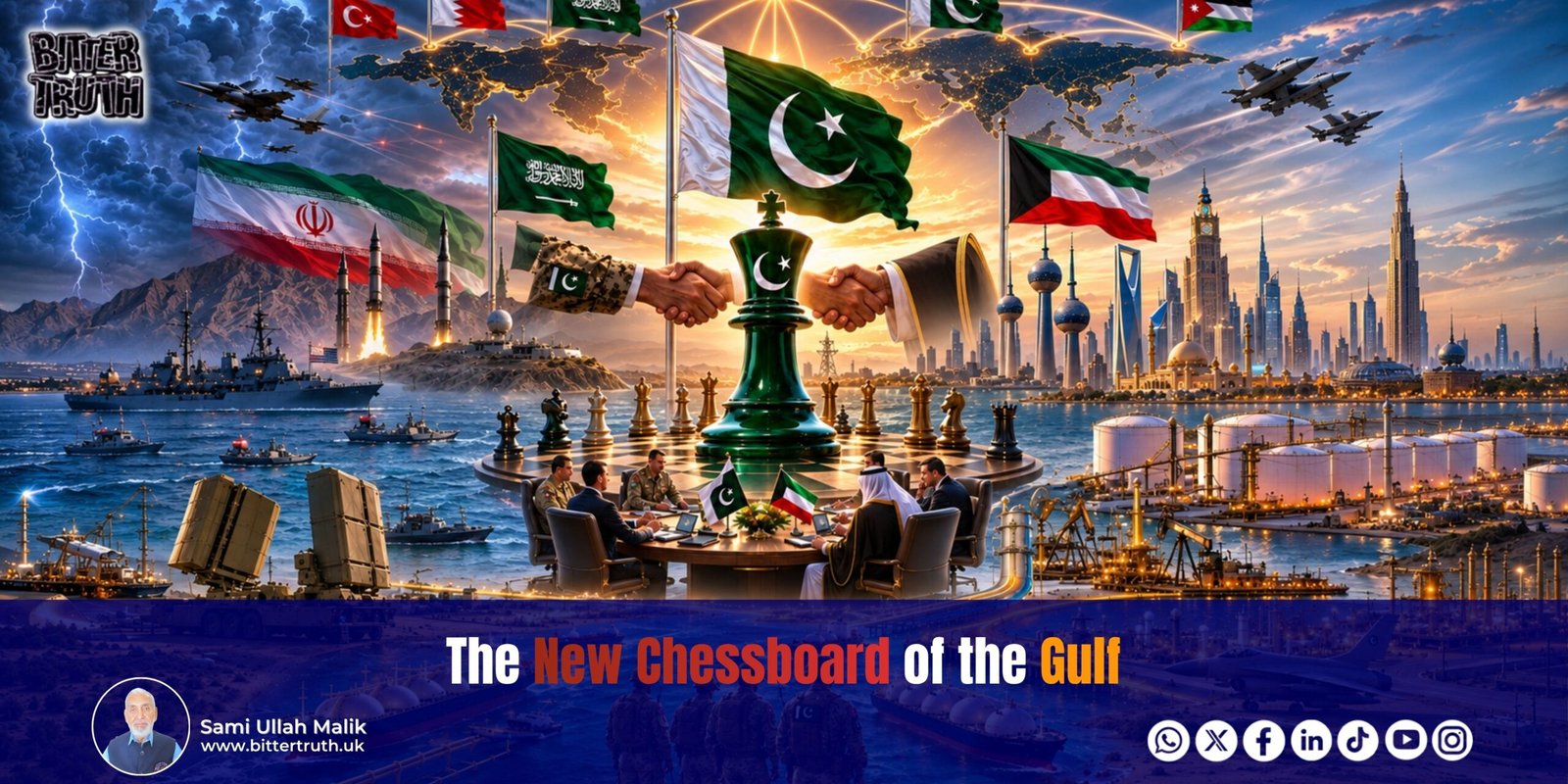
The New Chessboard of the Gulf: Power, Energy and Pakistan’s Strategic Choice
Oil, Security and Strategy: The New Architecture of the Gulf

When the pages of history gather within their breast the struggles of civilisations, the ambitions of empires, and the strategic designs of nations, a perennial question lingers in their margins: what, in truth, constitutes the wellspring of power—steel, statecraft, or civilisational harmony?
If one peers through the apertures of time and surveys the contemporary horizon, the politics of the Middle East and South Asia present themselves as a grand chessboard—one upon which every piece appears, at first glance, immobile, yet is in fact charged with latent motion. Beneath the veneer of stillness lies a choreography of calculated intent.
Modern politics is no longer merely a contest of interests; it has become an all-encompassing theatre of ideas. In this arena, states marshal not only material resources but also intellectual and moral frameworks in pursuit of survival, sovereignty, and dignity. As the Middle East once again assumes its place at the fulcrum of global affairs, Pakistan finds itself at a critical confluence—where geography, belief, economics, and power politics intertwine with uncommon intensity.
Pakistan, at once a nuclear power and an ideological state, stands today at a renewed strategic crossroads. Its geographical location, long the source of both opportunity and vulnerability, confers upon it a singular role within this unfolding contest. It is not merely a participant but, in many respects, a hinge upon which broader regional dynamics may turn.
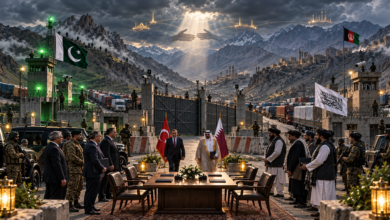
Within this wider political and military tableau, the prospect of an expanded defence agreement with Kuwait emerges as a new chapter—indeed, a fresh dimension. It is a chapter in which Islamic fraternity, strategic calculation, and the subtle manoeuvres of global power converge upon the same page. The implications of such an arrangement are unlikely to remain confined to bilateral relations; rather, they possess the capacity to reshape the political kinetics of the wider region.
Viewed through a more reflective lens, this prospective accord appears as a confluence of principles and pragmatism—where doctrines of just conduct, the equilibrium of power, and strategic foresight appear to coalesce. The ongoing preliminary discussions between Pakistan and Kuwait are not merely the scaffolding of a defence pact; they may be read as the prelude to a multidimensional partnership, one in which energy imperatives and military cooperation stand as complementary forces.
According to several well-placed sources, early-stage deliberations are underway concerning an expanded defence framework between the two states. Yet these conversations extend beyond the narrow confines of military collaboration. They are interwoven with considerations of energy cooperation and reciprocal investment. One might say, without undue flourish, that this is an agreement in which the scent of oil mingles with the acrid trace of gunpowder.
And yet, this diplomatic vine has not fully borne fruit. The intensifying tensions between the United States and Iran threaten to entangle the process in a web of complications. Such a development serves as a reminder—if any were needed—that no decision in international politics is ever taken in a vacuum. Each step is conditioned, constrained, and at times distorted by the wider contest among great powers.
Within the canon of Islamic political thought, the principle of ta‘āwun ‘alā al-birr—cooperation in the pursuit of virtue—finds a subtle echo in this context. When examined through the prism of Islamic military philosophy, these negotiations may be understood as a contemporary expression of the Qur’anic injunction to prepare and maintain strength. It is both the right and the duty of a state to fortify its defensive capacity; yet such fortification must remain tethered to prudence and guided by a sense of proportion.
The exchange of defence cooperation for energy security and investment reflects a delicate equilibrium—one in which material resources and military capability sustain one another. However, the pressures exerted by global actors—most notably the fraught relationship between Washington and Tehran—subject this equilibrium to a severe test.
Geographically, the Gulf region constitutes the lifeblood of global energy flows. Pakistan, in seeking deeper engagement with this vital artery, stands at a threshold that promises both opportunity and peril in equal measure. In such a landscape, every diplomatic step must be measured, deliberate, and acutely aware of its wider ramifications.
Within the corridors of Islamabad, one senses a subdued unease. The mutual defence agreement concluded with Saudi Arabia in the preceding year now presents itself as something of a double-edged sword. Pakistan’s relationship with the Kingdom is not merely political; it is imbued with spiritual and civilisational significance. Yet within Islamic strategic thought, the principle of walā’ wa barā’—of allegiance and distance—demands a balance of exceptional subtlety.
The defence relationship between Pakistan and Saudi Arabia is rooted in decades of shared history: religious affinity, reverence for the sanctity of the Two Holy Mosques, and sustained military cooperation. However, the enduring tensions between Iran and Saudi Arabia—particularly as manifested in the conflict in Yemen and the activities of the Houthi movement—have placed Pakistan at a delicate juncture.
Following attacks attributed to Iranian-aligned Houthi forces upon Saudi territory, Pakistan’s declaration—that an assault upon the Kingdom would be regarded as an assault upon Pakistan itself—resonated powerfully across diplomatic circles. It was a statement of solidarity, certainly; yet it also carried within it the latent risk of entanglement in a broader conflict.
Herein lies the central challenge: to harmonise loyalty with prudence, ensuring that emotional affinity does not eclipse strategic judgement. Pakistan’s stance reflects fidelity, but it also reveals the faint tremor of potential escalation. It is as though the state advances along a path where each step must be placed with utmost care.
Islamic political ethics call for balance, justice, and reconciliation within the broader community. Yet in the realm of practical politics, such equilibrium is akin to walking a tightrope—demanding not only conviction but also exceptional dexterity.
A defining feature of Pakistan’s foreign policy has been its attempt to maintain a balanced posture between Iran and the Gulf states. This role is not merely a diplomatic convenience; it is also informed by a broader aspiration towards unity, trust-building, and mediation within the Muslim world. However, should a more expansive defence agreement with Kuwait come to fruition, a pertinent question arises: can Pakistan continue to function as an impartial interlocutor, or will it increasingly be perceived as aligned with a particular strategic bloc?
The logic of geopolitics suggests that mediation retains its efficacy only so long as the mediator commands the confidence of all parties. Should a state develop deep military commitments with one side, the apprehensions of the other are bound to intensify, thereby unsettling the delicate balance of diplomacy. It is at precisely this juncture that statecraft must weigh emotional affiliations, historical ties, and national interests upon the same finely calibrated scale.
History offers its own counsel. The Treaty of Hudaybiyyah stands as a luminous example wherein what appeared to be a limited concession ultimately revealed itself as an act of profound strategic wisdom. It reminds us that the true mastery of power lies not solely in its overt display, but in the capacity to shape circumstances with foresight and restraint.
If Pakistan seeks to foster trust between Iran and the Gulf states, it must draw upon precisely this tradition of prudence, sagacity, and long-range vision.
Thus, the essential question is not merely whether Pakistan enters into defence cooperation with a given state. Rather, it is how it sustains its diplomatic identity, preserves its civilisational linkages, and contributes to regional stability. Only a carefully balanced strategy can secure for Pakistan a position in which it remains a reliable partner to its allies while also serving as an effective conduit for dialogue and reconciliation within the wider Muslim world.
Historically, defence cooperation between Kuwait and Pakistan has remained limited in scope, encompassing training programmes and joint exercises. Yet shifting regional dynamics have begun to propel this relationship towards a broader strategic partnership. Kuwait appears inclined to elevate its defence ties with Pakistan to a level comparable with its longstanding military engagement with Saudi Arabia—encompassing land forces, air power, drone technologies, air defence systems, and other advanced capabilities.
From a strategic standpoint, Pakistan’s military capacity could serve as a significant force multiplier for Kuwait. Its seasoned armed forces, extensive operational experience, and indigenous defence production capabilities render it a partner of considerable value.
For Islamabad, however, the decision is far from straightforward. It is not merely a question of military cooperation, but one that intersects with resource allocation, regional obligations, and national security priorities. Pakistan’s defence relationship with Saudi Arabia—shaped over decades by historical, religious, cultural, and political bonds—cannot simply be replicated in a new context.
The Discipline of Power: Strategic Prudence, Defence Cooperation, and Pakistan’s Emerging Role in a Changing Gulf Order
In the philosophy of military strategy, particularly within the classical traditions of political thought, no great undertaking has ever been sustained by force alone. The true measure of strategic wisdom lies in the careful balance between ambition and restraint, between capability and caution, and between the immediate demands of the present and the enduring interests of the future.
History bears witness that successful leadership has rarely been defined by the reckless display of strength. Rather, its finest examples have been those in which power was exercised gradually, deliberately, and with a profound understanding of circumstance. The greatest statesmen have known that victory is not always achieved through dramatic gestures, but often through patience, preparation, and the quiet accumulation of advantage.
It is within this broader philosophy that any prospective defence cooperation between Pakistan and Kuwait ought to be understood—not as a sudden military alignment, but as an evolutionary process built upon confidence, shared training, technological partnership, and gradual strategic coordination. Durable alliances are not forged overnight; they are cultivated through trust, tested through experience, and strengthened through mutual understanding.
A broader military partnership may undoubtedly offer considerable defensive advantages to both nations. Yet history has repeatedly demonstrated that expansion without careful calculation can create burdens as significant as the benefits it seeks to secure. Excessive commitments may place pressure upon military resources, complicate strategic priorities, and gradually narrow a nation’s freedom of action.
For Pakistan, therefore, the wiser course would be to pursue a balanced approach—one that recognises Kuwait’s legitimate security interests while remaining firmly aligned with Pakistan’s own national priorities. The true elegance of power does not lie merely in its possession or its display; it lies in its disciplined, proportionate, and purposeful application. Strength becomes respected not when it is constantly revealed, but when it is governed by judgement.
According to Pakistani security sources, although Kuwait’s aspirations for defence cooperation are broad and comprehensive, Islamabad is not, at this stage, considering the permanent deployment of combat forces. This position should not be interpreted as hesitation, but rather as an expression of careful military and diplomatic calculation.
Pakistan seeks neither to restrict the possibilities of cooperation nor to bind itself to commitments that may, in time, impose constraints upon its broader national objectives. It resembles a lamp whose flame is guarded against the winds—not because its light is weak, but because its direction must remain constant.
The principle of strategic gradualism suggests that major decisions should be approached through stages, with full awareness of circumstances and with a constant regard for wider interests. In this respect, Pakistan’s measured posture reflects an attempt to fulfil its defence responsibilities while avoiding unnecessary entanglements that could diminish its strategic flexibility.
There exists a fundamental distinction in every defence doctrine between safeguarding and aggression. The legitimate purpose of military strength is not domination, expansion, or coercion, but protection, stability, and the preservation of lawful security.
Pakistan’s reluctance to immediately commit combat forces reflects precisely this understanding: that military capability is not merely an instrument of display, but a responsibility entrusted with the protection of national interests and regional peace.
Thus, the central challenge for Pakistan in any future defence cooperation with Kuwait is not the possession of military capability, but the wisdom with which that capability is employed. The dignity of power survives only when it is guided by foresight rather than emotion, and by necessity rather than ambition. It is this discipline that transforms a state from merely a military actor into a responsible contributor to regional stability.
The Language of Diplomatic Silence: Strategy Behind the Unspoken Word International reports suggest that discussions between Pakistan and Kuwait have taken place, although both governments have maintained official discretion regarding the details. The absence of formal confirmation from relevant authorities in both countries indicates that the matter remains within the delicate stages of consultation, evaluation, and diplomatic consideration.
In the theatre of international affairs, silence is not always an absence of communication. At times, silence becomes a language of its own—a language whose meanings are conveyed not through declarations, but through restraint, timing, and careful calculation.
Every announcement in statecraft carries consequences. It can influence political perceptions, shape regional reactions, and invite pressures from external powers. For this reason, sensitive defence matters are rarely handled through haste or public speculation.
A single careless statement may disturb negotiations, alter perceptions, and create unnecessary turbulence in an already fragile regional environment. Strategic silence, therefore, is not a sign of weakness; rather, it is often the protective veil behind which serious decisions mature before they emerge into public view.
Throughout political history, wisdom, discretion, and careful judgement have remained essential elements in matters affecting collective security. In strategic planning, the preservation of information, the maintenance of uncertainty, and the selection of the appropriate moment have often determined success or failure.
Seen from this perspective, the cautious diplomatic posture of Pakistan and Kuwait suggests that both nations are seeking to approach any significant decision not through emotion or urgency, but through a careful assessment of wider interests, regional balance, and future possibilities.
This quiet diplomacy is, therefore, not an empty space. It is a deliberate strategy in which fewer words may carry greater meaning, where decisions are shaped away from public spectacle, and where patience itself becomes an instrument of statecraft.
The Changing Gulf Security Landscape: From Dependence to Diversification Over recent years, the security outlook of the Gulf states has undergone a notable transformation. Nations that once relied predominantly upon the protective umbrella of a single external power have increasingly begun exploring diversified partnerships, regional cooperation, and alternative avenues of security.
This shift is not merely a response to immediate military concerns; it reflects a deeper transformation in the geopolitical environment. States today seek greater strategic independence, attempting to build relationships with multiple partners rather than placing their entire security architecture upon one foundation.
Within this changing landscape, Pakistan has emerged as a significant potential partner for Gulf states due to its military experience, trained armed forces, defence capabilities, and strategic standing.
Its relevance extends beyond conventional military cooperation. Pakistan is increasingly viewed as a complementary power—one capable of contributing to regional balance through experience, capability, and institutional knowledge.
The broader principle behind this approach is the recognition that modern security requires resilience through diversity. Nations strengthen their defence posture not by depending exclusively upon a single protector, but by cultivating multiple relationships capable of reinforcing national stability.
From the perspective of political thought within the Muslim world, such cooperation may also be viewed through the broader themes of mutual responsibility, collective security, and shared interests. Throughout history, defence partnerships have represented not merely expressions of military strength, but efforts to preserve stability and collective confidence.
Yet the success of such arrangements will ultimately depend upon the manner in which regional states maintain equilibrium. Defence cooperation founded upon wisdom, trust, and clearly defined national interests can become a force for stability. But if transformed into a contest of competing power blocs, it may produce new tensions rather than lasting security.
The defining requirement of the present age is therefore balance: strength accompanied by restraint, partnership accompanied by responsibility, and unity accompanied by strategic judgement.
Pakistan’s Strategic Value: A Bridge Between Regions and Powers
Within Kuwaiti security and policy circles, Pakistan is regarded as a partner possessing a rare combination of military capability, historical connections, and diplomatic balance.
Its importance does not arise solely from its armed strength; it also derives from the wider network of cultural, political, and historical relationships that shape its regional identity.
Pakistan’s longstanding association with Saudi Arabia, its position within the Muslim world, and its ability to maintain working relations with major international powers provide it with a distinctive strategic character.
This combination allows Pakistan to function not merely as a military partner, but potentially as a bridge—one capable of facilitating communication between regional actors and wider global powers.
On one side, Pakistan understands the security concerns of Gulf states; on the other, it possesses the diplomatic experience required to engage with broader international realities. This dual capacity gives it significance as a potential stabilising force within a complex regional order.
From the perspective of strategic thought, Pakistan’s importance also lies in the coexistence of conviction and capability. When military strength is governed by wisdom, responsibility, and restraint, it can serve not only upon the battlefield but also within the arena of diplomacy. Yet these very strengths impose a profound responsibility. The preservation of equilibrium among diverse relationships is an exceptionally delicate undertaking.
The true test for Pakistan, therefore, is not measured by the number of alliances it establishes, but by the wisdom with which it manages them.
A successful state is not one that merely demonstrates power; it is one that employs power responsibly—to preserve peace, advance stability, and maintain a balanced diplomatic presence in a turbulent world.
The Architecture of Strategic Partnership: Energy, Security, and Pakistan’s Place in a Changing Regional Order
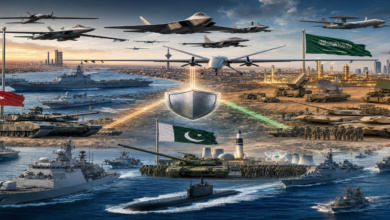
The prospect of a joint defence understanding among Türkiye, Pakistan, and Saudi Arabia represents a significant development within the shifting political and military landscape of the region. Should Bahrain and Jordan also become part of such an arrangement, it would transcend the boundaries of a limited security agreement between individual states and gradually assume the character of a broader regional partnership—one whose influence would extend beyond military considerations into the spheres of diplomacy, economics, and political alignment.
Such a potential framework possesses the capacity to reshape the regional balance of power. In the contemporary world, nations are increasingly recognising that security cannot rest solely upon dependence upon external protectors. Instead, they are seeking resilience through cooperation, shared capabilities, and partnerships rooted in mutual interest.
Yet the central question remains: would such an association emerge merely as a response to immediate security requirements, or would it be founded upon a deeper convergence of political vision, historical understanding, cultural affinity, and economic purpose?
History teaches that alliances endure not simply because states possess common adversaries, but because they share a common sense of direction. The strongest partnerships are not built upon fear alone; they are sustained by trust, purpose, and a recognition of mutual destiny.
Within the broader traditions of political thought, alliances have never represented merely the accumulation of power. They have also been associated with principles of responsibility, justice, and collective security. In this respect, a potential regional partnership may be viewed as an expression of a wider commitment—not simply to demonstrate strength, but to contribute towards stability and the protection of legitimate interests.
However, history offers a clear warning: military agreements alone rarely survive the passage of time unless they are supported by a foundation of confidence, shared objectives, and enduring strategic understanding.
The success of any emerging defence framework will therefore depend upon whether participating nations conceive it not merely as a military arrangement, but as a balanced partnership. If defence cooperation is accompanied by economic collaboration, political coordination, and deeper human connections, it may become a meaningful stabilising force. But if it remains confined to temporary strategic necessity, its longevity will inevitably remain uncertain.
Energy Security and National Strength: The Economic Foundations of Defence
In the modern era, the concept of national security has expanded far beyond the battlefield. Military capability remains important, yet economic resilience, energy security, and access to essential resources have become equally vital pillars of national strength.
For Pakistan, defence partnerships are not solely instruments of security cooperation; they are also connected with the broader objectives of economic stability and national independence. The possibility of enhanced cooperation with Kuwait must therefore be understood within this wider framework—where defence partnership and energy security are not separate concerns, but interconnected elements of national strategy.
Pakistan’s energy challenges have long affected both its economic performance and its strategic position. Reliable access to fuel and energy resources is directly linked to industrial growth, economic momentum, and the capacity of a state to sustain its defence requirements.
Cooperation with an energy-rich nation such as Kuwait could provide Pakistan not only with greater security of supply but also with a stronger foundation for long-term economic planning.
Throughout history, energy has remained one of the decisive instruments of political influence. Nations that have managed their resources with foresight have often strengthened not only their economies but also their independence of decision-making.
For Pakistan, therefore, energy cooperation is not merely an economic necessity; it represents a strategic investment in national resilience. A strong defence cannot be maintained upon a fragile economic foundation.
Political wisdom has always recognised that prosperity and security are inseparable companions. A nation’s strength does not arise solely from the number of its weapons, but also from the stability of its economy, the welfare of its people, and its ability to sustain itself through internal capability.
In this broader sense, prosperity provides the foundation upon which security is built, while security protects the prosperity upon which national confidence depends.
Thus, energy and defence cooperation with Kuwait should not be viewed as an isolated bilateral arrangement, but as part of a wider national strategy in which economic stability, energy independence, and strategic autonomy reinforce one another.
Strategic Reserves and the Question of Self-Reliance
Kuwait’s proposal for shared fuel reserves may represent an important development in the economic and strategic relationship between the two countries. Such an initiative could expand existing energy cooperation while providing Pakistan with a stronger mechanism for managing future uncertainties.
In an age where energy requirements are directly connected with economic performance, industrial expansion, and national security, secure reserves of essential resources are no longer merely
commercial assets; they have become instruments of strategic stability.
Such cooperation could enhance Pakistan’s capacity for long-term planning, particularly if integrated with investment, infrastructure development, and broader economic reforms.
Yet, as with every strategic partnership, prudence remains essential. Excessive dependence upon any single external source may, over time, restrict a nation’s freedom of policy choice.
The enduring lesson of history is that cooperation becomes a source of strength only when it complements internal capability rather than replacing it. External partnerships may provide valuable support, but lasting power requires the strengthening of domestic foundations.
For Pakistan, therefore, cooperation with Kuwait in energy storage and defence presents significant opportunities. However, the success of this path will depend upon maintaining a careful balance between partnership and independence.
The true wisdom of statecraft lies in transforming external cooperation into an instrument of national strength, rather than allowing it to become a new form of dependency.
This energy initiative, therefore, is not merely a matter of storing fuel; it represents a broader chapter in national strategy, where economic security, defence preparedness, and independent decision-making converge into a single vision of national resilience.
The Final Measure: Power Guided by Wisdom
The entire landscape of possible defence and economic cooperation between Pakistan and Kuwait resembles a great river formed by many streams: diplomacy, military strategy, economic necessity, energy requirements, and historical commitments all flowing together.
The true challenge lies in giving these different currents a balanced direction.
For Pakistan, the essential task is to navigate a course that harmonises national priorities, regional responsibilities, and international realities while preserving sovereignty, dignity, and strategic freedom.
Political philosophy teaches that power must always remain subject to justice, wisdom, and responsibility. Geopolitical reality, meanwhile, demands that nations understand changing circumstances with clear vision and protect their legitimate interests.
The principles of strategic planning further remind us that strength is not measured merely by the quantity of weapons possessed, but by the quality of decisions made, the accuracy of priorities established, and the wisdom with which power is employed.
Pakistan’s path to success will therefore depend upon its ability to unite principle with practicality, conviction with knowledge, and capability with restraint.
If Pakistan succeeds in maintaining this balance, it may emerge not only as a stronger regional actor but also as a respected, responsible, and constructive participant in international affairs. However, history has always warned that the pursuit of power without moderation may transform opportunities into burdens. Nations have often discovered that ambition without judgement can turn promising roads into difficult passages.
The journey of strength has never been completed through power alone; it requires wisdom as its compass and foresight as its guide.
Pakistan now stands at a significant historical crossroads where each decision may influence the direction of generations to come. The question before it is not merely one of defence agreements or energy arrangements, but of national vision.
It must determine the role it seeks to play within a changing world: whether as a state carried by circumstances, or as a nation capable of shaping events through confidence, patience, and strategic understanding.
The choice before Pakistan is therefore profound: a future where knowledge accompanies conviction, where wisdom accompanies strength, and where national interest remains inseparable from responsibility.
The story, however, is far from complete. It continues to be written by the decisions of the present and the judgement of the future.
The coming years will reveal whether Pakistan merely responds to the currents of history or whether, with determination and foresight, it carves for itself a position of dignity and influence within the changing order of nations.
For ultimately, it is upon this delicate balance that the enduring success of states—and their place in the memory of history—is decided.