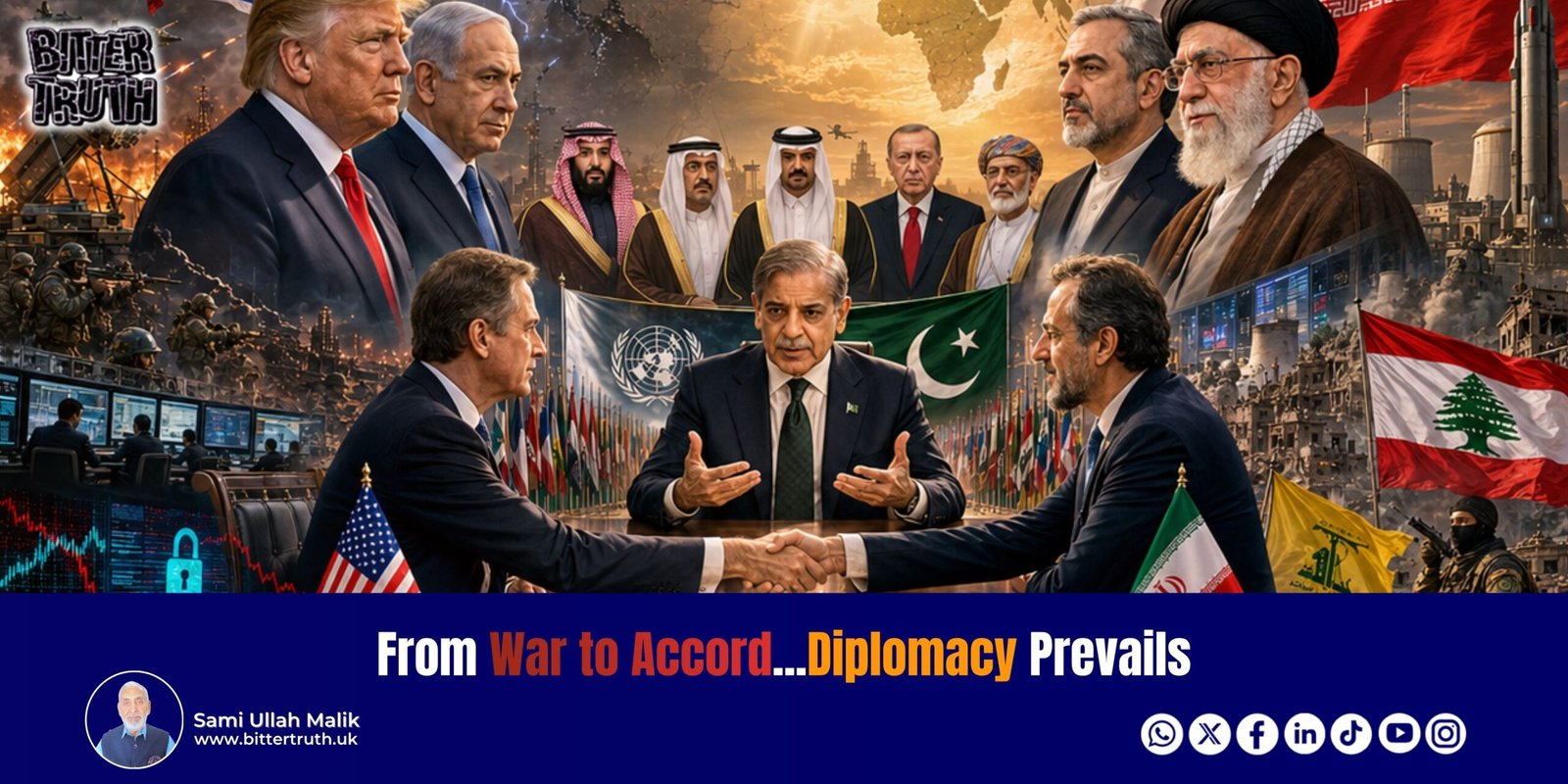
From War to Accord
Diplomacy Prevails

The contemporary global landscape makes increasingly plain that the Middle East is no longer a mere theatre of regional contestation; it has, rather, become a crucible in which the converging interests of the world’s great powers are tested and contested. In the third decade of the twenty-first century, the region has once again emerged as the fulcrum of international politics. The present study undertakes an examination of recent tensions and geo-political transformations within the Middle East, taking as its point of departure the joint military action undertaken by the United States and Israel against Iran—an episode that swiftly transcended regional confines to pose a grave peril to global stability itself.
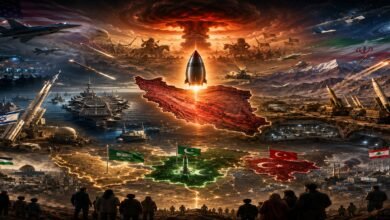
This outbreak of hostilities brought the fragile edifice of world peace to the very brink of catastrophe. It engendered a crisis of such magnitude that not only the equilibrium of international security but the foundations of the global economy were placed in immediate jeopardy. The confrontation, though ostensibly military in character, was undergirded by decades of accumulated political antagonism, ideological divergence, and deeply embedded strategic calculations.
The reverberations of this crisis were felt not merely across the region but throughout the international system, unsettling established balances of power. Notably, the unfolding events revealed how Iran, under acute military pressure, succeeded in transmuting adversity into diplomatic advantage. Concurrently, a significant diplomatic opening emerged, wherein Pakistan, through a judiciously calibrated and proactive engagement, assumed a pivotal role in averting what might otherwise have escalated into a global conflagration. Acting as a discreet yet effective intermediary, Pakistan contributed meaningfully to the de-escalation of tensions, thereby sparing the international community from a potentially devastating outcome.
This article offers a comprehensive appraisal of the crisis in its entirety—its historical antecedents, the dynamics of the conflict, the diplomatic endeavours undertaken, and, ultimately, the memorandum of understanding that paved the way for a tentative rapprochement between Iran and the United States.
Relations between Iran and the United States have remained persistently fraught since the Islamic Revolution of 1979. That upheaval not only reconfigured Iran’s domestic political order but also fundamentally altered its external alignments. A nation once counted among Washington’s closest allies was transformed, almost overnight, into one of its most resolute adversaries. Indeed, the roots of tension between Iran and the Western powers may be traced directly to the revolutionary moment that ushered in a sovereign and avowedly anti-Western polity. In the years that followed, Iran’s pursuit of defensive self-sufficiency, its nuclear ambitions, and its support for allied actors across the region elevated it to the status of a consequential—if controversial—power.
Israel, for its part, long regarding itself as a solitary yet resilient state within a volatile region, has consistently viewed Iran’s expanding influence as a strategic threat. This perception has been sharpened by concerns over Iran’s nuclear programme and its backing of resistance movements, particularly in Lebanon. Consequently, tensions between the two have frequently manifested in indirect confrontations and proxy conflicts. Over time, these frictions have intensified, assuming the form of sanctions, shadow wars, and diplomatic estrangement. In recent years, however, this latent hostility has given way to overt military confrontation.
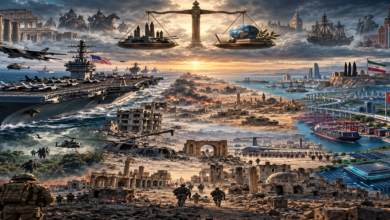
Historically, the Middle East has served as an arena for great-power rivalry, where the interplay of energy resources, geographical significance, and ideological divisions has perpetually fuelled instability. To comprehend the present crisis, one must resist the temptation to view it as a mere episode of warfare; rather, it ought to be understood as a strategic reconfiguration—one that has reshaped the very architecture of regional politics.
A glance at the historical and ideological backdrop reveals that, in the wake of the 1979 Revolution, Iran consciously distanced itself from Western influence. Between 1980 and 2020, the United States imposed successive waves of economic sanctions, while Israel designated Iran’s nuclear aspirations as an existential threat. According to data from international financial institutions, these sanctions have inflicted losses on Iran’s economy exceeding one trillion dollars. Additionally, hundreds of billions in Iranian assets have remained frozen abroad. Analytical reports further suggest that, following the collapse of the 2015 nuclear accord, tensions escalated by as much as sixty-five per cent.
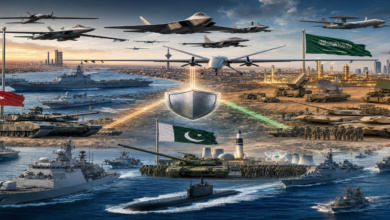
The joint operations conducted by the United States and Israel against Iran may be characterised as a coordinated and systematic campaign aimed at undermining Iran’s military, economic, and strategic capacities. These strikes targeted sensitive military installations, disrupted economic infrastructure, and sought to exert pressure upon Iran’s regional allies.
Such actions not only constituted a breach of international legal norms but also heightened the spectre of a large-scale regional war. The confrontation itself bore all the hallmarks of modern warfare: the deployment of advanced technologies, cyber operations, and precision air strikes. Iran’s strategic infrastructure was subjected to sustained assault, while extensive ground operations—equipped with sophisticated weaponry—were undertaken to weaken proxy networks. The encirclement of the Strait of Hormuz further exacerbated the crisis, inflicting severe damage upon the global economy. In essence, this was not a conventional war but a paradigmatic instance of hybrid warfare, wherein informational, economic, and military instruments were employed in concert.
The objective of these operations was to constrain Iran’s defensive capabilities and isolate it regionally. Yet the outcomes confounded expectations. Iran fortified its strategic posture, its allies responded with heightened coordination, and the theatre of conflict rapidly expanded into Lebanon and beyond. The situation teetered on the edge of a full-scale regional war, with far-reaching implications for global energy flows and economic stability.
Lebanon, in particular, assumed a central role in this unfolding drama. Resistance forces operating within its borders—widely regarded as aligned with Iran—became integral to the conflict, transforming the Lebanese front into a forward theatre of engagement. These forces maintained their defensive lines, compelling Israel to confront a form of asymmetric resistance that defied conventional military logic. Israeli operations within Lebanon signalled the widening scope of the war, ostensibly aimed at weakening resistance groups and extending territorial control. Yet the realities on the ground told a different story.
Far from being diminished, these resistance forces emerged more cohesive and resilient. Their strategic position improved, while Israel appeared increasingly strained in ensuring its own internal security. The unexpected intensity of resistance, coupled with mounting domestic security concerns, underscored a critical truth: traditional military superiority no longer guarantees decisive outcomes. Moreover, urban warfare exerted a profound influence upon global public opinion. Civilian casualties in Lebanon rose sharply, while large-scale displacement occurred along Israel’s northern front—developments that further complicated the moral and political dimensions of the conflict.
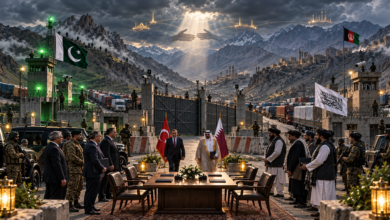
Amidst this intricate and perilous crisis, Pakistan distinguished itself through the exercise of what may aptly be termed “quiet diplomacy” and back-channel engagement. Acting as a responsible, impartial, yet proactive mediator, Pakistan assumed a role of considerable diplomatic consequence. Its efforts were widely acknowledged and commended across the international community.
Through adroit and sustained engagement, Pakistan’s leadership facilitated communication between Tehran, Washington, and other key capitals, striving to rebuild trust among the parties. By raising the issue on global platforms and fostering consensus within the Muslim world, it helped pave the way for ceasefire initiatives at the United Nations. Tireless efforts were undertaken to promote confidence-building among regional and global actors.
These endeavours ultimately persuaded major powers to incline towards de-escalation. Pakistan’s leadership, exercising prudence and foresight, adopted measures that compelled the adversaries to return to the negotiating table. Back-channel communications between Iran and the United States were initiated, complemented by parallel overt diplomatic exchanges. In so doing, Pakistan exemplified the efficacy of “middle power diplomacy”—demonstrating how, even with limited resources, a state may exert disproportionate influence upon the course of international affairs.
The culmination of these efforts was the conclusion of a memorandum of understanding, marking a tentative yet significant step towards reconciliation.