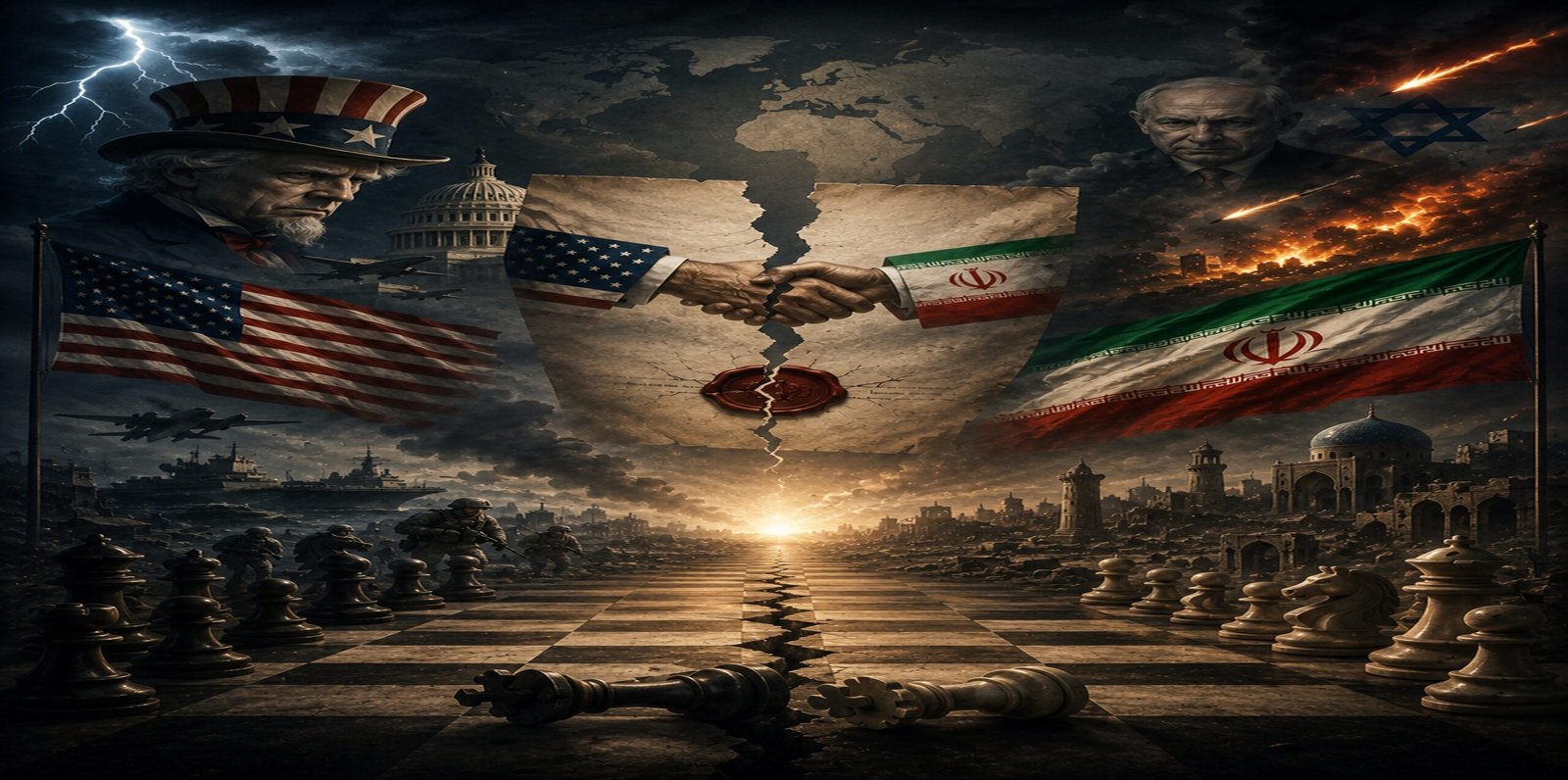

Upon the great chessboard of global politics, the pieces at times advance in near silence, and at others the decrees of destiny are inscribed amid the thunder of artillery. The twenty-first century—so often heralded as an age of progress, diplomacy, and the governance of international institutions—is, in truth, a far more intricate tapestry: one woven from strands of power, interest, and ideological contestation, each thread tethered to the imperatives of national ambition. Iran’s nuclear programme stands as one of the central chapters in this unfolding drama—a chapter wherein science, sovereignty, faith, and the hierarchies of global power are interlaced with the sudden brilliance of lightning across a darkened sky.
When the Russian Foreign Minister, Sergey Lavrov, asserts that Iran possesses the full right to enrich uranium for peaceful purposes, his words are not merely the currency of routine diplomacy. Rather, they constitute a deliberate move in a silent and enduring game of grand strategy. Russia, ever eager to cast itself as a counterweight to Western predominance, invokes the principle that under the Treaty on the Non-Proliferation of Nuclear Weapons, every state is entitled to the peaceful pursuit of nuclear energy. On its face, this position appears an affirmation of law and equity; yet beneath it lies a more profound political calculus. Moscow understands well that to deny Iran its asserted rights would further skew the already delicate balance of global power—precisely the juncture at which principle and interest appear not as adversaries, but as uneasy companions.
Iran, for its part, speaks in tones both unequivocal and unyielding. In the words of its Foreign Ministry spokesman, Esmail Baghaei, uranium enrichment is an “inalienable right”—one not subject to negotiation, nor open to compromise. This declaration is not the mere obstinacy of diplomacy; it is the echo of a long historical consciousness. A nation that has endured centuries of foreign intrusion, colonial pressure, and revolutionary upheaval now regards the guardianship of its sovereignty not only as a right, but as a solemn obligation. One is reminded here of the old maxim of political thought: that a nation which bargains away its right to exist has already consigned its destiny to oblivion.
Uranium enrichment, in its essence, is but a scientific process. Yet once drawn into the orbit of global politics, it transcends the technical and becomes emblematic of power itself. For Iran, it signifies not only a source of energy and a marker of scientific advancement, but, above all, a potent symbol of national dignity. For the United States and its allies, however, the same process is cast as a harbinger of nuclear armament, a seed of regional instability, and a threat to international security. It is precisely this divergence of interpretation that elevates the matter from a question of science to one of global consequence.
According to Iranian reports, Washington has advanced five conditions for the resumption of negotiations, among them the transfer of some 400 kilograms of enriched uranium. Though outwardly framed as a gesture of confidence-building, such a demand appears to Tehran as a profound encroachment upon its sovereignty. Here we encounter once more the familiar disposition of powerful nations: to preserve their ascendancy in the language of justice, and to circumscribe the freedoms of others in the name of peace.
The declaration by Donald Trump that a military strike upon Iran had been deferred at the request of Middle Eastern leaders—among them Saudi Arabia, Qatar, and the United Arab Emirates—offers a revealing glimpse into the region’s intricate diplomacy. A curious paradox emerges: these states remain wary of Iran’s expanding influence yet are equally apprehensive of the conflagration that open war might unleash. It is the posture of one who stands upon the shore, fearful of the waves, yet compelled to launch his vessel upon them.
Mr Trump has suggested that an accord may yet be fashioned—one acceptable to the United States, the Middle East, and the wider constellation of global powers. Yet history counsels caution. Such agreements, however elegant upon parchment, are too often scattered by the tempests of competing interests before they can take root in reality.
His further warning—that in the absence of agreement, military action remains an ever-present possibility—lays bare an enduring truth of international affairs: that even in our modern age, the ink of the pen is seldom free from the shadow of the sword. It is at this frontier that diplomacy approaches its outermost limits, and the spectre of war begins to gather upon the horizon.
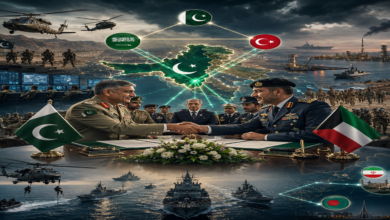
Equally striking is the observation by Marco Rubio that a proposed “Project Freedom” was halted at the urging of Pakistan. This revelation gestures towards Islamabad’s continued relevance within the theatre of global diplomacy—a nation that, though often understated in its posture, still occupies a position as a bridge between East and West. Its role may be quiet, yet its resonance is felt within the councils of power.
The spokesman of Iran’s Islamic Revolutionary Guard Corps, in warning that any “foolish act” would meet with a firm and decisive response, articulates not mere rhetoric but a calculated defensive posture. It reflects the psychology of nations compelled to assert strength in the face of perceived threat—to persuade adversaries that they are anything but weak.
Thus, Iran’s nuclear question is no mere technical dispute over uranium enrichment. It is, rather, a dense amalgam of sovereignty, geopolitical rivalry, regional dynamics, and civilisational identity—a contest in which reason, power, and history are all engaged. Yet the story remains unfinished. Many chapters are still unwritten: the precise contours of American demands, Iran’s strategic calculus, the role of Israel, and the eventual alignment of global powers. Only when these elements fully unfold may one hazard a judgment upon the outcome.
Iranian media reports further suggest that Washington’s five conditions, even if couched in the language of diplomatic cunning, are influenced by the same old logic of power that history has often exposed. They include the transfer of enriched uranium, limits on enrichment levels, comprehensive access for international inspectors, transparent monitoring of nuclear facilities, and moderation in regional and military posture.
Such terms, in effect, amount to a covenant in which one party is asked to submit its resources, its scientific progress, and its defense strategy to the scrutiny of an external authority. One is reminded, almost irrefutably, of a long-standing observation: that when powerful nations make agreements, they often honor their terms in the name of principle.
Iran’s response—strong to the point of inflexibility—finds its roots deep in its domestic politics. And since the revolutionary past of the Iranian Revolution, the state has based its political philosophy on three enduring principles: sovereignty (istiqlal), resistance to hegemonic domination, and the preservation of Islamic identity.
The question of uranium enrichment has, in effect, become the living embodiment of these three foundational principles. To concede upon it would not, for Iran, constitute a mere technical adjustment, but rather an ideological retreat of the gravest order. It is for this reason that the Iranian leadership frames the matter not simply in terms of policy, but as one of national honour and civilisational dignity.
The Middle East has ever stood at the crossroads of world affairs—a region where oil, civilisation, and conflict coexist in uneasy proximity. The appeal by Saudi Arabia, Qatar, and the United Arab Emirates to defer a strike upon Iran constitutes a diplomatic gesture of considerable significance. These states remain apprehensive of Iran’s expanding influence yet are no less alarmed by the spectre of open war. It is a condition akin to a game of chess in which each player seeks to checkmate the other, whilst remaining acutely mindful of his own vulnerability to the same fate.
Though absent from explicit mention in certain formulations, the role of Israel in the Iranian nuclear question is neither marginal nor obscure. It regards Iran’s nuclear ambitions as an existential peril, and accordingly exerts pressure upon the United States, engages in covert operations, and labours to shape global opinion against Tehran. It is, in many respects, an unseen hand—operating behind the curtain, yet exerting a decisive influence upon the direction of the entire enterprise.
The assertion by Donald Trump that military action remains a possibility in the absence of agreement lays bare a defining feature of modern diplomacy: that negotiation and coercion proceed in tandem. Even as the language of peace is invoked, preparations for war continue unabated. One is reminded of the ancient maxim that those who desire peace must be prepared for war.
The emergence of Pakistan within this context marks a development of no small consequence. Should it indeed be the case that military action was deferred through its intervention, this would stand as testament to its diplomatic capacity. Endowed with a unique geographical and political position, Pakistan occupies a singular place: a significant state within the Islamic world, a nuclear power in its own right, and a nation capable of maintaining a delicate equilibrium among competing global forces. These attributes render it, in effect, a quiet intermediary—its voice subdued, yet its influence discernible.
The stern rhetoric of Iran’s Islamic Revolutionary Guard Corps is best understood not as mere bluster, but as a calculated psychological stratagem. Such pronouncements serve a dual purpose: to deter adversaries through the projection of resolve, and to fortify domestic morale by reinforcing unity in the face of external threat. It is a device long employed by nations confronted with crisis.
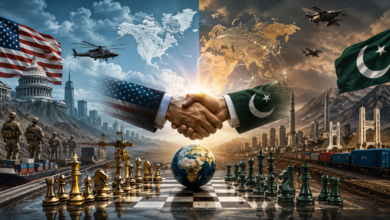
The Iranian nuclear issue has once again divided the world into two broad alignments. On one side stands the Western bloc—anchored by the United States and its European allies; on the other, a countervailing or balancing coalition led by Russia and China. This configuration evokes the memory of a bygone Cold War, wherein confrontation seldom took the form of direct conflict, but was instead waged through diplomacy, economic sanctions, and the manoeuvring of regional proxies.
At the centre of this dispute lies the Treaty on the Non-Proliferation of Nuclear Weapons, a global framework ostensibly designed to prevent the spread of nuclear arms. Yet its moral authority is persistently called into question by an evident asymmetry: certain states retain nuclear arsenals, whilst others are denied the same capacity. It is this disparity that Iran invokes to buttress its position, presenting itself not as a violator of norms, but as a challenger of inequity.
If the entire panorama were to be distilled into a single proposition, it might be thus expressed: this is not merely a dispute over uranium enrichment, but a comprehensive contest over power, sovereignty, and the very notion of justice in the international order.
And yet the narrative has not reached its climax. There remain unanswered questions suspended upon the horizon of time: the precise contours of any prospective agreement, Iran’s future strategic posture, the repercussions for the global economy, and the potential consequences of war. These are matters whose resolution lies not in conjecture, but in the yet unwritten pages of history.
The annals of diplomacy teach us that agreements are never mere instruments of ink and parchment; they are forged from a delicate alloy of power, expediency, and prudence. The prospective accord between Iran and the United States resembles a mirror in which each party seeks the reflection of its own interests. Its likely foundations may be discerned in several key provisions: limitations upon enrichment levels, reductions in uranium stockpiles, unfettered access for international inspectors, the gradual easing of economic sanctions, and commitments to de-escalate regional tensions.
These provisions may appear, at first glance, as emblems of balance. In reality, they form a strategic chessboard upon which every move conceals multiple intentions. It is here that one is compelled to reflect that the true substance of agreements lies not only in what is written, but equally in what is left unsaid.
If there exists a persistent shadow upon the horizon of the Middle East, it is the ideological and strategic rivalry between Iran and Israel. This is no mere dispute over territory or resources; it is a collision of worldviews, a struggle for legitimacy, and a contest for regional primacy. Israel perceives Iran’s nuclear ambitions as a threat to its very existence, whilst Iran, in turn, denies Israel’s legitimacy. Thus, the tension resembles a smouldering fire, its embers liable at any moment to erupt into flame. It is this volatile backdrop that renders every agreement suspect and every peace inherently fragile.
Nor is the Iranian question confined to the political or military sphere. It extends to the arteries of the global economy. The Middle East, and especially the Gulf region, remains the center of the world’s energy supply. Any major military action against Iran would almost certainly lead to a sharp rise in oil prices, disrupt global markets, and create widespread economic instability. This is why the great powers avoid war and yet maintain its shadow. One might sarcastically say that it is a market in which both peace and war are commodities, distinguished only by the intentions of those who buy them.
If the talks break down and the drums of war begin to beat, the possible scenarios are truly dire. Limited airstrikes could target nuclear facilities, prompting a swift response. A wider regional conflict could engulf Lebanon, Syria, Iraq and Yemen, as proxy wars intensify and Gulf states become directly or indirectly involved. Still at a high level, global tensions could rise, with Russia and China lining up in support of Iran, while the United States and its allies stand in opposition. Such a sequence of events resembles a continuum, each link of which brings a fresh disaster.
Iran’s strategy rests upon three principal pillars—what might aptly be termed a doctrine of patient resistance: diplomatic firmness in negotiations, military preparedness as a deterrent, and the cultivation of regional influence through allied networks. It is this triad that elevates Iran from a vulnerable state to an effective regional power.
The conduct of the United States, for its part, has long exhibited a dual character: the application of maximum pressure, coupled with the maintenance of diplomatic engagement.
It is precisely this duality that has characterised the approach adopted towards Iran. The strategy resembles a river whose surface carries gentle ripples, even as beneath it runs a swift and forceful current. In this interplay of conciliation and coercion lies the essence of contemporary statecraft.
The alignment of China and Russia alongside Iran signals the emergence of a new configuration in global politics. Beijing’s proximity to Tehran is shaped largely by economic imperatives, while Moscow’s support reflects a desire to preserve strategic equilibrium. Together, they gesture towards the outline of an alternative order—one that seeks, however tentatively, to counterbalance Western predominance.
Global public opinion may appear, at first glance, to be no more than a silent spectator in this vast contest. Yet in reality, the influence of media, think tanks, and popular sentiment weighs perceptibly upon the decisions of governments. It is for this reason that each party labours to present its narrative with the greatest possible persuasion, mindful that in the court of international opinion, perception often rivals power itself.
The role of the Muslim world in this matter is at once significant and, regrettably, fractured. Some states incline towards the United States, others towards Iran, whilst yet more remain passive observers. This disunity reflects a deeper infirmity: that when a civilisation forfeits its cohesion, its strength is dissipated into fragments.
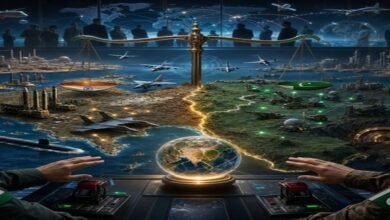
The entire tableau resembles a complex map in which every line marks an interest, every colour an ideology, and every angle a potential hazard. Iran’s nuclear question thus emerges as a mirror reflecting the contradictions of the international system—where justice and power, principle and expediency, peace and conflict stand in perpetual contention.
The narrative now moves toward a decisive moment. The possible consequences of this conflict, its lasting impact on the world order, and the shape of the emerging international order—what some would call a new world order—are questions that could determine the course of the coming century. We have reached a point where thought reaches its climax, history prepares to pronounce its verdict, and the destinies of nations begin to chart new directions.
The record of history suggests that every conflict ultimately resolves itself along one of three paths: confrontation, equilibrium, or reconciliation. These same alternatives present themselves in the case of Iran’s nuclear dilemma. Should confrontation prevail, the ensuing conflagration would scarcely be confined to Iran alone but would engulf the wider region. Should a precarious balance endure, tension would become a permanent condition—a silent war without end. And should reconciliation be achieved, it would stand as a notable triumph of diplomacy, albeit one requiring both sides to temper their principles with a measure of flexibility.
This conflict is not just a regional crisis. It is the catalyst for a broader shift in the global order. The world seems to be moving away from a unipolar order in which the United States has an unprecedented influence. China emerges as an economic power, Russia reasserts itself as a strategic counterweight, and Iran emerges as a symbol of resistance—an actor that remains steadfast in its position despite constant pressure. What we are witnessing is the tentative formation of a multipolar world.
For the Muslim world, this entire episode teaches a lesson with profound consequences. The most important of these is the need for unity: division remains its greatest threat, because in unity its voice carries far more weight. Second, intellectual and scientific self-reliance is being made imperative. Iran’s nuclear program is proof of the fact that knowledge and science are the real foundations of power. Third, there is the enduring principle of self-restraint and dignity: those nations that endure are those that remain true to their principles, come what may.
For Pakistan, the present moment represents both an opportunity and a chance. It must wisely navigate the competing pressures of global powers, play a constructive role within the Muslim world, and strengthen its internal stability. If guided by foresight, it can play the role of an effective mediator in this complex conflict.
War has been a part of civilizations in every era. It is not simply a clash of arms but a clash of values, a test of humanity and the means by which history pronounces its verdicts. Should mankind once again resort to war, it would cast a long shadow over all claims to progress.
In our time, conflict is fought not only on the battlefield, but also on television screens, through social media, and within news narratives. Each seeks to present its own account as the truth, and to discredit its opponent. This contest of narratives has become one of the defining weapons of the modern era.
At the heart of this entire question lies a fundamental inquiry: is power the ultimate معیار of right? If the answer be in the affirmative, then justice, law, and morality are reduced to little more than words. If, however, the answer is in the negative, then the international order must undertake a profound re-examination of its own principles.
History does not render its judgments in haste; it unfolds them over time. The decisions taken today will cast their influence upon generations yet to come. It is for this reason that every step within this conflict carries such weight.
Viewed in its entirety, the matter assumes a stark clarity: Iran stands in defence of its sovereignty; the United States seeks to preserve its influence under the banner of global order; other powers align themselves according to their interests. It is a contest in which each player strives for victory, yet the ultimate defeat may well be that of humanity itself.
This, then, is not merely the story of Iran or of the United States—it is a shared human narrative. It compels us to ask: are we truly advanced? Have we learned from the calamities of war? Are we capable of choosing peace?
Such questions remain before us still, awaiting their answers.
In its entirety, this reflection has been a journey of thought—from politics to history, from science to civilisation, from interest to principle. If it were to be distilled into a single proposition, it would be this: the struggle at hand is not over uranium, but over the conscience, dignity, and future of humankind itself.