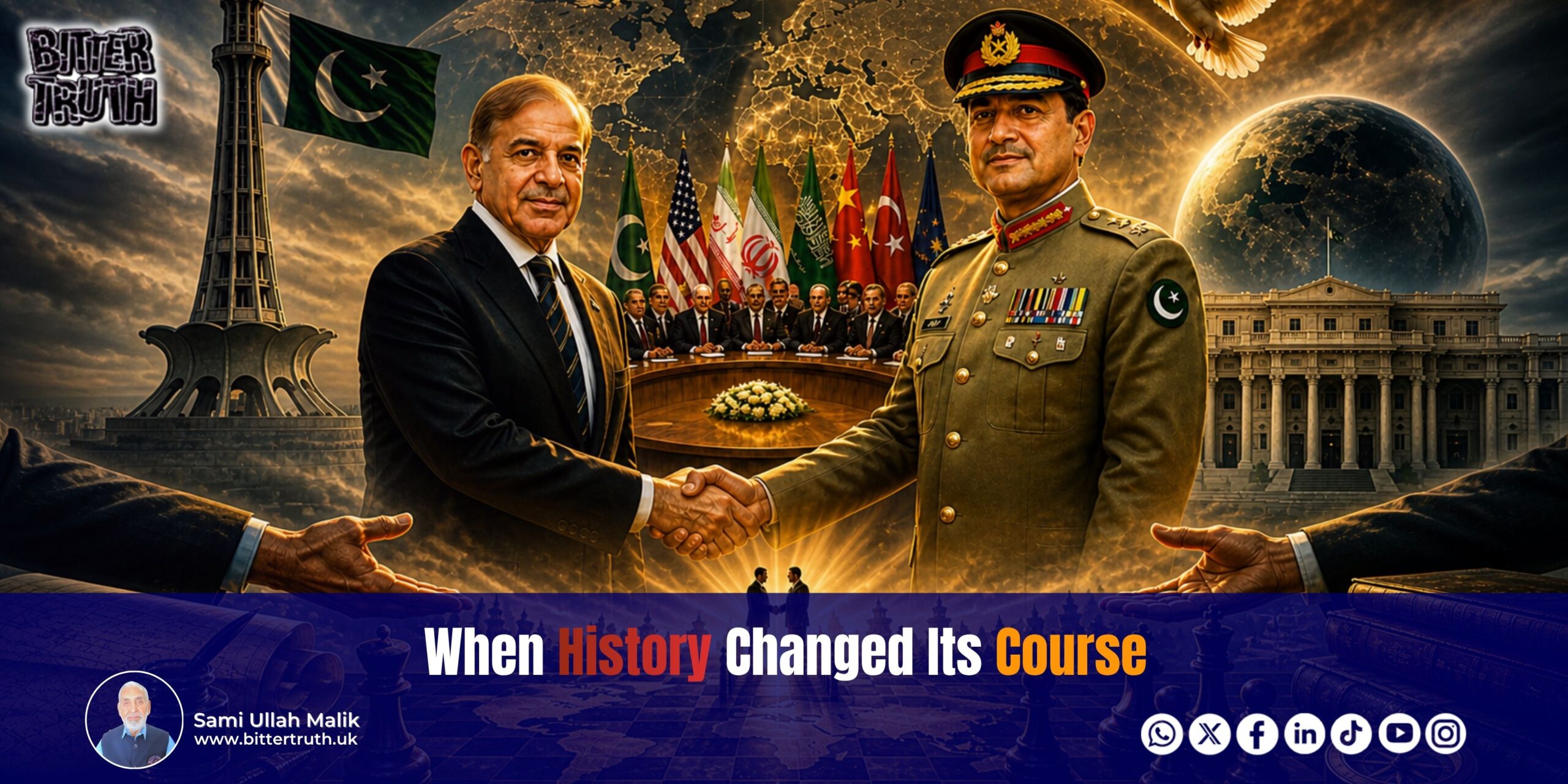
An Era Defined, A Leader Revealed
When History Changed Its Course

Pakistan’s political and military history, when surveyed with a reflective eye, reveals certain epochs that are not merely aggregates of events, but rather the prologue to an entire civilisational and intellectual reconfiguration. History, in its truest sense, is not a mere procession of occurrences; it is a living consciousness—an ever-unfolding narrative that gathers within its fold the ascent and decline of nations, the moulding of their intellectual temperaments, and the measure of their leadership’s discernment. At times, the age itself gives rise to individuals who are not content to be shaped by circumstance; rather, they impose upon circumstance a new direction and are recognised not by the loftiness of their office, but by their rare capacity to bend the current of events to their will.
Such are the moments when history departs from its habitual course and assumes the force of a new current; when individuals, by the sheer weight of their character, come to determine the trajectory of their age. These are figures who, like steadfast beacons amid tempests, burn with a quiet resolve and, in the gathering darkness of uncertainty, offer both direction and meaning. In the recent political and military chronicle of Pakistan, the figure of Asim Munir has emerged as emblematic of such a moment.
This, then, is not merely the account of a soldier’s ascent, but of an era defined by the collision of internal discord, external pressures, and the intricate cross-currents of global politics—within which a certain form of leadership asserts itself. In Asim Munir, one observes a rare confluence: the dignity of military command, the acuity of political judgement, and a measured grasp of international diplomacy. His rise, therefore, is not an isolated phenomenon, but a historical expression shaped by crisis, resilience, and the complex weave of global power relations, all converging to inscribe a new chapter upon the national narrative.
When, in November 2022, Asim Munir assumed command of the Pakistan Army, the state stood in the grip of a profound and all-encompassing political upheaval. The government of Imran Khan had already fallen through a vote of no confidence, leaving in its wake a landscape clouded by uncertainty and contention. It was a moment when the credibility of state institutions, the coherence of political narratives, and the trust of the public alike were subjected to severe trial. The polity appeared adrift, as though the vessel of state had been cast into a whirlpool of doubt, its balance challenged by waves rising from every quarter. It was, in the language of history, a moment of “the trial of leadership”—when office ceases to be an honour and becomes instead the weight of obligation. To place the command of the army in Munir’s hands, at such an hour, was to entrust him with the helm of a ship navigating a storm-laden sea.
The protest movement that gathered force under Imran Khan’s leadership further intensified the political atmosphere. Across the breadth of the country, the air reverberated with slogans; the streets were animated, yet hearts were burdened with suspicion. His supporters took to the roads, and accusations—direct and unrestrained—were levelled at the military leadership. These charges introduced a new and more volatile phase of tension, one in which words assumed the sharpness of blades and narratives themselves became contested battlegrounds. This was no longer a mere divergence of political opinion, but a struggle of competing truths, each faction raising aloft its own standard of legitimacy. In such a climate, allegations directed at the military leadership deepened mistrust and strained the delicate fabric of institutional confidence.
The army and the government issued repeated denials, yet the atmosphere remained thick with doubt. History teaches, with an austere clarity, that when the bond of trust begins to fray, explanations seldom suffice to restore it; indeed, they often dissipate unheard. Thus, the state’s narrative found itself engulfed in the tempest of emotion, while the voice of reason grew faint, and public perception fractured into mutually opposing interpretations.
The events of 9 May marked a tumultuous and defining chapter in Pakistan’s political history, leaving a fissure both deep and enduring. Following Imran Khan’s arrest, violent protests erupted across the country, shaking the very foundations of state order. Sensitive installations—including the General Headquarters in Rawalpindi—were targeted, and what began as protest assumed the symbolic form of rebellion. It was a day when the line between dissent and insurrection blurred to the point of indistinction.
In the aftermath, a wave of legal proceedings was set in motion, with hundreds named in cases. The state initiated stringent legal action, presenting it as a necessary assertion of the rule of law; Khan and his party, however, denounced it as retribution. Thus, the battle of narratives deepened further, and political divisions became more sharply defined. It was at this juncture that the momentum of the protest movement began to falter, as the broader political climate grew ever more intricate and fraught.
Indeed, the events of May served to alter the very trajectory of the movement. What had once surged forth as a popular tide gradually lost its force, as though history itself had turned a corner, compelling political actors to reconsider their alignments and recalibrate their strategies. The elections of February 2024 ushered in a new political arrangement: the Pakistan Muslim League (N) and its allies assumed power, and the pieces upon the political chessboard were once again rearranged. This shift was not merely political in form; its reverberations extended into the realm of state policy and governance.
Yet the most consequential transformation emerged in the aftermath of the Pakistan–India conflict of May 2025. This brief but intense war, spanning four days, not only demonstrated military capability but also reshaped the psychological landscape of the region. Characterised by the deployment of advanced technologies—drones, missile systems, and modern strategic doctrines—it departed markedly from the conventions of earlier wars. Pakistan’s application of contemporary warfare drew considerable attention in international circles, while its claimed successes became a subject of global discussion. The situation escalated to such a degree that the United States, having initially maintained a posture of neutrality, found itself compelled to intervene and call for a ceasefire.
According to Pakistani accounts, the downing of India’s advanced Rafale aircraft proved a decisive moment, altering the direction of the conflict and capturing the attention of international media and defence analysts alike. This was not merely a tactical achievement; it reverberated across the strategic imagination of observers, suggesting a potential shift in the balance of power. History offers here a familiar lesson: even a modest alteration in that balance can transform the global narrative. Those who yesterday stood as spectators may, under altered conditions, be drawn into the role of arbiters.
Analysts across the world have since observed that the conflict marked a turning point not only in military terms but also at the psychological level. It restored a measure of confidence within Pakistan and conveyed to the outside world a clear message—that the state remained resilient, active, and fully capable of defending itself. Initially regarded as a regional dispute, the conflict’s escalation compelled international attention, and the eventual call for ceasefire underscored a perennial truth of global politics: that even localised conflicts may exert far-reaching influence. Power, when asserted upon the battlefield, has a way of summoning diplomacy in its wake; when equilibrium falters, the table of negotiation is, almost inevitably, laid.
It was in the aftermath of this conflict that Asim Munir was elevated to the rank of Field Marshal—a distinction that, in this context, signifies not merely advancement in rank, but the formal recognition of a leadership tested and affirmed in the crucible of events.
In the aftermath of that conflict, Asim Munir was elevated to the rank of Field Marshal—an honour bestowed upon but a select few in Pakistan’s history. Such a distinction signifies far more than military success; it is, in essence, an expression of national confidence, a recognition that transcends the battlefield and enters the realm of collective trust. It occupies a singular place in the country’s historical memory. The claim of a ceasefire by the President of the United States, coupled with Pakistan’s affirmation of it, pointed towards an emerging diplomatic concord. It was at this juncture that military strategy appeared to dissolve seamlessly into diplomatic finesse.
On the global stage, the conflict conferred upon Pakistan’s military capability a renewed and distinct recognition. Defence analysts acknowledged that the country was not only capable of safeguarding its frontiers but was also attuned to the evolving demands of modern warfare. In that moment, the state asserted its presence with unmistakable clarity. Concurrently, a perceptible transformation was observed in Asim Munir himself: once regarded as reserved and cautious, he now emerged as a figure marked by confidence and a clarity of purpose.
Within India, meanwhile, political pressures intensified. Narendra Modi faced mounting criticism, and questions began to surface regarding the direction and efficacy of his foreign policy. The contrast in engagements in Washington was striking: where the earlier encounter bore the marks of caution, the latter revealed a statesman of composure and diplomatic maturity. This evolution was not merely personal; it was forged in the crucible of circumstance. Wars, as history attests, reshape individuals even as they refine leadership. India’s relations with Israel, alongside its alleged role in tensions involving Iran, introduced a new layer of strain within the region. These developments reflected the intricate web of global politics, wherein interests often assert themselves over principle, and complexity becomes the defining feature of international relations.
Amidst this shifting landscape, Pakistan adopted a measured and balanced policy, presenting itself as a responsible state actor. It was here that military leadership began to assume an overt diplomatic role. Those close to Asim Munir describe him as a man of few words but firm action—one who does not rely upon rhetoric, but allows results to speak in his stead. It is precisely this restraint that lends his leadership a distinctive character.
Engagements in Washington introduced him more fully to the international arena. Initially perceived as reserved, he gradually revealed an uncommon assurance. His visit to the United States marked a defining moment in this regard, as he appeared not merely as a commander, but as a diplomat of substance. His wider engagements—with China, Saudi Arabia, and Iran—further underscored that his role extended beyond the military sphere into the domain of active diplomacy.
By June 2025, his bearing had come to reflect that of a seasoned diplomat. Positive impressions within American policy circles opened new avenues for Pakistan, while his composure and clarity of expression proved effective in engaging global audiences. This signalled the emergence of a new diplomatic dimension, one in which the boundaries between military and diplomatic spheres appeared increasingly porous.
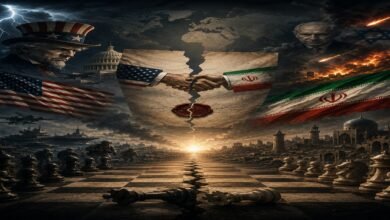
Pakistan’s offer to mediate between Iran and the United States during a period of heightened tension constituted a significant diplomatic initiative. At a time when the world appeared precariously poised on the brink of wider conflict, such an offer reflected both foresight and restraint, strengthening Pakistan’s standing as a constructive actor. It was, in effect, an articulation of a broader vision: that Pakistan sought to position itself not as a partisan participant, but as a bridge between contending powers. The meeting at the White House in June 2025 further elevated this trajectory, conferring upon it both diplomatic depth and symbolic stature. International media described the development as remarkable, and in its wake, Asim Munir came to be regarded as a consequential figure within global politics.
Following the formal engagement at the White House, a gathering at the Pakistani Embassy in Washington assumed the character of more than a ceremonial reception; it became, in essence, an intellectual forum. The presence of American foreign policy experts lent it the atmosphere of an informal council of reflection. It was here that Field Marshal Munir articulated a principle that resonated beyond the immediate setting:
“Diplomacy remains the most effective path to the reduction of tensions, and Pakistan stands ready to assist.”
This statement was not merely a declaration of diplomatic intent; it signalled a deeper transformation—Pakistan was no longer confined to reactive postures, but had begun to assume a proactive role in addressing global crises.
During the tensions between Iran and the United States, while the Prime Minister and the Foreign Minister were visibly engaged upon the diplomatic front, Field Marshal Munir’s quieter yet no less effective efforts continued in parallel. Confirmation of these contacts by a White House official underscored the coherence of Pakistan’s civil and military coordination. This approach bears resemblance to what is often termed in international affairs as “Track Two diplomacy”, wherein formal and informal channels operate in tandem, each reinforcing the other.
The negotiations held in Islamabad on 11 April between Iranian and American representatives imparted a new dimension to Pakistan’s geographical and diplomatic significance. The joint presence of Prime Minister Shehbaz Sharif and Field Marshal Munir at these talks symbolised an alignment of state institutions under a unified national vision. Though the discussions did not yield immediate results, they marked an important milestone in what must be understood as a sustained diplomatic endeavour, where continuity itself is the measure of progress.
The acknowledgement by Donald Trump that a ceasefire between Iran and the United States had been facilitated at Pakistan’s behest represented more than a diplomatic success; it amounted to a declaration that Pakistan was emerging as a credible and trusted intermediary between global powers. Although subsequent rounds of negotiation were not held in Pakistan, the country’s continued involvement reinforced the significance of its role.
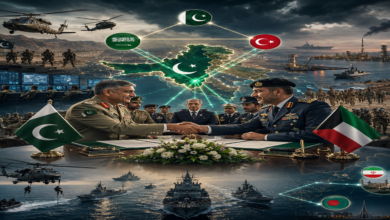
A pertinent question arises: why would adversarial states such as Iran and the United States accept the same intermediary? The answer lies in Pakistan’s carefully balanced foreign policy. Its relations with Iran, the Gulf states, China, and the United States have endowed it with the capacity to function as a bridge between divergent interests. It is at this intersection that the leadership of Field Marshal Munir assumes the form of a coherent state strategy.
By advancing the security priorities of its partners—Saudi Arabia, China, and the United States—in a measured and balanced manner, Pakistan has established itself as a responsible stakeholder. This is not diplomacy in its superficial sense, but rather a finely calibrated equilibrium, where each step is weighed with precision so as not to unsettle the concerns of any one party.
A significant factor underlying Field Marshal Munir’s success in mediation lies in his long-standing intelligence connections. His tenure in Military Intelligence in 2016, followed by his leadership of the Inter-Services Intelligence, enabled him to cultivate relationships with Iran that transcend the limitations of formal diplomacy. Such ties engender a level of trust that cannot be easily replicated through conventional channels. It is for this reason that both Iran and the United States perceive him as an individual capable not only of understanding their respective positions, but of conveying them with clarity and credibility to the other side.
The unconventional style of Donald Trump’s politics has long been a matter of public knowledge. In his calculus, relationships are shaped less by office than by personality; it is the individual, rather than the institution, that commands his regard. Within this frame, his rapport with Field Marshal Asim Munir gives rise to a new diplomatic reality—one in which formal protocol yields, at least in part, to personal trust. This element, once peripheral, has in the modern conduct of international affairs assumed a significance both subtle and profound.
When other संभाव्य intermediaries—Turkey, Saudi Arabia, China, and Russia—recede from such a role for reasons of their own, Pakistan emerges as the singularly viable alternative. This is no accident of circumstance, but the outcome of a sustained and carefully calibrated diplomatic strategy, through which Pakistan has preserved its acceptability across divergent camps.
In the final analysis, there emerges a defining aspect of Field Marshal Munir’s character that distinguishes him from many of his contemporaries in both military and political spheres: a manner at once direct, unambiguous, and decisive. For a leader such as Trump, who favours clarity over equivocation, such a quality possesses a particular appeal. It is this very attribute that renders Munir not merely an effective commander, but an accomplished diplomat.
In the theatre of global politics, there are moments when a single sentence transcends the sum of its words and comes to embody the mental temper of an age, the priorities of a state. Such a moment arose during a gathering in the United States, when Field Marshal Munir was asked about the threats confronting Pakistan—particularly the spectre, oft invoked in analytical circles, of instability or even disintegration.
The question was not merely speculative; it carried within it the accumulated anxieties of years, long debated within policy forums and strategic institutions. In a region marked by geopolitical tension, internal political fluctuation, and economic strain, such inquiries are not uncommon. Yet Munir’s response was immediate, unequivocal, and devoid of ambiguity. He declared, with striking firmness:
“I do not envisage a world without Pakistan.”
This statement was not a mere defensive posture; it was, rather, a declaration of conviction—an affirmation of state confidence, national continuity, and historical resolve. Yet another dimension of his reply drew particular attention, as he intimated that, should Pakistan’s existence ever face a grave threat, the country possessed the means to defend itself with full capacity—even to an extent that could carry consequences of global magnitude.
It appeared, in that moment, that Pakistan’s leadership had entered a phase in which words themselves bore the weight of instruments—where a single utterance might hold the potential to forestall conflict. Munir’s remark, though stern in its tone, may thus be understood as a complex yet effective guarantor of peace. Within the framework of international relations, it cannot be dismissed as a mere emotional expression; rather, it represents an extension of the doctrine commonly termed deterrence—the principle by which the demonstration of power serves not to provoke war, but to prevent it.
As a nuclear state, Pakistan has long subscribed to this doctrine. Yet on this occasion, Munir’s words served to reaffirm that its defensive posture extends beyond the safeguarding of territorial boundaries to the preservation of its very existence. It is a conception not unfamiliar in history, recalling the logic that governed relations among great powers during the Cold War, when the capacity for destruction itself became, paradoxically, the guarantor of peace.
Thus, the statement carries within it a dual significance. On the one hand, it is an expression of military resolve—a clear warning that the survival of the state admits of no compromise. On the other, it conveys a diplomatic message: an assurance to allies and the wider international community that Pakistan approaches its security with seriousness, sovereignty, and decisiveness. It is precisely at this juncture that military leadership and diplomatic strategy converge, forming the hallmark of contemporary statecraft.
International observers have interpreted the statement through varying lenses. Some have regarded it as an unusually forceful articulation, while others have seen in it the measured resolve of a responsible nuclear state—one that possesses both the capacity and the restraint to avert conflict. This apparent tension is, in truth, emblematic of modern geopolitics, wherein power and peace, though seemingly opposed, function as complementary forces.
Viewed against the broader canvas of Pakistan’s history, the statement does not appear as a sudden impulse, but as part of a longer continuum of thought and action. Since its inception, the state has confronted moments when its very survival seemed at stake. On each such occasion, its leadership has conveyed a consistent message: that Pakistan is not merely a geographical entity, but an idea—and ideas cannot be extinguished by force alone.
Munir’s response, though succinct, is rich in implication. It is at once an affirmation of national will, a continuation of strategic doctrine, and a distilled expression of diplomatic intent. It reminds us that in the modern world, survival depends not solely upon strength, but upon the judicious exercise of it. Pakistan’s diplomatic history now appears to be entering a new chapter—one in which a fine yet resilient line is drawn between war and peace.
Under Field Marshal Munir’s leadership, Pakistan has sought to demonstrate that true power in the contemporary age lies not merely in armament, but in judgement, balance, and credibility. This journey, therefore, is not simply the story of an individual’s ascent, but of a state’s intellectual and strategic evolution—one that may, in time, exert its own influence upon the wider currents of global politics.
The course of history, it must be remembered, seldom runs in a straight line. It bends, it eddies, and at times it presents those rare crossings where nations are compelled to rewrite their destiny. In this sense, the trajectory of Field Marshal Munir appears not merely as the rise of a military officer, but as a turning point—indeed, as a bridge—across which Pakistan has sought to steady its internal discord while asserting its presence upon the global stage and confronting external challenges with renewed purpose.
Yet this narrative remains unfinished; it is but a beginning. The pages of history will continue to unfold, and time alone will determine where this chapter ultimately comes to rest. For now, it is sufficient to observe that a name has been inscribed upon the breast of history—a name that has emerged not as the captive of circumstance, but as its architect.
The global politics of the twenty-first century stand at a crossroads where military strength and diplomatic acumen have become inseparable. The expression of power is no longer confined to the battlefield; it extends equally to the negotiating table, where the destinies of nations are shaped. Within this context, Pakistan—once perceived merely as a regional actor—now appears to be emerging as a responsible and active participant on the world stage. At the centre of this evolution stands the figure of Field Marshal Asim Munir.
History rarely affords us individuals who are, in equal measure, soldier, strategist, and diplomat. Munir’s persona reflects this rare synthesis. Should Pakistan succeed in maintaining its internal stability and external dignity in the years to come, the role of this leadership will be remembered as a defining milestone. Yet the story is not complete; it is but a chapter, with many pages still to be written.