Four Days, A Century’s Lesson
The Quiet Architecture of Power

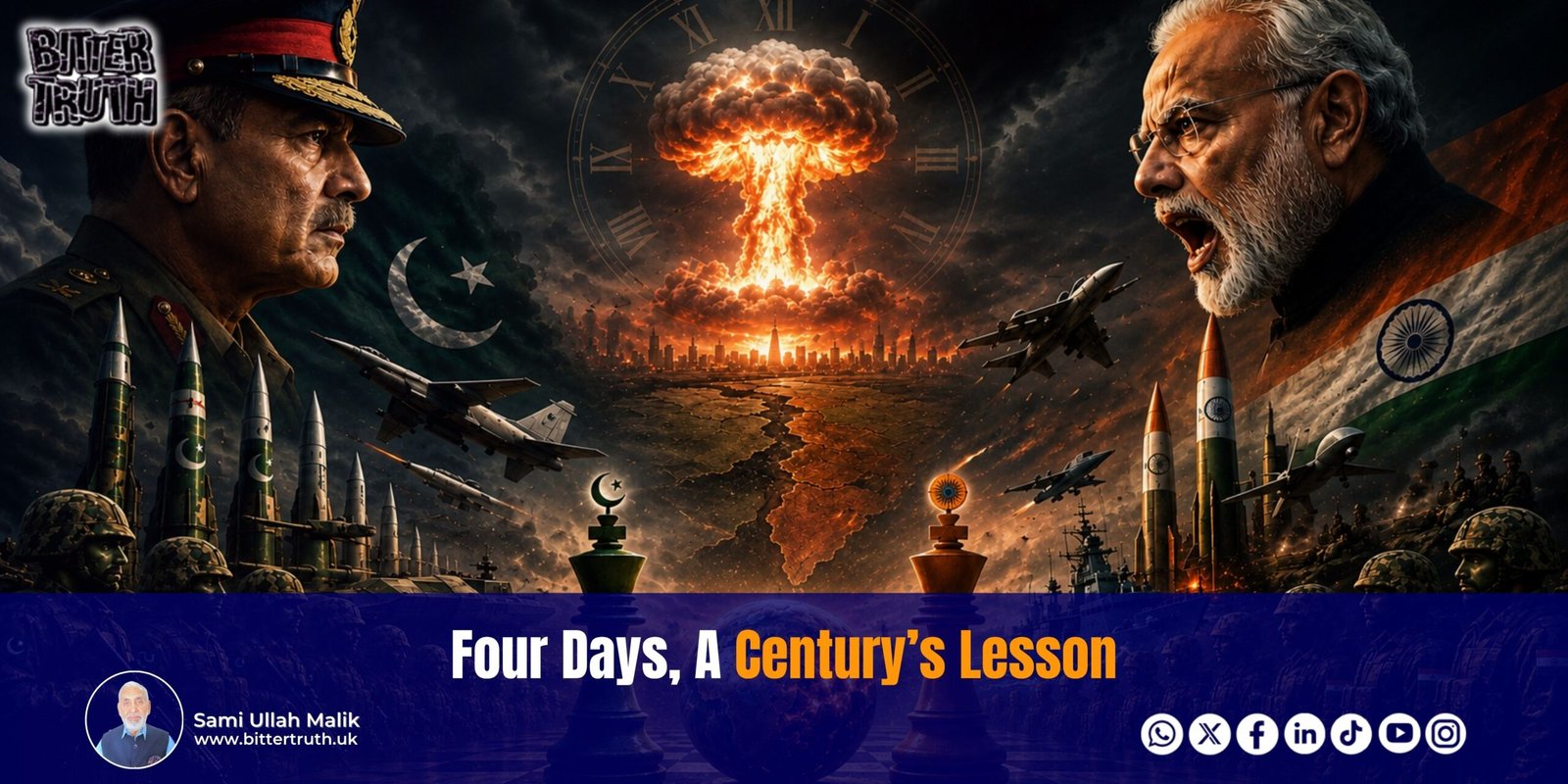
History, in its austere custody, preserves certain moments that outgrow the confines of mere incident and assume the stature of an age’s defining emblem. The four-day conflict between Pakistan and India in May belongs unmistakably to that order—brief in duration, yet decisive in consequence; limited in span, yet profound in effect. It was an episode in which the world beheld, with no small measure of astonishment, how a state modest in territory, resources, and economic weight could, by force of resolve, prudence, and sacrifice, stand unflinching before a far larger adversary.
Pakistan’s conduct in this contest was not merely a display of martial capacity; it was, more significantly, an affirmation of a perennial truth—that the fortunes of war are not ordained by numbers alone. There are moments when conviction stiffens the sinews of a nation, when unity of purpose lends coherence to effort, and when timely judgment alters the very current of history. It is an old maxim, though seldom so vividly illustrated, that frailty, when allied to belief, may ripen into strength; while power, once intoxicated with its own conceit, prepares the ground for its own undoing.
The present study, therefore, is conceived not as a hymn of uncritical praise, but as a sober and dispassionate inquiry into the realities that shaped this encounter. It seeks to examine, with due candour and balance, the military preparedness, defensive doctrines, and evolving strategic tendencies of both Pakistan and India. Its purpose is not to exalt one side nor to diminish the other, but to illuminate the truth in its full complexity—so that both the public mind and the councils of authority may better apprehend the shifting contours of the regional order.
This reflection is further guided by the recognition that war, in our present age, no longer confines itself to the visible boundaries of the battlefield. It has extended its reach into the domains of technology, economy, and thought itself. In such a world, nations are compelled not only to draw instruction from their past, but to steel themselves—intellectually and materially—for the trials that lie ahead.
When the pages of history are turned with a discerning eye, one encounters chapters that, despite their brevity, come to signify an entire epoch. There lingers, even now, a peculiar resonance in the atmosphere of South Asia—a resonance not merely of artillery and arms, but of contending ideas, evolving doctrines, and a newly arranged technological chessboard. The four-day conflict of last May was of precisely this character. Superficially fleeting, it was in truth no ephemeral episode; rather, it marked an intellectual inflection, a military experiment, and a political narrative whose reverberations have proved at once enduring, far-reaching, and deeply suggestive. It was not a simple clash of frontiers, but a collision of strategic imaginations—one that has already begun to redefine the grammar of wars yet to come.
Where once wars were waged upon open fields, this contest unfolded across minds, machines, and systems. The clarion call of the soldier yielded to the near-silent vigilance of the drone; the thunder of artillery gave way to the swiftness of the missile; and the clash of steel was supplanted by the whisper of digital signals. War, in its outward form, has altered its raiment—yet its inner spirit, that triad of dominance, defence, and survival, remains unchanged.
Now, a year removed from that confrontation, both nations are engaged not merely in recounting their triumphs, but in inscribing the episode into the very fabric of their national consciousness. Ceremonies, declarations, and military exercises together constitute a tacit proclamation: that the conflict has not so much ended as it has assumed a different form. It is within this wider context that the episode must be understood—not as an isolated event, but as a prologue to the wars of the future.
It is equally evident that, in the aftermath of those four days, diplomatic relations between the two states have been arrested beneath a heavy and unyielding frost. What was once a cautious yet continuous current of engagement has congealed into stillness. Embassies stand subdued, visa channels lie dormant, and the avenues of trade have fallen into disarray; mutual confidence, once fragile yet present, has receded into the realm of memory. Most striking of all is the unilateral suspension of the historic water-sharing accord, long preserved as a near-sacred trust and sustained across decades of hostility. That such an arrangement should falter now is a testament to the altered nature of conflict in the modern age.
For war today is no longer confined to the battlefield alone; diplomacy, economics, and the control of vital resources have themselves become instruments within its arsenal. It is, in effect, a total phenomenon—one in which the stroke of a pen may prove more consequential than the discharge of a rifle, and the abrogation of an agreement more perilous than the advance of an army. Water, once the universal emblem of life, is increasingly transformed into a token of power; rivers themselves appear to submit to the logic of boundaries and control.
Against this backdrop, the pronouncements emerging from both capitals acquire a significance that transcends mere rhetoric. India’s declaration of the continuation of “Operation Sindoor,” and Pakistan’s equally resolute assurance of readiness and response, are not idle utterances; they are, rather, portents of a gathering storm. Defence analysts are inclined to interpret such statements as elements of a sustained psychological campaign—an effort to shape public sentiment while maintaining unrelenting pressure upon the adversary. Here, language itself assumes the character of a weapon, and the statement becomes a fortified position. Words, in their power to strengthen or unsettle the national psyche, rival even the most formidable of missiles.
Thus, we are confronted with a sobering realisation: that wars are no longer won by arms alone, but by narratives, information, and the subtle arts of psychological persuasion. Each declaration carries within it a dual purpose—to embolden one’s own ranks, and to caution, if not disquiet, the opposing side.
Among the most consequential developments witnessed during the conflict was the unprecedented employment of modern technology. For the first time, both nations openly asserted the use of long-range missile systems, cruise capabilities, and unmanned aerial platforms. In that moment, the traditional boundaries of warfare were decisively breached, and a new domain was entered—one in which distance itself has ceased to be a limiting factor. The soldier yields place to the machine; the battlefield to the screen.
The silent trajectories of drones, the lightning velocity of missiles, and the lethal precision of cruise systems together compose a tableau in which human impulse is increasingly supplanted by algorithmic calculation. War, it would seem, is no longer a contest of proximity, but of capacity.
Drones glide overhead like verses inscribed upon the sky—legible only in the harsh lexicon of
destruction. Missiles traverse their path with such speed that decision and consequence are scarcely separated by time. And cruise systems strike with a certainty that renders error almost inconceivable. In this emerging order, man recedes into the background, while his machines advance to the fore—heralding a transformation as profound as any in the long chronicle of war.
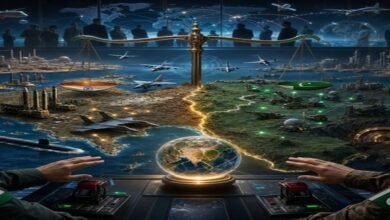
In the wake of the recent confrontation, the strategic doctrine adopted by India—commonly described as multi-domain warfare—amounts, in essence, to a reimagining of war itself within an entirely new philosophical frame. Conflict is no longer confined to the terrestrial plane; it unfolds simultaneously across four principal theatres: land, air, sea, and the vast, intangible expanse of cyberspace. This conception serves as a stark reminder that modern warfare resembles less a single contest of arms than a grand chessboard, upon which each move reverberates across multiple dimensions. It is, in effect, a total phenomenon, wherein each domain is inextricably linked to the others; a weakness in one may imperil the integrity of the whole. War, therefore, now demands not isolated excellence but systemic coherence—a finely tuned arrangement in which every component performs its function with precision. Speed, integration, and technological sophistication have thus emerged as the three cardinal pillars of contemporary conflict. Power is no longer measured solely by the possession of arms, but by their timely, coordinated, and intelligent deployment.
In the estimation of defence analysts, the eighty-eight hours of hostilities have already assumed the character of a reference point—a defining template against which future wars are being conceived and planned. The episode has served to remind the world, with renewed urgency, that South Asia remains poised upon a delicate equilibrium, where even the smallest spark may give rise to a conflagration of alarming magnitude.
Indeed, many experts regard this conflict as little short of a prototype—a preliminary sketch in which the outlines of future warfare stand clearly revealed. It illustrates a broader truth of history: that it does not repeat itself in crude imitation but rather re-emerges in altered and often more intricate forms. Each war carries within it the germ of the next; each conflict begets the strategies that will shape those yet to come. At such junctures, history issues its quiet admonition—that to neglect the balance of power is to drift, unwittingly, towards the brink of ruin.
In response, the Indian armed forces have embarked upon a programme of reorganisation, centred upon the creation of integrated theatre commands. Under this arrangement, land, naval, and air forces are to operate beneath a unified command structure, their efforts synchronised towards common objectives. It is, in effect, an acknowledgement of a central truth of modern warfare: that isolated strength is of limited consequence, and that victory is born of coordination and harmony. As in a well-conducted orchestra, where each instrument contributes to the integrity of the whole, so too in war does the interplay of forces determine the final outcome.
The joint command-and-control framework established during Operation Sindoor offered a practical demonstration of this emerging doctrine. The convergence of diverse military branches upon a single operational platform, and the capacity to take decisions in a coordinated and timely manner, underscore the extent to which warfare has evolved into a collective enterprise of intellect and organisation. This model is likely to form a cornerstone of future military planning, where the speed and accuracy of decision-making may prove decisive.
Parallel to these structural reforms, India has sought to invigorate its defence production by encouraging the participation of the private sector, while research and development institutions labour to produce increasingly sophisticated weaponry. This trend signals a profound transformation: war is no longer the exclusive preserve of state institutions, but a broader enterprise in which industry, economy, and technology converge. Every factory, every laboratory, and every engineer become, in some measure, a part of the wider machinery of war.
The testing of advanced ballistic missiles, the deployment of modern air defence systems, the proliferation of unmanned platforms, and the acquisition of cutting-edge aircraft together testify to an intensifying arms competition within the region. Though outwardly justified in the language of defence, this competition is underwritten by a deeper and more pervasive anxiety—the imperative felt by each nation to remain a step ahead of the other. It is, therefore, not merely a contest of power, but a struggle for survival itself. Yet a question persists, sombre and unresolved: will this race ever reach its conclusion, or will it confine humanity within an unending cycle of apprehension and distrust?
The proposed construction of subterranean military installations, modelled in part upon precedents elsewhere, reflects a further evolution in the very concept of defence. The safeguarding of strategic assets beneath the earth’s surface suggests that security itself is descending below the visible horizon. The use of tunnels for movement and the preparation of sudden offensives has assumed increasing importance. In this, one discerns an echo of ancient fortifications—yet now augmented by the instruments of modern technology. History, it would seem, does not merely return; it returns transformed.
Similarly, the upgrading of military infrastructure in the north-eastern regions, the excavation of tunnels through mountainous terrain, and the reinforcement of forward positions all attest to the enduring relevance of geography in war—albeit in a reinterpreted form. Mountains are no longer mere obstacles; they have become shields. Tunnels are not simply passages; they are strategic instruments. Geography, once a static constraint, is now dynamically integrated with technology to produce new operational doctrines.
The contemporary battlefield has thus expanded far beyond traditional frontiers. Drones, missiles, and aircraft possess the capacity to penetrate deep into the interior of any nation. Defence, in such circumstances, cannot be confined to borderlines alone; it must extend to every point at which vulnerability may arise.
The present condition of affairs compels us to recognise that the face of war has undergone a complete transformation. It is no longer a crude contest of gunpowder and steel, but a comprehensive system encompassing technology, economy, diplomacy, and psychology alike. Yet any account of this evolving narrative would remain incomplete without due consideration of Pakistan’s own strategic response—its military reforms, and the possibilities that lie ahead.
In the chronicles of nations, there are decisions which transcend the arithmetic of numbers and come to embody the deeper currents of collective consciousness. Pakistan’s decision to affect a substantial increase—of twenty per cent—in its defence expenditure belongs to this category. It is not a mere adjustment of fiscal figures, but an expression of statecraft attuned to emerging dangers, and resolved to address them before they fully manifest.
This augmentation is not simply a withdrawal from the treasury; it is the outward sign of an inward urgency—a declaration that the question of survival has passed from the realm of abstraction into that of urgent reality.
The four-day conflict served as a mirror in which Pakistan discerned both its vulnerabilities and its latent strengths. It revealed, with unmistakable clarity, that while the desire for peace is both natural and commendable, its preservation demands the backing of credible power. Aspirations and diplomatic hope, however sincere, cannot alone secure tranquillity. Strength remains its indispensable guarantor.
Thus, when the defence allocation was raised to 2,550 billion rupees, the measure signified far more than the provisioning of resources for military institutions. It was, in essence, a declaration of collective resolve—a clear and unambiguous message that the state stands prepared to bear the cost of its own security. It affirmed that the safeguarding of national frontiers would be pursued with every available means, even if it required a reordering of economic priorities themselves.
This augmentation of defence expenditure must also be understood as a civilisational response. History offers ample testimony that those nations which neglect their own security are, in time, swept away by the unforgiving currents of change. Pakistan, mindful of this enduring lesson, has recalibrated its national priorities, elevating defence from a mere administrative concern to a central pillar of national survival. The increase in military spending thus represents not only a response to external threats, but also a considered answer to internal challenges—most notably the persistent spectre of terrorism. It is, in effect, a double-edged instrument, designed to confront both the adversary beyond the frontier and the disorder within.
Viewed in a global context, Pakistan’s defence expenditure reveals a picture both complex and coherent. It is the portrait of a state situated in a region of acute strategic sensitivity, where challenges arise from multiple directions with unsettling frequency. Reports from international institutions only reinforce this reality: in such an environment, defence spending ceases to be a matter of choice and becomes a matter of necessity. When increases in Pakistan’s military budget are noted internationally, they reflect not merely martial ambition, but also the imperatives imposed by geography. Thus, the expansion of defence expenditure emerges as a function of both domestic needs and external pressures, shaped by regional competition and strategic uncertainty.
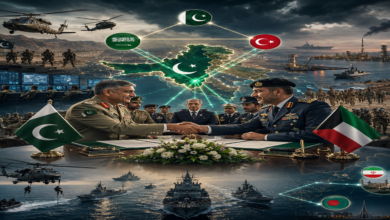
Pakistan’s defence agreements with China, the acquisition of advanced aircraft and missile systems, the fulfilment of previously negotiated arrangements, and the pursuit of long-term partnerships all point towards a deliberate and forward-looking defence strategy. This is not an impulsive reaction to immediate circumstances, but a gradual and carefully considered process, in which each step is taken with foresight and purpose.
It is equally important to recognise that an increase in defence spending does not necessarily signify aggression or expansionist intent. At times, it reflects a nation’s sense of vulnerability and its determination to address it. Yet it is precisely in transforming such vulnerability into strength that nations demonstrate their resilience. Pakistan’s military doctrine appears to rest upon this principle: that a stable balance of power remains the most reliable guarantor of peace.
Within Pakistan’s military evolution, the establishment of the Army Rocket Force Command stands as a development of considerable consequence. It is not merely the creation of a new formation, but the embodiment of a modern strategic philosophy—one that places emphasis upon speed,
extended reach, precision, and the capacity for rapid response.
In earlier periods, long-range missile capabilities were largely confined to the strategic sphere; modern warfare, however, has required their integration into conventional military structures. The creation of the Rocket Force is a direct response to this need. It signals that Pakistan has enhanced its ability to strike at distance, to respond swiftly, and to influence the course of conflict in its favour. Distance, once considered a safeguard, has lost its protective value; any location may now fall within reach. This capacity to convert distance into advantage lies at the heart of modern military effectiveness.
The establishment of a dedicated drone warfare unit further illustrates the transformation of conflict into a quieter yet more technologically driven domain. It marks the emergence of a new phase in which machines increasingly assume roles once performed by soldiers, and the sky becomes an active theatre of operations. The flight of drones may be silent, yet their consequences are far from negligible. Pakistan’s investment in this capability, and the exercises conducted to refine it, demonstrate a clear awareness of contemporary trends in warfare and a willingness to adapt accordingly.
The defining qualities of such systems lie in their silence and precision. They observe, analyse, and, when necessary, strike—often in a single, seamless sequence. This dual capability renders them uniquely effective. It is for this reason that unmanned systems are expected to play a decisive role in future conflicts. They may be unseen and unheralded, yet their impact can be profound.
Pakistan’s naval forces have likewise undertaken significant adjustments following the conflict, enhancing both their capabilities and strategic orientation. The induction of new vessels, alongside the addition of advanced submarine platforms, reflects a renewed emphasis on maritime defence. In this, Pakistan affirms that the protection of its maritime domain is no less critical than the defence of its land frontiers.
The seas have long served as both the arteries of commerce and the theatres of power. A nation that maintains a credible presence upon them secures not only its territorial integrity but also its standing in global trade and economic influence. Pakistan’s maritime strategy appears firmly grounded in this understanding: that the oceans are not merely expanses of water, but channels through which power is projected.
In modern warfare, the most decisive advantage is often that which remains unseen. Stealth technology represents the practical realisation of this principle. Pakistan’s efforts to acquire advanced stealth aircraft indicate a clear recognition of future operational requirements. Such platforms possess the ability to evade detection and strike with precision, making them among the most formidable instruments of contemporary conflict. They are, as it were, shadows in motion—unseen in passage, yet unmistakable in effect.
Pakistan’s military leadership has made it clear that future conflicts will be defined by multi-domain operations. War will be conducted simultaneously across multiple arenas—cyber, air, land, and even space. This conception presents warfare as an integrated and complex system, in which each component is interdependent. Success will belong to those who understand this complexity and are able to harness it effectively. The battlefield now extends far beyond traditional boundaries, reaching into digital and informational realms.
The growing prominence of cyber warfare and artificial intelligence further underscores the migration of conflict into the digital sphere. It is now possible to disrupt an adversary’s systems, access critical information, and anticipate strategic intentions with remarkable speed. This is a domain in which no visible combat occurs, yet the consequences can be severe. For this reason, Pakistan continues to develop its capabilities in this field, seeking to secure a position of strategic advantage within an evolving regional landscape.
The four-day conflict imparted to Pakistan a lesson of lasting significance: that the demands of modern warfare require credible long-range strike capabilities and advanced rocket systems. It revealed a deficiency now being addressed with measured determination. It is at such junctures that nations learn from experience, refine their judgment, and transform weakness into strength.
Pakistan’s existing strategic missile arsenal possesses nuclear capability, yet its use remains necessarily constrained. For this reason, the strengthening of conventional military capacity has become essential. The acquisition of new systems suited to conventional warfare reflects a deliberate effort to preserve strategic balance. Such equilibrium is indispensable, for even a misperception may lead to escalation, and the slightest miscalculation may give rise to a wider conflict.
The country’s drone programme is advancing with notable speed and purpose. Increasingly sophisticated exercises demonstrate a clear intention to achieve both strength and self-reliance in this domain. Unmanned systems, capable of both surveillance and precision strike, represent a versatile and increasingly indispensable instrument of modern warfare.
At the same time, the air force continues its progression towards acquiring advanced aircraft, signalling a firm commitment to maintaining aerial superiority. Air power has long played a decisive role in warfare, and its importance remains undiminished; hence the sustained investment in this critical sphere.
The successful testing of air-launched missile systems further indicates that Pakistan is refining its missile technology along modern and effective lines. These weapons possess the capability to engage strategic targets at considerable distances, thereby reinforcing the country’s deterrent posture.
At sea, the induction of advanced submarine platforms and modern defensive systems has strengthened Pakistan’s maritime capabilities. These developments reflect a clear recognition of the importance of safeguarding maritime interests and ensuring preparedness for future contingencies. The protection of maritime space is as vital as the defence of land borders.
Taken together, these developments present a comprehensive and dynamic vision of Pakistan’s military strategy—one defined by foresight, adaptability, and resolve. They reveal a nation that is not only learning from past experience but is also actively preparing for future challenges.
This account is, in essence, the story of a nation’s resolve—its strategic awareness and its enduring commitment to defence. It affirms a fundamental truth: that peace is secured not by aspiration alone, but by preparedness. Nations derive their strength not merely from arms, but from intellect, prudence, and determination; and it is these qualities that are shaping the course of Pakistan’s defence policy.
At the conclusion of this analytical study, one truth emerges with unmistakable clarity: modern warfare is not merely a contest of weapons and resources, but a test of wisdom, foresight, and resolve. Pakistan demonstrated in the brief yet decisive conflict of May that when national morale is strong, leadership is steady, and preparation is timely, even limited resources can withstand far greater power.
History, in its steady course, teaches a consistent lesson: that victory depends not only on weapons, but on the hands that wield them and the conviction that guides them. Pakistan’s experience conveyed that sacrifice, unity, and national cohesion can transform material limitations into effective strength.
Yet it would be unwise to regard this outcome as merely a cause for celebration. It is, rather, a responsibility—an imperative that calls for continued vigilance, sustained inquiry, and constant improvement. It is in this spirit that the present study has examined the military strategies of both nations, so that citizens, policymakers, and strategic institutions may better understand the evolving nature of conflict.
It must also be recognised that enduring traditions of thought emphasise the necessity of preparedness in the face of adversity. This is not merely abstract guidance, but a practical principle: that the desire for peace must be accompanied by readiness to defend it. It is this balance that secures both dignity and independence for a nation.
The central conclusion of this study is therefore clear: Pakistan must treat its recent experience not as an endpoint, but as a milestone—a foundation upon which to build further progress. Through continued research, the adoption of modern technology, and the strengthening of national unity, it can aspire to greater heights. For history remembers those nations not that rest upon their achievements, but that use them as a stepping stone to future advancement.