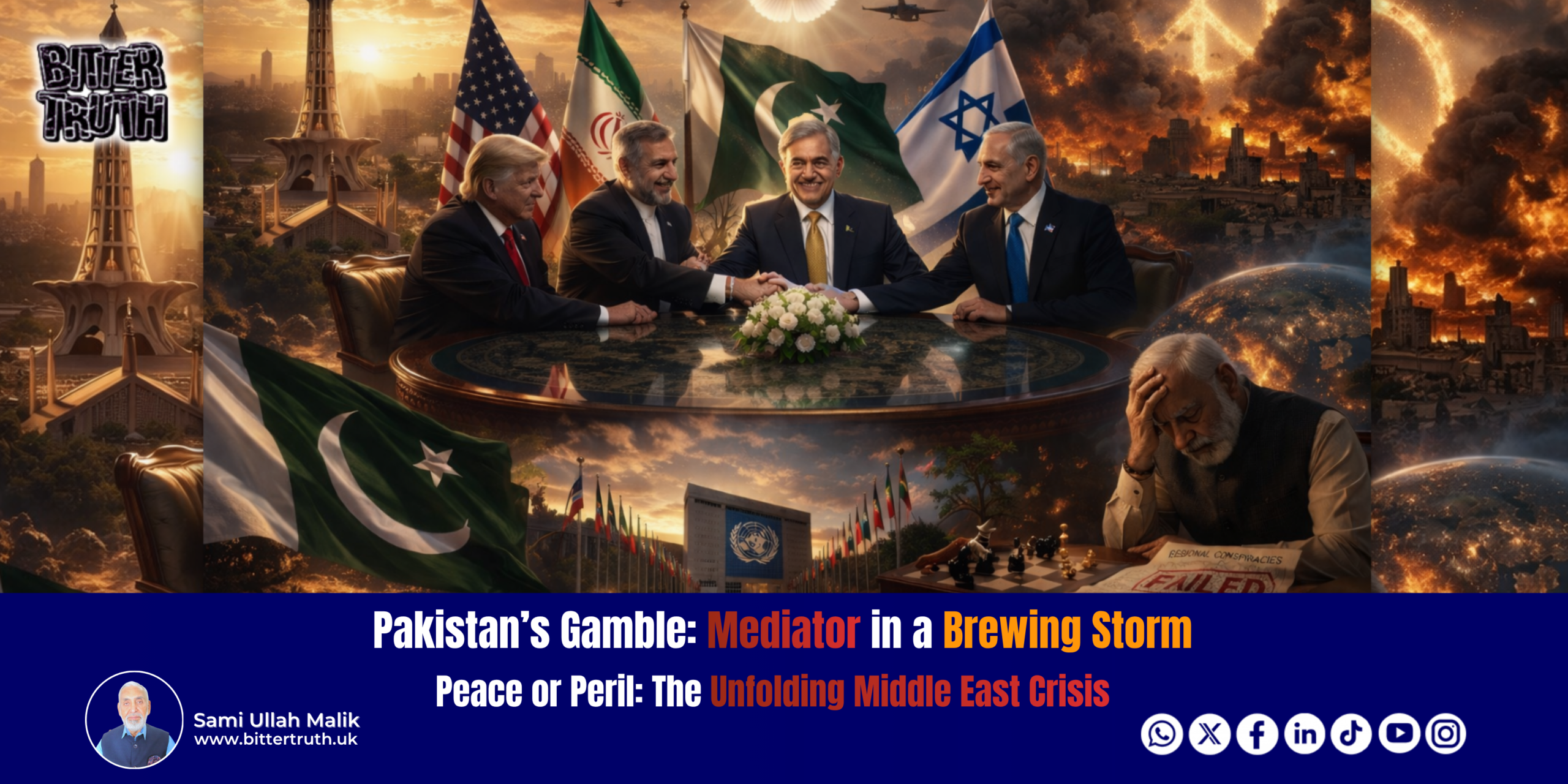
Pakistan’s Gamble: Mediator in a Brewing Storm
Peace or Peril: The Unfolding Middle East Crisis

The Middle East once again finds itself poised upon one of history’s fraught thresholds—where the acrid scent of gunpowder threatens to suffocate the quieter, more fragile whispers of diplomacy. What began as a series of American and Israeli strikes upon Iran has, in the space of little more than a month, outgrown the confines of a regional quarrel. It has unsettled the wider architecture of global politics, disturbed the delicate machinery of the world economy, and cast new uncertainty over the balance of power itself.
For all the supposed sophistication of the twenty-first century, this crisis serves as a sobering reminder that the language of force has not been retired; indeed, it continues to compete—often successfully—with reason, restraint, and negotiation. Yet there is, in this instance, a notable peculiarity: while the theatre of war burns with undiminished intensity, the diplomatic stage, too, is ablaze with urgent and overlapping manoeuvres.
This is no mere contest of missiles and bombardments. Beneath the visible violence lies a dense web of political calculations and strategic designs, not easily deciphered even by seasoned observers. The United States, in particular, appears to be pursuing a dual-track policy—extending the olive branch with one hand while brandishing the sword with the other. It is the familiar doctrine, often described by analysts as “carrot and stick,” whereby inducement and coercion are deployed in tandem. Yet, for all its tactical clarity, the ultimate purpose of this approach remains shrouded in ambiguity, as though obscured by a deliberate and lingering fog.
Iran, for its part, has responded with a combination of restraint, resilience, and calculated defiance. Its posture has not been confined to the battlefield; rather, it has extended into the diplomatic arena, where Tehran has sought to challenge and outmanoeuvre its adversaries with notable composure. Nowhere is this more evident than in its influence over the Strait of Hormuz—a geographical chokepoint of immense strategic consequence. Control, or even disruption, at this narrow passage reverberates far beyond the region, sending tremors through global markets and supply chains alike.
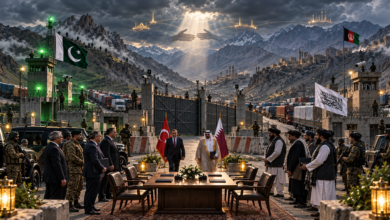
Amidst this intricate and precarious landscape, Pakistan has emerged as a figure of unexpected yet undeniable significance. Bound to Iran by ties of proximity and fraternity yet simultaneously engaged with the United States and the Gulf monarchies, Islamabad occupies a position of rare diplomatic equilibrium. This delicate balancing act—fraught with risk, yet rich in possibility—has conferred upon Pakistan a distinctive role, one that transcends mere observation. The recent flurry of diplomatic engagements in Islamabad, including consultations among regional foreign ministers, suggests that Pakistan may yet evolve from a concerned bystander into a consequential architect of peace.
It is within this broader context that the present analysis seeks to unfold: to examine the underlying dynamics of the conflict, to interrogate the elusive objectives of the United States, to assess the strategic calculus of Iran, and, above all, to consider the prospects and limits of Pakistan’s mediatory role. The central question, however, remains as stark as it is urgent: can diplomacy extinguish a fire that continues to be fed by the very powers professing to contain it, or is the world, once more, drifting towards a prolonged and ruinous confrontation?
More than a month has now elapsed since the outbreak of hostilities following the strikes on Iran. In recent weeks, alongside Turkey, Egypt, and Saudi Arabia, Pakistan has assumed a more visible role among those states seeking to arrest the slide towards wider conflict. Pakistan’s Foreign Minister has indicated that both Tehran and Washington have expressed confidence in Islamabad as a potential facilitator—a claim echoed, on several occasions, by former President Donald Trump, who has publicly acknowledged Pakistan’s constructive engagement.
A particularly consequential development has since lent this crisis a new diplomatic inflection. President Trump has announced his willingness to defer a planned military escalation against Iran for a period of two weeks, reportedly at the urging of Pakistan’s Prime Minister, Shehbaz Sharif, and the Chief of Army Staff, Field Marshal Asim Munir. This tentative pause, however, is conditional upon Iran ensuring the immediate, complete, and secure reopening of the Strait of Hormuz. Concurrently, Iranian sources have confirmed that a structured negotiation process—based upon a ten-point agenda—is set to commence in Islamabad.
Such developments illuminate not only Pakistan’s growing diplomatic relevance but also a deeper and more paradoxical truth: even at the height of conflict, the door to negotiation is seldom fully closed. That said, Israel has signalled its intention to confine the scope of hostilities, indicating that the conflict will not, at least for now, extend into Lebanon—an assertion widely interpreted as an effort to prevent further regional escalation.
Yet contradictions persist. Washington speaks of serious negotiations with Iran’s new leadership, hinting at a possible end to military operations, even as threats and strikes continue with undiminished vigour. Tehran, in turn, has dismissed American proposals as excessive and unreasonable, with Foreign Minister Abbas Araghchi repeatedly insisting that no direct negotiations with the United States are presently underway.
In this atmosphere of uncertainty—thick with suspicion, calculation, and competing narratives—the role of Pakistan as a potential intermediary warrants closer scrutiny. What, if anything, stands to be gained by Islamabad in assuming such a role? And what, indeed, does the United States hope to achieve by simultaneously advancing policies of coercion and conciliation?
These are not merely tactical questions; they are, in essence, inquiries into the very nature of power—its purposes, its limits, and its consequences. For if this conflict has revealed anything thus far, it is that even in an age of overwhelming force, victory remains an elusive and often ill-defined prize, while the costs—economic, political, and human—extend far beyond the battlefield, leaving their imprint upon the conscience of the world.
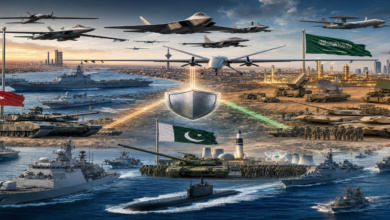
Only hours before these consultations commenced, Pakistan’s Prime Minister, Shehbaz Sharif, held a direct conversation with Iran’s President, Masoud Pezeshkian—a gesture at once symbolic and strategic, underscoring the urgency of the moment. Of equal consequence is the defence agreement concluded last September between Pakistan and Saudi Arabia. By most expert assessments, this accord does more than deepen military cooperation; it carries within it the potential to recalibrate the regional balance of power. Its central clause—whereby an attack upon one shall be deemed an attack upon both—introduces a latent but formidable dimension to any future escalation.
Pakistan’s position, however, is neither simple nor easily categorised. Iran is not merely a distant actor but an immediate neighbour, bound by a 900-kilometre frontier and a long history of cultural and political affinity. Islamabad has consistently referred to Tehran as a fraternal state. At the same time, Pakistan hosts no American military bases, distinguishing it from several Gulf states that have historically played intermediary roles. Crucially, Pakistan remains, for now, outside the theatre of war. This very detachment—combined with its readiness to facilitate dialogue—renders its role both delicate and potentially decisive.
In an era increasingly defined by the slow but unmistakable shift towards multipolarity, regional stability is no longer a peripheral concern but a strategic imperative. Pakistan, despite facing persistent pressures along its eastern and northern frontiers, appears acutely aware of this reality. Its efforts to maintain equilibrium—bringing together disparate actors while striving to prevent the spread of conflict—reflect not merely prudence but a broader vision of regional order. Yet difficult questions loom. Should the conflict deepen, and should Saudi Arabia be drawn directly into the fray, how would Pakistan reconcile its treaty obligations with its present posture of neutrality? The answer, perhaps, lies in a prior question: why has Riyadh thus far refrained from direct involvement?
Beyond the immediate calculus of war and peace lies a more pragmatic inquiry: what does Pakistan stand to gain from its prominent role in ongoing diplomatic efforts? The answer is neither abstract nor rhetorical. For Pakistan, the continuation of conflict would carry grave economic, diplomatic, and security consequences. Rising oil prices, inflationary pressures, and the risk of wider regional war all converge upon its domestic stability. Add to this the complexity of public opinion—largely critical of American and Israeli actions—and the stakes become clearer still. In such a context, the cessation of hostilities is not merely desirable; it is essential. Should Pakistan succeed in facilitating even a partial de-escalation, it would mark a significant triumph—not only for its foreign policy but for its standing within the wider architecture of global diplomacy.
China, too, has entered the frame with measured but unmistakable support for Pakistan’s mediatory ambitions. The recent visit of Pakistan’s Foreign Minister, Ishaq Dar, to Beijing forms part of a broader diplomatic choreography. For some time now, Islamabad has sought to persuade both Tehran and Washington to return to the negotiating table, even offering to host direct talks on its own soil. While such a breakthrough has yet to materialise, Pakistan has succeeded in constructing a multilateral platform—first by convening the foreign ministers of Saudi Arabia, Egypt, and Turkey in Islamabad, and subsequently by securing Beijing’s endorsement. The resulting five-point communiqué, jointly articulated by China and Pakistan, represents a concerted attempt to arrest the conflict and restore a measure of diplomatic coherence.
With this, expectations have inevitably risen. Pakistan, once regarded as an unlikely mediator, now finds itself under intense international scrutiny. The question is no longer whether it can play a role, but whether it can deliver results—specifically, whether it can persuade Iran to engage, however cautiously, with the United States. Many analysts remain sceptical. The deficit of trust between Washington and Tehran is not one that any single state can readily bridge. Yet a multilateral framework, particularly one that includes China, may offer a more viable pathway. Beijing’s considerable influence over Tehran lends a degree of credibility to the process—one that bilateral efforts alone could scarcely achieve.
China’s stakes in this crisis are neither incidental nor marginal. As the largest importer of Iranian oil, Beijing has, despite sanctions, continued to sustain Iran’s economic lifelines. Official statements from the Chinese Foreign Ministry emphasise principles of sovereignty, territorial integrity, and national security, while reiterating that diplomacy remains the only viable means of resolving disputes. The long-term strategic agreement signed between China and Iran in 2021—spanning defence technology, infrastructure, and cultural exchange—serves as a reminder that this relationship extends far beyond transactional economics. Indeed, for an Iranian economy long constrained by sanctions, China represents something approaching a lifeline.
Trade figures further illuminate this reality. In 2025, bilateral trade between China and Iran reached nearly $10 billion, excluding substantial volumes of unreported oil exports estimated at over $30 billion. When accounted for, these figures reveal that energy alone constitutes the overwhelming majority of economic exchange between the two. It is therefore hardly surprising that Beijing views stability in Iran—not to mention the uninterrupted flow of oil through the Strait of Hormuz—as a matter of pressing strategic concern.
Against this backdrop, the prospect of a diplomatic resolution, though difficult, cannot be dismissed as fanciful. Iran possesses a long and, at times, surprisingly flexible history of negotiation. Prior to the escalation triggered by recent strikes, several diplomatic sources suggested that Tehran had shown a willingness to proceed further than many had anticipated. The question now is whether any space for diplomacy remains—or whether the conflict will continue its upward spiral.
Both sides, it seems, are engaged in a dual contest: pursuing diplomatic solutions while simultaneously striving to maximise their respective advantages on the ground. Iran, for its part, appears intent on securing not merely an end to hostilities but credible assurances against their recurrence. The United States, conversely, seeks an outcome that can be presented—both domestically and internationally—as a strategic victory. Yet the distances between their positions remain considerable, and, perhaps more troublingly, the mutual distrust that underpins them shows little sign of abating.
Where, then, might diplomacy begin? The first step must surely be a genuine commitment—however tentative—to the cessation of conflict. Beyond that lies a narrower, but potentially more tractable, area of convergence: the nuclear question. Iran has long maintained that it does not seek to develop nuclear weapons, while preventing such an outcome has been a central objective of American strategy. Here, at least, exists a point of departure—fragile, contested, yet real.
Even so, the success of any diplomatic track will depend in no small measure upon the roles played by external actors. China’s influence, though uneven across different players in this conflict, is undeniably significant in relation to Iran. Its involvement could lend credibility and reassurance to any negotiated framework. Pakistan, meanwhile, has already demonstrated a notable diplomatic agility, drawing international attention and, perhaps, cautious optimism. It is for this reason that Beijing appears to view Islamabad not merely as a participant, but as a potentially effective facilitator—one capable, under the right conditions, of nudging adversaries towards the negotiating table.
Whether these efforts will culminate in a meaningful breakthrough remains uncertain. Yet in a conflict defined as much by ambiguity as by aggression, even the faintest prospect of dialogue carries with it a significance that cannot be lightly dismissed.
and in some cases improving—relations not only with the Arab world and Iran, but also with the United States. At the same time, Pakistan is not a distant observer insulated from the consequences of war. As Iran’s immediate neighbour, any further deterioration in the situation will inevitably reverberate across its borders. The prospect of instability spilling over—economically, strategically, and even socially—renders the stakes for Islamabad both immediate and profound.
The conflict itself now stands at a perilous juncture. Should diplomacy falter, the options available to Washington may narrow considerably. One conceivable course would be for President Trump to declare a form of symbolic victory—asserting that Iran’s military capacity has been sufficiently degraded, while disclaiming responsibility for reopening the Strait of Hormuz. Yet the global economic tremors already witnessed in recent weeks offer a sobering indication of the consequences such an outcome might entail. The alternative—an expansion of the war—cannot be dismissed either, particularly given a pattern of rhetoric that has, at times, veered unpredictably between restraint and escalation.
Reports of more than four thousand American marines advancing towards the Persian Gulf, airborne units held in readiness, and discussions of further reinforcements all point towards a potential intensification. In a scenario of full-scale engagement, one might even envisage attempts to seize strategically significant islands within the Gulf. Yet such ventures would hardly be without peril. Iran has repeatedly declared its readiness for a protracted conflict, and some analysts contend that, in the calculus of endurance, Tehran may be better prepared for a long war than its adversary. The question, then, is not merely whether a ground campaign is feasible, but whether it is sustainable—or, indeed, wise.
Historical parallels with Iraq or Afghanistan offer only limited guidance. A large-scale invasion appears unlikely; a more plausible scenario would involve limited, targeted operations, undertaken perhaps in a moment of strategic impasse—when withdrawal becomes difficult and options begin to narrow. Even then, the risks attached to such an undertaking would be considerable, raising the question not simply of possibility, but of purpose.
Despite Tehran’s formal insistence that no direct negotiations with Washington are underway, it would be naïve to assume a complete absence of communication. Indirect channels—particularly those facilitated by Pakistan—appear to remain active. Both sides have articulated their respective conditions. Yet the much-discussed American proposals, reportedly comprising a fifteen-point framework, strike many observers less as a blueprint for peace than as an instrument of capitulation. Iran’s own demands—ranging from control over the Strait of Hormuz to reparations for wartime damage and the removal of American military bases from the region—are, for their part, equally unlikely to find ready acceptance in Washington.
What remains beyond dispute, however, is the scale of the potential consequences. A prolonged conflict would carry devastating implications—not only for the region, but for Pakistan and the wider world. The questions posed at the outset thus return with renewed urgency: what does Pakistan stand to gain from acting as a mediator, and what does the United States hope to achieve by pursuing a strategy that oscillates between coercion and conciliation?
For Pakistan, the calculus is stark. Whether viewed through the prism of economic stability, public opinion, or international standing, the continuation of war represents a net loss, while its cessation offers tangible gains. As for the United States, its objectives remain elusive—obscured by shifting rhetoric and contradictory signals. Yet one conclusion is inescapable: this conflict has already altered the geopolitical landscape. The open discussion of regime change, alongside the emergence of new and tentative alignments, suggests that the region stands at the threshold of a possible reordering.
Whether Pakistan’s mediation efforts will succeed—or whether this conflict will instead be remembered as a decisive turning point in global politics—remains an open question.
It is worth recalling that wars are not fought solely upon battlefields. They leave their imprint upon the destinies of nations, the stability of economies, and the prospects of generations yet unborn. The present confrontation between Iran and the United States is not merely a bilateral dispute; it is part of a wider contest of power, the consequences of which may extend far beyond its immediate theatre.
After more than a month of hostilities, neither American objectives have been clearly realised, nor has the conflict moved towards any coherent resolution. And yet, amidst this pervasive uncertainty, one fact stands out with increasing clarity: despite overwhelming force, neither side has secured decisive supremacy. Iran’s resilience and America’s dual-track strategy have together produced a strategic impasse—a complex cul-de-sac from which no straightforward exit is visible.
It is precisely here that Pakistan’s role acquires heightened significance. At a moment when major powers remain entangled in their competing interests, Islamabad has advanced a policy marked by balance and restraint, presenting itself as a plausible intermediary. The path is undeniably fraught—hampered by distrust, divergent agendas, and heightened emotions—but it is not without promise.
For Pakistan, this is not merely a question of diplomatic prestige; it is a matter of national interest in its most concrete form. Rising energy prices, the risk of regional escalation, and mounting domestic pressures all point towards the same conclusion: peace is not a luxury, but a necessity. Should Pakistan succeed at this delicate juncture, it would not only strengthen its international standing but also inscribe a notable chapter in the annals of modern diplomacy.
In the end, the essential question endures: will the world choose dialogue over domination? Will the United States and Iran find the resolve to settle their differences across the negotiating table? And can Pakistan, in this rare convergence of crisis and opportunity, transform mediation into a durable peace?
History, it would seem, is once again in motion. The days ahead will determine whether this conflict is destined to become yet another chapter of devastation—or a decisive turning point towards peace.
The pages of history are turning now—and the coming days will determine whether this war will prove to be another devastating chapter or a decisive turning point towards peace. However, “Fifteen years ago today, my prediction that the important decisions of the future world would be decided with the advice of Pakistan were widely ridiculed,” today the Almighty has given Pakistan that position. [All] praise is [due] to Allah, Lord of the worlds