A World Holding Its Breath
The Moment Before the Storm

The Middle East and the Shadow of Catastrophe
The soil of the Middle East has, for centuries, been a theatre of contending powers; yet the present tensions have brought the region to a threshold where even the breath of history seems to grow heavy. Once again the Middle East stands at a fateful turning point — a moment when the pulse of time appears to falter and the horizon of politics carries the acrid scent of gunpowder. The region’s diplomacy has reached a delicate and perilous juncture, where each step threatens to stir new tremors in the annals of history.
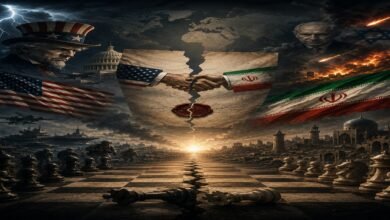
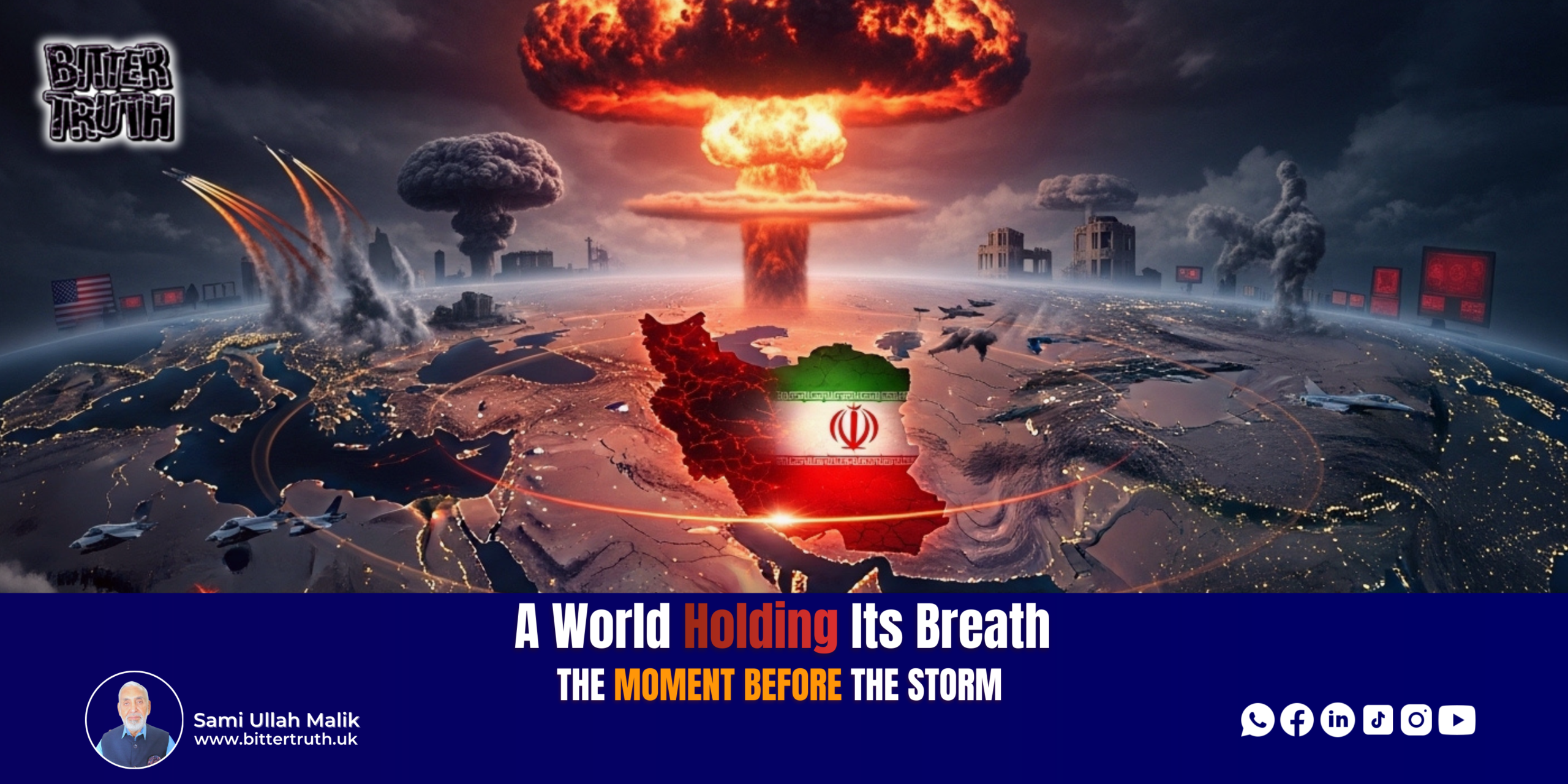
In the wake of successive strikes by the United States and Israel against Iran, Tehran’s retaliatory actions have cast a fresh unease across the global stage. The Middle East today appears seized by an agitation whose echoes reverberate through the long corridors of history. The politics of power has entered the field armed with its full panoply, while clouds of war gather upon the horizon as though centuries of uneasy silence were preparing to break into storm.
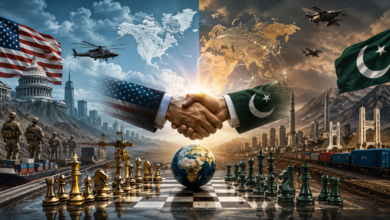
The atmosphere of the region is laden with foreboding, as if history itself were listening for the distant rumble of an approaching tempest. Pieces move restlessly upon the chessboard of power; within the chambers of diplomacy circulate uneasy whispers; and across the wider horizon of international politics the clouds of apprehension grow steadily darker.
Iran’s responses to the sustained assaults have borne testimony to a resolute determination in Tehran: that it will not bow before pressure but will instead raise the banner of resistance. Its firm and unapologetic actions have stirred a tempest across the firmament of global politics, the thunder of which resounds far beyond the immediate theatre of conflict. Despite relentless pressure, diplomatic manoeuvres, threats, media clamour, and the swirling tempests of propaganda, Tehran has refused to lay down its arms.
By declining to capitulate in the face of intimidation and diplomatic isolation, Iran has made plain that it does not regard this confrontation as a mere episode of war, but as a question bound up with the preservation of its sovereignty. Yet the ongoing exchanges between Iran on the one hand and the United States and Israel on the other have pushed the region towards a precipice of tension whose consequences are difficult to foresee.
It is in this charged atmosphere that a haunting question strikes the conscience of the world like a bolt of lightning: could the United States once again tread the dreadful path it chose at the close of the World War II, when atomic bombs were dropped upon the Japanese cities of Hiroshima and Nagasaki, reducing them to ashes in a matter of moments?
This is not a mere conjecture of political imagination. It is the echo of one of the most tragic chapters in human history, now reverberating once again within the conscience of our age. Should that terrible echo be heard anew, it would not simply represent a military decision; it would inflict yet another wound upon the moral conscience of civilisation itself.
The harrowing story of those days remains etched in humanity’s memory like a scar that time has never wholly healed. Were such a calamity to be repeated, it would not merely signify the devastation of a single nation; it would become another dark stain upon the brow of humanity and another grievous wound upon the conscience of civilisation. The tale endures like an indelible imprint upon the human spirit, one which even the dust of decades has failed to erase. If such an apocalypse were to recur, it would not be a strategic act alone but a moral catastrophe — a blow so deep that the modern world might find itself shrouded in a darkness thick with smoke and despair.
History bears witness that this region has long been the arena of rivalry among the world’s great powers. Yet the tableau now emerging appears more grave, and more ominous, than at any moment in recent memory.
Nuclear weapons are not merely instruments of war; they are a man-made apocalypse, capable of turning cities into rubble and silencing countless lives in the space of a single instant. Should — God forbid — a nuclear strike be launched against Iran, the devastation that would follow is of such magnitude that language itself trembles at the attempt to describe it.
For nuclear weapons are not simply symbols of military might; they are keys to the very gates of doomsday. Their destruction is not merely the thunder of explosives but a silent cataclysm whose consequences flow like poisoned rivers through the currents of time. There comes a moment when a blinding flash rends the sky — and then, in an instant, cities, towns, and the fragile lamps of human life begin to flicker and fade.
If such a tragedy were ever to occur, its devastation could never be captured by statistics alone. The fury of nuclear fire devours hundreds of thousands of lives in moments. Creatures across the earth would see the candle of existence extinguished in a single breath. Immediate deaths would form only the opening scene of that dreadful calamity; the deeper tragedy would unfold in the years that follow.
For radiation wounds do not fade with the passing hour. They seep into bodies and landscapes alike, carrying their poison through generations. This hidden fire plants the seeds of illness within the human body, seeps into the particles of soil, the droplets of water, and the currents of air, and leaves its mark for decades to come. It dims the fertility of the earth and infuses the atmosphere with a toxin whose echoes linger through time.
Thus nuclear devastation is never the tragedy of a single nation alone. It becomes a sorrow written upon the shared destiny of humanity itself. Its consequences cross borders with ease, ignoring the artificial lines that divide the world’s peoples. It is a wound that no balm of time can entirely heal.
An atomic strike, therefore, would not simply destroy one country; it would cast a shadow across the collective fate of mankind. History teaches with terrible clarity that the consequences of nuclear warfare never remain confined to a single land or people. Rather, they darken the horizon of humanity as a whole, leaving behind a legacy of suffering that belongs to the entire world.
The Wider Shockwaves of a Nuclear Catastrophe
In truth, a nuclear strike would not remain the tragedy of a single nation; it would swiftly become a calamity shared by the entire world. Its consequences would not respect borders nor be restrained by oceans. They would ripple outward across the common destiny of mankind. It would resemble a stone cast into the still waters of a global lake — the initial splash may be local, yet the widening circles travel far beyond the point of impact.
Nor would the consequences for Iran remain confined to the realm of military strategy or geographical loss. The nations of the world would inevitably pay a heavy price for such a miscalculation. The destruction of a single city, in such circumstances, would send tremors through the future of humanity itself.
The neighbouring states surrounding Iran would hardly escape such an apocalyptic scenario. Geography offers no sanctuary from the invisible reach of nuclear devastation. The Gulf monarchies — whose prosperity, stability, and political equilibrium remain closely bound to the air, waters, and economic arteries of this very region — would scarcely be immune to the slow and merciless advance of radiation.
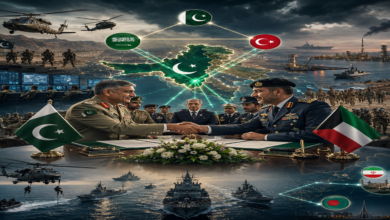
Nor would Iran’s other neighbours remain untouched. Both Turkey and Pakistan inhabit the same geographical circle, breathing the same winds and sharing a landscape where borders are little more than lines upon maps. The winds of the earth do not recognise frontiers, and radioactive clouds carry no regard for diplomatic agreements. The disasters that travel upon the currents of air require neither visa nor passport.
In such a moment even those Arab rulers who have sought to cultivate political proximity with Washington — showering the American leadership, particularly Donald Trump and members of his family, with lavish honours, jewels, and princely gifts — would be compelled to confront a stark and inescapable reality. For when a conflagration erupts, its heat does not discriminate between friend and foe. Once the flames are kindled, they rarely remain confined to a single land; they spread with a fury that engulfs entire regions.
History teaches us with relentless clarity that when the fires of war begin to burn, they consume the frontiers of allies and adversaries alike.
Yet the political consequences of this crisis may prove even more explosive than its military dimension. The reverberations within the architecture of global politics could be far more profound. Only days ago a telephone conversation between the President of the United States, Donald Trump, and the Russian President, Vladimir Putin, reflected precisely this atmosphere of anxiety and apprehension.
Moscow has voiced grave concern about the prospect of war and has urged an immediate ceasefire. Within the halls of international diplomacy, a growing realisation is taking hold: if this fire is not contained swiftly, it may grow into a blaze capable of consuming the entire structure of the global order. What now appears to be a regional crisis could swiftly transform into a convulsion that shakes the very foundations of international stability and rattles the pillars of the world economy.
Against this backdrop there are also reports that Russia and China remain in continuous consultation over the crisis. Beijing has reportedly advised Washington to halt the escalation of war and has expressed strong concern over reports suggesting that Iran’s senior leadership might become targets of a potential American strike.
The statements emerging from Moscow and Beijing suggest that the world’s major powers are acutely aware of the danger now looming on the horizon — a danger which, if allowed to spiral beyond control, could propel global politics into a new and perilous epoch.
Behind the formal curtains of diplomacy a silent yet decisive struggle is underway. In the chambersof diplomacy the words may be spoken softly, yet their implications travel vast distances. Around apparently quiet tables, diplomats are striving to erect a barrier around a fire that, if left unchecked, could engulf the world itself.
The great powers sense the peril: should the lamp of reason be extinguished, the sword of power may plunge the world into darkness. When the politics of force loses the guidance of prudence, history has often found itself standing at the brink of catastrophe.
Indeed, some strategic analyses now speculate that if the situation deteriorates further, Moscow might extend its nuclear “umbrella” to Iran. Such a step would imply that any further nuclear strike against Iran could be interpreted as an act of nuclear aggression against Russia itself. In such circumstances the fragile balance of global politics could fracture in a matter of moments, and the world might once again approach that dreadful threshold where the shadows of a third world war begin to gather.
At that moment humanity would be compelled to look into the mirror of its own history and decide whether it will bow before the arrogance of power or heed the counsel of wisdom.
History reminds us, again and again, that those who beat the drums of war are often the least acquainted with its horrors. Yet once the smell of gunpowder spreads through the air, it is the entire caravan of humanity that must pay the price. Time and again civilisation has learned that decisions taken in the intoxication of power have a habit of leaving entire societies buried beneath the rubble of their consequences.
Thus, the central question in this unfolding drama is not one of power, but of reason and humanity. If the lamp of wisdom is allowed to fade, the present spark in the Middle East could ignite a fire that engulfs not merely one region but the destiny of the entire world.
The lessons of history are unmistakable: the road to war often appears short and decisive, yet its destination is almost always lost in long corridors of darkness.
At this moment the world stands at a turning point where only reason, prudence, and diplomacy can safeguard the future of mankind. The issue before humanity is not the triumph of power but the preservation of wisdom and civilisation itself. If global leadership fails to keep the flame of prudence alive, the present spark in the Middle East may grow into a conflagration whose flames reach far beyond the region and seize the fate of the world.
War, in its first appearance, often seems swift and simple. Yet its ultimate end is almost invariably lost in a wilderness of shadows.
History teaches us repeatedly that wars are often decided in moments of passion, but their cost is paid by humanity in long years of painful reflection. The survival of civilisation depends upon those who sit within the chambers of power remembering a simple yet solemn truth: a single moment of error can sometimes become the regret of centuries.
Today the world stands at a crossroads where those entrusted with decisions in the citadels of power must remember that when the fires of war ignite, their flames rarely distinguish between friend and foe. Humanity now stands at a junction where one decision may lead towards the shores of peace, while another may plunge the world into the whirlpool of destruction.
If the lamp of wisdom is extinguished, the spark now flickering in the Middle East could easily become a fire whose heat engulfs the entire world.
The Final Reckoning of History
The beating of war drums may outwardly proclaim the confidence of power, yet history reminds us that their echoes often fade amid the ruins of shattered civilisations. Again, and again the chronicles of mankind have demonstrated a sombre truth: the path of force may appear swift and decisive, but its destination is almost always lost in long corridors of darkness.
Should the leaders of the world keep alight the lamp of wisdom, this present crisis too may one day be recorded in the pages of history merely as a stern trial through which humanity passed and endured. Yet if passion were to overwhelm reason, the present spark in the Middle East could easily kindle a conflagration whose flames might redden the skies of the entire world.
The preservation of civilisation therefore lies in a simple yet profound choice: that the leaders of nations must prefer the counsel of prudence, foresight, and peace over the intoxicating pride of power. For history bears witness to a painful reality — that a single moment of misjudgement can sometimes ripen into centuries of regret.
Amid all these possibilities and anxieties, the central question confronting humanity is stark and unavoidable: can the world, intoxicated by the illusion of power, truly afford to repeat the most dreadful experiment in the history of mankind — the unleashing of nuclear devastation?
If global leadership fails to keep the lamp of wisdom, prudence, and diplomacy burning brightly, the spark now flickering in the Middle East may grow into a fire whose flames would seize not merely a region, but the destiny of the entire world.
For in the final reckoning of history, nations are not judged by the force they unleash, but by the wisdom they exercise when the fate of civilisation itself hangs in the balance.