A Strategic Signal Disguised as Trade
The Politics Beneath the Tariffs

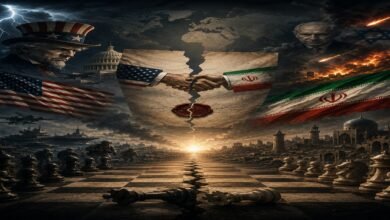
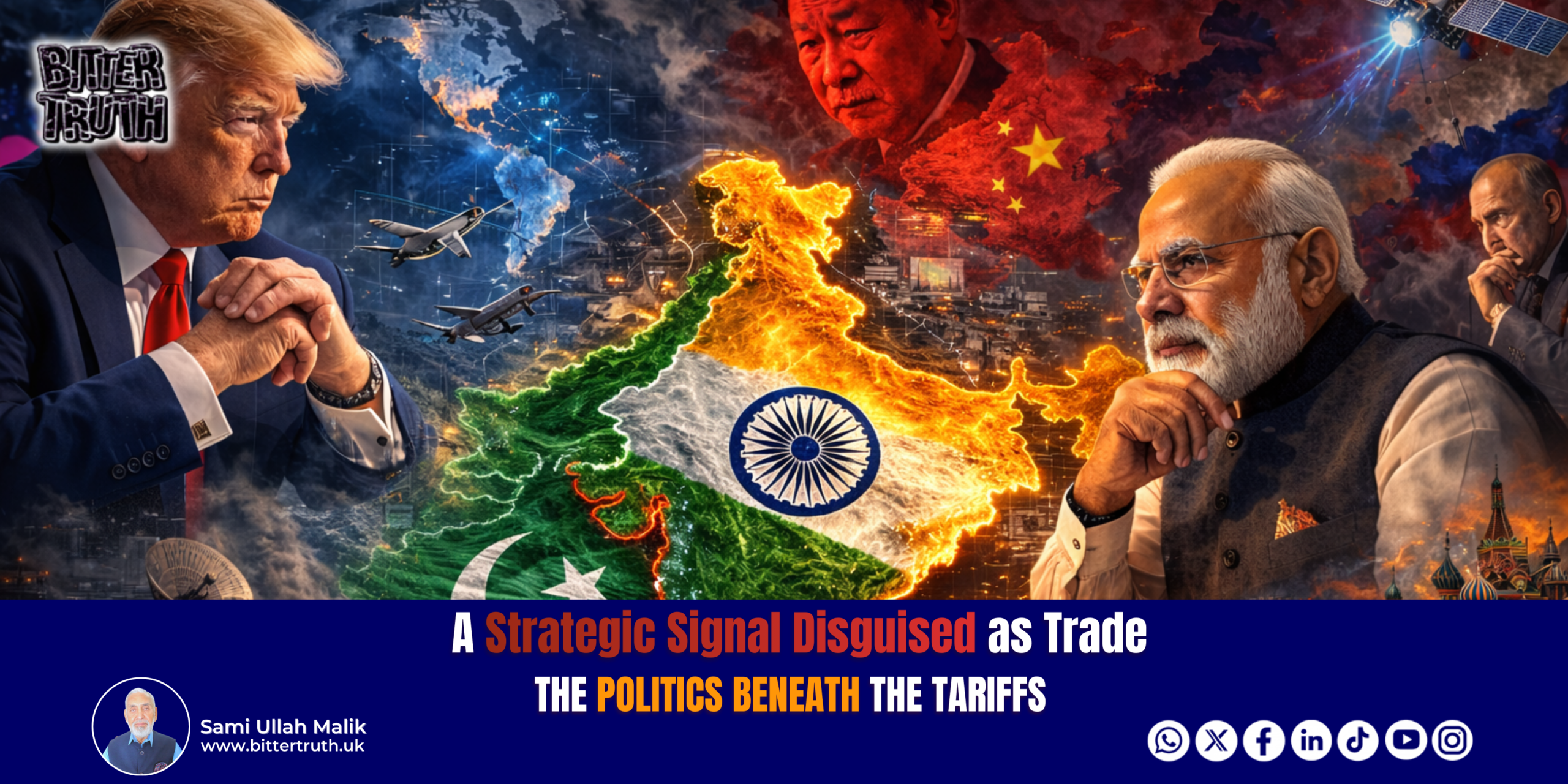
Today, I wish to draw attention to an international development which, on the surface, presents itself as a trade agreement, yet in substance signals a consequential shift in the political equilibrium of South Asia and, indeed, of the wider world. The recent trade arrangement between the United States and India—under which American tariffs on Indian goods have been reduced to 18 per cent—is not merely an economic concession. It is, rather, a carefully calibrated strategic message. A message addressed not only to China and Russia, but to the entire region—and one whose reverberations inevitably reach Pakistan as well.
Let me come directly to the central point. This agreement between Washington and New Delhi is not an act of commercial generosity; it is a force multiplier. And force multipliers, as history consistently reminds us, are fashioned first in the realm of economics long before they manifest on the battlefield. The agreement underscores a decisive shift in American perception: India is no longer viewed merely as a market, but as a strategic pillar—particularly in the context of China’s expanding influence. History teaches us, with sobering clarity, that when one state is endowed with disproportionate strength through external patronage, regional imbalance is not an accident; it is an outcome.
The history of the subcontinent bears ample witness to this truth. Whenever a single state has been extraordinarily empowered by external sponsorship, instability has followed in its wake. The current US–India trade agreement is but a new link in this historical chain, and to regard it as a purely economic occurrence would be an act of political naïveté.
Another agreement has appeared on the horizon of global politics with a quiet authority—one in which the words are few, but the meaning profound. The latest trade accord between the United States and India is not simply a gesture of economic alignment between two states; it represents a new angle in the balance of global power. The reduction of American tariffs on Indian goods to 18 per cent is, in appearance, a commercial measure. In essence, however, it is infused with politics, strategy, and the subtle currents of power.
Lowering tariffs to this level will enhance India’s export capacity, foreign exchange earnings, and industrial base. Over time, this economic reinforcement will inevitably find its way into defence budgets, medium- to long-term threat amplification, and force structures. The transformation will not be immediate, but it is assured. Viewed against the backdrop of the Russia–Ukraine war, intensifying US–China rivalry, and the geostrategic sensitivity of South Asia, this agreement assumes exceptional significance. Pakistan—standing at the confluence of geography, history, and politics—cannot afford the illusion of detachment. Decisions of this nature, even when indirect, shape the pulse of the region.
That President Donald Trump and Prime Minister Narendra Modi chose to announce this decision via social media is itself emblematic of our age: history is no longer written solely in grand chambers, but increasingly inscribed upon digital walls. President Trump declared on “Truth Social” that a trade agreement had been concluded, reducing mutual tariffs from 25 per cent to 18 per cent. The United States is, in effect, steadily strengthening India as an economic, strategic, and military partner—its principal objective being the containment of China’s influence. In this context, India’s economic empowerment carries the potential to disturb the regional balance of power, with direct implications for Pakistan’s security environment.
The reduction in tariffs will open new avenues for Indian exports and is likely to augment India’s economic strength. The lesson of history is unmistakable: in the subcontinent, economic advantage has often translated into military confidence and diplomatic assertiveness. Pakistan must therefore remain vigilant lest economic asymmetry evolve into strategic imbalance.
At present, the United States is actively engaged on three simultaneous fronts: containing China’s expanding reach; constraining Russia through the Ukraine conflict; and elevating India as a dependable regional pillar. The trade concessions extended to India are integral to this broader framework. They form part of a containment architecture directed at China—one in which India is expected to grow stronger economically, shoulder its own burdens, and advance American strategic objectives. Within this calculus, Pakistan is no longer regarded as a primary ally, but rather as a situational partner.
India’s prospective economic strengthening may directly influence its military self-assurance and diplomatic posture. For Pakistan, this is not a moment for emotional reaction, but for sober assessment—eyes open, nerves steady. The US–India agreement serves as a reminder that the world is changing with remarkable speed. Pakistan’s path forward lies in balance, dignity, and strategic insight—neither blind alignment nor needless confrontation.
It is also noteworthy that alongside this agreement, additional tariffs have been imposed on India over its purchases of Russian oil. This serves as a pointed reminder that in global politics, friendships are seldom permanent; interests almost always are. For Pakistan, the lesson is clear: energy security, trade policy, and foreign relations cannot be treated as isolated compartments.
Above all, this agreement reaffirms that the United States does not view India merely as a trading partner, but as a strategic pillar positioned against China. Pakistan’s challenge, therefore, is to present itself not as an extension of any bloc, but as an autonomous, credible, and reliable state.
The resonance of this announcement is heightened by the fact that US–India relations have experienced notable fluctuations over the past year—oscillating between warmth and strain. In such a context, the statement by US Ambassador Sergio Gor that “President Trump genuinely considers Prime Minister Modi a good friend” is not a casual diplomatic remark; it is a political signal. Under this agreement, India will not only reduce its tariff and non-tariff barriers vis-à-vis the United States, but will also commit—under the ‘Buy American’ framework—to large-scale purchases of American goods. Indications of procurement exceeding 500 billion dollars across energy, technology, agriculture, coal, and other sectors amount, in effect, to a transfusion of fresh blood into the American economy.
trade agreement, yet in substance signals a consequential shift in the political equilibrium of South Asia and, indeed, of the wider world. The recent trade arrangement between the United States and India—under which American tariffs on Indian goods have been reduced to 18 per cent—is not merely an economic concession. It is, rather, a carefully calibrated strategic message. A message addressed not only to China and Russia, but to the entire region—and one whose reverberations inevitably reach Pakistan as well.
Let me come directly to the central point. This agreement between Washington and New Delhi is not an act of commercial generosity; it is a force multiplier. And force multipliers, as history consistently reminds us, are fashioned first in the realm of economics long before they manifest on the battlefield. The agreement underscores a decisive shift in American perception: India is no longer viewed merely as a market, but as a strategic pillar—particularly in the context of China’s expanding influence. History teaches us, with sobering clarity, that when one state is endowed with disproportionate strength through external patronage, regional imbalance is not an accident; it is an outcome.
The history of the subcontinent bears ample witness to this truth. Whenever a single state has been extraordinarily empowered by external sponsorship, instability has followed in its wake. The current US–India trade agreement is but a new link in this historical chain, and to regard it as a purely economic occurrence would be an act of political naïveté.
Another agreement has appeared on the horizon of global politics with a quiet authority—one in which the words are few, but the meaning profound. The latest trade accord between the United States and India is not simply a gesture of economic alignment between two states; it represents a new angle in the balance of global power. The reduction of American tariffs on Indian goods to 18 per cent is, in appearance, a commercial measure. In essence, however, it is infused with politics, strategy, and the subtle currents of power.
Lowering tariffs to this level will enhance India’s export capacity, foreign exchange earnings, and industrial base. Over time, this economic reinforcement will inevitably find its way into defence budgets, medium- to long-term threat amplification, and force structures. The transformation will not be immediate, but it is assured. Viewed against the backdrop of the Russia–Ukraine war, intensifying US–China rivalry, and the geostrategic sensitivity of South Asia, this agreement assumes exceptional significance. Pakistan—standing at the confluence of geography, history, and politics—cannot afford the illusion of detachment. Decisions of this nature, even when indirect, shape the pulse of the region.
That President Donald Trump and Prime Minister Narendra Modi chose to announce this decision via social media is itself emblematic of our age: history is no longer written solely in grand chambers but increasingly inscribed upon digital walls. President Trump declared on “Truth Social” that a trade agreement had been concluded, reducing mutual tariffs from 25 per cent to 18 per cent. The United States is, in effect, steadily strengthening India as an economic, strategic, and military partner—its principal objective being the containment of China’s influence. In this context, India’s economic empowerment carries the potential to disturb the regional balance of power, with direct implications for Pakistan’s security environment.
The reduction in tariffs will open new avenues for Indian exports and is likely to augment India’s economic strength. The lesson of history is unmistakable: in the subcontinent, economic advantage has often translated into military confidence and diplomatic assertiveness. Pakistan must therefore remain vigilant lest economic asymmetry evolve into strategic imbalance.
At present, the United States is actively engaged on three simultaneous fronts: containing China’s expanding reach; constraining Russia through the Ukraine conflict; and elevating India as a dependable regional pillar. The trade concessions extended to India are integral to this broader framework. They form part of a containment architecture directed at China—one in which India is expected to grow stronger economically, shoulder its own burdens, and advance American strategic objectives. Within this calculus, Pakistan is no longer regarded as a primary ally, but rather as a situational partner.
India’s prospective economic strengthening may directly influence its military self-assurance and diplomatic posture. For Pakistan, this is not a moment for emotional reaction, but for sober assessment—eyes open, nerves steady. The US–India agreement serves as a reminder that the world is changing with remarkable speed. Pakistan’s path forward lies in balance, dignity, and strategic insight—neither blind alignment nor needless confrontation.
It is also noteworthy that alongside this agreement, additional tariffs have been imposed on India over its purchases of Russian oil. This serves as a pointed reminder that in global politics, friendships are seldom permanent; interests almost always are. For Pakistan, the lesson is clear: energy security, trade policy, and foreign relations cannot be treated as isolated compartments.
Above all, this agreement reaffirms that the United States does not view India merely as a trading partner, but as a strategic pillar positioned against China. Pakistan’s challenge, therefore, is to present itself not as an extension of any bloc, but as an autonomous, credible, and reliable state.
The resonance of this announcement is heightened by the fact that US–India relations have experienced notable fluctuations over the past year—oscillating between warmth and strain. In such a context, the statement by US Ambassador Sergio Gor that “President Trump genuinely considers Prime Minister Modi a good friend” is not a casual diplomatic remark; it is a political signal. Under this agreement, India will not only reduce its tariff and non-tariff barriers vis-à-vis the United States, but will also commit—under the ‘Buy American’ framework—to large-scale purchases of American goods. Indications of procurement exceeding 500 billion dollars across energy, technology, agriculture, coal, and other sectors amount, in effect, to a transfusion of fresh blood into the American economy.
This agreement also holds up a mirror to Pakistan. In contemporary global politics, it is not geography alone that commands attention, but economic credibility. Strategic location, once sufficient to secure relevance, no longer carries the same weight. Pakistan must therefore begin to view trade, exports, and the investment climate through the lens of national security. This is not a moment for reflexive response, but for far-sighted decision-making. The true requirement of national security is that power be subordinated to wisdom—not wisdom to power.
American flexibility towards Iran presents Pakistan with a timely opportunity: to promote regional connectivity, to balance energy and trade initiatives, and to establish itself as a responsible mediator. Recent diplomatic signals concerning Iran and the Middle East offer Pakistan the chance to act as a bridge—neither confrontational nor indifferent, but constructively mediatory.
Within this framework, Pakistan’s priorities must be clearly defined. Qualitative edge, electronic warfare capabilities, ISR, and multi-domain deterrence must extend beyond conventional strength to include superior air and missile defence. In the battle of narratives, silence is costly. Capability must find expression—not through bluster, but through measured demonstration, informed by experience and communicated with strategic intent. At intervals, it is both prudent and necessary to remind the world, through evidence rather than rhetoric, of one’s preparedness.
Prime Minister Narendra Modi, dedicating this decision to India’s 1.4 billion citizens, publicly thanked President Trump and welcomed the reduction in tariffs on “Made in India” products. This statement carries domestic political significance, where economic achievement is consciously woven into the fabric of national pride.
Above all, internal stability has now emerged as a strategic necessity. No foreign or defence policy can bear fruit unless the economy is stable, political cohesion is intact, and the state narrative is clear and consensual. These are the foundational pillars of national security. We must never lose sight of the fact that national security is not forged solely at borders; it is constructed through the equilibrium of economy, politics, and diplomacy. Internal stability, political harmony, and a coherent national narrative remain our greatest strengths.
Modi’s assertion that “when the world’s two largest economies and the biggest democracies work together, countless opportunities for mutual benefit arise” reflects India’s broader ambition—to be recognised not merely as a regional power, but as an equal partner of the United States. India will present this agreement as a validation of its global standing. Pakistan, by contrast, must resist emotional or purely defensive reactions. What is required is a sober, reasoned, and civilised narrative—one that projects Pakistan as a force for stability in the region. This demands an active National Strategic Council, the integration of foreign and economic policy, diplomatic flexibility alongside defence preparedness, and a consistent effort to present Pakistan internationally as a “state of stability”.
Yet, when examined closely, this entire development is not merely a tale of friendship; it is also a contest of manoeuvre. From the outset, the move was described as a political gambit—a characterisation that increasingly appears accurate. On one hand, the United States has repeatedly highlighted the downing of Indian aircraft during Indo-Pakistani tensions to shape regional narratives; on the other, it has drawn attention to the underwhelming performance of French Rafale platforms, thereby warming the market for American defence systems. This duality underscores the transactional nature of great-power politics.
It bears repeating: no strategic advantage can endure without internal political and economic stability. The central lesson for Pakistan is that foreign-policy successes cannot compensate for domestic fragility. Internal cohesion is itself an expression of national power.
In this shifting landscape, Russia once again finds itself in a dilemma. On Ukraine, it must either acquiesce to deeper isolation or reassess its long-standing relationship with India. History suggests that Russo–Indian ties have been shaped less by sentiment than by interest—a reality unlikely to change.
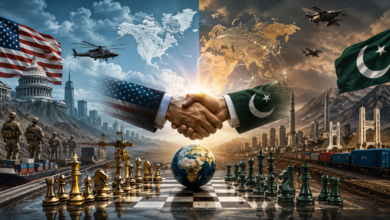
This agreement is not merely a chapter in US–India trade relations; it is a new inscription in the ledger of global power. It would not be inaccurate to say that political decisions are defined not by what is said, but by what is understood. This decision belongs to that category: trade in appearance, strategy in substance; friendship in language, interest in reality.
This is not a moment for reaction, but for anticipatory alignment and strategic calibration. If we treat this agreement as mere news, we shall awaken too late. If we read it as a strategic signal, we retain the agency to determine our next move. This is the distinction between a reactive force and a strategic state. This is not the hour for emotional slogans, nor for complaint; it is the hour for judgment and foresight. Not a moment for noise, but for reflection, balance, and learning from history—for consciousness.
If Pakistan understands itself at this critical juncture, the changing world can yet be transformed into opportunity. Viewed with the right perspective, Pakistan need not remain a mere piece on the board; it can be recognised as a dignified player. If decisions are taken with clarity amid change, Pakistan will not stand as a spectator on the new global chessboard but will play a respected and effective role. If not, these agreements will remain stories of others’ advancement alone.
May God grant us the wisdom to choose rightly. Amen.