Wounds, Hope, and the Path to Peace
Striving for Peace

This document is no mere anthology of headlines. It is rather the resonant echo of wounds endured, the vivid imprint of those intertwined destinies that have spoken, time and again, from the very pulse of two neighbouring nations. It does not merely recount news events; it captures instead a profound reflection of shared history, sacrifice, and trials that have carved their marks into either side of the frontier.
Modern history has inscribed within our collective heart moments of noble hospitality, nights of migration lit by compassion, as well as tragedies so bitter that they have recurred through the annals of time like iron chains clattering in the corridors of remembrance. At times, bonds of neighbourly kinship flourished. At others, the acrid dust of border disputes dimmed the sky. Perfidious foreign intrigue too has, on occasion, left hearts fractured and trust diminished.
Islam, in its eternal counsel, enjoins fraternity, forgiveness, and justice; the very foundation of human morality summons us toward an era of peace. It is for this reason that the talks convened in Istanbul stand illuminated by the imperative of fairness and reconciliation.
Here, beneath the banner of peace, we remind ourselves that nations who once shared shelter under the same roof of humanity must not now allow wounded sentiments to erupt into violence. Such a spectacle is a humiliation before the world and a solemn warning for us. History teaches that the dramatic tale of South Asia is punctuated not only with personal sacrifices and national hardships but also with external pressures and regional power play that inflicted grievous strain upon communal bonds.
Islamic ethics demand that where blood has been shed and sorrow persists, the pathways of justice must be pursued with prayers for the fallen, not with exultation for vengeance. Hence, this dialogue and diplomatic gathering constitute a rare opportunity. Through a union of prudence, international law, and humanity’s sacred principles, we must seek those avenues that extinguish warfare and restore confidence between people and states alike.
We stand at a moment of moral and intellectual trial. While the armed forces and police of both nations have borne immense sacrifice, sincerity, patience, and a steadfast commitment to peace remain indispensable virtues. The wounds of hostility run deep, yet the guidance of Qur’an and Sunnah offers a course that places negotiation upon the firm pillars of peace, justice, and compassion.
Islam has ever repudiated bloodshed, vengeful pursuits, and the spectre of proxy conflict. It has upheld harmony, brotherhood, and patience. The Qur’an reminds us:
وَقُولُوا لِلنَّاسِ حُسْنًا
“Speak kindly to all people.” (Surat al-Baqarah 2:83)
This principle, timeless in its wisdom, is the very compass that should guide the Istanbul talks. Both nations must recall the history they share, the sacrifices borne across borders, and chart a course founded on transparency, peace, and mutual confidence.
Recent reports affirm that Pakistan and Afghanistan reached an agreement for an immediate ceasefire in Doha, following a week of intense border clashes, the most severe since 2021. Pakistan’s armed forces urged Kabul to restrain militant groups operating from Afghan soil. Casualties among military and police personnel underscored the human cost of such confrontations. In such moments, the patriotic sentiment that “we sleep in comfort because our defenders stand awake at the frontier” becomes not a slogan but a sombre metaphor for national vigilance and sacrifice.
This assertion touches upon two parallel realities: one, the heroic ideal of those who dedicate their lives to guarding the nation; and two, the public mandate that, in times of peril, elevates such sacrifice into the essence of national security.
These are not rhetorical flourishes. They represent the grim outcome of border hostilities, as corroborated by both local and international reporting. The push toward negotiated security arrangements in Doha and later in Istanbul arises from precisely this context of heightened concern.
According to documented findings of the United Nations High Commissioner for Refugees (UNHCR), more than 2.8 million Afghan nationals remained in Pakistan by December 2024, and by January 2025 the figure approached 3 million under official refugee classifications. Such statistics lend perspective to Pakistan’s longstanding narrative. For over four decades, Pakistan has shouldered the mantle of hospitality, sheltering Afghans fleeing war, occupation, and unrest.
Pakistan’s recent statements reflect both historical memory and a sense of moral expectation: that generations of Afghans have been raised within Pakistan’s borders, educated and nurtured by its society, and that scarcely anywhere in the world has such hospitality been extended at such scale and duration.
This discourse embodies two cultural truths: first, the moral debt of hospitality; second, the profound economic and security pressures felt by a host whose resources and stability strain under an extended burden. The grievance persists that despite this asylum, elements within the refugee population have on occasion been implicated in threats to national security, with evidence presented repeatedly to the Afghan authorities. Kabul’s dismissal of these concerns remains a matter of serious contention.
During the Doha negotiations, Pakistan laid before the world its verified evidence that attacks within its borders were being conducted from Afghan soil. Hospitality, extended over decades, now stood shadowed by “violations of peace and order.” This raises a poignant question: how can a nation that has offered sanctuary in times of despair now find itself the victim of terror inflicted from the very land of those it sheltered?
This contradiction, both moral and practical, reveals a stark clash between the sacred duty of hospitality and the grinding cost of national defence. Pakistan has paid for this contradiction with precious lives and strained treasure.
It is therefore no surprise that voices within Pakistan ask, with rightful bewilderment, how a people so generously hosted could allow themselves to be weaponised against their benefactors, serving as a proxy for a neighbour whose enduring hostility toward Pakistan needs no introduction. India, shamed by recent setbacks and forced behind a diplomatic veil, now seeks vengeance by cultivating Afghanistan as its proxy.
The question cuts deep, both ethically and psychologically. In our civilisation, hospitality is a sacred trust. Within our faith, the Qur’an reminds us that kindness must be answered only with kindness. Yet the ruthless arithmetic of geopolitics often pits gratitude against geography and national interests upon the scales of expediency.
Repeatedly Pakistan’s leadership has asserted that militant operations emanating from Afghan soil fuel terror within its borders. Kabul has denied or diluted these claims, yet the conflict forms the central axis of negotiation. The matter cannot be dismissed as mere moral complaint; in the real theatre of geopolitics, it defines the fragile line between war and peace, a line already scarred by military action and forceful declarations.
Pakistan’s lament that “Afghanistan acts as India’s proxy against us” stands as a perilous element of this political narrative. Such accusations, framed by history and geography, bear the potential to elevate border tensions to new and grave heights.
The Defence Minister of Pakistan remarked that Afghan refugees have “captured jobs and businesses,” and while calling for neighbourly coexistence, he warned that, should diplomacy fail, the “path to open war remains.” His words carried two contrasting impulses within a single breath: the socio-economic anxieties of a host nation, and the unequivocal caution of a state pushed toward the precipice.
It would serve the relations of these two nations better if Islamic brotherhood were not confined to rhetoric. True fraternity requires transparent economic engagement, fair opportunities in trade and employment, and practical cross-border cooperation. Peace built on sentiment alone soon falters. Peace that thrives demands mutual commitment, enforced with sincerity, especially since Afghanistan, landlocked and interdependent, relies profoundly on Pakistan’s geography for its socio-economic survival. To leverage proxy escalation as blackmail risks calamities neither nation desires.
Following intense border clashes, an immediate ceasefire was reached in Doha. Thereafter, both parties proceeded to Istanbul for a second round of negotiations under Turkish auspices, endeavouring to establish mechanisms of enforcement, monitoring, and the architecture for lasting peace. This gathering is not merely another discussion; it is, potentially, the inauguration of practical peace.
In context of these reports, both states pledged mutual respect for sovereignty and agreed to cease support for armed activities across borders. While the charge of proxy involvement is not explicitly stated in official documents, the implication remains unmistakable. Pakistan’s grievance is framed as the greatest sorrow: that hospitality is answered by hostility.
During the Istanbul session, Pakistan’s Defence Minister reiterated that if talks collapse, “open war” remains on the table. Economic and social strains related to refugee integration continue to stoke anxiety. Though precise figures were not cited, concerns regarding labour and commercial displacement reflect genuine fears that pressures of mass refuge may destabilise the host society.
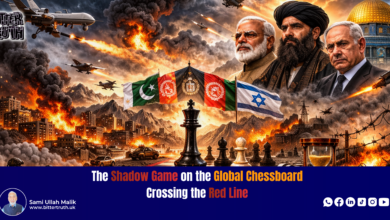
Negotiations between Pakistan and Afghanistan continue. The ceasefire reached in Doha—an interim peace first agreed in October 2025—has been extended to allow for deeper discussion on frameworks of enforcement and sustained stability. Istanbul now serves as the forum where mechanisms of joint oversight, border respect, and confidence-building measures are debated under the watchful eyes of an international mediator. The substance of a permanent accord remains under cultivation.
The Qur’an voices a counsel befitting this moment:
وَإِنْ جَنَحُوا لِلسَّلْمِ فَاجْنَحْ لَهَا
“If they incline toward peace, then incline yourself to it.” (Surat al-Anfal 8:61)
This injunction calls both sides to choose conciliation over confrontation, grounding diplomacy in divine wisdom and human responsibility.
The negotiations convened in Doha between Pakistan and Afghanistan culminated in an immediate ceasefire and a mutual pledge to respect each other’s sovereign frontiers. This commitment, solemn in tone yet fragile in execution, formed the bedrock of subsequent diplomatic endeavours. The declarations issued under the auspices of Qatar and Turkey bore testimony to this understanding, though their true test lay not in rhetoric but in the vigilance and trust required for practical enforcement. Hence, the deliberations in Istanbul sought to devise the machinery that might convert intent into stability.
According to the documents presented at the talks, three principal axes of discussion commanded the table:
A Joint Monitoring and Compliance Mechanism.
A structured system capable of tracking militant infiltration, regulating cross-border movement, and reporting violations with transparency and urgency.
Sovereignty and International Legal Obligations.
An affirmation that neither nation’s soil must serve as a battleground for insurgent adventurism, and that borders—however porous in history—must assume the dignity of recognised law.
Economic, Humanitarian, and Commercial Concerns.
Questions of refugees, livelihoods, and frontier trade drawn from the broader tapestry of peace rather than relegated to a military footnote.
The Pakistani delegation was spearheaded by the Additional Secretary for Afghanistan Affairs, alongside key diplomatic and security officials; the Afghan side was led by Deputy Minister for Interior Affairs Haji Najeeb. Turkish and Qatari facilitation endowed the Istanbul conclave with weight and continuity. These sessions, stretched over several days, examined each tremor that could unsettle the ceasefire’s still-forming foundations.
Striving for progress, both sides laboured toward outcomes that might prevent militants from roaming unchecked across borders, reinforce mutual legal respect, and transform a temporary silence of arms into a durable architecture of coexistence. Failure, as repeatedly signalled by Pakistan’s defence leadership, could compel measures neither side wishes to contemplate. The words “open war” has already been uttered. Economists warn that the mere disruption of border trade has triggered sharp spikes in the price of everyday essentials, fresh produce in particular, within Pakistan’s domestic markets.
A stark deficit of trust now haunts the relationship. History’s ledger records each side claiming the other struck first. Yet, in Doha and Istanbul, Pakistan submitted concrete intelligence, asserting that the Taliban government had been notified repeatedly of terrorist sanctuaries and hostile movements emerging from Afghan soil. Despite Kabul’s assurances that “our land shall not be used against any country,” Pakistan insists that only verifiable action can dispel doubt. A plan has accordingly been tabled to guarantee the neutralisation of cross-border infiltration. The Taliban, for their part, have proposed relocating TTP fighters and associated factions deeper into Afghanistan. Islamabad seeks bolder guarantees: not merely displacement of danger but its eradication.
Humanitarian realities linger beneath the gunmetal surface. Refugees, employment anxieties, and the fragile prospects of social integration shadow every procedural line. Peace cannot be bartered by generals alone; it must feed families and secure futures.
The Qur’anic injunction resounds through this theatre of strained neighbourliness:
هَلْ جَزَاءُ الْإِحْسَانِ إِلَّا الْإِحْسَانُ
“Is there any recompense for good other than good?” (55:60)
Diplomacy tests whether this eternal ethic might still shape statecraft.
The Diplomatic Frame
The Doha-Istanbul cycle exemplifies mediation as the chosen antidote to escalation. Qatar’s steady hand helped secure the initial ceasefire on 19 October 2025. Istanbul inherited its stewardship, tasked with mechanisms for reporting violations, coordination between military commands, and a joint technical forum capable of resolving crises before bullets replace words. Turkey’s role remains pivotal; its table becomes the arena where war is postponed by wisdom.
Potential Futures
If the monitoring architecture takes hold, regional commerce may revive, borderlands may breathe, and hope may reclaim ground seized by fear. A peace founded upon sovereign respect promises prosperity, mobility, and the quiet dignity of uneventful days.
Should the framework collapse, however, the consequences could be catastrophic. The minister’s sombre warning rattles diplomatic chambers: a march toward open conflict would devastate economies already under strain and plunge an entire region back into the inferno from which it seeks escape.
The moment demands not only agreements inked in foreign capitals, but an awakening of statesmanship that honours shared history, faith, and geography. Providence has placed these nations behind the same mountain ranges. Wisdom must ensure they do not fall upon the same sword.
This period of dialogue reflects a tension in which history has long favoured hospitality, while the present has brought instruments of caution into play. The report by the Financial Times outlining the ceasefire agreement states that Pakistan and the Afghan Taliban administration reached an understanding in Doha that they would refrain from hostile actions, would not use each other’s territory, and would not attack each other’s security institutions or infrastructure. In other words, both ceasefire and respect for borders have been incorporated into the agreement, marking the first time such mutual recognition has been formalised at this level.
The antidotes to peace exist on both sides: on one hand, the bonds of longstanding fraternity; on the other, the realities of geography and security. The Istanbul round of negotiations provides a pause in this struggle—this pause may either open the door to goodwill or place parties on the threshold of renewed violence.
Now, with the veil lifted at the Istanbul negotiating table, we must remember that although the wounds run deep, the roots of hope can also emerge. Students of history know that at the root of every friendship and enmity lie bitter experiences and misunderstandings, which can be resolved through dialogue. The Istanbul negotiations teach us that, despite deep resentments and injuries, it is necessary to sincerely cultivate the roots of trust and goodwill once more. Alleged claims and accusations should be viewed only in a historical and analytical context, not as a basis for action. Peace, fraternity, and human compassion demand that dialogue continues to prevent border clashes. Transparency and international oversight must guide the negotiation process. Acknowledgement of both past favours and grievances is essential, and progress must be made in light of Islam’s principles of peace.
Certain alleged statements and rumours continue to circulate in the public sphere—some are interpreted as strong political signals or suspicions—but the path to true justice requires evidence, references, and transparent inquiry. One-sided accusations or unsubstantiated claims can poison the peace process; therefore, the negotiation process demands that all parties proceed with transparency, confidence-building, and responsibility under international oversight.
Islam teaches patience and peace; the noble Sunnah of the Prophet ﷺ emphasises the role of brotherhood and forgiveness in the survival of humanity. This religious and ethical imperative commands us to regard ongoing negotiations as a sacred duty and to act to extinguish the flames of hatred. If we truly desire peace today, we must establish principles of peace grounded in the Qur’an and the Sunnah, recognising both past favours and grievances, so that both nations may share the burdens of life together.
In the mirror of history, only those nations will shine which have softened hearts instead of wielding the dagger; and it is our duty to keep dialogue alive to the end, replace swords with peace, and adopt law and transparent procedures to rectify shortcomings. In the reflection of history, only those nations will endure that choose compassion over the sword and embrace law and transparency to correct faults. This is our duty and the Islamic imperative.