Will Pakistan Bow to Tel Aviv While Al-Aqsa Bleeds?
Echoes of Al-Aqsa, Deaf Ears in Islamabad

The Shadow Beneath the Covenant: A Lament for Justice and the Prelude to Awakening
When the first echoes of the adhan rose upon the brow of the East, it was not merely a call to prayer — it was the overture of unity. That voice, reverberating from the sanctity of Al-Aqsa to the hallowed precincts of the Kaaba, summoned all of humankind to a singular and sovereign Lord — before whom neither Pharaoh could boast, nor Nimrod defy.
And yet, in a moment laced with the irony of history, the inheritors of that sacred call now circulate a document solemnly titled The Abraham Accords — a pact whose shadow proves more ominous than its substance. It is not ink upon parchment that alarms the conscience, but the spectre it evokes — a fresh blot upon the fabric of history, reawakening wounds that had only begun to scab.
Behind the veil of peace lies the sting of humiliation; beneath the robe of reconciliation, the threadbare garb of subjugation. Cloaked in the rhetoric of fraternity is the bitter venom of acquiescence — potent enough to fell the pride of nations.
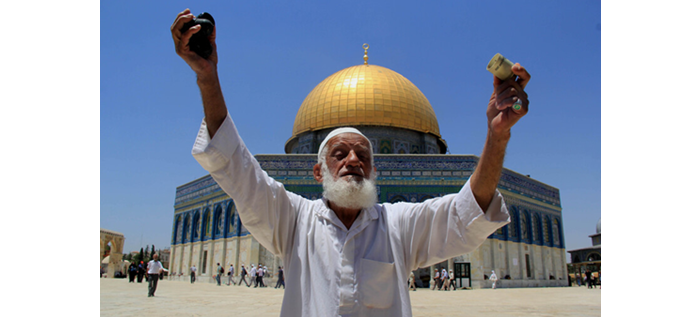
Palestine’s soil still cradles the fragrance of its martyrs, and Jerusalem remains shackled, though defiantly unbowed. Once, prayers rose from every tongue for the liberation of the First Qibla.
Today, the very banners that flutter before its grieving walls are not those of resistance, but of recognition — of a foreign flag once considered sacrilege. The hands once raised in prayer above the coffins of martyrs now extend in trade agreements and diplomatic overtures with the usurper.
History gazes on in bewilderment. The Ummah lies mute. And the wider Islamic world slumbers in a torpor so deep, even the dust of injustice cannot rouse it.
This text, then, is not a passive reflection. It is a cry — a cry of protest, of awakening, of inquiry. Herein, we shall not merely unravel the diplomatic embroidery of the Abraham Accords, but peel back its layered meanings, untangle the motives that undergird it, and dissect the cultural incursion that shadows its every clause.
For whom is this a treaty of peace, and for whom a quietus? Who sees it as a gateway to progress, and who as shackles to a new form of bondage?
The pen of history has not yet dried; the scroll of time still awaits its final verses. But let it be known: those who do not write their own histories will find them written by victors — and then imposed upon their necks in the form of treaties, not truths.
This, therefore, is not merely an analysis — it is a cry of conscience, a dirge for Al-Quds, and the clarion call of awakening. Let us behold the Abraham Accords not under the dazzling dazzle of diplomacy, but in a light that does not dazzle, but disturbs — a light that pierces illusion and interrogates complacency.
When history shakes the dust from its hem, it does not simply narrate events — it unspools the interplay of civilisations, the schemes of empires, and the subtexts of ambition. The Abraham Accords belong to such a chapter — one where the language is diplomatic, but the intent imperial; where theology is evoked, but power prevails.
In the year 2020, under the unorthodox aegis of President Donald J. Trump, a document was born on the political horizon of the Arab world — christened The Abraham Accords. That such a title should be invoked is, in itself, an act of theatrical diplomacy: a gesture cloaked in the spiritual lineage of Abraham, patriarch to Judaism, Christianity, and Islam alike — yet the reality, earthbound and stark, speaks more to geopolitical calculus than to sacred fraternity.
Under this accord, the United Arab Emirates and Bahrain offered formal recognition to the State of Israel — with Morocco soon following suit. This was no mere diplomatic thaw; it was a paradigmatic shift. The ancient axis of Arab-Israeli enmity was redrawn. Those who once faced Jerusalem in sorrow now turned westward in alliance.
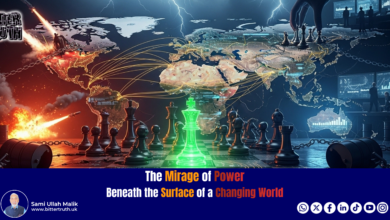
Far from being a simple rapprochement, the Accords mark a tectonic rearrangement — an American-crafted chessboard where the pieces move not for peace, but for containment; not for brotherhood, but for hegemony. It is diplomacy in the language of virtue, masking ambition in the garb of unity.
What appears as a trumpet of peace is, in fact, the muted war-drum of exclusion — with Palestine shunted offstage and Iran cast as the eternal adversary. The aim is clear: to enshrine Israel as a legitimate actor in the Arab world, while forging a consolidated front against Tehran — all under the benevolent guise of dialogue and harmony.
And most dangerously of all, it seeks to render this new order socially palatable — not by persuasion of the heart, but by suppression of the voice. The Arab street, so often ignored, is once again bypassed. Washington leads; the region follows. And thus, under the star-spangled shadow, the old imperial choreography resumes its grim ballet.
Beneath the Abrahamic banner flutters the old flag of force. Beneath the promise of peace lies the same strategy of dominance — where the pawns are many, and the kings few.
The Abraham Accords: Diplomacy Draped in Silk, Anchored in Steel
It would not be an exaggeration to describe Jared Kushner — son-in-law to President Donald Trump and a political neophyte by formal reckoning — as the unorthodox architect of one of the most audacious diplomatic maneuvers of the early twenty-first century. Operating not from grand chancelleries but through hushed backchannels, Kushner brokered what would come to be known as the Abraham Accords, fusing the political destinies of Israel and select Gulf Arab states through a tapestry woven in the looms of ambition, calculation, and quiet betrayal.
The United Arab Emirates, Bahrain, and later Morocco did more than merely recognise the State of Israel; they inaugurated an era of open commerce, intelligence exchange, and technological cooperation — all under the courteous camouflage of “peace.” In truth, what emerged was less a concord of civilisations and more a compact of converging interests — interests shaped in Washington, sanctioned in Riyadh, and crowned in Tel Aviv.
At the heart of this diplomatic sleight-of-hand was a curious bond — one forged between the young Jewish-American envoy and Saudi Arabia’s ambitious Crown Prince, Mohammed bin Salman. To dismiss this relationship as merely transactional is to miss the tenor of its intimacy. Reports from credible quarters suggest that bin Salman, in his inner circles, boasted that Kushner “revolves around me” — that he is, quite literally, “in my pocket.” Such a metaphor, loaded and incendiary, speaks volumes not only of their political entente but of a personal allegiance that blurred the lines between diplomacy and complicity.
The covert depth of their camaraderie would soon find dramatic expression. According to revelations by The Intercept, Kushner, privy to classified American intelligence briefings, is said to have disclosed sensitive names of royal dissidents to bin Salman. Within weeks, a sweeping anti-corruption purge was unleashed. Over 300 princes, businessmen, and former ministers were detained at Riyadh’s gilded prison — the Ritz-Carlton. Presented as a national cleansing, it was in effect a surgical consolidation of power — eliminating rivals, amassing wealth, and centralising authority, all under the aegis of a Kushner-assisted campaign of silence and steel.
From 2017 to 2019, this purge netted an estimated $100 to $400 billion in assets — a staggering figure by any reckoning. Yet it is the nature, not merely the quantum, of this operation that invites concern. Was it governance, or was it autocracy under the velvet glove of reform? Was it coincidence that the young American adviser, fresh from the West Wing, would later receive a $2 billion investment into his private equity firm, Affinity Partners, from none other than Saudi Arabia’s Public Investment Fund — despite objections from its own financial advisers, who deemed the deal “unacceptable on all counts”? The Crown Prince, wielding royal prerogative, simply overruled them.
This was not diplomacy in its classical sense; it was a royal bargain cloaked in the language of markets and modernisation — a transactional entente reminiscent of the great power intrigues of the nineteenth century. And just as those empires once carved spheres of influence under the guise of civilisation, so too was Kushner’s modern-day enterprise gilded in the rhetoric of progress yet rooted in the raw calculus of power.
When the U.S. Congress sought to investigate whether Kushner had acted as an unregistered foreign agent on behalf of Saudi Arabia, he dismissed the charges with lawyerly poise and moral high ground — “I followed every law and ethical guideline,” he asserted. Yet behind the legal formalities lingered a moral ambiguity that no Senate hearing could quite exorcise.
Indeed, the geopolitical implications of this friendship reverberated far beyond the Saudi court. Kushner, ever the emissary of influence, publicly floated the idea that Saudi Arabia’s recognition of Israel would herald a cascade of normalisations — drawing in other Muslim-majority nations such as Indonesia and, pointedly, Pakistan.
This suggestion, delivered at an international forum with studied calm, was anything but benign. To name Pakistan — a nation forged on the ideological crucible of Islam and historically committed to the Palestinian cause — was to drop a rhetorical grenade into the heart of its political conscience. The reaction was swift and unsettled. Defence Minister Khawaja Asif conceded that the notion of “normalisation” had entered the realm of national discourse, albeit without official policy change. Yet in that subtle shift lay a storm gathering on the horizon.
Kushner’s comment was more than a speculative aside; it was a deliberate provocation, one that ignited deep-seated anxieties among a public already sceptical of creeping diplomatic alignments. In Pakistan — where the memory of Al-Quds pulses not as policy, but as sentiment — to recognise Israel would be no less than a seismic reordering of national identity. It would breach not merely constitutional doctrine but pierce the very soul of the polity. Such a move could trigger protests on an unprecedented scale, from mosques to marketplaces, from campuses to capitals.
Is it not fair, then, to ask: was Kushner merely forecasting a geopolitical trend, or was he planting the seeds of domestic discord? The line between insight and instigation is, at times, perilously thin.
This much is certain: in the corridors of modern diplomacy, the soft murmur of private deals now echoes louder than the grand speeches of parliaments. Where once ambassadors moved by protocol and treaties, today influence flows through private firms, princely friendships, and whispered promises in candlelit rooms. The Abraham Accords, for all their pomp and poetry, may yet prove less a peace treaty than a prelude — not to harmony, but to a new age of realpolitik gilded in religious symbolism.
The Shadow of the Crescent: The Abraham Accords and the Eclipse of Conscience
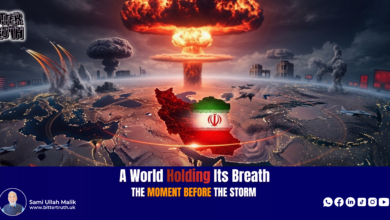
Pakistan remains the lone sentinel in the Muslim world—a nuclear power standing on the precipice of global scrutiny and regional hostility. In recent televised statements, Israeli Prime Minister Benjamin Netanyahu identified Pakistan, alongside Iran, as a strategic threat. His remark branding Pakistan’s nuclear arsenal as “unstable” was no mere diplomatic slip—it was an unmistakable overture to a more sinister design, a clarion call to pre-emptive vigilance.
Israel’s political elite have long declared that a “second Iran” shall never be tolerated. In that light, Netanyahu’s conflation of Pakistan’s nuclear programme with existential threat only affirms what has been whispered in the corridors of Western and Zionist strategists: Israel seeks to obliterate any rival power that dares to challenge its regional hegemony.
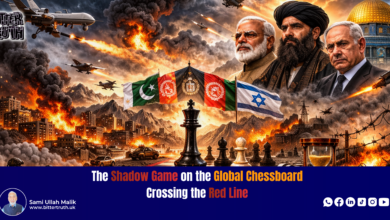
This calculus—of deterrence cloaked in aggression—has in recent years emboldened the unholy nexus of Tel Aviv and New Delhi. During the height of Indo-Pakistani tensions, Israel did not merely sell India sophisticated Harop drones; it dispatched operators alongside them. In the skirmishes that followed, nineteen Israeli personnel were reportedly killed—shipped home in silence, under the shroud of night. It was in the wake of this clandestine catastrophe that Pakistan’s military signalled Israel as a potential adversary. The American diplomatic machine surged to action.
President Trump, no stranger to theatrical diplomacy, personally intervened to engineer a ceasefire. India’s Foreign Minister later confessed: without that ceasefire, annihilation loomed. One must now ask: Is the region bracing for a second act? Will the forces of Tel Aviv and Washington, humiliated once, provoke New Delhi again—not for India’s honour, but to erase Pakistan’s military prowess and nullify its nuclear edge? Such a confrontation would not be born of regional grievances, but of a global realignment—a new covenant forged in the name of peace, yet reeking of calculated domination.
For beneath the veil of the Abraham Accords—so benign in title, so beguiling in tone—lurks a darker truth: a doctrine that sanctifies Israeli primacy and demonises all resistance as terrorism. Those who hail this pact as a beacon of peace would do well to remember: true peace requires justice, not subjugation.
In the mirror of our age, we search for the reflection of Abraham; instead, we are greeted by the smirking face of Nimrod. Once we looked to the heavens, hoping to find the gleam of monotheism among the stars. Now, we stare at the ground, watching treaties signed with ink mixed in the tears of Palestinian orphans and the dust of Jerusalem’s shattered stones. The Abraham Accords are not a tribute to Abraham—they are an exploitation of his name, a sacrilegious pact signed by the custodians of the Kaaba over the silence of the First Qibla.
Where now are the men of purity whose eyes once lit up with the call to prayer echoing from al-Quds? Where are the tongues that cried, “Labbayk ya Aqsa!” with hearts ablaze?
The Qur’an admonishes: “And hold fast, all of you together, to the rope of Allah, and do not be divided.” (Al-Imran: 103)
Yet today, we have forsaken that rope, and in its place embraced the silken snare spun in Tel Aviv. The very name of Abraham, whose footprints remain etched in the stone of Safa, once summoned men to the creed of la ilaha illallah. Now, that name has been repurposed to auction off Jerusalem, inch by sacred inch.
O people of the pen! O keepers of conscience! Is it not time to halt the caravans marching silently beside the idols of our age? O people of the East! Have you forgotten the day when Salahuddin’s sword shattered the Crusader chains from the soil of al-Aqsa? That mosque still stands, that mihrab still faces heaven, but its custodians now bow not in prayer, but at negotiation tables.
Why then do we seek their approval, bartering dignity for diplomacy? Will these accords bring peace—or will they, beneath their velvet veneer, distort our identity and fracture our spirit? Let it not be forgotten this is the land where the Prophet Muhammad (peace be upon him) led the prophets in prayer on the night of ascension. Where Umar ibn al-Khattab entered Jerusalem barefoot, his sandals in hand, upon sacred earth. A land made holy by prostration—now spread upon the banquet tables of diplomatic appetite.
Did Umar not declare, “If a dog were to die thirsty on the banks of the Euphrates, Umar would be held accountable”? And shall no question be asked today of the tears of al-Aqsa?
This is not an article—it is the knocking of a restless conscience. A dawn-call in the dead of collective slumber. A cry yet unspoken but echoing in the chambers of every believing heart.
Let us give voice to that cry. Let us robe our protest in the dignity of scholarship. Let us tear through the velvet veil of the Abraham Accords to reveal the political coercion, the spiritual deceit, and the cultural conquest buried beneath. For if history has taught us anything, it is this: power can subjugate men, but it cannot conquer nations.
And in the land of Palestine, that wound upon the brow of history, every new peace bleeds like a fresh betrayal.