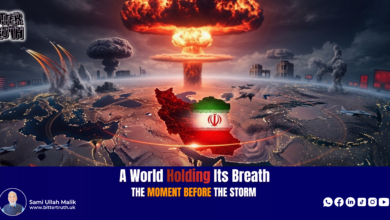

Today It’s Iran, Tomorrow It Could Be Us
The Next Target? Unity or Extinction

When one surveys the ceaseless revolution of days and nights that constitutes the chronicle of mankind, a single injunction seems to resound across the centuries: “Hold fast, all of you together, to the cord of God, and do not be sundered.” Yet, to our sorrow, we have spurned the very weaving of fraternity and let the Divine rope slip untaken from our grasp. In the present contest between earth and firmament, the Muslim ummah’s own sectarian fissures have been honed into a flashing blade whose glittering edge now cleaves the bosoms of its makers.
Should the Muslim polities fail to draw into concord, each ineluctably shall await its turn upon the scaffold. That warning is no flight of diplomatic rhetoric; it stands, grim and implacable, at the very wickets of our common defence, a verdict delivered by history herself. The phrase—If the Muslim nations do not unite, each shall have its turn—is neither a rabble rousing slogan nor the facile flourish of some itinerant orator. It is, rather, the cry that rises from the graveyard of empires: a lament that echoes from the fall of Granada to the downfall of Baghdad, tolling the knell of every Muslim dominion betrayed by its own disunion. History holds before us a mirror in which our prospective fate, more menacing than any conjecture, already peers back. It is no mere spectre of tomorrow; it is the naked truth of today—truth that many a Muslim capital has sought to muffle beneath a threadbare cloak of diplomacy, but which now demands to be confronted with an unclouded brow and an awakened conscience.
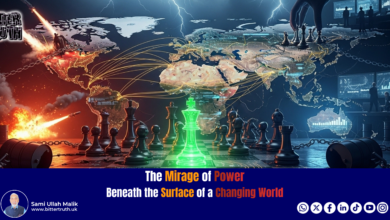
Iran is upon the bull’s eye this day; to morrow it may be Pakistan, or the Kingdom of Saudi Arabia. History testifies that when the ummah scattered, all between al Andalus and Baghdad was reduced to ash. Have we, then, learnt aught from those pages? Or are we the travellers who, each generation, blunder into the self same ravine that swallowed our forebears?
The greatest eclipse in Muslim story was wrought less by martial frailty than by the shattering of unity’s clasp. In al Andalus, Muslims stood as captains of learning, civilisation, and art; but once Arab, Berber, and Iberian Muslim set claw upon throat, Christian arms consigned their libraries to flame. Baghdad—where al Fārābī, Ibn Sīnā, and Ibn Rushd once lit the intellect’s vault—sent forth a summons for aid, and none replied. Hülägü’s hordes dyed the Tigris not only with the ink of wisdom but with the blood of its custodians. Thus does history cry aloud that when the Muslim commonwealth shirks unity, it is known not for the power to attract, but for the force of the blows it suffers.
Peering once more into that mirror we must concede where unity was rent, honour was likewise torn to tatters. The adversary has again unsheathed this formula before our very eyes. In 2006 a mere handful of Hizbullah fighters so confounded Israel and its patrons that the vaunted Israeli air force—held up by American generals as a model for their own—was left abashed. Failing to rout that small company, the foe contrived instead to inscribe a bold line of enmity across the Muslim Middle East. One by one the bastions Iran had raised were assailed, weakened and, finally, demolished, until every state in the neighbourhood was tacitly instructed to bow before Israel and heed its decrees.
The embers of the latest conflagration in the Levant still radiate a fierce heat. Only last month, beneath a moonless sky, Israeli strike fighters dealt a savage blow to the nuclear facility at Isfahan—an edifice long cherished as a symbol of Iranian pride. Buildings were reduced to rubble, hundreds perished, and in Tehran’s intellectual circles the air grew apocalyptic. Iran, casting silence aside, loosed more than a hundred drones and missiles, whose trajectories carried them through the skies of Iraq, Syria, and Jordan before converging upon Israel.
Those very Muslim lands that ought to have formed the vanguard for the liberation of the First Qiblah now served as corridors for Israeli warheads; and, in answer, Iranian ordnance passed through their airspace on its way to the foe. Whether by mute consent or outright collusion, their acquiescence strengthened the enemy’s hand. When alien weapons carve furrows through Muslim frontiers, one is compelled to ask: why permit our soil to become another’s military highway? Behind that hush lurks, in places, the alibi of diplomatic prudence, elsewhere the bait of financial assistance, and throughout the region the lattice of bases that the United States has strewn from Riyadh to Doha, from Ankara to farther Muslim capitals. The result is that those capitals are now condemned to hear the clamour of foreign war in their own heavens—a clamour that is at once a geographical fact and a stern admonition. Remember:
when the battlefield extends beyond dust and steel to the realm of loyalties, silence in the name of expedience becomes itself a species of guilt.
The American rifle appears at times nestled upon Israel’s shoulder; anon the American ægis encircles it as shield and sabre alike. In the wake of Isfahan, as Tehran’s riposte winged westward, interceptor missiles from American cruisers in the eastern Mediterranean conferred upon Israel a vault of iron sky. By that same double standard Israeli aggression is baptised “self defence,” while Iranian retaliation is branded “terrorism”—an alchemy made possible by Western media’s obsequiousness and the Muslim press’s impoverished spine.
All the world knows that Israel’s sinew lies in the tutelage of Washington, and that behind Washington crouch its western allies, obedient to command. Whether the gift be defence missiles, cyber warfare suites, reconnaissance drones, or the wielding of the veto within the United Nations, Israel enjoys them because America’s treasure and martial lifeblood flow through its veins. From the ruination of Gaza to the raids upon Iran, the United States has vouchsafed to Israel not merely protection but licence to strike.
As for the corpus of international law—once held aloft as the moral charter of nations—it has been reduced to a parchment that safeguards naught but the interests of the puissant. Global institutions and statutes have dwindled to paper claims: Israel violates them repeatedly, yet suffers neither sanction, condemnation, nor meaningful reprisal. We inhabit an age in which the justice of the United Nations survives only as a footnote, and equity, when weighed upon the scales of lucre, leaves the downtrodden perpetually in deficit.
In the grand halls of the United Nations — now resembling mausoleums of justice — resolutions placed against Israeli aggression are swiftly shredded by the sharp scissors of veto power and consigned to the dustbin of history. The UN, the IAEA, the human rights organisations — all stand like frozen statues: their faces bear the faint smile of justice, yet their lips are stitched shut. The courts of the world have become mute spectators.
IAEA files, Human Rights Council reports — all rendered helpless. For this is the same unbridled Israel that does not pause at the golden lines of international law, but at the red lights of Washington’s nod or frown.
In these institutions, justice lies prostrate before the feet of the powerful. Be it Palestine or Lebanon, Syria or Iran — whenever the oppressed cried out, the institutions listened, but never responded. These are courts where the seat of justice is present, yet the judge is absent.
The United States — self-proclaimed standard-bearer of democracy — dons the collar of authoritarianism when it comes to supporting Palestine or Iran. The rulers of the Muslim world are either shackled by debt or paralysed by the fear of sanctions. Thus, under American pressure, decisive policymaking becomes a distant dream. A leadership that glances at the treasury before raising the banner of truth is not governance — it is a salaried post.
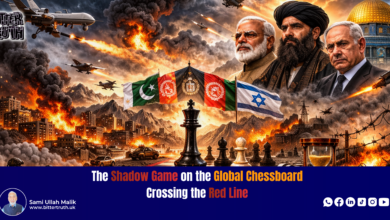
It is no secret that Israel, India, the United States, and their Western allies view the Muslim world not as a collective civilisation, but as a series of fragmented entities. Their strategy is simple: to strike one at a time.
America invaded Afghanistan alone. Iraq was assaulted by coalition forces. Libya was isolated, then Muammar Gaddafi eliminated. Syria was plunged into civil war, pitting Iran, Turkey, and the Arab world against each other. The design is clear: never confront the Muslim world collectively — always dismantle it piece by piece.
Across Riyadh, Kuwait, Qatar, the UAE, Jordan, and beyond, American military bases and intelligence outposts stand like fortresses. This is not merely military presence — it is the bitter mark of political, economic, and media subjugation. When a nation’s skies are patrolled by foreign forces, that land is no longer sovereign — it is mortgaged soil. This is why Muslim leaders hesitate to raise their voices against Israel.
Israeli aggression is labelled “defence”, while Iranian retaliation is condemned as “terrorism”. This narrative — so cunningly spun by the Western media — is now established dogma. Israel, despite violating the sovereignty of dozens of nations, is described as a “defensive state”. Meanwhile, those who respond are branded as “state terrorists”.
If this isn’t sorcery of language, then what is? Words have been twisted to turn oppressors into victims, and victims into criminals. This linguistic fraud can only be undone when the Muslim world aligns its pens in defence of truth.
Today, if Al Jazeera, TRT World, and PTV World cannot shape the global narrative effectively, the fault lies not in lack of resources, but in lack of strategic direction. We do not need mere news channels — we need intellectual battalions. A media not only to show images and footage, but to craft a compelling narrative — one that becomes the advocate of the oppressed and the judge of the oppressor.
Look closely: Israel — a speck on the map, a fraction of your population — yet it stands as the fulcrum of power. The reason? Unity of purpose among them, while our unity is buried beneath sectarian rivalry and political discord. When we call ourselves to account, we hear bitter answers: Riyadh and Tehran divided by sectarian strife; Ankara and Cairo vying for leadership; Islamabad buckling under pressure from global financial institutions. This fragmentation has become the striking force behind Israel’s military might.
And yet — reflect for a moment — what divine task has been entrusted to Pakistan, a miraculous state carved by the will of God?
In the high-speed battles of the modern era, the four blood-soaked nights of May 2025 can never be forgotten. On those nights, the skies of South Asia became highways for drones, as the smell of burning explosives stretched from Rajputana to the plains of Pakistani Punjab. Ostensibly, it was a clash between two nuclear-armed neighbours — but behind the curtain were Israeli weapons, American diplomatic strings, and European complicity. It was a multi-layered script in motion.
In Operation Sindoor, India unleashed Israeli-made Harop loitering drones on Pakistan’s air defence systems — claiming these kamikaze units were sufficient to breach Pakistan’s military deterrence. But within just three days, Pakistan not only downed nearly 69 drones, but also electronically disabled 9 others, forcing them to land intact. Their shattered remains were displayed before the global media from Karachi to Lahore to Azad Kashmir, smashing the arrogance of Israel to pieces — Alhamdulillah.
This robust defence not only stunned India’s military planners but also rattled Israeli military engineers. Some unconfirmed reports suggested that Israeli technical teams embedded in India suffered casualties — and when silent funerals were held in Tel Aviv, Israel realised that Pakistan, now provoked, could set its sights on Tel Aviv and Haifa in retaliation.
As air battles escalated and five Indian fighter jets, including Rafales, were confirmed shot down, 70% of India’s national grid collapsed, plunging the “Shining India” into literal darkness. Suddenly, the United States — which had begun this conflict with reckless indifference — remembered the word ceasefire.
American diplomacy entered its final innings. Financial and trade pressure was exerted on both capitals. On 10 May, the framework for a ceasefire was hastily drafted. The US President proudly dubbed it a “rescue arbitration”. Meanwhile, the once-arrogant Modi and his media — who had been airing premature fantasies of occupying Pakistani territory — were gradually exposed before the global press.
It began with a Bloomberg report, in which an Indian general admitted defeat and blamed the political leadership. Then Indian Foreign Minister S. Jaishankar, before a parliamentary committee, confessed that Washington had shared classified intelligence — warning that Pakistan was preparing a devastating counterstrike. This statement made headlines, smearing Modi’s face with the ink of shame. The Indian public finally began to see through the lies of its pliant media.
These 88 hours of war proved one thing: that more than land, sea, or air power, it is now drones and electronic warfare that dictate the battlefield. But above all, diplomatic strength and financial unity form the backbone of lasting power.
Pakistan proved that with unwavering confidence in one’s military capabilities, even superpowers are compelled to seek a ceasefire. The lesson here is stark: power remains the only language the world truly understands.
This battle cries out, loud and clear: if a single-winged state like Israel can redefine the contours of an entire battlefield with its technology, then what stops nearly sixty Muslim nations from drafting a collective blueprint for defence and economic sovereignty? If today it was Pakistan that stemmed the flood of drones, then tomorrow Iran or Turkey must be prepared to do the same. The concept of Ummah Wahida must not remain a decorative flourish of our speeches—it must manifest in practical agreements, joint research centres, and a united media voice.
Otherwise, the scribes of history may already have prepared another lamentation in our name.
Remember—today it is Iran; tomorrow, it could be us. This is a moment of reckoning—the final toll of awakening. Just as Palestine, Syria, Libya, Iraq, Afghanistan, and now Iran have been struck one after the other—who remains untouched? One leaf falls after another, and we, clinging to the tree’s trunk, delude ourselves with the illusion of safety. If even now the Muslim Ummah does not awaken, history shall repeat those tragedies over which we merely passed resolutions and offered condolences—turning them into eternal curses upon our descendants.
The Muslim world today comprises 57 nations, possessing abundant natural resources, vast armies, and millions of brilliant youth. Yet despite all this, we are branded as the world’s oppressed. Why? Because this immense power is fragmented, scattered, and each nation is trapped within the narrow shell of its own interests, trade, and survival. Palestine faces Zionist aggression, while certain Arab states sign trade agreements with the aggressor. Iran is attacked, and Muslim nations remain silent spectators. Whether it be India’s verbal aggression against Pakistan, or actual military hostilities under Israeli patronage, most Muslim states continue to adhere to the policy of neutrality. Be it the looming civil strife in Turkey, or the devastation of Libya, Syria and Yemen—our internal disunity serves to reinforce the enemy’s strategy.
It is for these very reasons that an emboldened enemy dares to strike the Muslim Ummah with unrelenting assaults.
The Israeli attacks on Iran, the destruction of nuclear facilities, and the targeted assassinations of scientists—these are all part of a global message being conveyed to every Muslim state: if you do not submit to the West, your time will come. And this is not a distant possibility. Tomorrow, these same tactics may be employed against Pakistan, Turkey, or Saudi Arabia. The enemy now recognises no moral, legal, or civilisational limits. Their sole doctrine is the total obliteration of Muslim power—by any means necessary.
The pressing question is: how do we escape this spiral of misery? How do we break the barriers that hinder Muslim unity and attain the kind of triumph that can lift us from the pit of disgrace and ruin?
First, we must believe in our own existence and in the vast resources we possess. We must pursue our lost destination not with dreamy idealism, but with resolute purpose. The paths that can deliver us from this siege are not mythical gateways—they are clear, actionable lines.
There is but one road to salvation: Unity, Self-Reliance, and Joint Defence.
This moment demands that the OIC be transformed from a body of mere declarations to a platform of tangible cooperation.
• Our first step must be towards defence self-sufficiency. Turkey, Pakistan, Iran, and Malaysia must extend hands of collaboration in strategic technologies and joint military research, while moulding intelligence sharing into a structured system.
• Next, an economic alliance is crucial to resist Western financial pressure. Islamic banking and trade through local currencies can serve as the foundation.
• We must also establish a global media alternative, through which the voice of Muslims may be heard and the Western narrative meaningfully challenged.
•
This media counterweight—anchored by Al Jazeera, TRT World, and PTV World—must be empowered through investigative journalism and global linguistic diversity, so that the cry of the oppressed does not vanish into the void.
A clear message must echo through the halls of power: that the cries of the children of Gaza, Kashmir, and Isfahan are our own; their wounds are ours. The public pressure must be so intense that a tremor of fear reaches the thrones of rulers—that no delay or apathy can save them from accountability now.
Remember: if today Isfahan bleeds, then tomorrow it could be Karachi, Riyadh, or Kuala Lumpur. The enemy has already trampled the last line of moral restraint—yet we remain unwilling to respond to the knocking of unity on our hearts. If we leave our defence to mere lamentation, then all that will remain are elegies, and over the ruins of Islamic civilisation, history will pen yet another harrowing chapter.
Now is the time for Muslims to become not merely the Ummah of oratory, but the Ummah of action. When decisions are no longer made in Washington and London, but in Makkah and Madinah, in Istanbul and Tehran, in Lahore and Kuala Lumpur. Unity is the very point upon which the Prophet’s Seerah and the Rashidun Caliphate built the foundation of their glory.
If we do not unite now, the flute shall fall silent, for the reed will be no more—and by the time we awaken, history shall have been written against us, not by us.
The Muslim world now stands at a perilous crossroads—any further delay guarantees destruction. The bitter truth is: if we do not move towards unity, sovereignty, and strategic coordination, then though the call to prayer may still echo, the rows of worshippers will stand empty.
Today Iran is the target; tomorrow, perhaps, it is us. And if we confine ourselves to mere resolutions, condemnations, and diplomatic regret, we shall join the ranks of those pitiful figures in history who watched the onslaught of the enemy—but never rose to resist it.
Time is short. The moonlight is fading. And on the Eastern horizon glows a crimson hue—either the dawn of life, or the herald of blood-soaked dusk.
The verdict of history now shakes us to the core: the survival of Muslims no longer rests on faith alone—but on unity, wisdom, and action.
The decision is ours.
May Allah grant us the wisdom of Luqman, the resolve of Ali, and the vision to chart our course at this defining hour of history.