The Siege and the Silence: A Crisis of Conscience
Gaza: Where Might Overrules Morality

The Gaza Conundrum: A Chronicle of Siege, Sovereignty, and the Strains of Modern Statecraft
Nestled upon a slender coastal strip between Israel, Egypt, and the Mediterranean Sea lies Gaza — a land diminutive in geography yet colossal in tragedy. With a population exceeding 2.3 million, Gaza stands among the most densely populated and materially deprived enclaves on Earth, its skies heavy with the smoke of conflict, its soil soaked in generational sorrow.
Since 2007, Gaza has been governed by Hamas — a movement borne of resistance, forged in the crucible of Israeli occupation, and unyielding in its claim to self-determination. But in October 2023, the fragile veil of ceasefire torn asunder. A war erupted with ferocity not seen in years, plunging Gaza into a profound humanitarian abyss. In May 2025, Israel’s Security Cabinet — under the spectre of internal discord and international scrutiny — sanctioned a new policy: one that calls not merely for military escalation, but for the effective reoccupation of Gaza, the annihilation of Hamas, and the throttling of humanitarian relief.
Far from mitigating the crisis, this policy has exacerbated it. Rather than balancing national security with the obligations of international law, it deepens the chasm between diplomacy and devastation, sovereignty and siege.
It is worth recalling that in 2005, Israel had withdrawn its forces from Gaza, a manoeuvre hailed at the time as a gesture toward peace. Yet the withdrawal proved nominal; the blockade by land, sea, and air remained — a skeletal hand ever tightening its grip on Gaza’s arteries. Imports, exports, electricity, and water remain firmly under Israeli control. When Hamas launched a massive attack in October 2023 — a culmination, perhaps, of decades of disenfranchisement — Israel responded with overwhelming force. Thousands of Palestinians perished; countless more were displaced. Urban landscapes were turned into graveyards of stone. In retaliation, Hamas seized dozens of Israeli hostages — a grim reminder that vengeance begets vengeance.
Now, in May 2025, a renewed doctrine of military dominance has emerged. Israel seeks not merely to degrade Hamas militarily, but to govern Gaza indefinitely — a move that has drawn fierce condemnation from legal scholars, human rights advocates, and governments alike. For under the laws that bind the nations of the world — the Fourth Geneva Convention of 1949, and the Hague Regulations of 1907 — occupation may be tolerated in moments of exigency but never eternalised.
International law is clear: a military occupation must be temporary. The occupier is bound by solemn duty to protect the rights of the occupied. To cut off food, medicine, and access to clean water is not merely cruel — it is a crime against humanity. In 2004, the International Court of Justice deemed Israel’s occupation of Palestinian territories, Gaza included, as illegal. Though Israel withdrew militarily the following year, its continued blockade has rendered Gaza a prison without walls.
Should Israel now proceed with full-scale reoccupation, it would enter the domain of colonial imposition — a status universally repudiated. The International Criminal Court, in its prior assessments, has intimated that Israel’s actions in Gaza could amount to collective punishment and war crimes. The United Nations, for its part, has already declared Israeli settlements in the West Bank unlawful; similar judgments may yet await Gaza.
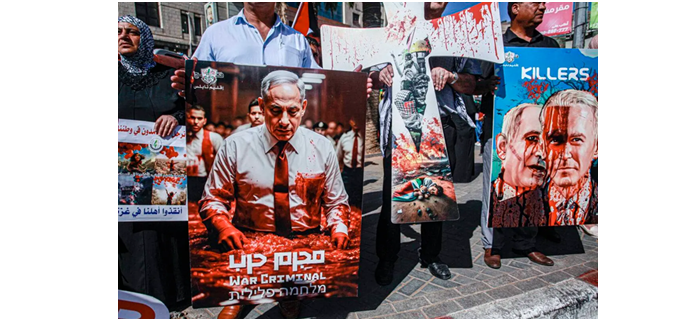
Prime Minister Netanyahu’s strategy appears not only martial but also political. Besieged by domestic protests, corruption trials, and far-right pressure, Netanyahu has sought in war a kind of sanctuary — a rallying cry against a common enemy to silence dissent and bolster his electoral fortunes. His rhetoric — resolute, unyielding, and often incendiary — declares that peace is unattainable until Hamas is utterly vanquished. But beneath the slogans lies a brutal calculus: to prolong war for political preservation.
And yet the fate of hostages — held by Hamas and symbolic of mutual intransigence — complicates this gambit. For Hamas demands Israeli withdrawal in exchange for their release, while Israel insists on military pressure to compel capitulation. Between these opposing absolutes, the people of Gaza — voiceless, vulnerable — are crushed.
Even as American diplomats table proposals for a postwar Gaza governed by the Palestinian Authority — an echo of the long-dormant two-state solution — Israel’s actions speak louder than any rebuff. They seek permanence, not transition; dominance, not diplomacy.
And so Gaza bleeds — not merely from bombs, but from the fraying of every norm that once held civilised nations to account.
The Crumbling Facade: Israel’s War Strategy and the Gathering Storm of International Reproach
Despite repeated entreaties for a ceasefire by the United States, the European Union, and the United Nations, the government of Prime Minister Netanyahu has remained implacable, steadfast in its military posture, and unyielding in the face of mounting humanitarian calamity. Two central motives may underpin this unwavering stance.
Firstly, there appears to be a calculated endeavour to extract political capital from the crucible of war itself. By casting dissent as tantamount to treachery, the Netanyahu administration seeks to harness the siege mentality of the Israeli populace, rallying them to its side. Yet, such efforts bear the hallmarks of desperation rather than strategy. While the Prime Minister clings to the belief that military pressure will compel Hamas into submission, this conviction risks proving pyrrhic.
Indeed, though military might may subdue territory, it rarely wins hearts—and seldom ensures durable peace. Israel’s current trajectory threatens to deepen its diplomatic isolation while exacerbating the suffering of hostages still held by Hamas. Approximately a hundred Israeli citizens remain captives, and public pressure for their return has reached a fever pitch. But every missile launched without the overture of negotiation drives that hope further into the shadows.
It is a cruel irony that Israel’s two principal objectives—the return of its hostages and the total annihilation of Hamas—exist in mutual contradiction. The former demands diplomacy; the latter forecloses it. Hamas holds its hostages not as mere prisoners but as bargaining chips in a game of existential stakes. Without substantive concessions, such as prisoner exchanges or the withdrawal of Israeli forces, Hamas is unlikely to relinquish its hand.
Meanwhile, the spectre of war crimes casts a long shadow over the battlefield. Reports of over a hundred bullets fired directly at medical personnel constitute not just an ethical affront, but a potential breach of international humanitarian law. The Geneva Conventions enshrine the inviolability of medical teams, ambulances, and hospitals. An assault on those who heal wounds is, in the eyes of law and conscience alike, an assault on the very notion of civilisation.
Human rights organisations have denounced these acts in unequivocal terms, and the United Nations High Commissioner for Human Rights has called for formal investigations. The suppression of food and medicine, coupled with direct attacks on medical infrastructure, has stirred unease in the very capitals that once stood firmly with Israel. Civil society across the West has begun to awaken to the horrors unfolding in Gaza, and with it comes a growing chorus of protest directed at their own governments.
This groundswell of dissent now finds expression in the formal corridors of diplomacy. The United Kingdom, France, and Canada—long-standing allies of the Israeli state—have issued a withering rebuke of Netanyahu’s military policies. In their joint communiqué, these nations denounce the expansion of Israel’s military operations and underscore the intolerable human cost: soaring civilian casualties, the collapse of healthcare infrastructure, and the surging tide of displacement.
They speak not merely as critics, but as custodians of a vanishing moral order.
International organisations, including the World Food Programme, have sounded the alarm over Gaza’s descent into famine. With over two million souls trapped beneath the shadow of blockade, deprived of clean water, food, and medicine, the territory teeters on the brink of humanitarian collapse. The Geneva Conventions, so often invoked but seldom enforced, affirm the right of civilians to sustenance even in war. To deny them such is not strategy—it is subjugation.
Should Israel seek to establish permanent control over Gaza under the guise of military necessity, it courts legal peril. The International Criminal Court has already begun preliminary investigations into potential war crimes. The United Nations has on multiple occasions, designated the situation in Gaza a humanitarian catastrophe. In such an environment, silence is complicity, and neutrality is a moral abdication.
What is most telling, however, is the erosion of Israel’s traditional alliances. Britain, France, and Canada have not merely questioned Israel’s conduct—they have challenged the very moral legitimacy of its aims. Their repudiation signals a diplomatic nadir, a turning of the tide against a nation once buoyed by unshakable Western support. Now, even friendly governments find themselves compelled by public outcry to disassociate from policies deemed indefensible.
In their final joint declaration—one as stark as it is solemn—these nations warn that the continuation of hostilities will not only prolong suffering but cement Israel’s isolation upon the world stage. “We strongly oppose the expansion of Israeli military operations in Gaza,” they state, “for the magnitude of human tragedy is now intolerable.” Their message is unambiguous: ceasefire is not merely desirable, it is imperative.
In the moral ledger of nations, there comes a point where political calculus must yield to ethical imperatives. Israel stands perilously close to that threshold.
The Waning Mandate: Israel, the West, and the Spectre of Moral Isolation
Despite repeated entreaties from the United Nations, the European Union, and even the United States, the Netanyahu administration has maintained a posture of unyielding severity. This intransigence, one suspects, is born not solely of strategic calculus, but of political opportunism—an attempt to transmute the fires of war into the embers of domestic legitimacy.
It is the oldest trick in the book of embattled statesmanship: to cloak dissent in the garb of treachery, to depict criticism as a dagger at the nation’s back. Thus, internal divisions are papered over with the rhetoric of unity, and the drumbeat of war becomes a rallying cry. But this gambit is fraying at the seams. The Israeli public, though patriotic and resilient, grows weary. The promise of swift victory rings hollow against the backdrop of enduring hostilities and deepening global censure.
Militarily, Netanyahu appears persuaded that overwhelming force might yet bend Hamas to Israel’s will—that pressure alone shall compel capitulation. But such hope is both short-sighted and perilous. For every bomb dropped upon Gaza, Israel forfeits a measure of its standing on the world stage. The arithmetic of war may tally tanks and sorties, but diplomacy tallies trust.
Most damning of all is the humanitarian toll. Over one hundred hostages remain in Hamas custody—a grim and unresolved testament to the conflict’s most human cost. Their release, by all credible accounts, is contingent not upon airstrikes, but on negotiation. And negotiation, in turn, demands concessions—perhaps a phased military withdrawal, or the liberation of Palestinian prisoners. Yet these demands are antithetical to Netanyahu’s second declared objective: the total annihilation of Hamas.
Herein lies the insoluble paradox: one cannot crush a foe with one hand while extending the olive branch with the other. The dual ambitions of recovering hostages and securing absolute military triumph are not merely incompatible—they are mutually self-defeating. For Hamas, these captives are.
Remember this too! Wherever even a grain of food and a drop of medicine has been taken away from the oppressed Palestinians due to the Israeli blockade, the people of the West have been deprived of sleep. International organizations are shouting that the atmosphere of Gaza is filled with the darkness of famine, thirst, and disease, where every day is the Day of Judgment, and every night is the Night of Sorrow.
The Fourth Geneva Convention, which is the book of covenant for the protection of civilians, is being torn to shreds today by Israeli aggression. Collective punishment, the closure of medical facilities, and food shortages are all crimes against which the world’s courts have risen as messengers.
When even old allies like Britain, France, and Canada are ready to oppose Israeli aggression, it is a declaration that Israel has now entered the blind cave of diplomatic isolation. The joint declaration of these nations is like a torture that is raining down on Netanyahu’s policies. It is as if the current language of these countries is calling out:
O tyrant Netanyahu! Stop. Your weapons are embedded in the chest of humanity. Food, medicine, water — these are not the fuel of war, but the support of the life of the oppressed. If you do not stop, then not only the blood of the oppressed, but also history will catch you by the collar.
It seems that the traditional support of the Western world is now just dust that has blown away in a strong wind. And the United Nations, which has a song of peace on its lips and a wound of helplessness in its heart, has been reduced to ashes by the blazing fire of America’s veto… But for how long? Lest it be the case that this United Nations also ends up like the League of Nations and then the world stops trusting anyone.
And finally,
O Respected reader! If there is any shred of feeling left in your heart, know that every innocent face of Palestine, every orphan’s eye, every martyr’s mother – is a slap in the face of time, which will continue to echo until the hour of justice arrives, and falsehood reaches its end.