The sanctuary of the Ka‘bah found its guardians in the very temples of idols
“The Recognition of Palestine: Humanity’s Triumph in the Tribunal of History”

When the pages of history are turned, one sometimes encounters leaves stained with blood and blurred by tears. The tale of Palestine belongs to that sombre register—a chapter inscribed in both the darkness of oppression and the radiance of sacrifice. More than seventy years have elapsed, and yet the dreams of this nation remained unfinished. The lofty chambers of power ignored its pleas; the mighty standard-bearers of justice muffled its voice. But when, in the chronicles of mankind, has the cry of the oppressed ever been silenced?
As of September 2025, authoritative international assessments indicate that approximately 156 sovereign states have formally recognised the State of Palestine. The most recent European pronouncements — notably those by France, Belgium, Luxembourg, Malta, Andorra and Monaco — have materially shifted the overall count, bringing the number of recognitions to around 156.
Within the European Union, 16 of its 27 Member States have extended such recognition, whilst several others have signalled a willingness to follow suit in the near future. This evolving pattern reflects a discernible trend towards broader acceptance of Palestinian statehood across the European bloc, albeit with certain Member States continuing to adopt a more cautious or conditional approach.
And now, upon the sacred scroll of time, a new line has been written. Canada, Australia, and Britain have at last recognised this long-afflicted people, tacitly conceding that the debt of history must be paid, and that the flame of justice may not be extinguished. This is not merely a Palestinian moment; it is a moment in which the conscience of humanity itself stirs from slumber.
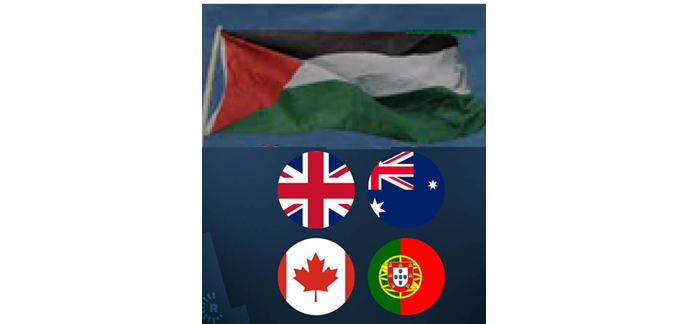
After centuries of restless yearning and decades of blood-stained struggle, the course of history has turned. Canada, Australia, Portugal, and Britain have proclaimed the recognition of the State of Palestine. It is as though, in the midnight of oppression, a solitary lamp of hope has been lit upon the horizon. This act of recognition is no sterile inscription upon a diplomatic parchment; it is a decisive move upon the chessboard of world politics. It proclaims that the great powers can no longer turn their gaze away. It heralds the waning of the “doctrine of might” and the slow enthronement of the “doctrine of justice.”
For long years, the corridors of power echoed with but a single maxim: that might is right. Yet today, for the first time, the very custodians of that creed are seen bowing before the altar of justice. This shift declares that the collective conscience of humanity will no longer remain shackled beneath the weight of tyranny.
In Britain, the proclamation resounded with particular clarity. Prime Minister Sir Keir Starmer, in a broadcast address, solemnly declared:
“Today, in order to revive the hope of peace and the two-state solution, I formally announce that the United Kingdom recognises the State of Palestine.”
These were not idle words but a herald of new life for a nation long crushed beneath the rubble of centuries. This announcement was not born in the sterile antechambers of diplomacy; it was forged in the clamour of Western streets—by demonstrations, processions, students’ vigils, and the relentless struggle of human-rights advocates. It is a testament to the truth that when public opinion is steadfast and unyielding, even the fortified gates of power must yield.
Canada and Australia declared their stance at the General Assembly in New York; Britain and Portugal soon followed, and others—Belgium, France, Luxembourg, Malta, and Andorra—prepare to join them. Thus the United Nations becomes once more the witness of humanity’s plaintive cry, and the great powers are compelled to lift the veil from their ancient prejudices.
But this proclamation is also a mirror held up before the Muslim world. If Canada, Australia, and Britain can stand in the cause of justice, why are Muslim rulers struck dumb? Shall they remain spectators while history summons them to action? Is their duty confined to prayers and pious resolutions, or will they marshal their resources, their political influence, and their diplomatic clout in defence of Palestine? For if non-Muslim nations may uphold the rights of the dispossessed, then the silence of the Muslim world shall appear doubly culpable before the tribunal of history.
Canada, as the first G7 state to extend recognition, opened a new window of justice in the northern hemisphere. Britain’s act was not merely policy; it was also the faint whisper of contrition, a tacit acknowledgement of the historic burden it has long carried. From the Balfour Declaration to the partition of Palestine, Britain’s hand in this tragedy is known to all. Today’s recognition is an attempt, however belated, to bind the wound it once helped inflict. The scar is deep, yet this gesture testifies that the burdens of history cannot forever be evaded.
It is as if, after centuries, the world has confessed that edifices erected upon injustice cannot long endure. This recognition is less a triumph than an overdue admission of guilt—an attempt to redress a crime, though the full expiation is yet to come.
As the Qur’an proclaims:
وَلَا تَحْسَبَنَّ اللَّهَ غَافِلًا عَمَّا يَعْمَلُ الظَّالِمُونَۚ إِنَّمَا يُؤَخِّرُهُمْ لِيَوْمٍ تَشْخَصُ فِيهِ الْأَبْصَارُُ
And never think that Allah is unaware of what the wrongdoers do. He only delays them for a Day when eyes will stare [in horror]. (Qur’an 14:42)
In this verse lies the essence of the hour: that tyranny may strut for a season, but its dominion is fleeting; while justice, though delayed, remains inexorab
Following in Canada’s footsteps, Australia too declared its recognition of Palestine as a free and sovereign state. Thus, across the southern hemisphere there surged a tide of hope, as though the very winds had carried the sighs of the oppressed into the councils of power. This recognition is nothing less than an acknowledgment of the sacrifices etched in Palestinian blood through the centuries. It is hope, crimsoned and consecrated by suffering: the children buried beneath the rubble, their innocent blood soaking the soil of Gaza; the women who wept beside the slain, whose laments rose amid the ruins as they buried their martyrs; the aged who supplicated at the gates of Al-Aqsa, beseeching divine justice. This proclamation, in truth, is their vindication. With their own lifeblood, the Palestinian people have inscribed upon history’s ledger that the palaces of tyranny may totter, and that sacrifice, however long ignored, must at last be acknowledged by the world.
The Palestinian Mission in London hailed the decision as historic, calling it not merely a political gesture but a draught from the long-parched well of justice. On the other side, however, Israel’s Prime Minister denounced it as “rewarding terrorism.” Yet the truth stands in radiant contrast: to recognise Palestine is not to reward terror but to honour humanity itself. In branding it otherwise, Netanyahu betrays his fear—that the walls of falsehood are crumbling, that the edifice of denial is collapsing under its own deceit. The world now knows that recognition is no gift to a faction, but the acknowledgment of a nation’s inalienable right. Oppression may endure for a season, but it cannot erase a people from the stage of history. As more nations extend recognition, Israel’s citadel of denial will find its foundations faltering. However strong the fortress of tyranny, when the ramparts of conscience rise, the walls fall of their own accord.
Even now, history knocks at the gates of the United Nations. With Canada, Australia, and Britain having acted, the pressure mounts upon international institutions to grant Palestine formal membership and to defend its rights with more than paper promises. Otherwise, the question will resound: if great powers now side with justice, why do global institutions slumber still? Shall the banner of justice flutter only in resolutions, never in deeds? If the United Nations persists in its lethargy, its very existence will be called into doubt.
This day is not only about Palestine; it is also Britain’s day of reckoning—an hour to bear with gravity the weight of its historic responsibility. It is as though an ancient debt is at last being repaid. This overdue yet inevitable declaration confesses that Britain can no longer avert its gaze from the Palestinians’ inviolable rights of self-determination, liberty, and sovereignty. Today the non-Muslim world has taken the step that should have been ours. It holds a mirror to our failings, exposing our divisions and our lethargy.
Here lies a bitter truth had the Muslim world been united, conscious, and resolute, it would have been their voices— not those of Western powers—that first proclaimed recognition of Palestine. Alas, entangled in our own feuds and shackled by narrow visions, we failed our trust. This reality lays bare our political frailty, our internal disarray, and the slumber of an ummah unmindful of its calling. If we do not awaken from this slumber, history will deliver an even sterner verdict tomorrow.
To recognise Palestine is not a perfunctory act of bureaucracy; it is to affirm a truth written in rivers of blood, in clouds of lamentation, in storms of sacrifice. It declares that though the voice of the oppressed may be muffled, its echo shall one day break forth in undeniable clarity.
The implications will be far-reaching. Middle Eastern politics has felt the first tremor of change. Israel will face mounting diplomatic pressure, America may be compelled to recalibrate its stance, and other Western nations will be drawn into alignment. This is but the first glimmer of a shifting balance of power; the road remains arduous and long, yet if this glimmer is fanned into steady light, it may transform the region’s destiny and draw Palestine nearer to the fulfilment of its dream.
As Britain’s Prime Minister declared, the human-made catastrophe in Gaza has reached its tragic apex, and the cry of injustice shakes the conscience of humanity. This recognition is the dawn of a new morning upon the horizon of history. Amid the shadows of cruelty, a lamp has been kindled. But whether this lamp shall become an enduring beacon depends upon whether the Muslim world shoulders its responsibility, whether the conscience of humanity remains vigilant, and whether justice continues to be preferred above power.
Thus, this proclamation heralds a new dawn. In the darkness of tyranny, a light has been lit. Yet whether this light shall shine as a steadfast flame depends upon our fidelity to justice, our awakening to duty, and our resolve to march forward in the name of humanity. For the recognition of Palestine is, in truth, the recognition of humanity itself.
As the Qur’an reminds us:
وَتِلْكَ ٱلۡأَيَّامُ نُدَاوِلُهَا بَيۡنَ ٱلنَّاسِ
“And such are the days We distribute among mankind in turns.” (Qur’an 3:140)
Here lies the eternal assurance: that no tyranny endures forever, and that the wheel of history, though slow to turn, grinds inexorably towards justice.
The leaders of these four nations declared that the unspeakable scenes now unfolding in Gaza—of hunger, ruin, and merciless devastation—have shamed humanity and can no longer be borne. The words of the British Prime Minister were not the routine utterances of a politician; they were a cry steeped in blood and humanity’s anguish. He spoke of tens of thousands who had perished, even those whose only crime was to venture forth in search of bread and water.
The Prime Minister further observed that the spectacle of death and destruction fills us all with dread. Though humanitarian aid has been increased, the situation remains desperate, with no soul receiving sufficient relief. Turning to Israel, he demanded that its government lift the cruel restrictions, end its oppressive measures, and open the gates to humanitarian assistance. To this, Netanyahu, with astonishing brazenness, retorted that such measures amounted to “rewarding terrorism.” Britain, however, made plain that the recognition of Palestine is not the indulgence of any faction but the affirmation of a nation’s rightful claim.
Meanwhile, the rising power of China entered the stage with clarity. Beijing has called upon the international community to support Palestine’s full membership in the United Nations. This is not mere rhetoric; it is a compass pointing towards global justice, a principled stand for the right of self-determination. For as history has shown, weaker nations often stand alone, but Palestine now appeals to the conscience of the world, and China lends its voice to the call for justice.
Foreign Minister Wang Yi declared that China is resolute in seeking an immediate ceasefire and a lasting end to the war in Gaza. These are no perfunctory diplomatic phrases; they are the articulation of human compassion, of international law, and of a sincere quest for stability. China, unlike others, has not succumbed to the sorcery of power-politics but has charted a path by the lodestar of principle. He reminded the world that the war has produced an unparalleled human catastrophe, and that Israel’s actions defy international law while undermining the stability of the Middle East. As Maulvi Abdul Haq once observed, just as rivers, in their patient course, carve stone, so too the deeds of powerful nations attempt to shape human destiny. Yet history’s justice collides with oppression, shattering it, leaving the oppressors crushed beneath the mountains of their own remorse.
Wang Yi emphasised that three pillars are essential to peace: a comprehensive ceasefire in Gaza, the empowerment of Palestinian governance, and the strengthening of the two-state solution. These pillars are the foundation of a palace of justice and peace; without them, a mere cessation of hostilities can never yield a true and lasting settlement. He urged the world to support Palestine’s full membership of the United Nations—not as a political favour, but as a demand of principle, and as a reflection of the very spirit of faith: that to support the oppressed and resist tyranny is the duty of every believer.
By contrast, the United States dismissed the recognitions by Western nations as theatrical gestures, written upon paper yet empty indeed. Such is the chessboard of global politics, where masked powers ply the world with rhetoric even as history, impartial and inexorable, records both their ascendancy and their decline.
This report is not merely the chronicle of a political decision; it is the unfurling of a new page in history’s tome. The recognition of Palestine is, in truth, the recognition of humanity itself. In this century of darkness, it is a lamp of light before which the clouds of oppression begin to scatter.
O people of faith, O keepers of conscience—this proclamation confronts you with a question. If non-Muslim nations have risen in the cause of justice, what do you await? Will you sheath your swords and slumber in negligence, or will you fan this flame into a torch to lead the caravan of light forward?
Remember the word of God:
وَلَا تَهِنُوا وَلَا تَحۡزَنُوا وَأَنتُمُ ٱلۡأَعۡلَوۡنَ إِن كُنتُم مُّؤۡمِنِينَ
“So do not lose heart nor fall into despair; for you shall indeed be superior if you are true in faith.” (Qur’an 3:139)
The recognition of Palestine is not a bureaucratic act, but the vindication of humanity: the acknowledgment of the mothers’ tears shed over the corpses of their sons, the sacrifice of innocent children who perished smiling beneath the rubble, the answer to the supplications of elders who prayed at the doors of Al-Aqsa until the bombs of tyranny tore even their shrouds away.
And yet this is but the beginning. The destination is yet ahead: Jerusalem is not yet free, the walls of tyranny are not yet fallen. Your duty is clear: awaken your conscience, straighten your ranks, and commit every instrument of your being—your voice, your pen, your resources, your power—to the cause of Palestine.
Rise! For the hour calls your name. History fixes its gaze upon you. And if you still shroud yourselves in heedlessness, tomorrow your names shall be inscribed among those nations whom history never forgave.
The recognition of Palestine is, in truth, the crucible of your honour. O Muslims, the decision rests with you: shall this lamp be extinguished, or shall it become a sun to illuminate all mankind?
Why are we remembering the great leader Allama Iqbal so intensely?
ہے عیاں یورشِ تاتارکے افسانے سے
پاسباں مل گئے کعبے کوصنم خانے سے
Made manifest by the tale of the Tatar onslaught
The sanctuary of the Ka‘bah found its guardians in the very temples of idols.