The Philosophy of War and the Pursuit of Peace
Power, Politics, and the Grip of the Adversary

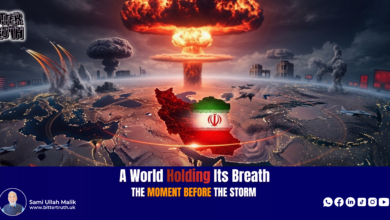
When the affairs of the world grow crooked, and history’s scroll twists into uneasy spirals, the pen of time, too, begins to let fly its arrows in silence. We stand at the threshold of an age whose visage of war has been transformed: no longer are the anthems of battle sung by the roar of cannon or the clang of steel, but by the crackle of electric waves and the ghostly hum of mechanical birds. Soldiers still pace the earth, but the skies are now commanded by wings of iron and silent assassins. Upon the field, it is less the voice of man and more the voice of machine—drones, cruise missiles, and autonomous weapons, the new “pens” with which the annals of conflict are inscribed.
The Israeli Ministry of Defence has of late laid bare a secret once confined to whispered conjecture: in its skirmishes with Pakistan, India has deployed weapons of Israeli manufacture. During the recent hostilities—popularly baptised by the media as “Operation Sandur”—New Delhi not only utilised the Israeli Barak-8 missile system but also fielded loitering munitions and drones of the Harop and Harop-E type. This was no mere transaction of arms; it was a signal, strategic and deliberate—that India and Israel now stand so closely aligned in military purpose that the arms of one are brought directly to bear against the foe of the other.
Such an admission is more than a technical communiqué; it is a testament to an international military entanglement which has recast the traditional conception of enmity. For Pakistan, this was a challenge doubly edged: on one side, the familiar adversary in New Delhi; on the other, the cutting edge of Tel Aviv’s military technology. Thus the strategic geometry of the region shifted, compelling Pakistan’s defence planners to respond with immediacy and resolve. And respond they did—with skill, with stratagem, and with the courage to face two cunning foes upon a single front. When, at last, defeat became the adversary’s portion, they scurried to seek succour from their “patron” in Washington, and now, adorned with the medal of a ceasefire, they nurse ambitious hopes for the Nobel Peace Prize.
Here one is reminded of the Divine Word:
﴿وَأَعِدُّوا لَهُم مَّا اسْتَطَعْتُم مِّن قُوَّةٍ وَمِن رِّبَاطِ الْخَيْلِ تُرْهِبُونَ بِهِ عَدُوَّ اللَّـهِ وَعَدُوَّكُمْ﴾
“And prepare against them whatever force you can muster, and warhorses readied for battle, to strike terror into the enemy of Allah and your enemy.” — [Al-Anfal 8:60]
The import of Israel’s declaration is plain: the threads of modern warfare run heedless of geography. Armaments, expertise, and technologies of war have become commodities of exchange. It has shattered that old axiom which presumed a third-party neutral in the quarrels of two; today, the intimacy of the arms-maker with the belligerent reveals that the hallowed boundaries of war have been redrawn.
In its pursuit of superiority, the Indian Army has accelerated the formation of new drone and UAV regiments—an innovation they style as the “Drone Battalion.” The question arises: is this the herald of enduring dominance, or but a fleeting advantage? Unmanned Aerial Vehicles—those aircraft bereft of crew or passengers—are the sentinels and raiders of the modern sky.
They can loiter for long hours at controlled speeds and altitudes, serving in manifold capacities.
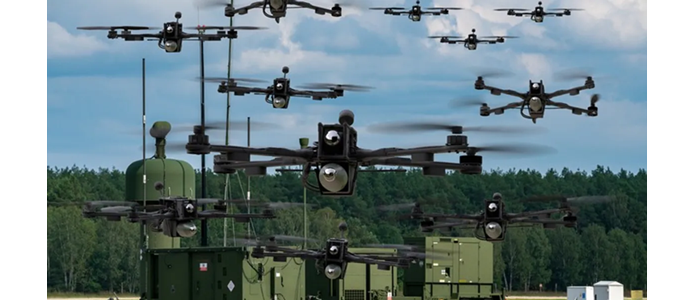
This “Drone Battalion” is to be no mere reconnaissance detachment. It will weld together surveillance drones, armed strike UAVs, and self-destructive attack craft into a single, coordinated battle unit. Each battalion will fuse rapid command, real-time intelligence, target verification, and weaponised drones in one operational frame—allowing decisions to be made swifter and with less human intervention.
Military analysts concede that such a formation may yield short-term advantage, particularly where the adversary lacks the means to neutralise these machines. Yet drone warfare is not merely a contest of hardware; it is a theatre of electronic acumen and instantaneous data. Here Pakistan has already honed its craft, for credible sources attest that in the recent Indo-Pak conflict, Harop drones were successfully brought down by Pakistani countermeasures—an achievement that stands as a quiet but potent testament to indigenous capability.
From a purely technical vantage, the “Drone Battalion” may confer transient supremacy, especially against an opponent deficient in electronic warfare. But enduring superiority depends upon more than machines—it rests upon numbers, training, the integrity of command-and-control networks, and the vigilance of early warning systems: radar, electronic warfare, and the overarching C4ISR (Command, Control, Communications, Computers, Intelligence, Surveillance, and Reconnaissance) framework.
Thus, in the calculus of the modern battlefield, the drone is no longer the adjunct to the soldier—it is his vanguard, his eyes, and, on occasion, his very sword. The Indian vision is clear enough: a networked force wherein sensors and shooters merge into a seamless unity, compressing the span between detection and destruction into the merest heartbeat.
Yet every advantage in war is but a coin with two faces. The rapidity which enables swift decision also risks hasty misjudgement; the removal of human oversight, while expediting the strike, may also strip it of discretion. The lesson of history, writ in the blood of many fields, is that the tools of war, however wondrous, cannot alone secure the laurels of victory.
Here the Eternal Admonition speaks:
﴿إِن يَنصُرْكُمُ اللَّـهُ فَلَا غَالِبَ لَكُمْ ۖ وَإِن يَخْذُلْكُمْ فَمَن ذَا الَّذِي يَنصُرُكُم مِّن بَعْدِهِ ۗ وَعَلَى اللَّـهِ فَلْيَتَوَكَّلِ الْمُؤْمِنُونَ﴾
“If Allah should aid you, none can overcome you; but if He should forsake you, who then could aid you after Him? In Allah, then, let the believers place their trust.” — [Āl ʿImrān 3:160]
Pakistan, cognisant of these realities, has set about fortifying its defences not merely in the tangible sphere of weaponry, but in the invisible realms of signal intelligence, counter-drone warfare, and electronic denial. The recent neutralisation of Israeli-made Harop drones in live conflict was not an isolated triumph, but a harbinger that the nation will not stand idle while its skies are trespassed.
In the greater game of power, the “Drone Battalion” is a symptom of a deeper transformation: the migration of supremacy from the brute strength of numbers to the precision of circuits, algorithms, and the mastery of the electromagnetic spectrum. Radar—radio detection and ranging—serves as the sentinel; electronic warfare manipulates that same spectrum to disrupt the foe’s eye and ear; and C4ISR weaves intelligence, communication, and command into a single tapestry from which the commander plucks the threads of decision.
But in this contest, the final arbiter is not the drone nor the missile, but the mind that commands them, the resolve that sustains them, and the moral compass that directs them. For technology is a blade that cuts both the just and the unjust; only the cause determines whether it is the sword of a liberator or the scythe of an oppressor.
And so, as the smoke of recent battles thins and the machinery of both war and diplomacy resumes its ceaseless grind, one truth stands unaltered: the guardianship of a nation’s honour is not outsourced, nor is its sovereignty leased. It is, as ever, secured by the vigilance of its defenders, the unity of its people, and the unyielding faith that the justice of their cause is shield enough against the tempests of the age.
Experience has shown us that in drone-centric warfare, solitary drones rarely achieve distinction; they require a finely woven net of reconnaissance, defensive coverage, and pinpoint target acquisition. Were Pakistan to employ robust electronic countermeasures and effective short-range air defence, the operational efficacy of these drone battalions could be substantially diminished.
India, in concert with its ally Israel, has conceived a novel warfighting doctrine whereby drone battalions are not merely instruments of surveillance but are marshalled for surgical strikes, disruption of enemy command and control, and for indirect assaults upon radar installations, missile sites, and military bases through the deployment of Harop suicide drones. Investment in electronic warfare—encompassing jamming, GPS spoofing, and radio frequency interference—is being ramped up, alongside the deployment of short-range anti-UAV shields such as the Spider system, kinetic interception, and the rapid mobilization of mid- and low-range air defence layers.
Yet, Pakistan stands resolutely self-reliant in preparation to counteract these adversarial manoeuvres, keeping vigilant watch over the full spectrum of Indian drone battalion operations and readying decisive retaliatory measures. Thus, the forthcoming theatre of war will mark a departure from traditional ground combat to an arena where control of the skies will dictate victory or defeat.
In this anticipated drone conflict, Pakistan has publicly declared a doctrine of pre-emptive self-defence, underscoring its resolve by signalling intent to target sensitive enemy installations—most notably in India’s eastern provinces—where disabling radar and command systems will be the paramount objective of any immediate response.
Pakistan has accordingly adopted a tripartite strategy: first, electronic warfare to render hostile drones “blind” via radio frequency jamming and spoofing; second, the deployment of counter-drone systems designed to neutralize enemy UAVs mid-flight; and third, the activation of multilayered air defence networks to intercept drones or missiles before they can inflict harm.
Among India’s aerial assets is the Heron drone, a long-range reconnaissance platform that prowls over enemy terrain like a vulture surveying its prey. Whether imported or produced under foreign licence, it plays a crucial intelligence role. The Harop drone, by contrast, is a suicide attacker — a stealthy hunter guided by radar signals that seeks and strikes its target with precision. The MQ-9 Reaper loiters for hours, even an entire day, performing reconnaissance and striking with pinpoint accuracy when required.
Moreover, India is developing swarms of smaller drones, which operate collectively much like a flock of birds descending upon a field. Many of these UAVs are manufactured domestically with Israeli assistance, some carrying out kamikaze-style missions.
Pakistan, for its part, has developed the indigenous Burraq drone, armed with missiles and capable of striking targets with unerring precision. The Shahpar-2 and Shahpar-3 extend Pakistan’s reach further, providing medium-range reconnaissance and, when necessary, offensive capability. Pakistan’s UAV counterunits are tasked with destroying enemy drones midair, all produced by national institutions such as the Global Industrial Defence Systems (GIDS) and other defence establishments—true sentinels of the skies who proudly confront adversaries.
The Harop drone, often dubbed the “silent killer,” is a mobile, autonomous weapon capable of hours-long loitering at low altitude to evade radar detection. Its small size and slow flight profile make it difficult to detect, while advanced target recognition algorithms minimise human intervention.
Pakistan claims to have successfully neutralised numerous Harop drones, with some even recovered intact to facilitate detailed forensic analysis of their software and sensor systems. While much of the debris is pulverised upon impact, the recovery and reverse engineering of a select few UAVs provides Pakistan with invaluable insights into their operation. Military reports and independent investigations corroborate these claims, with Pakistan asserting the destruction of over sixty-nine Harop and other drones, providing international media unprecedented access to the wreckage on the ground. This disclosure has posed significant challenges to Israeli and Indian claims that even America’s most advanced systems fail to detect Harop drones.
Recent declarations by Lieutenant General Ahmed Sharif Chaudhry, Director-General of the Inter-Services Public Relations (ISPR), have unequivocally outlined Pakistan’s strategic military objectives in any forthcoming Indo-Pak conflict. His candid interview with Bloomberg did not mince words: Pakistan will not hesitate to exercise its right to pre-emptive self-defence. The military’s statements sent a dual message—on one hand, a stern deterrent aimed at forestalling aggression; on the other, a calculated psychological stratagem designed to sow unease within the adversary’s ranks.
One must appreciate the nuances underpinning these pronouncements. Journalistic reports and official communiqués occasionally contain veiled warnings or signals indicative of both warfighting resolve and retaliatory capabilities. Pakistan’s explicit reference to targeting “Eastern India” must therefore be parsed through two complementary lenses: firstly, as a deterrent expression of proportional retaliation; secondly, as a political instrument intended to instil trepidation within the enemy and caution the global community. In practice, international law, regional complexities, and the spectre of nuclear brinkmanship impose constraints on such decisions. Yet, from a military standpoint, the focus on Eastern territories suggests a calibrated augmentation of range objectives, airpower, and rocket capability to ensure a swift and precise retaliatory strike if circumstances demand.
This posture transcends mere rhetoric and strategic briefs—it is an operational reality buttressed by advanced preparations.
Turning to the hardware that underpins this posture, a technical and pragmatic comparison between the American Apache attack helicopter, deployed by India and Israel, and the Chinese Z-10ME helicopter illuminates the strategic calculus informing Pakistan’s defence acquisitions.
The Chinese Z-10ME boasts a robust engine capable of sustained performance in high-temperature environments, equipped with anti-tank missiles, a medium-calibre cannon, and an array of rockets. Enhanced by modern radar, sophisticated sensors, and resilient armour, it offers a cost-effective, easily maintainable platform tailored to Pakistan’s operational milieu. Crucially, Pakistani engineers have had a hand in its development, ensuring bespoke modifications.
Conversely, the American Apache helicopter—renowned for all-weather performance—carries advanced missile systems, a heavy-calibre cannon, and state-of-the-art electronic warfare and radar suites. Though expensive, it remains battle-tested and highly reliable. For Pakistan, the Z-10ME emerges as a pragmatic solution, calibrated to local theatre realities, logistical infrastructure, and constraints posed by access limitations to Russian and American systems.
True victory, however, lies not solely in the steel of machines but in the calibre of pilots, coherence of command networks, and harmony of joint operations.
Pakistan’s choice of the Z-10ME helicopter reflects a confluence of practical factors: limited access to Western weaponry, deepening defence ties with China, cost-efficiency, ease of maintenance, and satisfactory performance for strike and defensive requirements. Reports indicate the Z-10ME has been customised for Pakistan’s needs—sensor tuning, radiator and engine upgrades, and filtration systems optimized for coastal and desert operations.
In contrast, the recent Indo-Pak war dramas saw India boast of air supremacy buoyed by the presence of French Rafale jets. Yet, as history bore witness, Pakistani aviators not only shattered these boasts but also demonstrated tactical finesse by electronically locking and neutralising over a dozen enemy aircraft. This feat left global defence analysts in awe and compelled even the head of the Rafale manufacturer to publicly concede—much to the chagrin of the Modi administration—that while the jets were sold, their crews lacked the will to fight.
A technical comparison is not mere arithmetic of speed or firepower; it embodies strategic philosophies and political underpinnings. Western military technology—American and European—traditionally assures high fidelity, extensive operational experience, and comprehensive supply chains. Chinese technology, on the other hand, has witnessed a meteoric rise over the past decade, offering affordable, locally adaptable, and rapidly upgradeable platforms. Thus, while Western systems remain complex, proven, and durable, Chinese alternatives increasingly present formidable competition, particularly where cost and local customization are paramount.
Moreover, procurement from the West often entails political strings and risks compromising sovereign decision-making, threatening national stability. No such encumbrances shadow Pakistan’s dealings with China, rendering Chinese platforms politically and financially judicious, with a neighbouring ally ensuring prompt deliveries and support.
In the shifting sands of international alignments, the Trump administration’s policies nudged India toward alternative alliances. Enhanced Sino-Pakistani defence cooperation and burgeoning Russian energy and arms procurement channels are a testament to this pivot. America’s likely response will be a blend of diplomatic pressure and negotiation, while India strives to safeguard its strategic autonomy.
As the Qur’an solemnly reminds us,
وَأَعِدُّوا لَهُم مَّا اسْتَطَعْتُم مِّن قُوَّةٍ
“And prepare against them whatever you are able of power…” (Surah Al-Anfal, 8:60)
— a dictum resonating through the corridors of military strategy and national defence policies alike.
Thus, the theatre of South Asia remains poised on a knife’s edge, where military preparedness, technological adaptation, and shrewd diplomacy intertwine in an intricate dance of power and prudence. Pakistan’s strategic narrative, expressed through both words and deeds, reveals a nation steadfast in safeguarding its sovereignty amidst the complex chessboard of regional geopolitics.
The Current Geopolitical Landscape: A Confluence of Economic Pressures and Strategic Realignments
The present tableau, marked by recent diplomatic and economic intricacies — most notably the imposition of tariff measures and trade restrictions by former U.S. President Donald Trump against India — has ushered in a fresh wave of tension across the subcontinent. Such economic manoeuvres, wielded as instruments of policy, have inexorably nudged Delhi towards the welcoming embrace of alternative powers, notably China and Russia. This rapprochement is driven by India’s pressing quest for energy resources, primarily Russian oil, as well as its pursuit of defence equipment and broader commercial opportunities.
Analysts broadly concur that President Trump’s unpredictable trade policies precipitated an immediate cooling of Indo-American relations. In response, the Modi administration, exhibiting political pragmatism if not necessity, began courting the ‘bear and the dragon’ with renewed fervour, even signaling a postponement of anticipated American arms deals. Yet, a pressing question looms: in this evolving context, can Russia and China place unreserved faith in India? Will Moscow once again draw near with open arms?
The historical fabric binding Russia and India, especially in the domains of defence and energy, is rich and enduring. Russia remains a primary supplier of weaponry and fuel to New Delhi, and there exists a credible prospect for Moscow to regain its strategic foothold — contingent, of course, upon an alignment of geopolitical interests between the two nations. Nevertheless, India remains steadfast in safeguarding its strategic autonomy, keen to shield itself from further American reprisals. Behind the scenes, Delhi continues to placate Washington with reassurances that any pronounced shift in allegiance is but a temporary expedient.
The American response to these developments may follow one of two trajectories: (a) intensified economic and military pressure, or (b) a diplomatic overture towards negotiation and rapprochement. Current policies emanating from the Trump administration suggest a preference for coercion as a means to effect behavioural change, though such efforts will undoubtedly collide with entrenched global policies and the imperatives of multilateral interests. The resultant milieu for India is one of cautious equilibrium, a disquieting uncertainty in which it must navigate between asserting sovereign resolve and, when expedient, seeking alternative alliances.
The intention of this discourse transcends mere reportage. It seeks to peel back the layers enveloping every military communiqué to reveal the cultural, intellectual, and political substrata beneath. The endeavour has been to adorn the narrative not simply with facts, but with a moral compass and a stirring eloquence, suffused with the contemplative hues of Islamic historicity — so the discerning reader may grasp that this conflict is far from a mere contest of armaments. It is, rather, a crucible of competing worldviews: a wrestling match for sovereignty, strategic confidence, and ethical boundaries. As the Qur’an solemnly reminds us:
﴿وَمَا جَعَلَ اللَّهُ لِرَجُلٍ مِنْ قَلْبَيْنِ فِي جَوْفِهِ﴾
“And Allah has not made for any man two hearts within his interior.” (Surah Al-Ahzab, 33:4)
— an invocation to singularity of purpose in these fractious times.
In conclusion, succinct policy recommendations for Pakistan’s defence apparatus emerge thus: an imperative to accelerate investments in electronic warfare capabilities and counter-UAV technologies. The restoration and maintenance of regional peace demand the activation of mediation and international mechanisms, with military responses reserved as a measure of last resort. A robust emphasis on indigenous production of defence matériel and reverse engineering must be cultivated to inoculate national security from the vicissitudes of external sanctions and supply disruptions.
Above all, it must be borne in mind that no one comprehends the vicissitudes of America’s friendship better than ourselves. The overtures extended for energy collaboration in Balochistan, no less than a hundredfold, merit measured contemplation and circumspection.