The Mineral Wars: China’s Economic Ascendancy
Silent Power: The Race for Rare Earths

The Empire of Earth and Ore: A New Theatre of Global Power
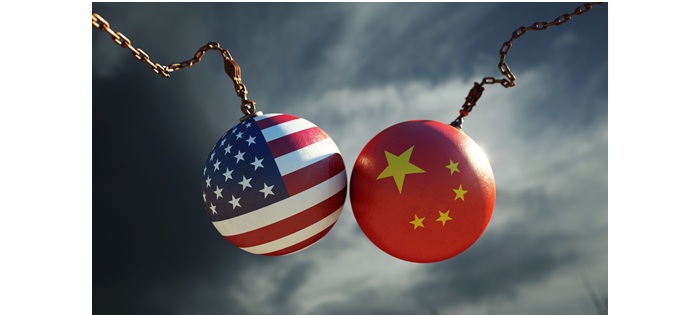
Since antiquity, the grandeur of empires has hinged not merely upon the strength of arms but upon the wealth concealed beneath their soil and the arteries of commerce that traverse their domains. In our own time, as economic titans such as China and the United States spar amidst the rising smoke of a trade war, it becomes increasingly evident that this is no mere skirmish over tariffs. Rather, it is a battle for dominion over rare earth minerals — the very sinews of modern technology.
China has recently thrown down a gauntlet by imposing stringent restrictions on the export of these critical resources, challenging the United States on a front where its vulnerabilities are starkly exposed. The global geopolitical landscape, in its latest iteration, is being redrawn not with the rattle of sabres but with the quiet but consequential shuffle of policy papers governing mineral distribution.
Deng Xiaoping’s prophetic declaration — “The Middle East has oil; we have rare earths” — now reads less like boastful rhetoric and more like a manifesto of strategic ascendancy.
The present juncture in the Sino-American trade confrontation is delicately poised. Both nations, wielding tariffs like cudgels, have battered one another’s economic flanks. Yet it is China’s deft weaponisation of its rare earth monopoly that has transformed the battlefield. To restrict their export is akin to depriving a living body of its breath — a surgical strike at the heart of American technological infrastructure.
The United States, for all its industrial prowess, is woefully dependent on these elements. Scandium, yttrium, lanthanum, and their ilk are the unseen scaffolding of the digital and defence age: indispensable in missiles, fighter jets, smartphones, radar systems, electric vehicles, and green energy apparatuses. Their rarity lies not solely in their scarcity, but in the exorbitant costs — economic and ecological — required to extract and purify them.
Though Australia, the United States, Brazil, and Russia boast substantial reserves, it is China that commands the lion’s share of processing — a staggering 92%, according to the International Atomic Energy Agency. This monopoly has effectively crowned China as the sovereign of this subterranean dominion.
These minerals, while economically precious, carry a toxic price. Radioactive by-products from mining render them an environmental scourge, which Western nations, driven by public and ecological conscience, have long shunned. China, seizing the opportunity presented by their withdrawal, invested decades into building an infrastructure of dominance.
With the imposition of export bans on seven key minerals — many of which are cornerstones of the American defence industry — China has not merely shaken markets but exposed the fragility of global supply chains. As of April, China requires special export licences under the rubric of “dual-use agreements”, acknowledging the dual civilian and military applications of these materials. Their strategic importance, thus, escalates dramatically.
According to the Center for Strategic and International Studies, American defence assets such as F-35 jets and Tomahawk missiles rely inextricably on these minerals. In their absence, such marvels of engineering become theoretical constructs — blueprints without substance.
America, though not entirely bereft of these resources, lacks the domestic capability to process them at scale. Former President Donald Trump, ever the transactional tactician, sought to pivot toward Ukraine to mitigate dependency on China. Yet geopolitical misfortune intervened: the very regions in Ukraine rich in these resources fell under Russian occupation. It is not without irony that the Western preoccupation with Ukraine’s sovereignty was, at least in part, mineral in motive.
Frustrated by strategic impasses, Trump turned to coercive diplomacy — issuing veiled threats to President Zelensky in a bid to secure access to these resources, though such efforts remain unfulfilled.
Even Greenland, an icy expanse under Danish tutelage and rich in untapped minerals, became the object of a bizarre overture from the Trump administration — an attempted acquisition more reminiscent of colonial whimsy than modern diplomacy. The proposal was met with derision across the world stage, emblematic of an administration whose erratic conduct alienated allies and emboldened adversaries.
This is not merely a trade war. It is an ideological and material struggle over the future architecture of global power. Should the United States fail to recalibrate its strategic compass, it risks finding itself upon the field of conflict, disarmed in every sense that matters.
History bears grim witness: America has, since its imperial ascent, engaged militarily in no fewer than 36 nations. And yet, each war seems to have terminated not in triumph but in ignominious retreat. The theatre of the future may well be resource-driven rather than territory-bound.
Let us, therefore, examine this emerging contest with forensic precision. For within the latticework of tariffs and counter-tariffs lies a deeper truth: that the struggle between Washington and Beijing is no caprice of contemporary politics, but the latest chapter in a long saga of empire, industry, and the earth beneath our feet.
In truth, this saga’s genesis can be traced to 2018, during Trump’s inaugural term, when the United States imposed tariffs on $250 billion worth of Chinese goods, accusing Beijing of technology theft, trade malpractice, and violations of intellectual property rights. China’s response was swift and proportionate — retaliatory tariffs on $110 billion worth of American exports, including soybeans, petroleum, and electronics.
By 2023, bilateral tariffs had surged by over 50%. According to the Peterson Institute, the U.S. economy sustained a 0.5% GDP contraction, while China bore a heavier blow of 1.2%. Thus, rare earth minerals — these hidden agents of power — have once again risen to prominence, no longer the concern of chemists and engineers alone, but of presidents and generals, diplomats and financiers. In the quiet wars of our time, they are the ammunition of supremacy.
The Silent Sinews of Sovereignty: Rare Earth Elements and the Struggle for Technological Dominion
In the modern epoch, as in the annals of ancient empires, the bedrock of might lies not merely in armies or armadas, but beneath the soil—in the elusive veins of the earth, whence nations draw their true power. Among these, the seventeen elements known collectively as Rare Earths form the hidden fulcrum upon which the edifice of contemporary civilisation precariously rests. From scandium to lutetium, these elements, though not scarce in presence, are torturously difficult and costly to extract and purify—rendering them the silent sentinels of technological supremacy.
It would not be an exaggeration to proclaim that, in the 20th century, following the atomic ascendancy of uranium, these rare minerals have emerged as the second quiet arsenal—shaping military doctrines, redefining economic strategies, and standing now as the marble columns of a future not yet written, yet deeply etched with the sigils of industrial power.
In the course of the past two decades, China—by virtue of strategic foresight and unrelenting diligence—has not only conquered the mines but also ascended as the sovereign in the alchemical realm of rare earth processing. Today, with 61% of the world’s production and an awe-inducing 92% of global processing under its aegis, the Middle Kingdom stands not as a mere participant, but as the undisputed regent of this clandestine dominion.
This supremacy is no accident born of fortune’s whim, but the fruit of deliberate design. As the Western world, gripped by environmental scruples in the 1980s, began retreating from the mire of mining, China embraced what others abandoned. With cheap labour, relaxed ecological constraints, and unyielding state ambition, it turned its Inner Mongolian and Jiangxi quarries into the lifeblood of global innovation.
Then came the strategic stroke of August 1st, 2023: China imposed export licensing on eight key rare earths, including gallium and germanium, thereby tightening its grasp on America’s jugular—disrupting up to 90% of its vital supply. While couched in the language of “national security” and “environmental concern,” many a shrewd observer recognised it as Beijing’s deft gambit in an ongoing geopolitical chess game.
The consequences were swift and jarring. From the stuttering of F-35 fighter jet production to disruptions in electric vehicles (such as Tesla), 5G infrastructure, and semiconductors, the tremors shook the very foundations of the American technological estate. These were not the tremors of industry alone—they were the echoes of a silent siege.
America, the self-anointed sentinel of modernity, now found itself ensnared. Its industrial sinews, stretched across defence, renewable energy, and communication, were tethered inexorably to a foreign will. One need only look to the F-35: each aircraft demands over 400 kilograms of rare earths. And yet, the raw material dug from its own Mountain Pass mine in California must, in an irony steeped in dependence, be sent to China for processing.
This reliance is not incidental; it is systemic. As early as 2000, China launched its visionary “863 Programme”, investing over $12 billion into the research of rare earths. The results are as resounding as they are formidable. With costs 60% lower than those in the United States, and with over 300 processing plants nestled within Shanghai and Guangzhou, China fortified its stronghold. Tax exemptions of up to 30% further gilded this strategic domain.
Meanwhile, Australia’s Lynas Corporation and Malaysia’s refining plants have struggled to pierce this monopoly. America, recognising the peril, has scrambled to respond. In 2022, it allocated $35 million to revive its own Mountain Pass facility. In concert, it has sought to muster the support of India, Japan, and Australia under the banner of the “Quad” alliance, an economic phalanx aimed at undermining Beijing’s mineral dominion.
Furthermore, the Rare Earth Independence Act of 2023 now aims to render the United States self-sufficient in processing by 2030. Yet even the most hopeful experts concede: such aspirations, though noble, fall short of true independence.
Consider neodymium—indispensable for electric motors and wind turbines; europium—for nuclear reactors and medical imaging; dysprosium—for military radar and missile guidance. The statistics are chilling. As of 2022, China controlled 95% of the global supply for five of the six rare earths most critical to the United States. For gallium and germanium, essential to semiconductors, America’s dependence is a full 100%.
Should Beijing choose to tighten its grip further, the United States faces not just economic inconvenience but industrial paralysis. A single F-35 jet, delayed by six months. A wind turbine, needing twice the rare earth input by 2030, rendered inert. A Tesla battery, deprived of its neodymium core.
It is a strange turn of fate—history’s favoured son, the American empire, stands in the same position as it did during the oil shock of 1973, this time not at the mercy of Middle Eastern oil barons, but of mineral emperors in the East.
One must ask: in this new age of mineral might, who shall wield the sceptre of the world?
Shall it be the eagle, grounded by its dependency?
Or the dragon, breathing fire from the depths of the earth?
Only time, and the trembling earth beneath our feet, shall reveal.
The Rare Earth Dilemma: A Silent Siege on the Arsenal of Democracy
According to the Pentagon’s 2020 report, of the 220 critical components involved in American defence manufacturing, no fewer than 160 rely heavily upon rare earth elements—those seemingly inconspicuous 17 chemical sentinels that undergird the very architecture of modern warfare. In the sleek body of an F-35 fighter jet or the precision guidance of a cruise missile, one finds not just cold steel and circuitry, but the hidden sinews of Chinese rare earths—3 to 5 kilograms of terbium per missile, to be precise.
Should China, through deliberate calculation or sudden exigency, curtail even 80% of this supply, the United States’ defence sector may be thrust into a strategic winter akin to the oil crisis of 1973. Such a disruption would not merely slow production—it could imperil national security itself.
But what lends these elements the title of “rare”? They are not rare in occurrence but rare in extraction—a technical irony underscored by their geological entanglement with more common metals such as iron and copper. To isolate them demands not only intricate chemical procedures but also exorbitant costs, accompanied by toxic waste that has, since the 1990s, compelled Western nations to retreat from their mining ambitions.
Beijing, with its lax environmental regulations and inexpensive labour force, seized this opportunity with calculated foresight. It emerged not merely as a producer, but as the custodian of the world’s rare earth processing—a quiet dominion that now determines the fate of advanced global technologies.
Consider the global reserves. China’s Bayan Obo mine in Inner Mongolia yields over 44 million metric tonnes—some 37% of global output. Vietnam, despite lacking advanced processing capabilities, extracts 22 million tonnes and ships it promptly to China for refinement. Brazil and Russia contribute 21 million tonnes but are hobbled by inadequate investment. And America’s own Mountain Pass mine in California—once a symbol of industrial prowess—extracts a modest 1.5 million tonnes, all of which must still be processed in China.
In sum, China controls the processing of approximately 92% of the world’s rare earth supply. It is not possession alone, but mastery of refinement that grants supremacy in this strategic theatre.
Let us examine four of these critical minerals, figures cited not by Beijing’s bureaucracy, but by the United States itself:
Neodymium, essential for electric motors and magnetics: 92% sourced from China.
Europium, vital for nuclear reactors and laser technologies: 89% from China.
Dysprosium, indispensable for radar and nuclear armaments: 95% dependency.
Praseodymium, powering aircraft engines and hybrid vehicles: 91% reliant upon Chinese supply.
Mountain Pass remains America’s lone operational rare earth mine, extracting 15,000 tonnes annually. Yet, in a twist both ironic and damning, the ore must traverse the Pacific to Chinese refineries. The only American processing plant, still under construction in Texas, is slated for completion in mid-2025. Even then, full independence will remain a distant aspiration.
The National Defense Stockpile contains emergency reserves sufficient for two years. But given that the U.S. military alone requires 4,500 tonnes annually for aircraft production—and an additional 1,000 tonnes for battery manufacturing—this lifeboat is hardly seaworthy for a long crisis. Relying on such a stockpile, as some strategists suggest, may well be to sow the wind and reap the whirlwind.
In pursuit of alternatives, the United States has launched a number of initiatives. Billions have been invested in new mining operations in Western Australia. In Canada’s Quebec province, immense reserves of niobium—60% of global stock—await processing infrastructure that does not yet exist. Germany’s Siemens has ventured into Greenland, though production is years away.
Alas, diplomacy too has faltered. Former President Trump, with characteristic bravado, antagonised neighbours and allies alike. His threats to annex Greenland and impose tariffs on the European Union served not to unify the West, but to sow discord among its members. Canada’s Prime Minister Trudeau, rattled by Washington’s aggression, was driven into premature retreat, while NATO, that pillar of transatlantic solidarity, came under verbal siege.
Meanwhile, Beijing responded not with sabre-rattling, but with surgical economic precision. Tariffs were raised. Export controls tightened. Prices for rare earths in America surged by 300%, rendering military contractors like Lockheed Martin and Boeing burdened with an additional $50 million in monthly costs. The spectre of geopolitical escalation, especially over Taiwan, now looms larger than ever, with rare earths as potential pawns—or weapons—on the chessboard of global diplomacy.
From a historical vantage, America’s decline in rare earth self-sufficiency is not a story of conquest, but of complacency. In the 1980s, the U.S. was responsible for over 60% of global rare earth production. By the turn of the millennium, environmental constraints and China’s economic agility had reversed this balance. Beijing introduced the Rare Earth Export Quota System, consolidating its grip on the global supply chain with a quiet relentlessness that belies the magnitude of its strategic implications.
Today, China may only house 37% of global rare earth reserves—but it refines three-fourths of the world’s output. Nations like Vietnam, Brazil, Russia, India, and even Pakistan possess substantial deposits, yet are shackled by technological and financial limitations. America’s current strategy is to diversify supply chains, forging alliances and launching joint ventures—from Canada to Australia. But here too, progress is glacial, and time, as ever in great power competition, is of the essence.
Let it be said: China did not stumble upon dominance—it engineered it. Through foresight, investment, and unrelenting statecraft, it has turned these humble minerals into instruments of global influence. The United States now finds itself at a crossroads where economic vulnerability threatens strategic stability. The path forward shall require not merely investment, but vision, resolve, and perhaps above all—a rediscovery of the very industriousness that once defined the American century.
Rare Earths and the Modern Empire: China’s Silent Trumpet
History, that grand chronicler of human ambition, has time and again proclaimed a singular truth: he who commands resources, commands the world. The annals of power are replete with such testaments—from the Roman Empire’s dominion over iron to Britannia’s ascendancy upon coal. Today, it is China that has seized the reins of a new age, not through swords or sails, but by the subterranean wealth of rare earth minerals.
A decade ago, in 2010, China issued a quiet yet thunderous declaration to the world: it halted the export of rare earths to Japan amidst a maritime dispute. The move was not merely economic—it was strategic theatre, an eloquent silence that spoke volumes. That very stratagem, once exercised as a warning, is now repurposed against the United States. What was once a local manoeuvre now echoes across continents like the rustle of an approaching storm.
Though America has unfurled legislation such as the Rare Earth Independence Act of 2023, these measures remain feeble bulwarks against China’s sweeping dominance. To borrow the spirit of Lord Macaulay: “It is not wealth that begets power, but the power to harness that wealth.” China, in this case, has not merely acquired wealth—it has mastered its orchestration.
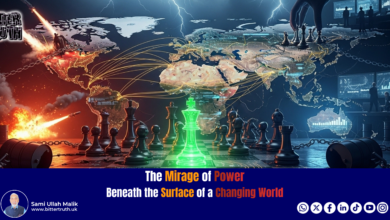
Let us not mistake this confrontation for a mundane tariff war. This is geopolitical chess, played with geological pawns. Each move, each embargo, reverberates through the global balance of power. Just as the Roman gladius carved the empire’s path through Europe, so too does China’s grip on rare earths herald the rise of a digital dominion. And one is reminded, with an almost eerie prescience, of Winston Churchill’s musing: “History is written by the victors.” China, it appears, has taken up the pen.
Indeed, this is not war by swords, but by supply chains. As Edmund Burke once reflected, “The weapons of war are not always forged of iron—they are often hammered in the forges of finance.” China has etched this lesson deep into its statecraft. Should America fail to restore its domestic processing capacity, this contest will not halt at tariffs; it shall ascend into the stratosphere of technological sovereignty.
It must be said—and said with clarity—that in both the rhetoric of knowledge and the language of statecraft, the very choice of words crafts the course of history. In this narrative, China has chosen its words wisely—its rare earths are not just minerals, they are metaphors of might. By contrast, America’s hubris and the moral decrepitude of its foreign policy, especially towards the Global South, has left it diplomatically bankrupt.
No tears are shed in Africa or Asia when Washington stumbles. No hearts flutter with sympathy. American declarations of freedom ring hollow in lands where drones replaced diplomacy.
Thus, we stand at the threshold of a new era of trade warfare, where China’s strategic prowess and America’s structural dependency have drawn the battle lines not upon maps, but within the very circuits of tomorrow’s technologies. Power, henceforth, will be measured not in missiles or mandates, but in the silent magnetism of minerals—and in this arena, China’s banners already flutter victoriously upon the digital hills.
Where are our respected friends in America and the West! Why are they silent in the face of today’s enemies of peace? You are our most valuable asset on this planet, and we want you to take the field for the truth, otherwise, under the guise of this trade war, the enemies of peace will once again succeed in their efforts to darken this world by pouring gasoline on the flames of war. Surely, you will not be left behind in extending a strong hand of peace and friendship to this request of mine.
“O minds of reason, custodians of conscience and guardians of peace—how long will you cloak silence in the garb of strategy? The streets of the world run crimson, and the breath of humanity grows fainter with each passing day. Peace is no longer a noble speech—it is a fading whisper. It is time for the true friends of peace, in the West and in America, to rise from shadows and speak. Lest history place them among the silent bystanders of tragedy. Let not your hesitation empower those who trade in fear and feed on fire. Today’s silence may become tomorrow’s shame. Rise—peace is calling you before it forgets your name.”
“Peace is waiting at your doorstep—will you step forward before darkness falls?”
“If the peacemakers remain silent, the warmongers will write history.”
“Do not let the moment slip—before the voice of reason is drowned by the drums of war.”
“The world waits not for the hesitant; act now, lest peace becomes a memory.”
“When will the true friends of peace rise? Before time chooses others to take the stage.”