The Flight of Prudence
Steel and Statecraft

In the twenty-first century, global politics is no longer confined to the mere defence of borders, or the ostentatious display of military might. It has evolved into a delicate and often unforgiving synthesis of technology, economic capacity, diplomacy, and defence industrial self-reliance. In this altered world order, prestige no longer belongs exclusively to those who wield power, but to those who can legitimise it—states that are able not only to meet their own defence requirements but also to assert the ethical, political, and strategic value of their military products within the global marketplace.
It is against this shifting international backdrop that Pakistan’s JF-17 Thunder programme assumes the character of a decisive milestone.
The project is far more than the manufacture of a combat aircraft. It represents the outward expression of an evolutionary transformation in Pakistan’s defence doctrine: a gradual but deliberate departure from import dependency towards joint production, technological partnership, and restrained yet dignified defence exports. The collaboration with China has not merely strengthened Pakistan’s military posture; it has repositioned the country as a responsible stakeholder within the complex geometry of global defence politics.
Recent negotiations concerning the prospective export of the JF-17 Thunder have consequently given rise to a series of consequential questions. Will Pakistan calibrate its commitments in accordance with its actual production capacity? To what extent will China’s role prove decisive? Which states ought to be deemed eligible recipients of this aircraft—and which ought not? And, above all, how is the delicate balance between national security and geopolitical equilibrium to be preserved within the domain of defence commerce?
This defence policy paper constitutes a serious and methodical attempt to address these questions from a structured, analytical, and state-centric perspective. Its purpose is neither to rehearse technical minutiae nor to lend credence to transient political narratives. Rather, it seeks to present a clear, cautious, and practicable policy framework capable of guiding the State of Pakistan in its future defence-related decisions.
1. Negotiations on the Sale of the JF-17 Thunder: National Interest and International Partnership
Pakistan’s confirmation that it is engaged in negotiations with multiple countries regarding the sale of the JF-17 Thunder is indicative of a significant shift in the orientation of its defence industry. No longer confined solely to domestic requirements, Pakistan’s defence production apparatus is now making a conscious and calculated effort to secure a foothold in the international defence market.
By choosing to introduce the JF-17 Thunder beyond the narrow confines of national defence, Pakistan signals its entry into a new phase of defence self-reliance—one in which military autonomy is consciously integrated with diplomatic foresight. The acknowledgment of ongoing preliminary negotiations with various states reflects a structured export strategy rather than an impulsive commercial venture.
It has been stated with complete clarity that any such agreement will necessarily include China’s consent. This stipulation is neither incidental nor negotiable; it flows organically from the joint nature of the project, its technological interdependencies, and its overarching strategic character. To disregard this reality would be to misunderstand the very architecture upon which the JF-17 programme rests.
According to Pakistani officials, while negotiations are indeed underway, these are not matters to be concluded at the pace of newspaper headlines. Defence agreements demand patience, trust, and time. The interest shown by multiple countries testifies to the aircraft’s growing credibility, yet legitimacy in such matters is achieved not through haste, but through silent maturation.
The Minister for Defence Production has reiterated that these discussions remain in their initial to intermediate stages and will require considerable time to reach fruition. Defence contracts are not mere commercial transactions; they are inseparably bound to considerations of national security, regional stability, and the tacit consent of global powers. Consequently, incremental progress has been prioritised over precipitous decision-making.
The JF-17 Thunder Block III: Capability and Strategic Relevance
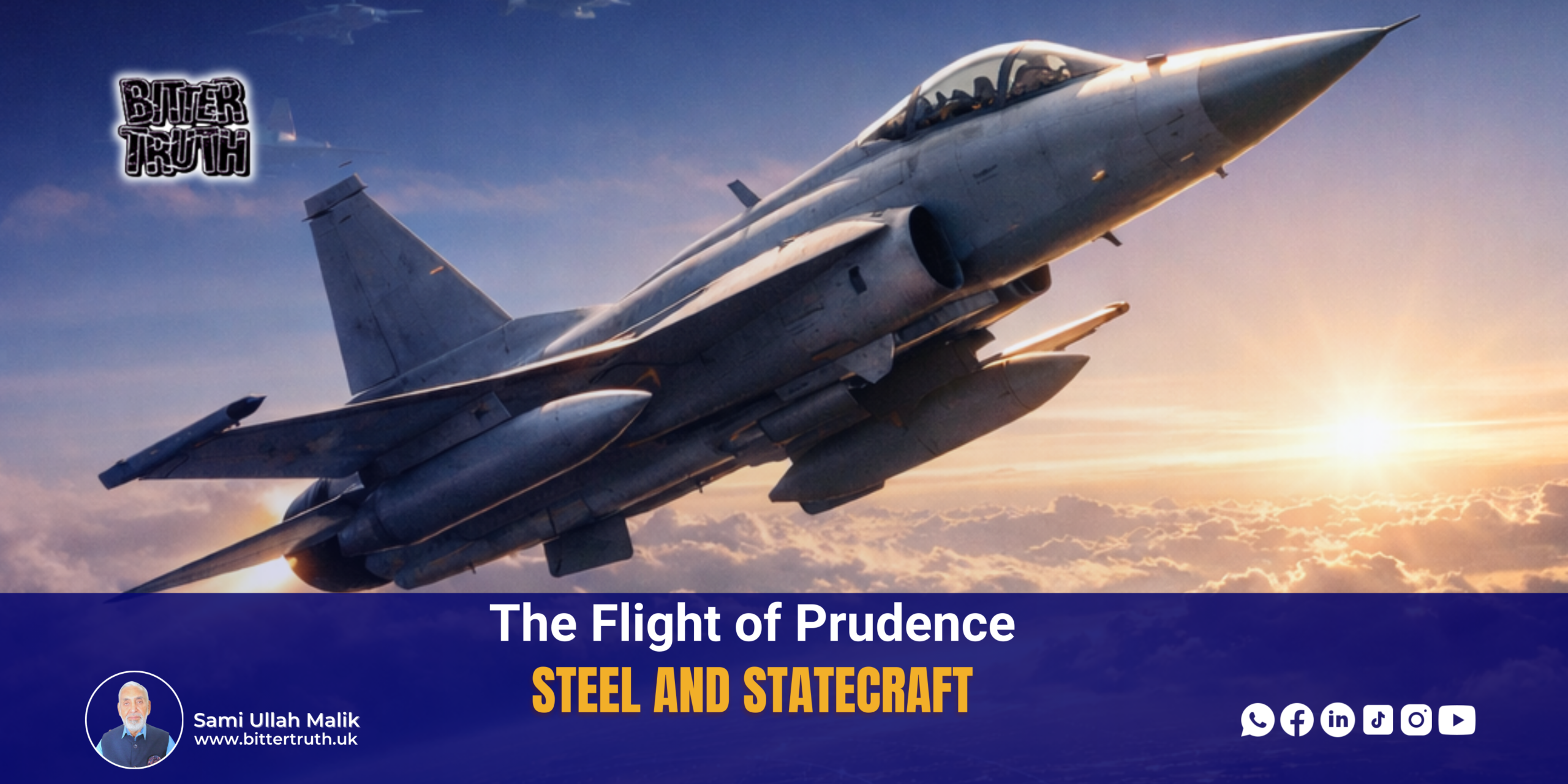
The JF-17 Thunder Block III is not merely a fighter aircraft; it is the embodiment of contemporary military thought. Classified as a 4.5-generation multirole fighter, it is aligned with the operational demands of modern aerial warfare. Equipped with an Active Electronically Scanned Array (AESA) radar and long-range beyond-visual-range (BVR) missile capability, it is designed to dominate an increasingly contested battlespace.
Its ability to detect and engage adversaries at extended distances, combined with its multirole functionality—including air-to-air, air-to-ground, and electronic warfare missions—places it in competitive parity with contemporary regional and global platforms.
Operational Validation and International Perception
During the period of heightened tension between Pakistan and India from 7 to 10 May, the JF-17 Thunder was operationally tested under real-world conditions. Its performance became both a mirror and a credential—quietly observed by air forces around the world, which witnessed the striking emergence of a credible new aerial capability.
While claims regarding the downing of Indian aircraft remain subject to political contestation, the more enduring achievement lay in the impression forged within international military circles. The operational effectiveness demonstrated during this episode significantly enhanced the aircraft’s global standing and reinforced its reputation as a combat-proven platform.
Cost, Philosophy, and Strategic Appeal
Where Western-manufactured fighter aircraft typically command prices ranging from $250 to $350 million, the JF-17 Thunder is offered at approximately $40 to $50 million. This disparity is not merely numerical; it reflects a fundamental divergence in defence philosophy.
The JF-17 represents not cheapness, but economy—an assertion that credible defence need not be prohibitively expensive. It is the philosophy of achieving greater capability with fewer resources, a principle that resonates powerfully with developing states seeking reliable yet sustainable defence solutions.
China’s Role: Structural and Strategic Imperatives
As a joint endeavour between Pakistan and China, with components manufactured in both countries, Chinese participation in every export agreement is unavoidable. This involvement is essential not only for the protection of sensitive technologies, but also for maintaining diplomatic equilibrium and managing the responses of global powers.
China’s role is neither ceremonial nor peripheral. It encompasses technical approvals, supply chain management, and technology control, ensuring that the strategic integrity of the programme remains intact. In this respect, Chinese participation constitutes a framework of technical, diplomatic, and strategic oversight rather than a mere contractual formality.
It is both natural and legitimate to ask whether Pakistan possesses the capacity to produce these aircraft in significant numbers within stipulated timelines. Yet such questions are not ordinarily debated in the open marketplace of opinion within defence-oriented states. At the level of policy, it is acknowledged that large-scale orders inevitably place production capacity under scrutiny. Nevertheless, this capacity is neither static nor improvised; it is a gradual and scalable system, capable of expansion in accordance with carefully assessed requirements. In the defence industry, production capability is not determined by factories alone, but by state resolve, long-term planning, and the discipline of time.
The response of the Minister for Defence Production was therefore both measured and revealing. This, he observed, is a matter of national defence, and national secrets must remain precisely that—secrets. By way of illustration, he emphasised that modern defence systems are not forged overnight; they demand patience, labour, and incremental development. Details relating to production capability, supply chains, and delivery timelines fall squarely within the domain of national security. Their public disclosure would not merely be imprudent, but contrary to established policy. This position reflects not evasion, but industrial realism tempered by state prudence.
Defence analysts consistently caution that agreements of this nature mature over years rather than months. Decisions driven by emotion or undue haste risk engendering long-term complications—ranging from supply-chain disruptions and technological bottlenecks to diplomatic pressure. Delays in delivery, interruptions in component availability, and external political leverage are foreseeable risks, and it is incumbent upon policymakers to formulate pre-emptive strategies to mitigate them. Wisdom and deliberation, rather than urgency, must therefore guide this process.
Given that critical components of the programme are sourced from China, Pakistan must refrain from entering into agreements that exceed its absorptive capacity or threaten to destabilise technological dependencies. This is a question of industrial sobriety, not political enthusiasm. Initial success in the global defence market demands nothing less than a robust, fail-safe supply-chain architecture capable of sustaining long-term commitments.
There is broad consensus among analysts that China occupies the position of senior partner within this project and will, quite naturally and necessarily, maintain close oversight of the sales process at every level. This entails a decisive role in final approvals, technology transfer, and export policy. Export decisions will proceed through bilateral consultation, with final authorisation resting on joint concurrence. Yet it must also be acknowledged that the success of these orders owes much—by the grace of God—to the demonstrated competence and resolve of the Pakistan Air Force and the armed forces as a whole, whose performance during the May conflict with India decisively validated the platform’s credibility.
According to Anar Tangjen, Senior Fellow at the Centre for International Governance Innovation (CIGI), Pakistan may sell the aircraft, but control over the underlying technology will remain with China. The export of the JF-17 will thus operate within a joint framework in which Chinese primacy is an established fact. This arrangement serves to prevent the unauthorised diffusion of sensitive technologies.
Both China and Pakistan are acutely conscious of the risk that advanced technologies might reach Western powers through third-party intermediaries. It is for this reason that all agreements will remain under close Sino–Pakistani supervision. This concern forms part of the wider global contest over technological dominance, and accordingly, export policy will remain subject to stringent controls.
As the Minister for Defence Production aptly remarked, no state sells its weapons to its enemies. The JF-17 is not intended for universal sale; it is reserved for friendly states, and each decision is taken within a clearly defined geopolitical context. This is not exclusion, but statecraft—the recognition that no nation transfers the instruments of its defence to those who may one day wield them against it. Policy therefore dictates that the JF-17 be supplied solely to trusted allies and strategic partners, with geopolitical considerations occupying a central place in every agreement.
The details of the defence agreement concluded last year between Pakistan and Saudi Arabia remain classified. Negotiated at the highest levels of state, its confidentiality underscores both its sensitivity and its strategic weight.
International media have also alluded to a possible Turkish role, though official silence has been maintained. Turkey, alongside China, Saudi Arabia, and Azerbaijan, stands among Pakistan’s partners with whom cooperation is neither transient nor transactional, but strategic and organic. Future joint ventures within this constellation remain a distinct possibility.
According to reports by Bloomberg, Turkey has expressed interest in drone production within Pakistan. While the Minister for Defence Production neither confirmed nor denied these reports, he did emphasise that Pakistan’s private sector is already deeply engaged in UAV and drone technologies. This trend signals the decentralisation of defence production and the diffusion of technological capability—a quiet revolution unfolding beyond the glare of public spectacle.
In light of these considerations, policy recommendations must prioritise gradualism and realism in export agreements. Institutionalised coordination with China is imperative. Production capacity must be expanded incrementally, and sales restricted strictly to reliable and friendly states. Technology control and information security must remain paramount.
The export of the JF-17 Thunder presents Pakistan with tangible economic, military, and diplomatic opportunities. Yet its success depends upon a cautious policy framework, close strategic alignment with China, and the setting of achievable objectives. Managed wisely, this programme has the potential to establish Pakistan as a credible participant in the global defence market.
Ultimately, the JF-17 Thunder is more than a combat aircraft. It stands as a metaphor for Pakistan’s military sovereignty and self-respect, its industrial maturity, its diplomatic prudence, and its measured advance within global politics—particularly within the Islamic world. This is a flight sustained not merely by wings of steel, but by judgement, confidence, and historical awareness. It serves as a reminder that defence is not defined by weapons alone, but by foresight, partnership, and the patient test of time.
The debate surrounding the export of the JF-17 is, in truth, a debate about Pakistan’s larger identity: whether it chooses to remain merely a purchaser in global politics, or to emerge as an informed, responsible, and autonomous defence partner. The aircraft may be an assemblage of metal and electronics, but the decisions surrounding it speak to national dignity, diplomatic balance, and future security.
This policy paper therefore concludes that the sale of the JF-17 represents both opportunity and trial. An opportunity to strengthen the defence economy, deepen strategic partnerships, and enhance Pakistan’s industrial reputation—and a trial because any miscalculation may invite technological dependence, diplomatic pressure, or production constraints detrimental to national interest.
China’s role as senior partner will remain central throughout this process, and Pakistan must harbour no illusions in this regard. Likewise, limiting exports to trusted allies is not only a matter of prudence but of state ethics.
In the final analysis, the success of the JF-17 Thunder will not be measured solely by the number of aircraft sold, but by whether Pakistan has upheld restraint, patience, realism, and strategic wisdom throughout the endeavour. Credible defence does not announce itself loudly, and enduring policy is that which withstands the judgement of time.
If the export of the JF-17 proceeds within this balanced policy framework, the programme may come to represent not merely a defence achievement, but a defining testament to Pakistan’s strategic maturity.