
The Diplomacy of Illusion: Lessons Etched in Blood and Betrayal
Chasing Shadows: Kashmir and the Ghost of Promised Peace

The Kashmir Conundrum: A Chronicle of Hope Betrayed and Diplomacy Denied
The question of Kashmir remains a long-standing and intricate dispute between the two pivotal nations of South Asia — Pakistan and India. It is a geopolitical thorn that has, from time to time, captured the wary gaze of the world’s great powers. Chief among them stands the United States — a power which has alternately cast itself as an arbiter, a strategic partner, or at times, a detached and self-interested spectator.
This treatise seeks to explore the historical landscape upon which the American offers of mediation have unfolded — promises that swayed Pakistani expectations, only to leave behind a wake of disillusionment and strategic stagnation.
History, if listened to with the ears of the discerning, speaks in tones untainted by deceit. And in the annals of South Asian political affairs, the American role — particularly in the entangled rivalry between India and Pakistan — has emerged as a recurring chapter: draped in the illusion of promise, only to dissolve into the mists of calculated indifference. This study maps the tangled web of diplomatic manoeuvres wherein American mediation, Pakistani aspiration, and Indian realpolitik have become knotted in mutual mistrust and missed opportunity.
It is a truth attested by history itself: in the theatre of global politics, there are no eternal friends, nor immutable foes — interest alone dictates allegiance. And if this axiom is to be applied to the world’s mightiest democracy — the United States — then the verdict is unambiguous: America does not tarry in sacrificing the very allies who have dared risk peril for her cause.
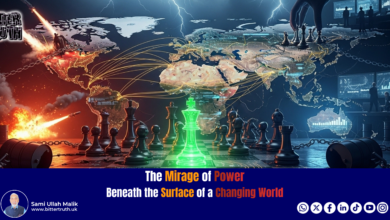
On the great chessboard of international diplomacy, some moves are more perilous and opaque than the deepest gambits of grandmasters. When America, the self-styled merchant of peace, dons the garb of a mediator while clutching the scales of self-interest, the afflicted often receive the sort of justice that a soulless trader might confer: “Silence your claims, surrender your soil — we shall see to the rest.”
The discerning observer knows that the pages of the subcontinent’s history are steeped in this tragic irony — that every time Pakistan lit the lamps of hope and steadfastness towards Washington, the winds of political expediency extinguished them before dawn. The milestones of the past bear grim witness to the truth: we bartered body, soul, and treasure at the altar of Uncle Sam’s favour, only to be rewarded with vague platitudes and unsolicited advice.
Let us remember in the autumn of 1962, as the guns of India and China thundered across Himalayan passes, flickers of strategic wisdom glowed faintly in the halls of Pakistan’s power. Voices — cautious but compelling — urged that this was the moment to act, the opportune hour to reclaim Kashmir. Many a seasoned strategist and political observer counselled the Pakistani high command: exploit India’s vulnerability and seize the prize long denied.
It is even whispered that China, through the veiled channels of silent diplomacy, signalled a quiet encouragement. Yet, Field Marshal Ayub Khan, persuaded by the solemn assurances of the Kennedy administration, chose the path of neutrality. He wagered on American mediation — that Camelot’s knight would grasp the scales of justice and award Kashmir to its rightful claimant. Thus, Ayub, seduced by promises spun in the parlours of Washington, committed an error both tragic and unforgivable: he sheathed his sword and placed his trust in tomorrow’s promise. History, ever the stern tutor, has since revealed the truth — that promise was never kept. The so-called American mediation was but a dream, rudely shattered by the awakening blow of political realism.
Today, that unfulfilled hope still haunts the corridors of Pakistan’s strategic memory, a lament echoing with the refrain of miscalculation and misplacement of trust.
In the 1950s, Pakistan aligned itself with the United States through military pacts such as SEATO and CENTO. These alliances were designed, not for regional equilibrium, but for the singular aim of combating the Communist threat. Military aid did flow — but only with the strings of strategic containment, not deterrence against regional adversaries such as India. The 1959 bilateral defence agreement, too, was woven from the same cloth — promising protection from Communist aggression but yielding little in tangible terms. For Pakistan, these agreements amounted to a one-sided transaction — their full benefit accruing, not to the partner who sacrificed, but to the partner who demanded loyalty.
History again bears witness: once its objectives were met, America did not hesitate to abandon the very nations that had stood beside her in her ideological crusades. Among the most scalded of these allies is Pakistan. Having been lured down a path of false promise under the banners of SEATO and CENTO, Pakistan was rendered a mere pawn in a larger Cold War game. Beneath the shade of so-called defence umbrellas, Pakistan found itself mobilised — not for its own sovereignty, but for American grand strategy.
When the Indo-Pakistani War of 1965 broke out, and Pakistan turned to the very arsenal once supplied in camaraderie, the U.S. turned off the tap. The weapons, we were told, had not been meant for Delhi. They were for Moscow. When sought for succour, America responded by suspending aid, reminding Pakistan that its arsenal came with terms not tailored to its regional reality.
And yet — ever the romantic — Pakistan continued to believe that loyalty would beget reciprocity, that the road to Washington led to resolution. Ayub Khan, once more, took the Kennedy administration at its word — that mediation would follow, that justice would be done. The result? Kashmir remained locked in stalemate, and Pakistan was once again confronted by the harsh lesson that in the eyes of the American Republic, it was less a strategic partner and more a disposable instrument of convenience.
A Pact with Shadows: From Shimla to Silent Betrayals
When the twilight of 1971 descended upon Dhaka, it did not merely mark the sundering of a nation but also witnessed the shackling of its strategic will. In the bitter aftertaste of war, Pakistan—mutilated and bleeding—was coerced into accepting a clause in the Shimla Agreement that quietly sealed the United Nations resolutions on Kashmir behind the dusty doors of diplomatic archives. Whether this acquiescence was born of tactical necessity or political naiveté is a question that renders every historian’s quill restless; yet in every inked response lies the unmistakable loneliness of Pakistan on the global stage.
India, with the leverage of thousands of Pakistani prisoners of war—both civilian and military—held the upper hand. It was a coercive diplomacy cloaked in peace-talk garb. The clause mandating bilateral resolution of all disputes, including Kashmir, weakened—though did not nullify—the UN’s standing resolutions. It was, undeniably, a strategic compromise, if not a diplomatic capitulation.
It is worth recalling that just a year prior, in 1970, General Yahya Khan had played the clandestine role of emissary between the United States and the People’s Republic of China, brokering a path to rapprochement. Yet what did this exertion yield? Neither a secured East Pakistan nor a resolved Kashmir. Instead, the reward was a dismembered country and an accord that emasculated international legal commitments. Bhutto’s diplomacy, loudly lauded in its day, proved with time to be triumphant only on parchment, not in the realpolitik of South Asia.
Fast forward to 1999—the Kargil conflict. Once again, the thunder of conflict met the whisper of American disapproval. Under mounting pressure from Washington, Pakistan was compelled to retreat, despite having engaged in a theatre where both nations were now nuclear-armed. While cloaked in calls for peace, the American intervention disproportionately leaned towards India, lending it the quiet assurance of tacit support.
Then came the post-9/11 era—a turning point not merely in global politics, but in the internal sovereignty of Pakistan. The military regime under General Pervez Musharraf crumbled before a single phone call from Washington. In a move that would baffle even the most cynical of realists, Pakistan offered its airbases to the United States—airbases that became launching pads for over 57,000 airstrikes on Afghan soil, including the brutal bombardment of Tora Bora. And yet, not a single Pakistani institution was permitted to monitor those very operations carried out from its own soil.
In return? A trickle of dollars. In consequence? The haemorrhaging of over 70,000 Pakistani lives, $110 billion in economic loss, and the burden of hosting millions of Afghan refugees—all carried out under the illusion of an alliance. Meanwhile, the United States struck a landmark civil nuclear deal with India and deepened its strategic embrace with New Delhi. Pakistan, the supposed ‘non-NATO ally’, was left as the proverbial groom left at the altar—cloaked in pledges, bereft of partnership.
Indeed, Indian sponsorship of terrorism within Pakistan became an open secret, furnished with dossiers, evidence, and appeals submitted to the United Nations. And yet, the UN—functioning all too often as an echo chamber of Washington’s foreign policy—remained criminally mute, reciting the litany of peace while averting its eyes from Indian transgressions.
Then came 2019. Donald Trump, ever the master of spectacle, dangled the prospect of Kashmir mediation before Prime Minister Imran Khan—an invitation gilded in theatrical diplomacy. Imran Khan, perhaps seeking a statesman’s halo, embraced the gesture like a World Cup-winning captain. Yet behind the pomp lay a tragic farce.
Trump, whose loyalties were already auctioned to Narendra Modi during grand spectacles on American soil, gave Modi a blank cheque on Kashmir. The American president had no intention of acting as an impartial broker. Rather, he oversaw the final act in a tragedy decades in the making—India’s unilateral abrogation of Article 370, effectively annexing Kashmir and discarding UN resolutions like yesterday’s newspaper.
General Qamar Javed Bajwa, Pakistan’s then-army chief, made a pilgrimage to the Pentagon, received a ceremonial salute, and returned with marching orders masquerading as diplomatic courtesies. Soon after, a press huddle confirmed the military’s quiet retreat from the Kashmir issue. It was, in truth, not diplomacy but defeat dressed in uniform.
In the aftermath, a grand reception at Chaklala Airbase was staged to welcome Imran Khan—a would-be statesman returning as though from Versailles, not Washington. Yet this display of pomp turned hollow when, on August 5, India executed the legal annexation of Kashmir. Trump remained conspicuously silent—proof, if any were still needed, that American mediation was never meant to be more than a smokescreen.
What sort of arbiter proclaims neutrality while enabling one party to ravage the disputed land? Was this “mediation” or a velvet-gloved auction of sovereignty?
If this is the model of American arbitration, then one must prepare for a similar solution in Palestine: hand over Gaza to the United States, transform it into a tourist resort, and resettle the Palestinians across neighbouring Arab states. The logic is imperial; the cost, civilisational.
How much longer shall the Muslim world remain shackled by delusions of Western fidelity? How many more betrayals must be endured before the lesson is learnt: that in the grand chessboard of global diplomacy, alliances are inked in interests, not honour?
The Mirage of Mediation: America’s Diplomatic Façade and Pakistan’s Quest for Sovereignty
A glance through the annals of modern history reveals a stark truth: since the close of the Second World War, the United States has cast its long and shadowy arm over no fewer than three dozen nations—often in the name of democracy, sometimes under the guise of security, but invariably in pursuit of strategic gain. From the frozen ridges of Korea and the sweltering jungles of Vietnam to the beleaguered hills of Afghanistan, the scorched plains of Iraq, the battered streets of Libya, the fractured ruins of Syria, and the silent suffering of Yemen—America’s footprint has more often marked the road to ruin than to redemption. And when the dust has settled, it is not banners of victory but the embers of shame or uneasy compromise that litter the battlefield—witness the haunting fall of Saigon or the unceremonious withdrawal from Kabul.
President Donald J. Trump, in his campaign rhetoric, had thundered about ending America’s “endless wars.” Yet, once ensconced in the White House, the mantle of imperial power proved heavier than anticipated. What began as populist defiance morphed into sabre-rattling: threats directed at Canada, overtures to purchase Greenland, a trade war with China, and bullying admonitions toward NATO and the European Union. On Palestine, America became a silent accomplice in Israel’s transgressions, tacitly condoning flagrant violations of human rights in Gaza—underscoring not only Washington’s duplicity but the brazen betrayal of its own professed ideals.
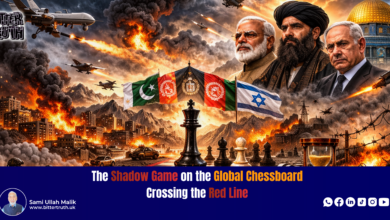
In its economic contest with China, Washington eventually found itself outmanoeuvred. The resilience of the Chinese economic model and its expanding global influence left the American trade offensive hollow, exhausted, and visibly futile. Meanwhile, the myth of Western military supremacy began to unravel, particularly in the latest Indo-Pakistani conflict. There, Pakistan not only intercepted and downed the much-vaunted Israeli-made Harop drones employed by India but also obliterated their control centres, effectively debunking the illusion of Israeli-Indian military invincibility. Eighteen Israeli specialists, reportedly killed in action, were quietly repatriated, but the world had already discerned the truth: the emperor had no clothes.
It was only after this tactical humiliation that the United States, under Israel’s behest, intervened with uncharacteristic haste to broker a ceasefire—an act not of benevolence, but of desperation, designed to salvage its regional pawns. For Pakistan, however, this manoeuvre echoed a recurring pattern. From 1962 to Kargil in 1999, and again in 2019, Washington has consistently offered promises sweetened with the syrup of mediation, only to retreat into studied ambiguity when the moment of reckoning arrived. The Kashmir conundrum, instead of resolution, has only grown more intractable with each American overture.
Once again, the spectre of U.S. mediation looms, this time dressed in the rhetoric of neutrality but animated by a strategic imperative to use India as a counterweight to China. The so-called “Quad Alliance” is a manifestation of this ambition. Yet, Washington seems willfully blind to the historical reality that India, despite its bombast, could neither confront China in 1962 nor is it equipped to do so today. This “lame horse” of American foreign policy, weighed down by structural military and strategic infirmities, remains more pawn than partner.
The pattern is unmistakable. America’s interventions—from the rice paddies of Vietnam to the deserts of Libya, from the ravaged alleys of Fallujah to the flaming ruins of Gaza—reveal a superpower bound not by principle, but by interest. Its pledges, its treaties, and its diplomatic overtures are instruments of expedience, not emblems of trust. Trump’s recent proposal that Ukraine cede 20% of its territory to Russia in exchange for “peace” was not diplomacy, but daylight extortion. His imagined solution to Gaza—to empty the territory of its inhabitants and repurpose it as a tourist haven—is not mediation, but a blueprint for erasure.
Meanwhile, Narendra Modi’s electoral playbook continues to feature Pakistan as a convenient bogeyman, rekindling the fires of Hindu nationalism to secure the ballot box and strengthen his standing within America’s anti-China agenda. Yet even this collusion is born of strategic fantasy. India may swagger on the stage of global forums, but beneath its rhetoric lies a fragile edifice of untested alliances and chronic vulnerabilities.
What then of American arbitration? What credibility can possibly remain when the scales of justice are so visibly tipped? Can a nation that abandons its allies, fuels conflicts, and props up regimes of convenience be trusted to mediate peace?
And suppose, for the sake of speculation, that a mediation formula was implemented—partitioning Kashmir, demilitarising the territory, or carving out semi-autonomous zones—would any party find it palatable? And if not, whose doorstep will Trump’s bear-like wrath darken next?
Pakistan must now awaken to the bitter truth: that reliance on American mediation is to chase shadows across a sunlit plain. National dignity, like sovereignty, is not bartered in the bazaars of international diplomacy, nor secured by the promises of foreign patrons. It is forged in the crucible of self-reliance, collective resolve, and unwavering principle.
Whether the issue is Kashmir or any other matter of vital national interest, Pakistan’s salvation lies not in the corridors of Capitol Hill, but in the strength of its own vision, the clarity of its diplomacy, and the unity of its people. The time has come to replace illusions with strategy, and to remember: the mirage of mediation must never be mistaken for the oasis of sovereignty.
The Familiar Fable of Washington: A Tale Rehearsed with Changing Masks
The story of Washington, it would seem, is not so much rewritten as it is replayed—with only the actors refreshed, never the script. Yesterday, it was General Zia who sought to cloak martial law with the benediction of the American hand. Today, another seeks to burnish his political image beneath the same gilded arch. But those who clasp Uncle Sam’s finger with the hope of guidance often find themselves paraded naked in that souk of realpolitik, where all that glitters is not principle, but power; and every transaction is measured not in trust, but in terms of leverage.
Should one today repose faith in Mr Trump’s arbitration—or that of any of his ilk—the “solutions” proffered would likely echo the same dismal tune: “Let the status quo stand,” or worse, “lease it to us for twenty years, and we’ll revisit the matter later!” Is such a proposition worthy of a sovereign people? And if refused, what then? We have witnessed Trump’s fury—a bear’s embrace from which there is no graceful escape and in which the very breath of liberty is throttled.
The United States presents itself not as a mediator, but as a merchant of outcomes, hawking peace only when it profits. If this requires the silencing—or indeed the obliteration—of the Muslim world, then so be it, in their cold calculus.
Those led astray by mirages spun into dreams are either intoxicated by delusion or ignorant of history’s harsh instruction. It is time, indeed overdue, for Pakistan to abandon this theatre of illusions. The resolution of Kashmir’s tragedy will not emerge from the polished chambers of foreign capitals, nor from the lips of those whose allegiances bend with expediency. It shall arise only when Pakistan anchors its foreign policy in sovereignty, resolve, and an unshakeable inner unity.
Every American promise carries within it a concealed clause, every offer of mediation a price not yet declared. We must stop mistaking diplomatic courtesy for commitment, and flattery for fraternity.
The moment has arrived for Pakistan to chart its path anew—not by consent of distant powers, but by the enduring strength of its geostrategic standing, its defensive competence, and, most of all, its ideological core. To do otherwise is to allow history to pen yet another chapter of betrayal with the same weary pen.
And now for the final, most bitter truth: nations that indulge the same dreams too often find them transformed—either into addictions that dull the will or into despair that crushes the spirit. Time and again we have awaited a saviour—someone to plead our cause, to loosen the grip on our jugular. But can one truly expect another to defend what we ourselves have neglected? Can the lifeblood, so often ignored by its own veins, be revived by a foreign pulse?
The writing is no longer on the wall—it is etched upon the forehead of history. The yearning for arbitration is the refuge of those who no longer believe in their own voice, their own strength, or their own sagacity. What is required now is a reckoning: to learn from the scars of the past, to assess allies and adversaries not through the mist of sentiment but by the harsh light of fact, and to place national interest not just first, but alone.
Else, every time we unwrap the bright packaging of promised diplomacy, we shall find within not deliverance—but another dose of poison, sweetened only by its presentation.