Smoke rising from the ashes of friendship
History Knocks Once More

The Ten-Year Defence Framework Between the United States and India — A New Dawn of Peace or the Prelude to a Militarised Epoch?
Across the horizon of history stand certain nations that proclaim themselves as champions of liberty, yet in their hands the shackles of other people’s gleam beneath the torch of freedom. The chronicle of the United States is one such paradoxical tale — towers of power echoing with the rhetoric of emancipation, but beneath each resounding chapter lies the sacrifice of a faithful ally.
Consider Iran — once America’s most trusted sentinel of the Gulf, the fortress of the Cold War, the proud monarchic guardian of Western interests. Yet when the crown fell and the masses swept through the streets, the golden doors of Washington, once paved with favours, closed upon the very sovereign who had stood by them. The United States refused even the sanctuary of exile to its oldest friend — the same ally whose soil had borne American bases and whose coffers had fuelled Washington’s prosperity for decades.
Then the wheel of time turned once more, and the torch of American interest was handed to Pakistan. In the days of Soviet aggression, Pakistan became the lamp that illuminated another’s path while consuming itself in darkness. During the Afghan Jihad, it wagered its land, its economy, its tranquillity, and even its generations for a war that was never its own. The battleground lay in Afghanistan, but the cost was paid in Islamabad. And when the Soviet Union’s funeral procession passed and America emerged as the world’s lone superpower, gratitude was replaced by sanctions, and the same land once hailed as the “Frontline State” was abruptly branded a “region of peril.”
Then came the cataclysm of 9/11 — and history, with its cruel sense of irony, repeated itself. Washington’s ultimatum thundered: “You are either with us, or you shall be bombed into the Stone Age.” Once again, Pakistan opened its skies, its soil, and its bases for America’s war — this time against its own neighbour, Afghanistan. But as the United States stepped into Kabul, India entered beside it — that very India once deemed beyond Washington’s strategic orbit. From Afghan soil, under American presence, India sowed the seeds of terror that would later bloom into the crimson thorns of bloodshed across Pakistan’s frontiers.
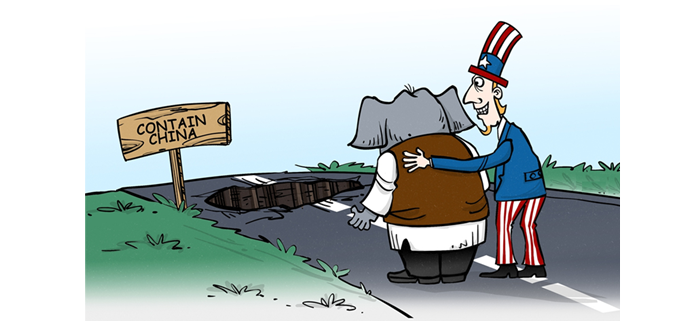
Meanwhile, Washington embraced New Delhi in a new “Civil Nuclear Agreement,” and soon after, in a more ambitious gambit, inducted it into the “Quad” alliance — a strategic league designed to counterbalance China’s growing influence. Thus, America reaffirmed the old truth that its friendship germinates only in the fertile soil of interest, and when the harvest is reaped, the farmer is left to weather the fallow season alone.
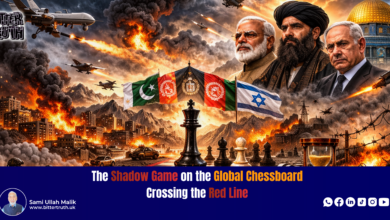
Following the Kuala Lumpur Defence Forum, U.S. Secretary of Defence Pete Hegseth announced that Washington and New Delhi had signed a decade-long defence framework — a formal edifice intended to institutionalise defence cooperation between the two powers. Both nations hailed it as a cornerstone for “regional stability, deterrence, and harmony.” Yet beneath the ceremonial ink lies an attempt to redraw the map of power across the Indo-Pacific — a joint declaration of America’s Eurasian strategy and India’s mounting military ambition.
In his social communiqué, Hegseth remarked that the framework seeks to enhance information exchange, technological collaboration, and military interoperability — phrases that, though couched in diplomatic restraint, reverberate with the language of strategic resolve. It is not merely the rhetoric of alliance but the lexicon of containment — a subtler pursuit of equilibrium rather than conquest.
﴿وَتِلْكَ الْأَيَّامُ نُدَاوِلُهَا بَيْنَ النَّاسِ﴾
“And so We alternate the days of fortune among mankind.” — Al-Qur’ān 3:140
A verse that speaks aptly of nations whose triumphs and trials are but turns of the same eternal wheel.
The inked parchment, then, is not just paper. It envisages operational congruence, logistical access, and technological exchange — the pillars upon which a new military economy may rise, particularly as both Washington and New Delhi aspire to curtail China’s maritime and strategic reach. This narrative, framed as an endeavour toward regional equilibrium, in truth bears the imprimatur of a calculated power design.
Viewed in the broader panorama, the framework seeks not mere cooperation but the orchestration of a coordinated front against Chinese ascendancy — a counter to both the economic sinews of the Belt and Road Initiative and the geopolitical thrust of Beijing’s expanding frontiers. Thus, this accord transcends bilateralism; it aspires to become a chapter in the evolving balance of power in Asia.
Its structural essence lies in three defining pillars: enhanced military interoperability — shared access to bases, logistical networks, and maintenance facilities; joint production and technology transfer — empowering India’s domestic defence industry; and regional security synchronisation. These provisions signify a new kind of proximity — not of geography, but of operational intent, where weaponry, training, and strategic access merge into a single continuum.
Among its notable clauses are the strengthening of interoperability, the promotion of indigenous defence capabilities, and the consolidation of the Indo-Pacific as a sphere of coordinated security. The framework also envisions deeper collaboration with Japan and Australia, fortifying the Quad alliance against the ripples of China’s economic and naval expansion. It sketches not merely a military blueprint but a geopolitical cartography — one that maps ambition upon alliance, and influence upon idealism.
This is not yet the birth of a formal bloc, but rather the rehearsal of one — a choreography of joint exercises, diplomatic symphonies, and strategic sermons. And as the ink dries, the question lingers: is this, indeed, a new dawn of peace — or merely the herald of another militarised age, cloaked in the rhetoric of cooperation?
The Chabahar Concession, the Theatre of Diplomacy, and the Return of History
From the very outset, I had forewarned through my writings and addresses that the recent commercial tensions between Washington and New Delhi were little more than a carefully staged contest — a Noura Kushti, a mock duel designed to obscure a deeper choreography of interests. This new defence framework stands as living proof that beneath the surface of apparent discord, the currents of grand strategy continue to flow in perfect symmetry. In diplomacy, appearances often marry policy; the spectacle conceals the substance, and yet both advance the same design.
To grasp this masquerade, one must look to the case of the Chabahar Port — a subtle but telling clause in the American playbook. At various junctures, the United States has displayed a measured leniency towards India’s ongoing project in Iran, allowing New Delhi to retain a commercial and strategic corridor into Central Asia and Afghanistan. Such flexibility reveals much: that Washington, while nurturing defence cooperation, occasionally tempers its sanctions and strictures to keep India’s regional foothold intact. It is a strategic indulgence — a reminder that in the calculus of empire, pragmatism often trumps principle.
Earlier this month, Washington granted India a temporary reprieve concerning its investments at Chabahar, a decision that breathed momentary life into Delhi’s ambitions on Iranian soil. Yet this concession was not born of goodwill; it symbolised the duality of modern statecraft — where economic and military interests run on parallel tracks. By extending this courtesy, Washington signalled to Tehran and Islamabad alike that it keeps not all its eggs in one basket, and that the turning of its gaze elsewhere is both habitual and historical. Its friendship, as ever, is a coin minted in the furnace of self-interest.
Recent rumours concerning the possible deployment of Pakistani troops in Gaza have stirred both intrigue and anxiety. Visits by Pakistan’s military leadership to Jordan and Egypt have only fanned the embers of speculation. Officially, however, Islamabad has issued no declaration; government channels maintain that any such decision would rest upon institutional consultation and parliamentary approval — a statement that reflects both caution and constitutional propriety. In the theatre of international affairs, rumours, leaks, and diplomatic whispers often precede reality, yet truth must be separated from the haze of conjecture. Until substantiated by formal instruments, such claims remain no more than the echo of ambition.
Even reports of former President Trump’s praise for Pakistani generals must be read within the idiom of diplomacy — gestures of courtesy rather than commitments of strategy. Compliment does not constitute consent, nor does admiration amount to alliance. As Jordan’s King Abdullah II has himself declared, Amman will not risk direct military entanglement in Gaza, and if an international peacekeeping force is ever formed, its role should be humanitarian and instructional, not coercive. The King’s caution is steeped in history: Jordan’s social fabric, interwoven with a vast Palestinian population, cannot sustain a policy divorced from the sensitivities of its own people.
Whispers from Western corridors suggest that certain powers — among them the United States and Israel — contemplate using Pakistani troops to disarm Hamas and impose a brittle peace upon Gaza. Yet such designs, if realised, would kindle a fire more consuming than any it seeks to extinguish. Praise from distant podiums must not be mistaken for policy; Pakistan’s role, if any, will be determined not in Washington’s chambers but within its own sovereign institutions.
This is an age of armed cooperation entwined with diplomatic intricacy — an age in which a single signature on parchment may herald either a new chapter or a passing overture. The ten-year defence framework, the American concession on Chabahar, the Jordanian refusal, and Pakistan’s poised restraint — these are interwoven threads in the grand tapestry of a changing South Asia and Indo-Pacific.
﴿إِنَّ اللَّهَ لَا يُغَيِّرُ مَا بِقَوْمٍ حَتَّىٰ يُغَيِّرُوا مَا بِأَنفُسِهِمْ﴾
“Indeed, God does not change the condition of a people until they change what is within themselves.” — Al-Qur’ān 13:11
Amidst the reshaping of alliances and ambitions, history whispers once more upon Pakistan’s doorstep. When Washington now embraces New Delhi, it awakens the ghosts of old betrayals — Iran, once its axis of power, cast aside when its throne collapsed; Pakistan, which bled for America’s wars, rewarded with censure and suspicion. The pattern persists, for empires change their banners but never their instincts. The eagle may alter its plumage, yet its talons remain the same.
As the map of global power shifts, America’s guiding principle endures: make friendship for utility, and when the purpose is served, consign the friendship to the grave. From Iran to Pakistan, from Afghanistan to Iraq, the script repeats itself — first the lamps of hope are lit, then extinguished in the ashes of abandonment.
Today Pakistan stands at another crossroads. Once more, history knocks upon our door. Shall we again serve as the fuel for another’s furnace, or shall we this time act in the shadow of our own sovereignty, guided by the light of our own interest? The answer lies not in Washington or Delhi, but in the conscience of Pakistan’s thinkers, statesmen, and scribes. For if we fail to learn from the dust of our past, the future will consign us, too, to that familiar graveyard of forgotten allies.