Silent Lobbies, Lofty Conspiracies
The Lost Dawn of Peace

On the Grand Chessboard: America, Israel, and the Architecture of Influence
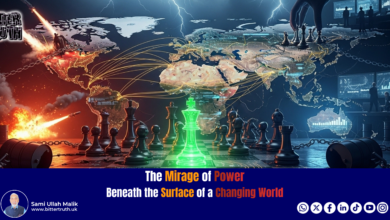
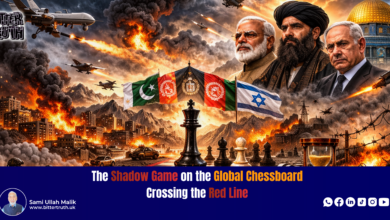
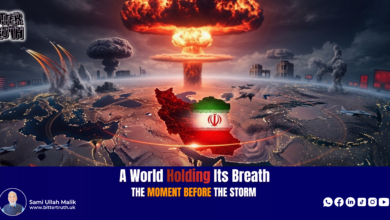
Whenever the annals of history are summoned to contemplate the destiny of mankind, it is often at such junctures that the pageant of politics performs its most intricate choreography. Stratagems of war, cunning diplomacy, and the theatre of statecraft converge with an intensity only the gravest of global questions can provoke. Such a moment has once again emerged upon the ever-troubled skies of the Middle East — a new chapter in an ancient drama — as the world’s attention, once fastened upon Iran’s nuclear pursuits, has been deftly redirected toward an obscure island. This sleight of hand, designed within the secretive chambers of the Pentagon, is a spectacle worthy of the old Arab proverb: “With the blink of an eye, deserts may bloom, and gardens may perish.”
The relationship between the United States and Israel is not merely a diplomatic alliance between two sovereign states; rather, it is one of the most complex, expansive, and enduring engagements of the modern era. It is not confined to mere assistance or episodic support, but rather encompasses a tapestry of historical, cultural, economic, and strategic dimensions. To reduce this union to the language of “friendship” or “alliance” is to do injustice to both political science and the record of history.
Within the political theatre of the United States, the influence of the Israeli lobby is no rhetorical exaggeration, but a firmly entrenched reality — one that extends from the corridors of the White House to the marbled halls of Capitol Hill. The ties binding Israel and America are not held together by sentiment alone; they are forged in the furnace of shared strategic interests, civilisational narratives, and a network of financial and ideological influence that spans generations.
Institutions such as AIPAC (American Israel Public Affairs Committee), ADL (Anti-Defamation League), and JINSA (Jewish Institute for National Security Affairs) are emblematic of this influence. Though they differ in structure and stated purpose, their gravity converges upon a single axis: the promotion and defence of Israel’s position in the American political psyche. AIPAC is perhaps the most visible advocate for pro-Israel lobbying in the United States. ADL, while ostensibly combating anti-Semitism and other forms of hate, often navigates towards the defence of Israeli interests. JINSA focuses more acutely on matters of national security, where American and Israeli defence priorities frequently coalesce.
So formidable is the reach of this lobbying architecture that no political party in America — Republican or Democrat — can realistically aspire to power without acknowledging, and indeed accommodating, its influence. Since 1948, the year of Israel’s formal establishment, the United States has not merely served as its ally but as its principal guarantor — a geopolitical guardian positioned to ensure Israeli hegemony amidst the stormy sands of the Middle East.
Israel’s geographic location, its rapidly advancing military capabilities, and its relentless operational readiness became linchpins in Washington’s strategic calculus. Over time, Israel evolved from a regional partner into a cornerstone of American imperial design — a sentry of Western interests in a region too vital to ignore, too volatile to neglect.
The power of the Israeli lobby in the United States is not confined to matters of foreign policy. It permeates election campaigns, legislative priorities, and executive decisions. That is why, immediately after the founding of Israel, the United States emerged as its most unwavering diplomatic and economic patron.
This is not a mere alliance of convenience. It is a historical bond, rooted in narratives of cultural affinity, shared values, and mutual interests. Every American president, regardless of party affiliation, becomes ensnared in this delicate web. To oppose it outright is to court political peril. AIPAC and its affiliated organisations wield such influence over American domestic politics that any serious divergence from pro-Israel policy often results in political isolation — or worse.
Indeed, the history of the American presidency bears witness to this truth. John F. Kennedy, Richard Nixon, and Barack Obama — three presidents separated by decades, yet united by their attempts to navigate the treacherous waters of Israel-related policy — all found themselves at odds with the machinery of the lobby, and all paid a price.
Kennedy, during the early 1960s, attempted to impose international inspections on Israel’s Dimona nuclear reactor, with the goal of preventing a regional arms race. His insistence was met with stiff resistance and considerable unease within the pro-Israel lobby. Kennedy’s efforts to bring Israel’s nuclear ambitions under global oversight represented a challenge not only to Israeli sovereignty but to the wider strategic consensus underpinning US-Israel relations.
The circumstances of Kennedy’s assassination have, ever since, been fertile ground for speculation. While no conclusive link has ever been drawn, the event has continued to provoke suspicion within the American political imagination. It is symbolic of a broader truth: that friction between the US establishment and the Israeli lobby is not simply a matter of policy — it is a phenomenon that reaches into the deeper strata of history, psychology, and strategic power.
Richard Nixon’s presidency (1969–1974) unfolded during one of the Cold War’s most sensitive phases. The Arab-Israeli conflict was inflamed, and Washington sought to maintain equilibrium on both sides. During the Yom Kappur War of 1973, Israel’s survival appeared imperilled. Nixon responded with a dramatic military airlift to support Israel. Yet his broader desire to engage Arab nations diplomatically provoked the ire of Israel’s supporters.
Secretary of State Henry Kissinger, himself of Jewish heritage, pursued a more balanced diplomatic posture in the region. His realism and pragmatism were ill-received by Israel’s more hardline defenders, who considered him insufficiently zealous. Nixon was denounced in some quarters as “indecisive” or even “duplicitous.” When the Watergate scandal erupted, the reaction of certain media circles and lobbying organisations was perceived by some as exceptionally severe. Though Watergate was, in essence, a domestic legal crisis, the political weakening of Nixon was seized upon by those already critical of his Middle East posture.
Barack Obama, too, encountered the gravitational pull of the Israeli lobby during his tenure. His administration’s cautious diplomacy towards Iran, culminating in the Joint Comprehensive Plan of Action (JCPOA), drew sharp criticism from pro-Israel constituencies in America. Obama’s approach was labelled naive by some, treacherous by others. Though he maintained significant military and economic support for Israel, his preference for multilateral engagement and nuclear restraint provoked open rebukes from Israeli leaders and their allies in Washington.
Thus, the history of American power reveals a sobering truth: that Israel is not merely foreign partner, but an intrinsic force within America’s political bloodstream. Its presence is not passive. It acts, it reacts, it mobilises. The Israeli lobby is not a spectator — it is a participant, a playwright, and at times, a quiet director in the unfolding drama of American governance.
In the final analysis, the relationship between America and Israel may best be understood not through treaties or headlines, but through the silent symphony of interests, ideologies, and ambitions that bind them. It is a bond tempered in the crucible of conflict, refined through decades of shared vision — and destined, it would seem, to shape the course of global power for generations to come.
The Watergate affair, far from being a mere instance of legal transgression, metamorphosed into a symbolic scar upon the visage of American political history—marking not only a premature cessation of presidential authority, but also a lasting fracture in the fabric of strategic allegiances. Through this episode, Israel and its influential advocacy organisations conveyed an unmistakable message: any American president who dared question Israeli policy might find his tenure shadowed by turbulence and eventual political exile.
The tenure of President Barack Obama (2009–2017) unfolded amidst a tempest of geopolitical upheaval: the Arab Spring, the ever-contentious Iranian nuclear dossier, and Israel’s relentless expansion of settlements in the occupied West Bank. It was during these years that the Obama administration brokered the Joint Comprehensive Plan of Action—an accord of historic proportion aimed at curbing Iran’s nuclear ambitions and forestalling a conflagration in the Middle East.
Yet, what Obama viewed as diplomacy in pursuit of global equilibrium, Israel and its vociferous allies in the American Jewish lobby castigated as an unforgivable betrayal. Prime Minister Benjamin Netanyahu took to the floor of the United States Congress to deliver an impassioned repudiation of the accord, denouncing the Obama administration as hostile to the Jewish State. Within days, major lobby groups branded the agreement a “historic error,” casting the president as a pariah in the court of Zionist opinion.
Obama’s support for a two-state solution to the Israeli-Palestinian conflict, coupled with his condemnation of Israel’s colonial expansion in the West Bank, was received as a direct affront to Israel’s existential security. The cold disdain between Netanyahu and Obama—both political and personal—became emblematic of a deeper fracture, revealing that even the President of the United States is not immune to the icy hand of organised dissent.
In this narrative, the sagas of Richard Nixon and Barack Obama emerge not merely as isolated chapters, but as enduring testaments to a singular political truth: the pervasive, and at times overwhelming, influence of Israeli advocacy within the corridors of American power. Nixon’s vacillation in matters pertaining to Israel’s strategic decisions came at the cost of political legitimacy. Obama’s commitment to multilateral diplomacy earned him relentless censure. Both presidencies demonstrate that dissent against the dominant Zionist narrative invites political peril.
The American political tradition bears witness to the capacity of the Israeli lobby to mount multifaceted challenges against any executive or legislator perceived to transgress its ideological perimeter. The media—particularly bastions such as The New York Times and The Washington Post—serve as both stage and sword for the dissemination of pro-Israel sentiment. Financial patronage, subtly orchestrated across both Republican and Democratic campaigns, consolidates influence through monetary leverage.
In the legislative arena, the presence of staunch pro-Israel allies in both the Senate and the House of Representatives ensures that strategic divergence is met with swift rebuke. Further still, within the bureaucratic machinery of the Pentagon and the State Department, pro-Israel administrators wield enough clout to mould policy from behind the veil.
Historical precedent offers three compelling illustrations.
President John F. Kennedy’s insistence on international oversight of Israel’s nuclear facility at Dimona was not a mere diplomatic overture—it was a manifestation of Cold War prudence and nuclear restraint. In 1963, Kennedy issued letters to the Israeli leadership demanding rigorous inspections of Dimona. Israel, in turn, dismissed such scrutiny as an existential affront. Scholars argue that this confrontation was more than a policy dispute; it etched a deep and lasting impression upon the DNA of American foreign policy. The National Security Archive’s 2006 exposé, Israel Crosses the Line by Avner Cohen and William Burr, chronicles this tension. The enigmatic circumstances of Kennedy’s assassination have, in the minds of many, become entwined with the shadows of this discord—creating a tapestry of suspicion that has yet to be fully unravelled.
Fast forward to 2018: under President Donald Trump, the US embassy was relocated to Jerusalem, and America formally recognised Israel’s sovereignty over the Golan Heights. Superficially, the relationship appeared to flourish—an apogee of pro-Israel policy-making. Yet, cracks began to show.
When Israel allegedly struck Iran’s nuclear facilities, triggering Tehran’s retaliation on US military outposts in the region, Trump’s immediate call for a ceasefire marked a subtle deviation. For the first time, a rhetorical chill emerged. Israeli officials voiced concerns about the method and timing of American response. Whispers of leaked intelligence and divergence in military priorities strained the intimacy of the alliance.
President Trump’s recent posture suggests a latent dissatisfaction with Israel’s increasingly unilateral and bellicose approach towards Iran and its neighbours—an approach seemingly at odds with American strategic objectives aimed at de-escalation and regional stability. Reports of sensitive intelligence disclosures and unmet expectations have compounded a growing trust deficit. Add to this Trump’s mercurial temperament, and a once symphonic relationship seems to stumble into dissonance.
The question thus arises: might Trump’s disenchantment galvanise a reaction from the mighty lobby? Historically bipartisan in its reach, the Israeli lobby has long cultivated both Democratic and Republican sympathies. It lauded Trump’s bold recognitions—Jerusalem and the Golan Heights—as diplomatic triumphs. Yet now, his ire unsettles the equilibrium.
The implications are profound. As history has shown, to dissent—even ever so slightly—from Israel’s prescribed path, is to tread a perilous road indeed.
The Israeli Lobby and the Orchestration of American Power: A Modern Imperial Parable
In the labyrinthine corridors of American politics, financial endorsement often speaks louder than rhetoric. It is, therefore, no idle speculation that future electoral campaigns may well encounter a conspicuous drought of contributions from the formidable Israeli lobby — a calculated cold-shoulder to any administration or leader deemed misaligned with Tel Aviv’s expectations.
More insidiously perhaps, we may witness a concerted effort from Israel-aligned media outlets and think tanks to fashion an anti-Trump narrative, subtly reconfiguring public sentiment through the vast machinery of opinion-making. In the hallowed halls of Congress, those senators and representatives whose allegiance lies unwaveringly with Israel may no longer merely observe; they may actively engage in political skirmishes, crafting legislative gridlocks or moral rebukes against a dissenting President.
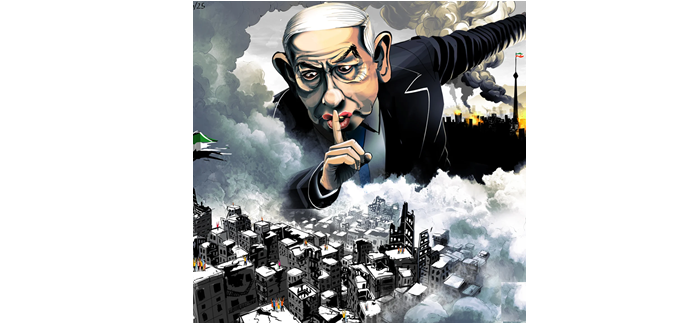
Meanwhile, deep within the sinews of the American bureaucracy, the lobby’s subtle levers — embedded within the Pentagon and State Department — may be employed to dilute executive agency in foreign policy, replacing presidential prerogative with quiet coercion. These are not the musings of the paranoid, but echoes from the annals of American history, where the Israeli lobby has been far more than a passive partner. It has at times, directed not only the compass of foreign policy but the very tide of political destiny.
The case of President John F. Kennedy stands as a solemn emblem of this phenomenon. His insistence upon the international inspection of Israel’s Dimona nuclear facility was not simply a diplomatic overture — it was a confrontation with a geopolitical reality shaped by Cold War imperatives. The Israeli response — to frame nuclear opacity as a matter of national survival — was more than defiance; it was the blueprint of an enduring strategy. Scholars such as Avner Cohen and William Burr have documented the chilling opacity that followed. The shadow of Kennedy’s assassination — still shrouded in conjecture — lingers as a cautionary tale of the price of friction with entrenched interests.
Today, the spectre of a similar conflict re-emerges in the fraught interactions between President Donald J. Trump and the Israeli establishment. The initial fanfare — marked by the relocation of the U.S. Embassy to Jerusalem and the recognition of Israeli sovereignty over the Golan Heights — has given way to discord, born of divergent approaches toward Iran and the broader Middle East.
Trump’s frustration, particularly after retaliatory Iranian missile strikes on U.S. bases, revealed not only cracks in the U.S.-Israel alliance but a public expression of presidential ire. Leaks of sensitive intelligence and disputes over operational secrecy laid bare the growing rift. At stake is not merely a bilateral disagreement but a test of American autonomy in the conduct of its foreign affairs.
Should President Trump continue on a path diverging from Israeli expectations, the lobby’s response may well transcend measured critique. Based on historical precedent, one may envisage a coordinated mobilisation — financial, media-driven, legislative — designed to corner, chastise, and politically outflank any dissenting leader.
Is America, then, a captive to Israeli strategic imperatives?
Scholars such as John Mearsheimer and Stephen Walt, in their seminal treatise The Israel Lobby and U.S. Foreign Policy (2007), argue that American support for Israel is not merely strategic but domestically ingrained, woven into the electoral calculus and the architecture of lobbying power. The renowned Noam Chomsky goes further, contending that American policy is not simply supportive of Israel — it is enmeshed with it, partaking in its military-industrial complex and reaping the dividends of regional hegemony.
This alliance is not founded solely upon religious affinity or historical sympathy. It is an amalgam of political, economic, and cultural expediencies. Israel, once a beleaguered outpost, is now the lodestar of the American defence industry, a key node in the constellation of Washington’s global reach. The relationship thus transcends statecraft — it is a convergence of civilisational visions, of shared myths and mutual ambitions.
Within the cultural psyche of the West, the Judeo-Christian narrative — steeped in Biblical
prophecy and the ideal of the “Promised Land” — bestows upon Israel a quasi-sacred status. As a result, the American-Israeli alliance becomes more than pragmatic; it morphs into a civilisational pact, with Israel cast as the impenetrable fortress of the Middle East, holding the line against Russian resurgence, Chinese encroachment, and Iranian ambition.
Chomsky’s writings — notably Hegemony or Survival (2003), Fateful Triangle (1983), and Manufacturing Consent (1988) — lay bare this complex symbiosis. He does not romanticise it as a democratic alliance but denounces it as a colonial collusion. In Fateful Triangle, he delineates how Israel and the United States collaborate to subjugate the Palestinians and exert dominion over the Arab world. He terms this collusion a “colonial triangular game,” with imperial overtones unmistakable.
In Manufacturing Consent, co-authored with Edward Herman, Chomsky illustrates how the American media, in lockstep with lobbying apparatuses, repackages military aggression as a defence of democracy — laundering imperialism through the vocabulary of liberty. For Chomsky, the U.S.-Israel bond is not the manifestation of democratic camaraderie but the embodiment of strategic conquest — a symphony of dominance conducted beneath the banners of peace and freedom.
In conclusion, the relationship between the United States and Israel is no mere bilateral arrangement. It is a crucible where historical memory, strategic necessity, economic interest, and ideological conviction are fused. And it is within this crucible that the fate of presidents is tempered, and the destiny of nations forged.
The Twilight of Empires: America, Israel, and the Legacy of Hegemony
It is a grave misconception to interpret America’s unwavering support for Israel as a matter of mere diplomatic amity or alliance between two democratic states. It is, in truth, a symphony of power and arms, a tale of strategic dominion and control over resources. Behind the veneer of partnership lies the intricate choreography of domestic lobbies, global financial mechanisms, and a confluence of civilisational affinities—historical, cultural, and political in nature.
More profoundly, this enduring alliance is the modern embodiment of imperial ambition—a continuation, not an aberration, of the age-old enterprise of global supremacy. In the discerning critique of scholars such as Noam Chomsky, this relationship is not merely a friendly association but the very archetype of contemporary colonial alignment—arguably the most formidable nexus of hegemony in our age. Thus, the ties that bind Washington and Tel Aviv transcend the temporal framework of diplomacy; they are strands in the broader fabric of a historical, strategic, and cultural epoch.
To reduce this dynamic to a matter of foreign aid or military cooperation would be to mistake the shadow for the substance. The essence lies in dominion—economic, political, ideological. It is a structure that spans the past, permeates the present, and threatens to shape the moral contours of the future.
America’s staunch advocacy for Israel is not born of mere sentiment or ideological fraternity. It is propelled by a calculated calculus of power. Israel has entrenched itself not only as a regional stronghold but as a fulcrum of global strategy—indispensable in containing the ambitions of Arab states, Iran, and other potential counterweights in the region. In this regard, support for Israel becomes not an act of charity, but a political necessity, deeply entwined with the architecture of modern imperial power.
Thus emerges the essential truth: this is not a relationship between two nation-states alone. It is a compact forged in the crucible of strategic hegemony, economic aggression, and imperial design. Chomsky and others refuse to cast this alignment in the soft hues of friendship or alliance. Rather, they frame it as a cog in the machinery of global domination—a system wherein the United States does not merely safeguard the region but seeks to shape the destiny of the globe itself, with Israel as a pivotal cornerstone.
This entente defies reduction to conventional diplomatic terms. It cannot be encompassed by words such as “support,” “aid,” or “alliance.” It is, rather, an all-encompassing superstructure—military, cultural, and economic—that aspires to sculpt the international order. The fierce clarity of Chomsky’s criticism lays bare the moral ambiguity that cloaks this relationship, exposing it as a mechanism of coercion rather than cooperation. Israel is not simply a “protected state”; it is, in his analysis, an extension—an instrument—of a neocolonial regime.
The story, therefore, is not merely that of Israel, Iran, and the United States. It is the broader narrative of power, of vested interests cloaked in noble language, and of calculated manoeuvres masquerading as principle. At stake is the very survival of ethical governance in the face of strategic opportunism.
Upon the scorched earth of the Middle East lies not only the rubble of homes, but the ruins of conscience. In those desolate cities and shattered dwellings, a lesson lies dormant: history is not merely a chronicle of events—it is the lamp of moral discernment and civilisational introspection.
And yet, the dawn of peace upon the blood-stained sands of this ancient region remains elusive. The question persists, hanging heavy in the air: when shall the morning of justice break over the Middle East? For as long as the powerful continue to offer the weak upon the altar of geopolitical convenience, the flame of war shall not be extinguished.
This is no mere regional conflict—it is the stage upon which the dramas of empire, resistance, and civilisation itself are played out. The stakes are not merely political; they are historical, moral, and existential.