
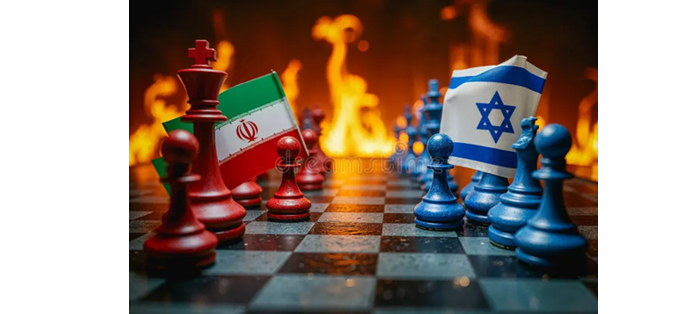
Resistance and Empire: The New Regional Conflict
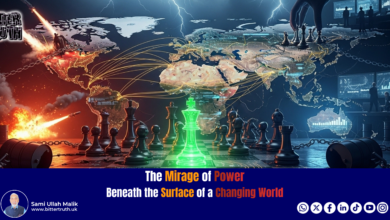
Ceasefire’s Veil: The Global Chessboard

At times, upon the horizon of nations, there emerges a moment so profound that it carries within its folds the weight of centuries.
The latter half of the twentieth century bore witness to such an epoch—an era when the Cold War’s global chessboard unfurled a fresh theatre in the Middle East. Tehran—once a bastion of jurisprudential innovation during the Safavid epoch—had been repurposed into a diplomatic outpost for capitalist intrigue. It was here that the United States, seeking to safeguard its strategic interests, anointed Iran, and more precisely Shah Mohammad Reza Pahlavi, as its “regional constable.” For Washington, no regional figure proved a more pliant or advantageous ally than the Shah—a tree offering shade to imperial ambitions beneath the scorching sun of geopolitical urgency.
America, which regarded the Middle East as indispensable to its energy security, could hardly afford to ignore Iran’s geographic centrality and military significance. It was an era when Iran did not bow at the banks of the Tigris or Euphrates but rather prostrated itself at the altar of Washington. The Shah had become not merely a political sentinel, but the very protocol officer of American strategic design.
Clad in the garb of modernity, the Shah stood as a paragon of cultural subjugation to the West. The tide of Western values surged through Iran with unchecked force, sweeping away centuries of indigenous ethos. Relations between Iran and Israel were not perfunctory; they were rooted in shared security, intelligence, and economic dependencies. Mossad and SAVAK—the respective intelligence apparatuses of Tel Aviv and Tehran—formed an unholy alliance to crush every whisper of resistance in the region. Iran supplied Israel with oil, and in return, received technology and training—intimacies not merely diplomatic, but ideological and strategic.
At the cartographic tables of covert strategy, Mossad and SAVAK sketched secret topographies of the Middle East. The connection between Tel Aviv and Tehran was not merely one of air routes; it was a bridge constructed upon intellectual convergence and imperial proximity. This was a convergence not of mere interests, but of worldview.
Then came the year 1979—a seismic shift in the narrative of Iran, one that did not merely dethrone a monarch but upended an entire global order. Under the stewardship of Ayatollah Khomeini, the Islamic Revolution erupted like a moral thunderclap in the salons of Western imperialism. The Shah was exiled, and in his stead arose a cry that reverberated through the corridors of global power: “Neither East, nor West—only Islam.”
This single utterance sent tremors through the very foundations of American geopolitical interests. The Iran that had once been a covert outpost for the CIA had transformed into the epicentre of anti-imperialist fervour. Ayatollah Khomeini did not simply denounce the United States and Israel in political rhetoric; he branded Israel as a “cancerous tumour” and America as the “Great Satan.” These were not the slogans of transient politics; they were declarations of a civilisational paradigm shift—assertions of a new Islamic identity in defiance of Western hegemony.
Washington, stunned and bewildered, found itself unprepared for the loss of its long-cultivated dominion. For decades, American power had woven itself into the very fabric of Iranian governance, only to be swept away by a tide of revolutionary resolve. The revolution was not merely a shift in governance; it was a cultural exodus from the empire’s embrace. In a bid to throttle this ideological uprising, the United States mobilised its subterranean agents within Iran, hoping to engineer the revolution’s demise.
In response, Iranian students stormed the U.S. embassy in Tehran, taking American diplomats hostage. The world watched in shock as diplomatic conventions were shattered. To the students, it was not an act of rebellion, but one of retribution—a message to the architects of covert subversion. The embassy, once a nerve centre of American operations, had become a theatre of moral resistance. Washington reeled; the global community expressed indignation. Yet for Tehran, this was the moment of narrative reclamation.
The Carter administration, desperate to reassert its authority, launched Operation Eagle Claw—a clandestine military expedition aimed at liberating the hostages. The operation ended in abject failure. American aircraft, ensnared by desert storms, crashed in the unforgiving sands of Tabas. Scattered wreckage, charred remains, and lost pride—these were the symbols left behind in the wake of imperial ambition undone by dust and divinity. The desert had swallowed American might whole, leaving behind only echoes of its arrogance.
The night of the failed rescue was followed by a moment of spiritual symbolism. Ayatollah Khomeini called upon every Iranian to ascend their rooftops and cry aloud “Allahu Akbar” three times—a proclamation not of religion alone, but of the divine humiliation visited upon worldly powers. In that cry resided a civilisation’s defiance and a people’s unyielding belief in providential justice.
In the aftermath, America, denied victory in the field, sought vengeance through economics. It rallied its allies and unleashed a barrage of sanctions aimed at strangling Iran’s economy. Financial institutions severed ties, oil exports were curbed, and even basic goods faced embargo. The scissor blades of imperial retaliation sought to cut Iran off from the arteries of global commerce.
But the revolution endured.
The Anvil of Endurance: Iran’s Stand Amidst the Siege of Sanctions
All this, it must be said, was done in the desperate hope that the Iranian populace—drained by the tides of hardship—might rise in rebellion against their revolutionary government. But the annals of Iranian resilience tell another tale. Though the economic foundations were shaken and the nation endured untold privations, the people clung steadfastly to the ideological standard of their revolution, as a mariner would to the mast in the throes of a storm.
America, stung by the sting of failure, exacted its revenge not on soldiers, but on sustenance. Sanctions—sharp, calculated, and enduring—descended upon Iran like a winter without end. The nation was cast adrift from international financial institutions, its oil exports throttled, and the very lungs of its economy sealed with geopolitical padlocks.
But the pressure did not end with embargoes. The United States found in Israel not merely an ally, but a regional enforcer, a proxy cudgel to batter Iran’s strategic flank. Israel, with its characteristic doctrinal paranoia, viewed Iran’s nuclear programme not through the lens of evidence, but through the haze of existential dread. The refrain, “Iran is building nuclear weapons,” echoed across international fora—not as a conclusion drawn from facts, but as a prelude to coercion.
Repeatedly, Iran declared its atomic ambitions to be peaceful, yet these declarations fell on ears unwilling to hear and eyes unwilling to see. Israel—armed with nuclear capabilities, unbound by international treaties, yet immune to accountability—denounced even the spectre of Iranian capability as an unacceptable threat to its hegemony and the precarious balance of the Middle East.
In the shadowy chambers of diplomacy, the West, led by Washington, covertly buttressed Israeli actions—whispering assent to sabotage, espionage, and targeted strikes. The nuclear issue thus ceased to be a matter of non-proliferation; it became a theatre for global manoeuvre and ideological siege.
This narrative is uncannily reminiscent of the tragic farce that preceded the invasion of Iraq. In 2003, under the banner of eliminating weapons of mass destruction, a sovereign nation was reduced to rubble, its people plunged into a generational nightmare. No weapons were ever found. Later, both Washington and Westminster confessed to the grievous error—Tony Blair himself branding it a “national tragedy.”
The duplicity, however, persists. If the West is truly committed to curbing nuclear proliferation, then the immunity granted to Israel is a glaring contradiction. That a nuclear-armed state, operating outside the bounds of international law, faces no scrutiny, no sanctions, and no censure, casts a long shadow over the moral claims of global order.
Iran’s nuclear programme, therefore, must be seen not merely as a security concern, but as a crucible in a larger geopolitical game—where truth is tailored to suit power, and pressure is applied not for peace, but for subjugation. To treat this issue in isolation is to miss the contours of a much grander design.
Indeed, it appears as though the American eagle, once free-soaring, now flutters at the beck and call of an Israeli leash—a parrot whose neck bends not to reason but to Zionist coercion. The theatre of world politics has become a stage where Israel scripts and Washington performs, while the world watches in uneasy silence.
To counter this encirclement, Iran adopted a defence not of walls, but of ideas and influence. A strategic network of proxies—ideologically aligned and militarily fortified—emerged as the outer bastions of Iranian deterrence. Syria, under Bashar al-Assad, became a crucial pillar; Hezbollah in Lebanon transformed into a formidable force of resistance; and in the mountains of Yemen, the Houthis drew strength from Iranian counsel and supply.
These were not mere alliances—they were forward trenches, designed to keep the Israeli threat at a distance from the Iranian heartland. In 2006, when Hezbollah engaged Israel in southern Lebanon, the myth of Israeli invincibility was shattered. What Tel Aviv expected to be a swift triumph turned into a protracted humiliation. Israel, instead of marching triumphantly into Beirut, found itself retreating in disarray from the very gates of Lebanon.
Chastened on the battlefield, Israel turned its gaze toward the shadow war—deploying Mossad to subvert, sabotage, and destabilise. Communications were hacked, leadership was infiltrated, and aerial strikes in Yemen became near-routine. In Syria, Assad’s grip waned; aided by Russia, he survived—but only just. Eventually, amidst shifting sands and scarred cities, Iran’s proxies began their retreat, ceding ground not to victory, but to geopolitical realignment.
And lo, the beneficiary of this retreat was once again Israel. Crown Prince Mohammed bin Salman, acting as host and broker during President Trump’s grand tour of the Kingdom, orchestrated the re-entry of the new Syrian leadership into international recognition. Sanctions were lifted. Normalisation ensued. Another front neutralised—another pawn moved.
But while diplomacy unfurled in opulent halls, carnage rained down upon Gaza. The atrocities committed there will forever stain the conscience of humanity. Gaza was reduced to dust and despair. Over 60,000 Palestinians were martyred—most of them women, children, and the elderly. The world looked on as the soul of a people was bled into the earth.
And who stood behind the oppressor, shield in hand and silence in heart? The United States. Not merely as an observer, but as an accomplice. It wielded its veto 18 times to thwart ceasefire resolutions, granting Israel a blood-soaked licence to kill, while its own President—Donald Trump—on the campaign trail had once vowed to end wars, not prolong them.
Thus, history repeats—but not as farce, nor tragedy alone, but as a warning. The embers of empire burn not just in the deserts of the Middle East, but in the pages of memory, where future generations shall read and judge.
The Gathering Tempest: Israel, Iran and the Theatre of Shadows
Scarcely had the storm of atrocities in Gaza—bolstered by unflinching American patronage—abated, when on 13th June 2025, the region was once again set alight. Israel, under the ominously titled “Operation Rising Line,” launched a series of surgical strikes against Iran’s nuclear and military infrastructure. Targets included the deeply entrenched facilities of Fordow, Natanz, and Isfahan—names etched in the annals of strategic deterrence.
In the days that followed, Israel’s assault evolved from the covert to the overt. No longer content with cyber sabotage and targeted assassinations, it crossed the Rubicon into open confrontation. Iran, wounded but unyielding, responded with calculated ferocity. Beginning in the desert dawn of 14th June, Tehran unleashed a sustained barrage—missiles and drones rained upon Israeli territory for twelve consecutive days. The Supreme National Security Council of Iran termed it not merely a reprisal, but “a demonstration of exemplary force.”
Amidst the unfolding drama, another thread emerged—one both sinister and strategic. The clandestine alliance between Zionist and Hindutva forces—long speculated, now stood manifest in the public gaze.
For decades, the Israel-Iran conflict simmered, but in recent years it metamorphosed into a covert war waged in the shadows. Mossad, Israel’s fabled intelligence apparatus, extended its reach deep into Iranian territory. Through an intricate network of foreign and domestic agents, it orchestrated a series of high-profile operations—targeting nuclear scientists, senior military officials, and even political guests of the Islamic Republic.
Among these brazen acts, none was more provocative than the assassination of Ismail Haniyeh, a senior leader of Hamas, who had been formally invited to attend the Iranian President’s inauguration. The symbolism was clear, the message unambiguous: Israel would not spare even Iran’s regional allies, and no guest of the revolution would be granted diplomatic sanctuary.
The slaying of figures like Dr Mohsen Fakhrizadeh—the doyen of Iran’s nuclear establishment—and senior IRGC commanders further underscored the reach of this shadow war. These blows were not merely tactical; they struck at the ideological heart of Iran’s defence doctrine.
Iran’s counter-intelligence units, after an exhaustive campaign, succeeded in unmasking the Mossad network. Those apprehended included not only Iranian nationals, but Afghan and Indian operatives as well—an indictment of transnational espionage that defies the sovereignty of nations. Several Afghan agents were sentenced to death, whilst trials for others remain ongoing. These proceedings gave further credence to Tehran’s long-standing assertion: that foreign intelligence networks operate with impunity on Iranian soil.
Notably, this was not an isolated revelation. In Qatar, officers of the Indian Navy were apprehended, having been implicated in espionage for Israel. Though sentenced to death, their penalty was subsequently commuted following diplomatic intercessions led personally by Indian Prime Minister Narendra Modi—an episode that tarnished India’s image on the international stage and cast an indelible shadow over the Modi government’s intimacy with Israeli security objectives.
Such revelations have rippled far beyond Tehran or Tel Aviv. They have cast doubts upon the strategic postures of Afghanistan and India—two nations now ensnared in the clandestine circuitry of proxy conflict. More crucially, they lend weight to Pakistan’s long-proclaimed assertion: that the most potent threat to global peace emanates from the ideological alliance of Zionist and Hindutva nationalism.
The recent events reached their climax when, emboldened by American backing, Israel sought to cripple Iran’s nuclear programme through direct strikes. Yet, for the first time in history, Iran’s reprisal pierced through the Iron Dome and left indelible scars upon Israeli soil. Over 550 ballistic, cruise missiles and drones were deployed—many intercepted, but several found their mark. Tel Aviv’s military headquarters, installations near Haifa and Ashkelon, and even key gas pipelines bore the brunt of Tehran’s retaliation. Haifa burned; the illusion of invincibility lay shattered.
Israel’s pride wounded, its defences rattled, the United States took the helm. On 21st June, American B-2 bombers and Tomahawk missiles targeted Iran’s core nuclear facilities—reigniting the ghosts of pre-emptive wars past.
But the Iran of today is not Iraq of 2003. In an unprecedented move, Tehran responded by striking American military bases across the Middle East. This marked a tectonic shift—from diplomacy and deniability to direct confrontation. As Iranian missiles thundered across the desert skies, the spectre of a broader war loomed ominously.
Sensing the futility of escalation and the peril to its strategic interests, the United States opted to pull the brakes. On 24th June 2025, through a hastily brokered ceasefire facilitated by former President Donald Trump, Israel and Iran agreed to a truce—12 days after the first missile had flown.
Under the terms, Iran would suspend its missile barrage, and Israel—12 hours hence—would halt its operations. Thus ended a chapter not with triumph, but with tension; not in resolution, but in reprieve.
Epilogue: The Smouldering Embers
This was no mere episode of retaliation—it was a clarion call that the age of impunity is over. In the grand chessboard of geopolitics, pawns have become players, and silence is no longer submission. The storm may have passed for now, but the winds of history remain unsettled. For in the Middle East, as ever, the battle for sovereignty is also a battle for truth.
Ceasefire as Concealment: A Symphony of Silence and Strategy
The declaration of ceasefire, though heralded as a diplomatic triumph, bore less the scent of peace than the stench of political expediency. It was not a trumpet of justice but a muffled drumbeat of desperation — a calculated retreat by the United States when its strategic interests teetered on the precipice of peril. It was, in truth, an attempt to douse the very flames it had kindled, all while presenting itself as the virtuous fireman rather than the arsonist.
According to reliable intelligence, the American B-2 stealth bombers, dispatched to strike Iran’s nuclear infrastructure, allegedly traversed or utilised Indian airspace and facilities. The conspicuous silence from New Delhi — a silence that, in diplomatic diction, is often construed as tacit assent — has not gone unnoticed. Should these reports prove accurate, India stands accused not merely of complicity but of active facilitation in an act of aggression against a sovereign state. It is a transgression not only of international law but of regional trust, casting a long, chilling shadow over South Asia and the Middle East alike.
Such covert alignments between Israel, the United States, and India are not merely matters of military logistics; they represent a tectonic shift in the architecture of regional diplomacy. They are, in essence, a clarion call to the Muslim world, exposing the fissures and fault lines that now threaten the fragile balance of power and identity in the broader Islamic East.
But let the world be reminded: when a nation is girded with conviction, when its people are tempered by historical wisdom and guided by a moral compass, neither bombs nor blockades can shatter its resolve. In the aftermath of the ceasefire, the veil began to lift upon the scale of Israel’s losses. Some 172 locations bore the brunt of Iranian missile strikes, with at least 28 lives claimed and thousands injured. Dozens of buildings were razed or severely damaged. Hospitals overflowed with casualties; civilians fled to shelter; chaos reigned in cities once thought impregnable.
On 19 June, Iran’s missiles struck Be’er Sheva’s Soroka Medical Centre — a harrowing symbol of Israel’s vulnerability. Reports of chemical exposure within the hospital underscored the potential for far greater catastrophe, were it not for swift evacuations. This was not merely an assault upon infrastructure, but upon the very myth of invincibility.
And yet, amidst the smoke and sorrow, the world’s conscience lay dormant. Once again, the hypocrisy of global response revealed itself in unflinching clarity. The United States, as ever, stood as Israel’s unwavering patron, deploying its fleets and issuing further threats of sanctions. Europe, cloaked in its habitual ambiguity, whispered pleas for peace, yet dared not censure the nuclear provocations of Tel Aviv. The United Nations, that venerable custodian of global order, merely parroted its perennial refrain: restraint and dialogue — impotent words in a theatre of fire.
Meanwhile, China and Russia found their voice in Iran’s defiance, condemning Israeli aggression and lending moral cover to the besieged republic. Yet the Western press, true to form, distorted the lens. Israel’s devastation of Gaza and the martyrdom of Palestinians were reduced to sterile statistics; Iran’s resistance, if reported at all, was disfigured into menace. Thus is the pen, once the instrument of truth, repurposed as the servant of imperial narrative.
Let it be known: revolution is not merely the reshaping of geography but the rebirth of ideology. Iran stands not alone, but as a sentinel of defiance — a banner of dissent, a clarion of resistance. Though its coffers may pale beside Washington’s, though its arsenal may not rival Tel Aviv’s, it wields that most indomitable of weapons — conviction. The same conviction that once expelled an empire from a single embassy now dares to silence the roaring engines of superpowers.
History, we must remember, does not belong to those who wield the sword alone, but to those who carry the burden of belief. This is not merely a war of ordnance — it is a war of ideas, of cultures, of visions. On one flank stands the imperial machine: secular, capitalist, and materialistic; on the other, the fervour of a civilisational ethos that harks back to the likes of Imam Khomeini, Maulana Maududi, and Sayyed Hassan Nasrallah — voices that forged resistance into doctrine, and doctrine into destiny.
This is not a skirmish over oil, armaments, or atomic ambitions — it is a confrontation between dominion and dignity; between the forces of colonisation and the spirit of emancipation. Iran, though encircled, though battered by sanctions and shadowed by isolation, remains steadfast — not as a mere state, but as a symbol. Its ideological resilience is not mere strategy, but civilisation embodied — a defiance woven into its very soul.
If there were no struggle between truth and falsehood, then history would be but a hollow chronicle. The life of nations is not sustained by weapons, but by ideals. This world, this transient crucible of trial, does not reward conquest — it honours the perseverance of principle. For the true victory is not found in dominion, but in the enduring flame of belief.

Author of the article Sami Ullah beautifully analysed and described the middle east and especially Iran ,US war and given an indepth view of the reasons,facts and resukts of the conflict in light of the background and changing needs of a new type of wars.