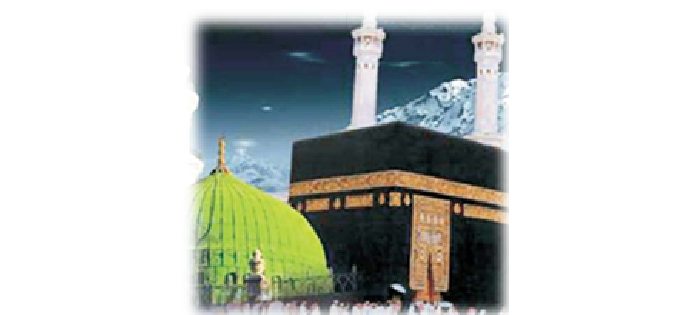
Pakistan, the Qur’an, and Our Test
Be the Helpers of Allah – Are We Ready

Allah-u-Akbar… Which is that house upon which your gaze falls, drawing blessings from its walls as you turn away? The house where not only your body circumambulates but so does your heart… In the idol-filled temples of the world, it was the first house of God yesterday, and it remains so today. Not merely for a few centuries, but since the dawn of humanity, it is the very first place of worship! Can any human memory hold the recollections of that distant time?
Through the vast expanse of history, countless temples have been built, innumerable churches have been filled with worshippers, and the earth has witnessed unending revolutions. Empires have risen and crumbled—be it Egypt and Babylon or Rome and Persia. Yet, in the deserts of Arabia, amidst the rocks and mountains, stands this structure draped in black, which the Lord has called “His House.” No storm of time, no revolution, no earthquake could ever shake its foundation. Abraha rose to destroy it, yet he himself was annihilated.
It is Allah’s special grace upon those souls whom He grants the fortune of visiting His sacred house. In this journey of devotion, how could one ever grow weary of circling it? Your gaze has barely completed one circumambulation when the heart desires that life itself should end in this very act of worship… This simple, black cubical house, devoid of any embellishment, captivates your sight, holding it still, while your soul, overwhelmed with humility, bows in prostration! At this moment, the memory of Musa (Moses), the one who spoke with Allah, comes to mind—if merely the light of His house is so overpowering that one struggles to maintain composure, what might the brilliance of its Lord’s presence do? When the radiance of His house alone is enough to captivate all who look upon it, then how could human vision ever endure the splendour of the Almighty Himself?
در مصحف روئے او نظر کن
خسر و، غزل و کتاب تا کے
Dar Mushaf roye oo nazar kun
Khusro, ghazal-o-kitab ta ke
(“Gaze upon His face in the sacred scripture, O Khusro! How long will you remain occupied with poetry and books?”)
The unparalleled House of the Lord of the Kaaba was before our eyes, radiating divine light. It was not built by an architect or an engineer, nor were millions spent on its construction, nor was modern machinery employed! And who was its builder? Yes, the builder, too, comes vividly to mind—a labourer who carried heavy stones upon his shoulders, his hands covered in clay and mortar. Unbothered by the scorching midday sun of Arabia, indifferent to material wages, this labourer was investing his very being in the construction of this sacred house. And the Owner of the house lovingly remembers these “labourers,” saying:
“When Ibrahim (Abraham) and Ismail (Ishmael) were raising the foundations of the House…”
Yes! When, with the eyes of imagination, we behold this House, it feels as though we can see those very hands placing one stone upon another, smearing them with clay, their eyes brimming with tears. And then, the fervent prayer bursts forth from their hearts:
رَبَّنَا تَقَبَّلْ مِنَّااِنَّكَ أَنتَ السَّمِيعُ الْعَلِيمُ
“Our Lord! Accept this service from us. Verily, You are the All-Hearing, the All-Knowing.” (Al-Baqarah 127)
Such is the status of true friendship with the Divine… beyond the mere stages of love, reaching the station of absolute devotion. Even after giving everything, the heart trembles—will it even be accepted?
If there exists no other house like this in the world, then where have such labourers ever been seen? Has any worker in history ever asked for the wages that the builders of the Kaaba did? And look at the reward they sought—it was not for themselves alone but included you and me as well:
“رَبَّنَا وَاجْعَلْنَا مُسْلِمَيْنِ لَكَ وَمِن ذُرِّيَّتِنَا أُمَّةً مُّسْلِمَةً لَّكَ وَأَرِنَامَنَاسِكَنَاوَتُبْ عَلَيْنَا إِنَّكَ أَنتَ التَّوَّابُ الرَّحِيمُ”
“Our Lord! And make us both submissive to You and raise from our offspring a nation submissive to You, and show us our ways of worship, and accept our repentance. Verily, You are the Most Forgiving, the Most Merciful.” (Al-Baqarah 128)
Whatever compensation the builders received is known only to them and their Master. But what about the reward granted to us? To those who visit this House, circumambulate it, embark on this sacred journey, love and revere this House—what treasures are bestowed upon them? Every pilgrim returns with countless blessings and honours… and so does your heart, filled to the brim with these divine treasures. In this moment, gratitude fills your soul, for your being has been purified, your ego dissolved, and you find yourself wandering through the realms of divine knowledge.
This is the House of God! It is no place for amusement. This is not a visit to the Taj Mahal in Agra or the Eiffel Tower in France—monuments that have stood for centuries, merely attracting sightseers. The millions who flock to those landmarks neither cherish them with devotion, nor kiss them, nor press their foreheads against them, nor circumambulate them with passion, nor prostrate in surrender, nor weep and implore, nor cry out in love and sacrifice. No one at those sites exclaims with fervour, “Labbaik Allahumma Labbaik” (“I am here, O Allah, I am here!”).
But here… here stands a multitude, draped in the uniform of Ihram, like an army of the Sovereign of all realms. When the call to prayer resounds, whether in the darkness of dawn or in the quiet of the night, every voice echoes the same chant. And in that moment, you and I, too, become intoxicated in this divine ecstasy. As we circumambulate, our minds are transported to that sacred dust where once walked the Beloved of Allah ﷺ. We recall the one who leapt into fire for his Lord, the one who laid a blade upon the throat of his dearest son, causing even the angels of heaven to exclaim in awe—indeed, he has fulfilled his pledge as the Friend of God!
And suddenly, as if time itself has turned back fourteen centuries, we find ourselves lost in devotion, our love surging uncontrollably. And then, a verse emerges like a veil before our eyes:
تو بردن درچہ کردی کہ درون خانہ آئی
چو بطرف کعبہ رفتم بحرم اہم ندا اند
Tu burdan dar che kardi, ke darun khana aayi
Cho ba taraf-e-Kaaba raftam, be haram aham nada and
(“What deeds have you brought that you dare enter this House? When I went to circumambulate the Kaaba, I was denied entry! They said: You disobeyed outside the Haram, now with what face do you enter the House of God?”)
Then our breaths begin to falter as we reflect upon the passage of time, and the true essence of sincere repentance—Toubat-un-Nasuh—becomes manifest. During Sa’i, the sacred soil reveals to us the footprints of Sayyida Hajar, the noble woman who bore the honour of being both a prophet’s wife and a prophet’s mother. For centuries, caravans have followed in the footsteps of this remarkable woman. What a status Islam has granted a woman! The Lord of Glory even commanded His beloved Prophet ﷺ to follow the tradition of Hajar. Imagine the scene when the Messenger of Allah himself, in admiration of Sayyida Hajar, ran swiftly between the designated spots! Undoubtedly, Umm al-Mu’minin Aisha (RA) must have reflected upon the legacy of Sayyida Hajar while engaging in prayer and supplication. The beloved daughter of the Prophet ﷺ, Sayyida Fatima (RA), would have also humbly followed the footsteps of her noble ancestor alongside her husband, Ali (RA), their heads bowed in reverence before their Lord.
Indeed, we have read about these monumental moments countless times in books, but today, with tear-filled eyes, we witness them in reality, feeling an overwhelming sense of gratitude and awe at our own fortune.
The burden of parting from the Ka’bah is immense, lightened only through tears and supplications. The farewell Tawaf is a moment of profound sorrow, immersing the heart in grief and melancholy. How can it not be, when soon we must bid farewell to this sacred house? With every passing second, the spiritual splendour of Makkah turns into a cherished memory. The heart, laden with anxiety and longing, wonders—will the dreams of a lifetime, centred on this place of guidance, now only exist in recollections, in dreams, in wistful imagination?
As the moment of departure approaches, eyes glisten with tears, emotions surge, and the soul trembles in desperation, while lips quiver in whispered laments. Indeed, these painful moments of farewell must weigh heavily upon the beloved of Allah. They must experience the anguish of separation like a fish out of water, their sobs uncontainable, their hearts pounding with sorrow. Who knows if we shall ever return? Is there any certainty that we shall once again circumambulate this blessed house? Will our names be inscribed once more in the roll of those called to witness the Ka’bah, to kiss the Black Stone, to touch the Yemeni Corner, to cling to the Multazam, to stand before the Door of the Ka’bah, to pray at Maqam Ibrahim, to drink from the well of Zamzam, to traverse the hills of Safa and Marwah, and to experience the sanctities of Makkah once more?
These thoughts make every moment here infinitely precious. Seconds stretch into centuries. And once again, with hands raised in supplication, we beseech the Lord of the Ka’bah—pouring our hearts out in cries for forgiveness, pleading for the absolution of our sins, seeking divine mercy for our parents and the departed souls, praying for the well-being of our loved ones and even strangers, entreating the Divine Healer for the cure of every ailment, imploring assistance in the payment of debts, begging for deliverance from the disgrace of unemployment, supplicating for protection from the torments of hellfire and for the eternal blessings of paradise. We seek righteous spouses for our daughters, their prosperity and good fortune, security and faith amidst the trials of this world. We plead for the liberation of Masjid Al-Aqsa, for the martyrs of Gaza and occupied Kashmir, for the dignity and honour of the Muslim Ummah, for the well-being of humanity, and for the fortune of returning to these sacred lands time and again to absorb the blessings and graces of the Haramain. Every fibre of our being quivers with reverence.
In these final moments, it is time to whisper in humility to the Lord of the heavens and the earth:
“O Lord of the Ka’bah! This blessed house is Yours, a sanctuary built by Your Khalil (Abraham), a place of solace for Your beloved Prophet ﷺ. It is by Your boundless grace that You have made the faithful inheritors of this sacred house. I am but a feeble, sinful servant, a vessel of transgressions and shortcomings, yet I remain Your servant. Accept my repentance. From this moment forth, purify my faith and deeds, shaping them into pearls that reflect the beauty of this house, that I may be counted among its rightful heirs. Let me live my life facing the Ka’bah and let me depart this world with my gaze still fixed upon it.
O Most Merciful and Compassionate! Plant the love of this house deep within my soul so that neither distance nor time can sever my connection to it. Let my actions reflect the splendour of the Ka’bah’s veil, let my heart mirror the sanctity of the Black Stone and the Multazam.”
Ameen, Ya Rabb al-‘Alamin!
It felt as if not only my body but also my soul was circumambulating the Ka’bah. My love for Allah overflowed beyond bounds. Once Tawaf was complete, I stood before the Multazam, hands raised in prayer, my heart pouring out before my Lord. I kissed the Black Stone with my eyes, remembering that the Messenger of Allah ﷺ once kissed this heavenly gem and reminded Umar (RA) that this was a place for shedding tears. Whoever weeps here over their sins will find them washed away entirely. Passing by the Black Stone, I beheld the Yemeni Corner, my heart drawing comfort from its presence. I embraced the walls of the Hijr Ismail, fixing my gaze upon the Mizab al-Rahmah. I became lost in the attraction of the Ka’bah’s drapery. Once my supplications ended, I quenched my soul’s thirst with the sweet nectar of Zamzam, the divine gift and the legacy of Prophet Ismail. Every sip carried the promise of beneficial knowledge, abundant sustenance, and healing from ailments.
As the call to Maghrib prayer resonated, a wave of sorrow surged within me—this would be my final prayer at the sacred Ka’bah, my last few breaths in this earthly paradise. The courtyard of the Ka’bah, eternally brimming with worshippers, also hosts seventy thousand angels at all times. How, then, could one’s heart bear the weight of parting from such a place of divine blessings, from the birthplace and abode of the Messenger of Allah ﷺ? Yet, duty called. After completing my Maghrib prayer, I performed my farewell Tawaf, each step a silent prayer of longing and gratitude. How fortunate I was to have completed all seven circuits near the Ka’bah itself. As I completed my Sunnah prayers at Maqam Ibrahim, only a short distance away, my hands rose in supplication once more—but this time, my soul was speechless. The grief of departing from the Ka’bah had rendered me mute. My heart wept, yet within that sorrow, another joy flickered—soon, I would set forth towards Madinah, the radiant city of my beloved Prophet ﷺ.
In the Flow of These Emotions How could I, overwhelmed by these emotions, ask Allah whether to extend my stay here or hasten my journey to the Green Dome? Indeed, it was Allah’s boundless mercy and grace upon us that He granted us the golden opportunity to breathe in the blessed fragrance of the Prophet’s radiant sanctuary—the refuge of the Muhajirun and the city of the Ansar. When one first sets eyes on the Kaaba and again when the moment of departure arrives, a heartfelt prayer naturally escapes the lips:
“O Lord, call me and my family to Your sacred house and the beloved city of Your Prophet ﷺ again and again, without cease.”
With these prayers echoing on my lips and a heart adorned with noble wishes, I cast longing glances at the Kaaba one last time before departing the sacred precincts with heavy steps. Turning back several times, it felt as if the Kaaba, full of love, was bidding farewell, whispering:
“The life-giving light and divine radiance of this place are the eternal treasures of faith, righteous deeds, fear of Allah, and accountability in the Hereafter. Whoever departs from here with these treasures shall be a true pilgrim of the Haramain, worthy of prosperity in both this world and the next.”
Had the name of Ahmad ﷺ not been inscribed on the cover of existence, Neither the tapestry of life would have emerged, nor the pen and tablet existed.
Now, my heart and soul are overwhelmed with an indescribable joy, yearning for the moment when I open my eyes and find myself before the Green Dome. As I embarked on my journey to the city of my Beloved ﷺ, the blessed words of my Prophet ﷺ resonated in my mind:
“If any of you can pass away in Madinah, let him do so, for I shall bear witness for those who die here.” (Sunan Ibn Majah)
No measure can capture the greatness of Madinah the Blessed, yet one of its supreme honours is that the second Caliph, Umar ibn Al-Khattab, used to pray:
“O Allah, grant me martyrdom in Your path and let my death be in the city of Your Messenger.” (Sahih al-Bukhari)
Reflecting upon this, my heart fluttered with devotion—this was the prayer of the one who was the crown jewel of Islamic history, whose opinions were so valued in the divine court that revelations would descend confirming them, whose justice was acknowledged by both friends and foes. By making this special supplication, Umar ibn Al-Khattab not only taught us how to live but also how to long for the company of the Messenger of Allah ﷺ even in death. Indeed, whoever breathes their last in the paradise of Madinah has, without doubt, secured salvation.
And how can one not be moved by the love the Companions had for the Prophet ﷺ?
It is narrated that Thawban RA, a noble Companion, became severely ill, and his condition worsened each day. When asked about his suffering, he remained silent. Eventually, the Prophet ﷺ himself inquired, and Thawban, with tears in his eyes, replied:
“O Messenger of Allah ﷺ! My heart grows restless whenever I do not see you. But what will happen when I die? Even if Allah grants me Paradise by His mercy, I do not know where you will be, and how will I ever find solace in Paradise without seeing your blessed face?”
The Prophet ﷺ comforted him with the glad tidings:
“Thawban, you will be with those whom you love.” Then, the Prophet ﷺ recited the divine revelation:
“Whoever obeys Allah and His Messenger will be in the company of those whom Allah has blessed—the prophets, the truthful, the martyrs, and the righteous.”
If this was the love of the Companions, how could the Auliya (saints) be any different?
It is narrated that Bayazid Bastami, a great mystic, once eagerly asked for a melon to be brought to him. However, before eating it, he wished to know how the Prophet ﷺ used to consume it. When he learned that there was no recorded account of the Prophet ﷺ ever eating a melon, he immediately set it aside, saying, “I cannot eat something without following the Sunnah of my Beloved.”
Love demands patience, and longing breeds restlessness—
How shall I colour my heart until it turns crimson with devotion?
The moment I first set my eyes upon the Green Dome; I found it almost impossible to contain my emotions. To stand at the doorstep of the Benefactor of Humanity ﷺ was a moment that made me envy my own fate. The one for whom Allah and His angels send abundant blessings, and for whom the believers have been commanded to recite salutations unceasingly—how could my heart not tremble in reverence?
Even those outside the fold of Islam have recognised and admired the grandeur of the Prophet ﷺ:
• Michael Hart, in his famous book The 100, ranked Prophet Muhammad ﷺ as the most influential person in human history, stating that “even as a Christian, I must acknowledge that Muhammad ﷺ is undoubtedly the greatest leader mankind has ever known.”
• Thomas Carlyle, in his 1840 lectures, said: “I love Muhammad ﷺ, for I find in him no pretence or vanity. We pay him our sincerest tribute of admiration.”
• Napoleon Bonaparte declared: “Muhammad ﷺ was indeed the greatest leader. In just fifteen years, he transformed a people, shattering false deities and leading them to the oneness of God—an astonishing feat!”
• George Bernard Shaw wrote: “The only way to rescue humanity from its suffering is for Muhammad ﷺ to be its leader.”
• Mahatma Gandhi acknowledged: “The Prophet of Islam taught the highest morals and brought people together in equality. The more I study Islam, the firmer my conviction becomes that it did not spread by the sword.”
• Johann Wolfgang von Goethe, the renowned German poet and playwright, was a profound admirer of the Prophet ﷺ, and his West-Eastern Divan is replete with expressions of love and devotion for the Messenger of Allah ﷺ.
At this moment, standing before the Prophet’s blessed resting place, I found my heart echoing the same sentiments.
O Messenger of Allah ﷺ!
How blessed are those who lived in your time, who gazed upon your radiant face, and who had the honour of serving you! But even today, though centuries have passed, hearts remain ablaze with your love, and eyes still long for the sight of your blessed countenance.
May our love for you be true and unwavering. May our every action reflect your teachings. And may we, by Allah’s grace, be counted among those who are granted your company in the Hereafter. Ameen, Ya Rabb al-Alameen!
The Eternal Echoes of the Sacred Journey
French historian Alphonse de Lamartine, in his book Histoire de la Turquie, sets a criterion for measuring human greatness. He argues that if three factors— sublimity of purpose, scarcity of resources, and astonishing outcomes—are the benchmarks of greatness, then which figure in modern history can compare to Muhammad (PBUH)?
De Lamartine further writes:
“A philosopher, a preacher, a prophet, a lawgiver, a commander-in-chief, a conqueror of minds, the founder of rational beliefs, the reformer of idol-worshipping societies, and the unifier of numerous states into a single spiritual empire—this was Muhammad (PBUH). If human greatness is to be judged by these standards, then who could claim a rank higher than him?”
Dr. Shelley, acknowledging the eternity and unparalleled nature of the Final Messenger (PBUH), states:
“Among all past and present individuals, Muhammad (PBUH) was the most perfect and superior. It is impossible to find his likeness in the future.”
Standing near Mount Uhud, just north of Medina, I was overwhelmed by the historical battle that unfolded on this sacred ground. I could almost see the devoted Companions forming a protective shield around the Prophet (PBUH), taking arrows, spears, and poisoned swords upon their own chests to shield him. The intensity of the battle had left the Prophet’s blessed teeth injured; his sacred face covered in blood. One narration states that the angel Jibreel (AS) preserved his noble blood in his wings, preventing it from falling to the ground—lest the earth, out of shame, became barren forever.
At that moment, I stood in front of the resting place of Hazrat Hamza (RA), the beloved uncle of the Prophet (PBUH), who was martyred at Uhud along with seventy other Companions. The enemy had desecrated his body, a sight that moved the Prophet (PBUH) to tears. Such was his love for his uncle that he visited the martyrs’ graves every Wednesday until his departure from this world.
As a pilgrim of the Two Sacred Sanctuaries, if one listens closely, a profound message resonates through the air—a message whispered by Masjid al-Haram as I departed, a call echoing from Masjid al-Nabawi, a reminder from the plains of Arafat, the sacred stones of Mina, the drops of Zamzam, and even the dust of the holy land. The message is but one:
“Be the helpers of Allah” (كونوا انصار الله).
When oppression fills the world, will you not rise to fulfill your duty? The path is before you, your feet are strong, and the obligation is upon your shoulders. The land given to you by the Creator has been neglected, overgrown with thorny weeds of injustice and corruption. This pilgrimage whispers that, just as every inch of this holy land resounds with the glory of Allah, so too must the entire universe. The battles of Badr and Karbala are still ongoing—in different forms, under different guises.
Have we ever reflected on why Pakistan was created in the blessed hours of the 27th night of Ramadan—the night greater than a thousand months? We made untold sacrifices, endured the largest mass migration in history, and lost countless loved ones in pursuit of an Islamic homeland. We made a pledge to establish the rule of the Qur’an, yet for seven decades, we have failed to honour our commitment.
Today, as political turmoil grips our nation once again, no political party dares to place the sovereignty of the Qur’an at the heart of its manifesto. Worse still, none speak of the plight of Kashmir, which remains a bleeding wound. The Night of Decree (Laylatul Qadr) asks us: Do we have the resolve to endure hardships for the sake of our faith?
The memories of this sacred journey challenge us:
When will we play our part in freeing the slaves of this world and bringing them back to the servitude of the Creator of all worlds?
Everything will perish. Nothing will remain—
Nothing, but the name of Allah!