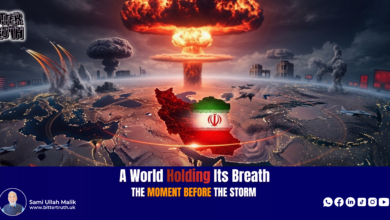
New Face of Terror: Nuclear Arsenal and Political Zealotry
Narendra Modi and the Question of Regional Survival

A Region at Boil: Shadows Over South Asia
There are corners of the world which history, with cruel consistency, subjects to the forge of fire and fate. South Asia, that ancient crucible of civilisations, is one such realm — a region where borders are drawn not merely by cartographers, but by the bloodstained hand of ideology, faith, and the burdened weight of memory.
In such a theatre of fragile equilibrium, when the elected head of a nuclear-armed state, cloaked in the garb of populist zealotry and gripped by the arrogance of unchecked power, dares to threaten the annihilation of millions of Pakistanis in a public rally, the matter surpasses the bounds of diplomacy or decency. It becomes, unmistakably, a question of humanity’s collective conscience, of the very survival of international law and the legitimacy of global institutions.
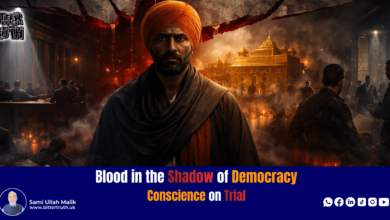
Narendra Modi’s recent pronouncement from the soil of Gujarat was no mere campaign rhetoric. It was a chilling glimpse into an ideological tempest — a doctrine inflamed by history’s shame, sustained by the demonisation of the ‘other’, and now amplified by the siren of nuclear capability. This is no longer the theatre of performative politics; it is the overture to a catastrophe that imperils millions across the subcontinent.
Such a declaration, wherein the Prime Minister of India threatened to gun down citizens of a sovereign neighbour, flouts not only diplomatic etiquette but betrays a deeper moral fracture. It is an utterance reflective not of statecraft, but of siege-mentality populism — a hunger to convert belligerence into political capital, to mask internal chaos beneath the cloak of nationalistic bravado.
This is the mind of a man who envisions stability not through consensus but through coercion, whose politics is not of governance but of confrontation. It is the mind that trades in division, that cultivates threat as a means of unity, and sees diplomacy not as dialogue, but as domination.
At the root of Modi’s incendiary oration lies a wounded vanity, a defeated pride, still smarting from the downing of Rafale jets — those French-hawked birds once brandished as emblems of Indian aerial supremacy. Their tragic descent, wrought by the steely resolve of Pakistan’s falcons, shattered not merely wings but the illusion of invincibility.
As even Dassault Aviation acknowledged the loss of three such aircraft, the ramparts of New Delhi, so accustomed to trumpeting triumph, were cast into a hush so profound it seemed Agra’s Red Fort itself wept in silence.
Once thunderous in his proclamations, Air Marshal A.K. Bhadauria now cloaks defeat in euphemism: “In war, losses are natural” — as if history might be persuaded by semantics, and wounds hidden by veils of phrase. But history sees through gauze and hears the muted cry of truth.
The Pakistani pilots who took to the skies were not merely warriors of steel and precision; they were the living testament of strategic synergy — the embodiment of Pakistan-China military and diplomatic alignment. The victory, while forged in Pakistani courage, bore the unmistakable imprint of Chinese prudence and quiet resolve.
Indeed, Modi’s fire-breathing address came not in a vacuum, but in response to Beijing’s calculated defiance. As India glared westward toward Pakistan, China quietly renamed 27 sites in Arunachal Pradesh, inscribing them anew in Mandarin and Tibetan script. It was not mere nomenclature, but cartographic rebellion — a reminder that maps are not merely drawn with ink, but with will, with assertion, and with patience.
When India turned eastward, it found not familiar valleys but estranged lands, where names had shifted and claims rewritten. In every direction, India finds herself walled in to the north by a resurgent China; to the west by an emboldened Pakistan; and to the east by Nepal, whose defiance, though small in stature, delivered seismic tremors to Indian hubris.
This, then, is the frame of Modi’s ferocity — a beleaguered moth flailing in a den of lions, mistaking the dusk of its own illusions for the dawn of supremacy.
His threats unfold against the backdrop of a region perched on the knife’s edge. Recent aerial engagements between India and Pakistan, exacerbated by the fall of the Rafale jets and the emerging triad of Chinese, Pakistani, and Nepalese pressures, have laid bare India’s strategic vulnerability and political disorientation.
Modi’s bluster, in this light, is not an act of strength but of desperation — a pyrrhic flourish meant to distract a wounded nation. His speech does not mask weakness; it reveals it. It pulls the shroud off India’s diplomatic inertia and exposes the false grandeur of silent failure.
For in global statecraft, silence is not always wisdom. True statesmanship lies not in withholding voice, but in speaking at the right moment, with measured purpose. Silence in the face of advancing forces is not composure — it is cowardice. And when Modi, before this address, stood mute as China reshaped boundaries and seized strategic highlands, the world saw not wisdom, but paralysis.
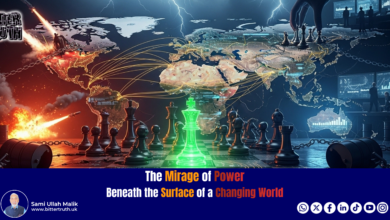
In stark contrast, Pakistan responded not with noise, but with resolve; not with theatrics, but with precision. And China, ever the master of quiet assertion, redrew lines without firing a shot. Between them, they reshaped the chessboard while India postured at its own reflection.
History teaches us again and again: silence, when born of strength, can build empires; but when born of fear, it dismantles them. Wisdom without action is but another shade of defeat.
Thus, in Modi’s tirade, the world must see not the drumbeat of coming war, but the death-knell of a delusion. The delusion of unchallenged dominance, in a region whose destiny will be carved not by rhetoric, but by reason, restraint, and the unflinching clarity of truth.
A Chorus of Silence: India’s Strategic Discord and the Spectre of Regional Conflagration
India’s muted response to China’s border incursions and transgressions has laid bare a silence that reeks not of sagacity, but of strategic infirmity. A nation whose media and military elite wax belligerent with unrelenting zeal against Pakistan have, curiously, chosen the path of docile reticence before Beijing. This dichotomy betrays not prudence, but paralysis — a dissonance born of intellectual confusion and a deficit of genuine statecraft.
In Indian political philosophy, the shadow of ancient cunning still looms large. The ghost of Chanakya whispers in modern ears: venerate the powerful without hesitation and crush the weak without mercy. India’s strategic instincts still bear the colour of Machiavellian duplicity. Gods are deified in multitudes — even rats and serpents find place in the pantheon — yet when these deities falter, their idols are cast down and shattered with unthinking vehemence. Such is the schizophrenia that characterises India’s religious and political psyche: a billion gods, and yet none sacred enough to survive their own devotees’ wrath.
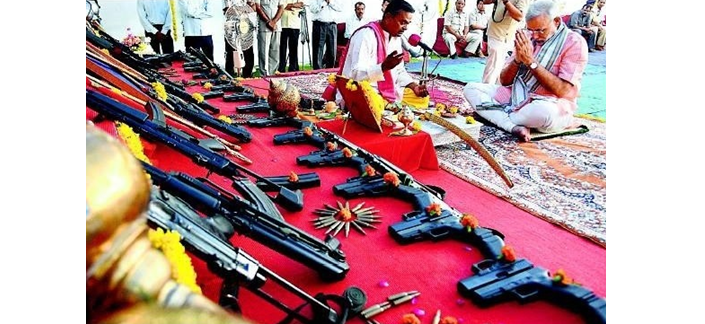
This contradiction is nowhere more poignantly illustrated than in Prime Minister Modi’s theatrical defence of the much-hyped Rafale fighter jets. Despite operational failures, their sanctity is upheld through elaborate religious rituals — a spectacle not of power, but of desperation. Worshipping machines of war with incense and garlands while they falter in the skies is not strategic resolve; it is spiritual camouflage for military inadequacy.
Modi’s incendiary rhetoric, particularly towards Pakistan, has poisoned the well of regional diplomacy. His statements do not merely inflame bilateral tensions — they imperil the broader peace and equilibrium of South Asia. In contrast, Pakistan and China’s measured restraint speaks volumes. Their quietude is not weakness; it is the resolve of those who understand that true strength lies not in the thunder of artillery, but in the steadiness of purpose and clarity of mind.
Indeed, the Indo-Pacific balance of power is shifting. India finds itself increasingly isolated — politically, diplomatically, and morally. The bark of bravado has begun to reveal the bite of solitude. Modi’s bellicose utterances, far from galvanising support, have eroded India’s international credibility at a time when cooperation, not confrontation, is the clarion call of the global order.
His threat to “shoot down” Pakistani civilians is not merely a violation of diplomatic protocol — it is a moral obscenity and a grievous breach of international humanitarian norms. It has sparked alarm among peace-loving peoples and raised the ominous spectre of regional catastrophe. Such declarations are not expressions of power; they are the unguarded confessions of a state teetering between impulse and impotence.
One must ask: is this aggression the manifestation of calculated strategy — or merely the tantrum of political vanity? History teaches us that wisdom is not in noise, but in nuance; not in threats, but in solutions. In that light, the Sino-Pakistani axis has displayed a maturity whose silence is more eloquent than a thousand speeches. Their victories are not only measured in military terms, but in the quiet capture of economic, psychological, and diplomatic terrain. Their alliance now stands as a cornerstone of regional stability.
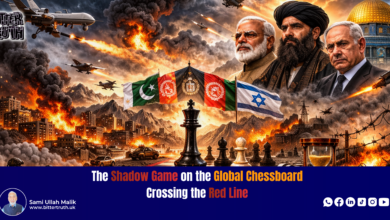
But amidst this grand strategic theatre, a darker subplot emerges — the subtle yet incendiary role of Israel. Credible reports suggest that Israeli military specialists, stationed in India, operated “Harop” suicide drones. These operatives, it is claimed, were targeted and perished in a retaliatory Pakistani strike. If substantiated, this episode transforms the conflict from a mere Indo-Pakistani quarrel into a node within a larger matrix of proxy warfare — drawing in Washington, Tel Aviv, and New Delhi against Islamabad, Beijing, and the silent will of the region’s war-weary multitudes.
The covert repatriation of Israeli casualties, shrouded in diplomatic silence, was an act of concealment — not closure. Both Israel and India scrambled to suppress the fallout, but the facts bled into the public sphere. Pakistan, citing this foreign intervention, launched a retaliatory strike well within its legal right under the laws of war. This, it seems, was the precise moment the United States — hitherto feigning aloof neutrality — sprang into action, pushing for a ceasefire not out of moral urgency, but from the cold necessity of preventing its allies’ strategic humiliation.
President Trump’s mediation, dressed in the robes of even-handed diplomacy, now lies under suspicion. His studied silence on Modi’s warmongering invective raises uncomfortable questions. If the United States truly aspires to peace, will it condemn Modi’s recklessness? Or shall it, through silence, give assent?
Was the ceasefire a mask — a pretext to shield India and Israel from a deepening military debacle?
According to diplomatic and intelligence sources, both the Indian Air Force and its Israeli-provided technology had suffered serious setbacks. Fearing further retribution, the U.S. intervened not to reconcile, but to rescue.
If Washington were genuinely neutral, it would have reacted strongly to Modi’s statements — with both censure and consequence. But it did not. And so, the Muslim world, and much of the global South, now sees through the veil. The so-called “mediation” was nothing more than strategic evasion — a ploy to bury defeat beneath the language of peace.
Now that Modi returns once more to the drums of war, a new set of ominous questions arises: Is the region on the brink of another conflagration? Will Israel, yet again, use India as a conduit for its strategic ambitions in South Asia? And will the United States, in the guise of mediation, once more shield its partners from the consequences of their own aggression?
If Washington remains mute in the face of such incendiary threats, then silence shall become complicity — not speculation, but certainty.
Meanwhile, the great institutions of peace — the United Nations, the guardians of human rights — gaze upon Modi’s remarks with the apathy of stone. Their silence, where thunder should have been, renders their declarations of justice mere wall-hangings: noble in ink, empty in action. Article 2(4) of the UN Charter forbids the threat of force — yet what value do such statutes carry when courage lies prostrate before power?
Alas, history is unkind to the timid. And truth, when silenced, echoes louder in the corridors of consequence.
When Silence Becomes Complicity: A Reckoning with Modi’s Threats
Should the full truth ever come to light, it would expose not only Mr Modi’s incendiary threats but also lay bare the militaristic obsession of Israel and the deafening silence of the United States. And by then, when Israel’s covert interference might well ignite a new theatre of war, it may simply be too late — for that war may spiral beyond containment, defying the control of diplomats and generals alike.
When an adversary issues open threats and the world remains tacit, silence ceases to be a strategy of prudence — it morphs into the cloak beneath which cowardice hides and tyranny finds an accomplice. Pakistan, a state that has long advocated peace and upheld its principled stance on global platforms with dignity and clarity, must now ask: Will the international community take heed of Modi’s threats?
The Indian Prime Minister’s brazen call to gun down Pakistani citizens is not a mere slip of political rhetoric — it is a flagrant violation of international law, a repudiation of the UN Charter, and a direct assault on the foundational tenets of human rights. This is not a disagreement between states; it is an act of state-sanctioned incitement to violence, bordering on nuclear brinkmanship and ethnic terrorism.
Article 2(4) of the United Nations Charter explicitly forbids any member state from threatening the use of force against the territorial integrity or political independence of another. So too do the Universal Declaration of Human Rights and the Geneva Conventions define such threats as precursors to war crimes and incitement to violence.
Yet one must ask: Will the comity of nations respond with resolve or retreat once more into the shadows of self-interest? Past experience reveals an uncomfortable pattern — when such belligerence emanates from a state allied to the world’s major defence or economic blocs, the so-called global conscience is often lulled into a diplomatic slumber.
Even so, a window remains: the UN Security Council can be compelled to convene an emergency session; human rights organisations can issue indictments; the European Parliament may adopt resolutions; and the International Court of Justice can weigh these statements under the lens of hate speech and war propaganda. But none of this shall materialise without an urgent, unified, and strategic response from Pakistan’s diplomatic corps, media, and civil society.
The world must be reminded — in no uncertain terms — of Modi’s descent into militant jingoism, and this must be portrayed in global media not as local bluster, but as a threat to international peace and security. More crucially, within Pakistan, there must be political cohesion, national solidarity, and an unwavering inner unity — for every threat, every incursion, every assault can be repelled only by a nation that stands indivisible.
Modi’s threats are not idle invective born of electioneering. They are the ideological blueprint of a mind prepared to unravel regional peace. If the international community is truly committed to the cause of peace in South Asia, it must treat such provocation not as political theatre but as prelude to catastrophe — for in a region where both nations are nuclear-armed, war’s embers can swiftly ignite a firestorm that will not remain confined to the subcontinent.
Pakistan, therefore, must act with statesmanship. It must raise Modi’s statements robustly before the United Nations, the OIC, the European Union, and the global press. It must unmask the triangular axis of India, Israel, and the United States — not as peacemakers, but as powers seeking to sanitise aggression beneath the veneer of diplomacy.
The road ahead cannot be paved with hate and hostility. It must be traversed with prudence, restraint, and the decorum of diplomacy. True leadership lies not in fanning the flames of conflict, but in de-escalating tensions, keeping the channels of dialogue open, and seeking common ground for lasting peace.
Modi’s thunderous words may serve to rouse temporary passions, but history is not kind to such rhetoric. It remembers those who wielded power with responsibility and forgets those whose rainbows of nationalism vanished after the storm. Silence is golden only when it stems from strength; when it springs from fear, it signals the prelude to national decline.
Imperatives for the International Community:
• The world must hold India accountable — both morally and diplomatically — for threatening regional peace.
• The United Nations and other global forums must unequivocally condemn such statements and devise a collective strategy to preserve peace.
• The burden now lies on the conscience of nations to warn Indian leadership against issuing such incendiary remarks in the future.
• Confidence-building measures must be accelerated across South Asia.
• Dialogue should be prioritised as the foremost tool for resolving disputes and achieving lasting stability.
• Constructive steps must be taken to enhance trust among India, Pakistan, and China.
• The Pakistan–China strategic approach should serve as a model: strategic patience, diplomatic poise, and regional cooperation can yield peace and prosperity.
• Engagements with global partners must be deepened to anchor peace in the region.
• India must be urged to replace sabre-rattling with sincere diplomacy towards both Pakistan and China.
• Public initiatives — in education, media, and civil discourse — must foster tolerance and counteract the politics of hatred and militarism.
Let it be known that Modi’s recent pronouncements are not the rantings of an election trail, but the ideological harbingers of conflict. If the world remains mute, the flames may not stop at South Asia’s doorstep — they may consume far beyond.
Pakistan must not falter. It must confront this aggression in every global chamber, reveal the hidden collusions masked as mediation, and declare to the world that this is not peacekeeping — it is peace-betraying.
And finally, a parable of time:
When time speaks, it makes nations immortal — but those who ignore its voice are condemned to the margins of history.
Pakistan and China recognised the moment when it arrived. And he who recognises the moment, becomes the master of his age.