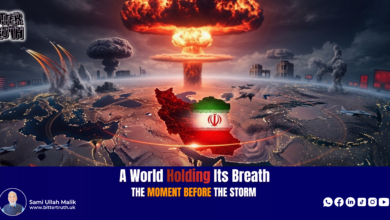
Modi’s statements: Fire or ashes in the region?
History speaks, is the world listening?

On the global political horizon, there exist certain regions perpetually forged in the crucible of history — lands where every turn of time brings new trials. South Asia is one such terrain, where borders are no mere cartographic constructs; they are blood-inked metaphors, scarred with ideologies, beliefs, and centuries of sentiment.
In this context, when the head of a state — a man wielding the nuclear button with as much ease as the delusions of grandeur — stands before a political rally and threatens to “gun down millions of Pakistanis,” the matter transcends mere diplomatic impropriety or moral outrage. It becomes a question that pierces the very soul of civilisation, challenging the conscience of international law, and shaking the edifice of global institutions.
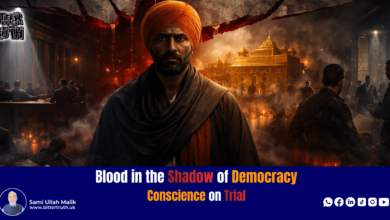
Narendra Modi’s recent outburst — echoed across the plains of Gujarat — is not merely an electioneering slogan, but a clarion call of ideological extremism. It is the snarl of a narrative that, ashamed in the mirror of its own past, survives by provoking its neighbours — stoking ancient animosities to mask its own moral decay. But this provocation can no longer be dismissed with a smirk; it is a calculated, perilous attempt to thrust the fates of two nuclear-armed nations into the furnace of folly.
Modi’s declaration has not only flouted the decorum of international diplomacy but has lifted the veil from a psyche actively dismantling the hope for peace in the region. His words, bereft of ethical restraint and contemptuous of human rights, lay bare a political mind that sees aggression as currency — a strategy to convert bellicosity into ballots. It is a rhetoric steeped not in statecraft, but in strife; a worldview that enshrines division and derides dialogue.
Beneath this rabid declaration lies the echo of a troubled conscience — a defeated inner voice guiding the Prime Minister once more down the duplicitous path of deceit, where demagoguery seeks redemption in applause. The world has come to recognise a familiar theatre in Delhi: a pageant of nationalism where arrogance drapes itself in power and the vaulted halls of government burn with the fever of ethnic pride.
But when the famed Rafale jets — symbols of martial hubris and fiscal extravagance — fell from the skies before the courage of Pakistan’s young falcons, a silence swept across India’s ramparts. It was as though the crimson flag over Agra’s Red Fort wept in place of waving. Even the French manufacturer, with stiff upper lip, confirmed the loss of three aircraft, and in that moment, India’s pride recoiled into the shadows of its own illusion.
Air Marshal A.K. Bharti, once the voice behind thunderous postures, could only murmur that “losses in war are normal” — an admission veiled in euphemism, an attempt to bandage blood with the silk of semantics. But history’s gaze is unforgiving; it sees through veils, hears the wail beneath the whisper, and records the truth undeterred by spin.
Pakistan’s eagles — their flight confined to their sovereign skies, yet their talons reaching into the clouds of enemy pride — were more than military tacticians. They embodied a doctrine, a symphony of Sino-Pak cooperation, where Chinese sagacity met Pakistani valour. This victory was not merely strategic, but a quiet proclamation of geopolitical alignment — a handshake of steel between Islamabad and Beijing.
Modi’s incendiary rhetoric is, in part, a desperate retaliation to the smouldering embers left by China’s silent spark amidst the ashes of ceasefire. As India fixated westward upon Pakistan, Beijing moved eastward in silence — renaming twenty-seven locations in Arunachal Pradesh in Chinese and Tibetan tongues. This act was no linguistic coincidence; it was a cartographic manifesto — a poetic assertion that maps are drawn not only on paper, but upon the minds, claims, and will of nations.
By the time India turned to face the east, the valleys had been rechristened, the mountains rebaptised, and the map it once called its own had been redrawn in silence. Thus, India now finds itself hemmed in by three resolute ramparts — China, Pakistan, and Nepal — a triad of geopolitical sentinels enclosing what increasingly resembles a besieged dream. Even Nepal, diminutive in size but majestic in dignity, has carved fissures into the bastions of Indian arrogance. Pakistan, once a military thorn, is now an intellectual adversary. And China, whose might is civilisational as much as it is militaristic, stands as a titan veiled in silk and steel.
Modi — the once-triumphant orator of Ahmedabad — now flounders like a wounded moth among lions, mistaking the storm clouds for sanctuary. That, precisely, is the condition of a statesman outpaced by circumstance.
This recent declaration by Prime Minister Modi must be viewed against the broader backdrop of an already volatile theatre — a region fraught with border skirmishes, aerial confrontations, and psychological warfare. The recent debacle involving the Rafale fleet, felled by Pakistan’s deft military strategy and underwritten by Chinese intelligence, has forced India into a new chapter of political reckoning.
Modi’s threat is thus not an isolated flourish but a frantic gasp — a nationalist crescendo trying to drown out a diplomatic dirge. On one side, India stands chastened on the global stage, embarrassed by its failed military posturing; on the other, it grapples with profound confusion and incoherence within both its domestic and foreign policy realms. This aggressive rhetoric, stripped of its bombast, is the voice of a fractured state seeking refuge in fire.
For in the end, it is not the shout that endures in history — but the echo. And the echo of Modi’s words shall not be one of strength, but of fear masquerading as might.
The Silent Roar of a Fading Empire: Between Cowardice and Calculus
In the annals of diplomacy and conflict, there exists a perennial paradox—between the silence that masquerades as wisdom and the threat that betrays desperation. Is silence truly a mark of strategic triumph, or but a veil draped delicately over the face of defeat?
In the theatre of international politics, silence is often garlanded as a crown of prudence and restraint. Yet, history teaches a sterner lesson: that silence, to merit virtue, must arrive with timing, with tact, and with tangible results. When an adversary breaches one’s frontiers and even the tongue forgets its purpose, then silence ceases to be diplomacy—it becomes cowardice dressed in robes of convenience.
India’s conspicuous quietude in the face of Chinese military incursions, prior to Modi’s recent belligerent pronouncements, stands not as an emblem of sagacity, but of a deep-seated apprehension and strategic disarray. In contrast, Pakistan has asserted its regional relevance not through rhetorical flourish, but through calculated military response and judicious diplomacy. China, meanwhile, has etched its territorial claims not merely in cartographic ink, but in the solid granite of geopolitical fact.
History is no stranger to such duplicity. Silence only bears nobility when it is laced with purpose and crowned with consequence. When it becomes a cloak to hide in rather than a mantle to stand with, it is but timidity draped in pretense.
India’s feeble rejoinders to Chinese encroachments, coupled with its unrelenting aggression towards Pakistan, unmask a strategic schizophrenia—an intellectual vacuum where doctrine ought to dwell. The Indian media and defence apparatus, ever vociferous against Pakistan, retreat into an uncanny hush when confronted by China’s icy resolve. This is not the composure of sages but the confusion of the insecure.
The philosophical underpinning of India’s modern political conduct echoes the ancient shadow of Kautilya—the Machiavelli of the East—whose realpolitik posited the deification of the powerful and the desecration of the weak. A pantheon of gods—some mighty, some mere rodents or reptiles—offers symbolic insight into a society that bows to strength and demolishes its idols when they falter. Such is the metaphysical disarray that pervades both India’s temple and its parliament.
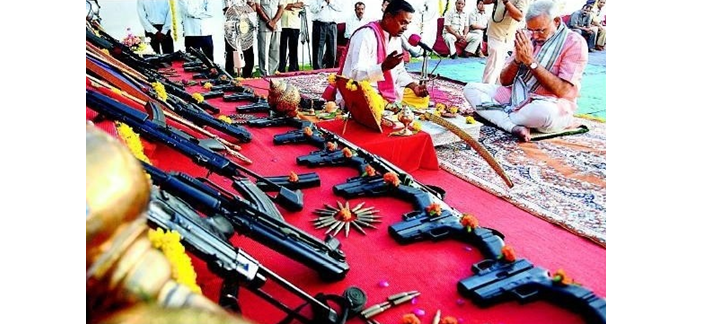
Prime Minister Modi’s ceremonial consecration of the Rafale jets—despite their ignominious performance—was a theatrical attempt to sanctify machines of war through religious rite, an act less of conviction and more of insecurity. This public piety in the face of military failure betrays a nation struggling to reconcile its mythos with its miscalculations.
Modi’s bellicose rhetoric does not merely poison Indo-Pakistani relations; it threatens to destabilise the subcontinental equilibrium, tilting the scales towards conflict. In contrast, the strategic patience of both Pakistan and China heralds a doctrine not just of strength, but of foresight. This subtle choreography of restraint and resilience is quietly reshaping the region’s balance of power and isolating India on both diplomatic and moral fronts.
In a world increasingly aligned towards cooperation, peace, and economic synergy, Modi’s incendiary threats—most grievously, his call to “shoot down” Pakistani citizens—stand as grotesque violations of international norms, human rights, and the most elementary principles of human decency. Such utterances conjure spectres of war and breed unease among peace-loving peoples the world over. They risk plunging the region into an abyss, darkened not only by nuclear overhang but by moral degradation.
This episode raises a solemn question: Is this truly the voice of strategy, or merely the howl of an empire unravelling under its own illusions? For true strategy does not bluster. It builds. It persuades. It endures.
Pakistan and China, for their part, have quietly constructed a citadel of mutual trust and strategic clarity. Their alliance, founded not only on military cooperation but on economic and psychological resilience, has emerged as a pillar of stability in Asia. It is a union where silence is not passivity but power, not submission but strategy.
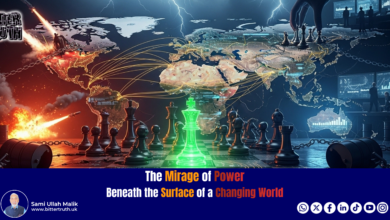
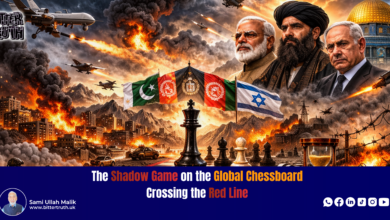
Yet in the shadow of this emerging bipolarity lies a more incendiary element—the role of Israel. Credible reports suggest that Israeli military technicians, operating Harop suicide drones, were present on Indian bases and became unintended casualties of Pakistan’s retaliatory strikes. This revelation thrusts the conflict into a new and perilous dimension—no longer confined to a bilateral clash but unfolding upon the vast chessboard of global military alignments.
In this new schema, the United States, Israel, and India find themselves aligned against an opposing arc comprising Pakistan, China, and the swelling voice of regional peace-seekers. The presence of Israeli operators—confirmed through intelligence channels—raises a disquieting question: Has Israel now become a formal participant in this subterranean war?
The implications are profound. A strike on an Indian base that reportedly housed Israeli military personnel, resulting in fatalities, signals that the conflict has metastasised into something far more complex. It is no longer simply a regional quarrel but a node in a global confrontation where technology, ideology, and geopolitics collide.
In sum, this chapter in South Asia’s unfolding story reveals a perilous trajectory. A regional power, emboldened by delusion and corroded by internal contradictions, lashes out with fury. Meanwhile, the custodians of patience and foresight prepare—not for war, but for history’s verdict. And history, as ever, remembers not the loudest voices, but the clearest minds.
The Spectre of Silence, the Rhetoric of Threats: A Crisis Beyond Borders
Unofficial reports suggest that the remains of Israeli operators, killed in a retaliatory strike, were discreetly transported back to Israel in sealed coffins, far from the public eye. Both New Delhi and Tel Aviv sought to cloak this discomfiting truth beneath layers of diplomatic hush. Yet when Pakistan cited Israel’s direct involvement as a legitimate cause for counteraction—consistent with the established norms of international law—it was at this precise juncture that Washington, erstwhile a silent spectator, was stirred into action, hastily campaigning for a ceasefire.
Thus, what commenced as a regional skirmish between two arch-rivals was transmogrified into something altogether graver—a theatre of proxy war wherein global powers began to circle the flame like wary moths. For the United States, hitherto posturing as detached and neutral, it became a matter not of mere interest but of strategic necessity to halt the conflagration.
President Donald Trump, draped in the garb of a purportedly impartial mediator, initially strove to play the peacemaker. But his resounding silence—indeed, a studied indifference—on Prime Minister Modi’s incendiary rhetoric, raised not only brows but profound doubts. For if the United States is sincerely committed to peace, would it not unequivocally condemn threats of such grotesque violence? And if it does not, does this not betray an uncomfortable truth—that behind the mask of neutrality, America may in fact be sheltering its allies?
One is left to wonder: Was the ceasefire not a gesture towards reconciliation but a desperate manoeuvre to shield India and Israel from the ignominy of a tactical defeat? Military analysts and diplomatic insiders alike whispered of significant losses incurred by the Indian Air Force and Israeli technology in the days preceding the truce. And with Pakistan’s resolve to strike back—not only against Indian aggression but also Israeli complicity—the U.S. intervention appears less as peace-brokering and more as damage control.
Had the Trump administration been truly impartial, it would not only have voiced disapproval but
exercised diplomatic recourse against Modi’s provocations. Instead, its silence has seeded a widening distrust across the global South, especially within the Islamic world, that America’s proclamations of peace are often but euphemisms for strategic containment—aimed less at justice and more at preserving the dignity of its allies.
Modi’s renewed threats now pose a pressing question:
Is the region inching towards a new and deadlier confrontation? Will Israel, once more, extend its reach into South Asia via Indian soil? And shall the United States again shroud its interventions in the veil of arbitration, while effectively shielding its partners from accountability?
If Washington continues to remain mute in the face of Modi’s violent bravado, it shall no longer be a matter of suspicion but of certainty—that the ceasefire was not peace, but theatre; not diplomacy, but distraction.
And what of the United Nations? That solemn institution, whose walls are adorned with the proclamations of universal humanity, now watches in silence—as if struck mute, like characters in a novel who are destined to observe rather than act. Article 2(4) of the UN Charter unequivocally forbids the threat or use of force by one state against another. But history has repeatedly shown that moral courage is a rare commodity—and rarer still when it must be directed against the strong.
If the world is to learn of the full extent of this peril, it must look beyond Modi. For beneath his threats lie the deeper spectres of Israeli militarism and American acquiescence. Delay now would mean confronting an escalation beyond control, a conflagration that no diplomacy might douse once kindled.
When the enemy openly declares his intent, and the world responds with silence, then silence is not wisdom but a shroud of cowardice—an accomplice to tyranny. Pakistan, which has long borne the standard of peace and pursued its diplomatic course with dignity, now stands at a moral crossroads.
Shall the international community heed Modi’s threats? Shall it recognise them for what they are—not mere posturing but an open declaration of ethnic and state-sponsored terrorism from a nuclear-armed power against civilians?
The Prime Minister’s statement—to “gun down Pakistani citizens”—is no longer a matter of political rhetoric. It is a flagrant violation of international law, the UN Charter, and every known principle of human rights. Article 2(4), the Geneva Conventions, and the Universal Declaration of Human Rights all construe such threats as incitement to genocide and a war crime. But shall the nations of the world act? Or shall they, once again, fall into the slumber of strategic convenience?
History has shown that when such declarations emanate from states deeply entwined with powerful alliances—as India is with the United States, Israel, and much of Europe—the so-called “global conscience” often recedes into timorous silence. Even so, there remain avenues of redress. The Security Council may convene. Human rights organisations may issue reports. The European Parliament may table resolutions. The International Court of Justice may deliberate over these declarations as crimes of war.
Yet none of these shall bear fruit unless Pakistan’s diplomacy, civil society, and media rise in unison to present this case with urgency, clarity, and moral force—lest the world sleepwalks into catastrophe once more.
An Echo of Conscience: The Final Reckoning of Peace and Power
It is imperative that the global media cease to regard Prime Minister Modi’s recent statements as mere rhetorical excesses of an election campaign and instead recognise them for what they truly are: incendiary provocations with the power to rend the fragile fabric of peace in South Asia. These utterances are not the careless musings of a populist in pursuit of applause — they are a calculated blueprint for ideological aggression. If the nations of the world value peace in this volatile region, then they must rise to condemn this dangerous posturing. For when two nuclear-armed states are brought to the precipice, the spark of conflict shall not only ignite South Asia, but may well engulf the globe in its inferno.
Pakistan, for its part, must vigorously pursue a diplomatic offensive — placing Modi’s declarations before the United Nations, the Organisation of Islamic Cooperation, the European Union, and all major international media platforms. It must unmask the covert nexus between the United States, Israel, and India — a triad that, under the guise of “mediation,” seeks not reconciliation, but rather the obfuscation of potential war crimes.
In the face of hostility, wisdom, restraint, and the decorum of diplomacy must light the path forward. True statesmanship lies not in stoking the flames of belligerence but in opening channels of dialogue, tempering tensions, and seeking common ground for collective prosperity. The reckless braggadocio of Mr. Modi may rally crowds and stir passions for a fleeting moment, but history does not immortalise the tempest — it remembers the statesman who calmed the storm. Silence, if it is to be golden, must speak of strength, not submission; otherwise, it portends decay.
Indian leadership would do well to eschew the language of provocation. The sowing of discord through political rhetoric does not fortify a nation’s sovereignty — it corrodes it. The international community bears now a solemn responsibility: to hold India diplomatically and morally accountable. The United Nations and other global fora must condemn these belligerent remarks and forge a collective strategy for the preservation of peace.
The hour demands not indifference, but action. It is incumbent upon the world’s nations to impress upon the Indian government the peril of such reckless declarations — and to urge a return to dialogue and diplomacy. Regional trust-building must be accelerated. Dialogue must become the antidote to discord, and enduring peace must be pursued with renewed conviction.
Positive steps must be taken to strengthen mutual confidence between India, Pakistan, and China. Let strategic wisdom and calm deliberation — as exemplified by Pakistan and China — serve as a model for regional stability and economic renewal. A renewed commitment to global engagement must underwrite regional harmony.
India must prioritise discourse with Pakistan and China, lest it forfeit the prospect of lasting peace. At the level of public discourse, educational and media initiatives must be advanced to promote tolerance and civic understanding, and to dispel the shadows of hatred and militaristic pride.
Let it be said once more, with all solemnity: Mr Modi’s recent pronouncements are not the firework flourishes of a political rally — they are the dark architecture of a dangerous ideology. Should the world fail to take heed, the road to conflict may swiftly become a motorway. These are not the idle threats of a petulant neighbour, but the overtures of a nuclear state — and the cost of ignoring them may be measured not in columns of newsprint, but in the ashes of cities.
Pakistan must not waver. Its diplomatic voice must rise in measured strength — at the UN, in the OIC, before the European Parliament, and across every international tribunal of opinion. Let the world know: this is no act of mediation, but a carefully cloaked evasion of accountability for crimes yet unfolding.
And finally, a parable of wisdom:
When Time speaks, it does not whisper — it engraves the fate of nations. Those who listen shape history. Those who turn away become footnotes of regret.
Pakistan and China have heard the voice of Time — and those who heed its call, become sovereigns not merely of land, but of destiny.