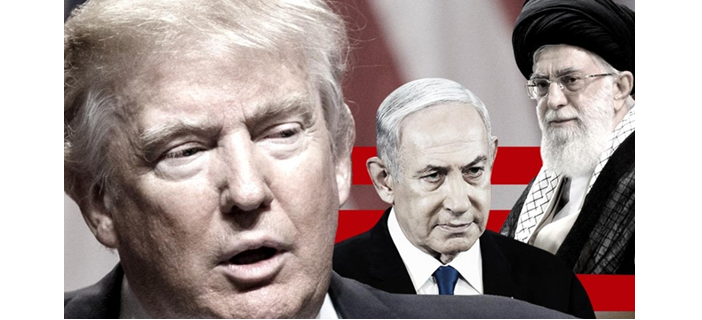
Iran’s Moves in the Middle East
Iran, Hezbollah, and US Policy

Hezbollah’s Evolving Role: A Persistent Challenge for Israel or a Diplomatic Tool for Iran?
Just a year ago, Hezbollah’s military, political, and social evolution had transformed it into an undeniable force within Lebanon, with its influence reverberating far beyond the country’s borders and across the region. The dual dynamics of Hezbollah posing a challenge to Israel and Iran’s potential strategic manoeuvring remain deeply interconnected, casting significant shadows over the geopolitics of the Middle East.
In Lebanon, Hezbollah is not merely a military organisation but also a political party and a welfare institution, providing public services and garnering widespread local support. This support base further solidifies its position, making it increasingly difficult for Israel to undermine Hezbollah militarily.
Military Strength and Regional Threats
Hezbollah possesses advanced missile systems, drone technology, and expertise in guerrilla warfare, posing a grave threat to Israel. During the 2006 Lebanon-Israel war, Hezbollah’s resistance took Israel by surprise, prompting Israel to fortify its northern defences. Currently, Hezbollah reportedly holds over 100,000 missiles and rockets, capable of reaching major Israeli cities.
Despite Israel’s advanced defence systems, such as the Iron Dome, Hezbollah’s continuous military advancements and its stronghold in southern Lebanon remain persistent threats. Any major conflict would result in heavy casualties on both sides, yet Hezbollah’s capabilities have established it as a constant concern for Israel.
Iran’s Role and Strategic Calculations
Hezbollah’s robust political and military presence in Lebanon is intrinsically linked to Iran. Despite Israel’s relentless efforts to weaken Hezbollah, the group gained further military experience by participating in the Syrian civil war. However, with Bashar al-Assad’s departure from Syria, Hezbollah’s influence has waned significantly. Nevertheless, public support in Lebanon and continued financial and military aid from Iran have kept Hezbollah afloat. Internal economic crises, political instability, and recent setbacks have posed new challenges for the organisation.
Israel continues to rely on airstrikes and intelligence operations to dismantle Hezbollah’s military infrastructure, particularly in Syria and Lebanon. Israel’s objective remains to keep Hezbollah sufficiently weakened to prevent any large-scale military offensives against it. However, the lack of complete military withdrawal has maintained a state of tension along the border.
The Turning Point: Could Hezbollah Remain a Threat?
On 26 January, thousands of displaced Lebanese citizens attempted to return to their homes in southern Lebanon. Travelling in convoys, waving Hezbollah flags, and listening to revolutionary music, they found upon arrival that their homes no longer existed after a year of conflict. Meanwhile, young motorcyclists, brandishing Hezbollah flags and blaring horns, passed through non-Shia areas, leading to confrontations with local residents who viewed their actions as provocative. Expressing sorrow over their losses, they adorned the ruins with images of former Hezbollah leader Hassan Nasrallah.
That day was meant to mark the complete withdrawal of Israeli forces, a condition of the ceasefire brokered by the United States and France. Under this agreement, Hezbollah was also required to withdraw its fighters and arms from the southern regions, while thousands of Lebanese soldiers were to be deployed there. However, Israel claims that Lebanon failed to fully comply with the agreement, resulting in an incomplete Israeli withdrawal. Lebanon, in turn, has levelled similar accusations against Israel.
As expected, tensions escalated. In certain areas, Israeli soldiers opened fire, killing 24 people, including a Lebanese soldier. Despite suffering significant losses in the war with Israel, Hezbollah, the dominant power in southern Lebanon for decades, once again seized the opportunity to assert its strength, leaving Israel and its allies stunned. The pressing question now is whether Hezbollah, as a group, can survive the shifting dynamics in Lebanon and the broader Middle East.
Hezbollah’s Historical Trajectory and Current Standing
Over the past decades, Hezbollah has established itself as the most powerful group in Lebanon, surpassing even the Lebanese army in military strength and expertise, thanks to Iranian support and assistance.
Violence has always been a tool in Hezbollah’s arsenal. At the same time, its presence in parliament meant that no significant national decisions could be made without its involvement. In short, Hezbollah had the capacity to paralyse the country at will—and on several occasions, it did just that.
The latest conflict began in October 2023, when Hezbollah opened a second front in response to Israel’s war in Gaza. Tensions had already heightened in September when Israel executed a bold infiltration, targeting Hezbollah members in pager-triggered explosions and utilising walkie-talkies in a similar fashion.
Simultaneously, airstrikes and ground assaults in southern Lebanon resulted in the deaths of over 4,000 people, including many civilians. Hezbollah strongholds suffered extensive damage, and the organisation itself endured heavy losses. Several leaders were assassinated, including Hassan Nasrallah, who had been the face of Hezbollah for three decades. His successor, Naim Qassem—who lacks Nasrallah’s authority—admitted to the group suffering “painful” losses.
In November, a ceasefire was declared, effectively marking Hezbollah’s capitulation. The group is considered a terrorist organisation by the United States, the United Kingdom, and numerous other countries.
Hezbollah’s Future and Iran’s Strategic Gambit
Hezbollah’s current predicament raises critical questions about its future role as both a military force and a political entity in Lebanon. While it remains a formidable challenge for Israel, its continued existence and influence may increasingly hinge on Iran’s broader geopolitical strategies, particularly regarding its nuclear ambitions and diplomatic engagements with the West. Whether Hezbollah will emerge resilient from the shifting sands of Middle Eastern politics or fade into obscurity remains to be seen.
A New Chapter in Lebanon: The Future of Hezbollah Amid Shifting Dynamics
Last month marked a new political reality in Lebanon when the parliament elected former army chief Joseph Aoun as the new president, a figure who enjoys support even in the United States. This election came after a two-year political deadlock, largely attributed to Hezbollah’s influence. However, this time, a weakened Hezbollah was unable to obstruct the process as it had done in the past. Another significant development was the appointment of Nawaf Salam as Prime Minister, who had previously served as a judge at the International Court of Justice. Salam is not considered a Hezbollah supporter.
At present, Hezbollah’s focus and priority remain on its own foundations. The group has conveyed to its followers that their setbacks in war are, in fact, victories. Yet, the majority of Lebanese citizens understand that the reality is different. Communities have been devastated, and according to the World Bank, damages to infrastructure exceed three billion dollars. With a shattered economy, no one in Lebanon knows where help will come from, as international aid is now conditional on the government’s efforts to curtail Hezbollah’s power. While Hezbollah has provided financial assistance to many, as it did following the 2006 war, signs indicate that public confidence in the group is waning.
According to Nicholas Blanford, author of Warriors of God: Inside Hezbollah’s Struggle Against Israel, “If people are still living in tents or the ruins of their homes six months from now, they may begin to blame Hezbollah for the war instead of Israel or the Lebanese government. In such a scenario, action against Hezbollah could become a possibility.” However, any move against Hezbollah would be fraught with risks. Owing to its military strength, Hezbollah has always wielded the veiled threat of violence, warning that any attempt to sideline it would provoke a severe response.
A Western diplomat, speaking on condition of anonymity, stated, “We are informing the Lebanese opposition and people in other countries that any effort to corner Hezbollah could backfire and lead to violence.”
Nevertheless, a new chapter is being written in Lebanon, where people are exhausted by endless waves of violence, government dysfunction, and widespread corruption. These accumulating problems have rendered the state largely ineffective.
In his first address to parliament, the new president pledged to introduce reforms essential for the country’s survival. He promised to rebuild governmental institutions, revive the economy, and ensure that the military becomes the sole armed force in the nation. Although he did not explicitly name Hezbollah, his remarks were clearly directed at them. Amidst applause in parliament, Hezbollah’s members sat in silence.
Hezbollah’s future will largely depend on Lebanon’s internal situation, Iran’s policies, and Israel’s military strategies. Should Lebanon’s economic crisis worsen, public support for Hezbollah may further decline. However, increased pressure from Israel could push the group to intensify its military activities, contributing to further regional instability.
Yet, the fate of Hezbollah’s military power may be decided far from Lebanon, in Tehran. For decades, Iran has nurtured the “Axis of Resistance,” a regional alliance designed to encircle Israel with armed groups. Hezbollah, with its thousands of trained fighters and stockpile of missiles, has played a crucial role within this network. The group has acted as a deterrent against potential Israeli attacks on Iranian nuclear facilities. However, this deterrent has now weakened, and even if Iran wishes to restore Hezbollah’s former strength, it will not be an easy task.
Following the fall of Bashar al-Assad’s government in Syria—a blow partly inflicted by Hezbollah’s own losses—Tehran’s land route for supplying arms and funds to Hezbollah has been disrupted. Israel, which has gathered extensive intelligence on Hezbollah, maintains that it will continue targeting the group to prevent it from regaining its previous strength. However, as Blanford notes, “The key questions regarding Hezbollah can only be answered in Iran. It’s possible that Iran or Hezbollah might consider a different path—disarming and remaining solely as a political and social movement. But that decision will ultimately be Iran’s to make.”
When sources familiar with Hezbollah’s internal affairs were asked whether such a scenario was possible, they suggested that “it could indeed be part of a larger regional resolution.” This seems to hint at Iran’s willingness to negotiate a deal with the West over its nuclear program. According to these sources, “There is a difference between completely abandoning weapons and using them within the state’s framework, and that is certainly possible.”
Political analysts in the region believe that Iran is potentially using Hezbollah as a “pressure point” to secure better terms in its nuclear deal negotiations with the United States and the West. Whenever Iran feels increasing international pressure or perceives the deal’s terms as contrary to its interests, it employs Hezbollah to exert pressure on Israel. In this way, Iran has long utilised Hezbollah as an informal diplomatic tool, escalating tensions in the region to coax the West back to the negotiating table. However, the pressing question now is whether, following the ceasefire in the region and Iran’s loss of vital ground connections, Tehran still possesses the capacity to use Hezbollah as an effective weapon—especially given the significant political changes that have unfolded in Lebanon.
It is worth noting that Iran remains Hezbollah’s largest financial and military backer. Iran has provided Hezbollah with advanced weaponry and military training, with the primary aim of extending its influence across the region and establishing a defensive front against Israel and the United States. But the question arises: is Iran willing to sacrifice Hezbollah for the sake of a nuclear agreement with the U.S., knowing that Hezbollah’s complete absence would pave the way for Israel’s expansionist ambitions?
Although Donald Trump, upon assuming office, introduced the world to a more aggressive face of America through his inflammatory statements, particularly towards Iran, there is evidence suggesting the U.S. could deviate from its earlier promises of non-intervention. Despite his campaign rhetoric about avoiding new wars and withdrawing from ongoing conflicts, Trump’s past behaviour suggests he could instigate fresh conflicts to achieve U.S. objectives. His approach to Afghanistan, where he used threats to achieve short-term goals but eventually faced public embarrassment, is a case in point. However, in the Middle East, the dynamics might differ. The U.S. could leverage the supposed “Iranian threat” to maintain pressure on wealthy Arab states in the region, potentially isolating Iran from its military support for Hezbollah and securing a revised nuclear agreement on favourable terms.
Nevertheless, Hezbollah remains a key part of Iran’s long-term strategy to retain influence in the region. On the other hand, Lebanon’s new leadership is under increasing pressure to act swiftly. External allies view the shifting balance of power in the Middle East as an opportunity to further weaken Iran, while Lebanese citizens are desperate for stability. People no longer find solace in the notion that they’ve managed to maintain life despite the devastation. In Beirut’s Christian quarters, once controlled by Hezbollah, residents express a longing for peace: “We want to live in a normal country where war is but a distant memory. We have longed for freedom from the horrors of conflict for decades.”
Even Hezbollah’s supporters might now begin questioning the group’s future role. It may never return to its pre-war structure. Disarming Hezbollah is no longer the inconceivable notion it once was. The shifting political landscape has made it a more realistic possibility.
Meanwhile, U.S. President Donald Trump’s policies have consistently favoured Israel, most notably demonstrated through the so-called “Deal of the Century.” Back in power at the White House, Trump continues to create global uproar with his provocative statements, and his policies are once again influencing U.S. foreign affairs. Any plan to dominate Gaza will undoubtedly face fierce resistance from the Palestinian people and Hamas.
Trump’s plans have been rejected not only by many countries in the region but also by traditional U.S. allies such as Jordan and Egypt. Both the United Nations and the European Union have expressed support for the rights of the Palestinian people. There remains widespread sympathy for the Palestinian cause across the Arab world, and any American or Israeli aggression could trigger strong reactions. Should the U.S. and Israel increase pressure on Gaza, the outcome could be widespread violence throughout the region. Groups like Hezbollah, already committed to resisting Israel, could become even more active, increasing tensions along Israel’s northern borders.
Conclusion:
Hezbollah presents a serious challenge to Israel that cannot be ignored. However, the nature and intensity of this challenge will depend on Iran’s broader strategy. Iran may use Hezbollah not only to strengthen its regional position but also as a bargaining chip to secure better terms in nuclear negotiations with the U.S. The likelihood of major military conflict in the region increases when diplomatic efforts fail or when pressure from sanctions on Iran intensifies. Hence, there is a deep connection between Hezbollah’s activities and Iran-U.S. relations, which will significantly influence the future political landscape of the Middle East.
Israel’s attempts to curtail Hezbollah’s power, combined with U.S. policies exerting pressure on Gaza, could further destabilise the region. The global community’s opposition to these strategies underscores the fact that unilateral actions will not achieve lasting peace in the Middle East. Instead, a comprehensive and balanced diplomatic solution remains the only viable path to sustainable peace.