Ingratitude and the Mirror of the Ummah
Forty Years of Sacrifice, a Bitter Test

From the Tents of Gratitude to the Ashes of Betrayal
Once, this land bore witness to a nobler hour. When the skies over Kabul were veiled in the acrid smoke of war, the mountains and plains of Pakistan spread their arms in shelter. For forty long years, this nation offered sanctuary to the Afghan refugees — not merely a refuge of stone and earth, but a refuge of soul and sustenance. Pakistan shared its bread, its schools, its hearth, and its heart.
It was no political expedience, no cold calculus of diplomacy — it was, rather, an act of faith, an embodiment of Islamic brotherhood and human compassion. Yet, history now stands upon a bitter threshold — a juncture where the echoes of gratitude have fallen silent, and the sound of gunfire has replaced the language of amity. Those who once sought shade beneath our tents now cast the shadows of enmity upon our borders.
The same frontier, sanctified by the blood of Pakistani soldiers who died defending it, now resounds with the crack of bullets fired by the very hands once fed by our benevolence. And all this unfolds whilst the so-called defenders of Islam, the Taliban, waltz in the halls of diplomacy with India — a state whose hands remain crimson with the blood of Gaza’s innocents. India, that ancient adversary of the Muslim world, stands today shoulder to shoulder with Israel in its campaign of cruelty. Reports speak of over a million Indian nationals serving alongside the Israeli army, raining fire upon the defenceless in Palestine.
For Kabul to clasp Delhi’s hand at such an hour is no mere political folly; it is an affront to faith itself, a salt rubbed into the wounds of the Ummah.
﴿هَلْ جَزَاءُ الْإِحْسَانِ إِلَّا الْإِحْسَانُ﴾
“Is there any reward for goodness other than goodness itself?” — [Surah Ar-Rahman, 55:60]
Yet, from the ashes of those very tents of mercy now rise the flames of betrayal.
History bears witness: sometimes the saplings nurtured in the soil of kindness are the first to wither in the winds of ingratitude.
The Fire Beyond the Frontier
This is the same Afghanistan whose pain Pakistan once bore upon its own wounds, and this is the same Pakistan which now, once again, stands resolute in defence of its sacred boundaries. The recent acts of the Taliban government have stirred unease among the thinkers and scholars of the Muslim world.
Those who proclaim themselves the standard-bearers of Islam are now seen courting powers that have long turned a cold gaze upon the sufferings of the Ummah, and worse — aided the oppressor with their very hands. Such conduct does not bind the Ummah in unity; it rends its fabric, thread by thread.
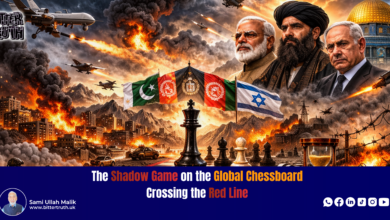
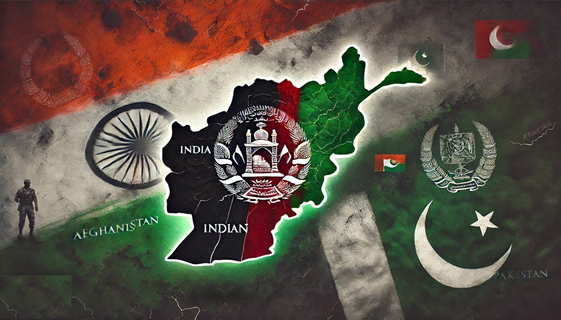
With the visit of Foreign Minister Amir Khan Muttaqi to India, tensions along the Afghan frontier flared anew. Unprovoked fire rained upon Angoor Adda, Bajaur, Kurram, Dir, Chitral, and Baluchistan. Pakistan, with patience and precision, responded not in vengeance but in necessity. At dawn on a Sunday, a decisive operation rendered several Afghan outposts ineffective, restoring control over nineteen strategic positions.
The message was clear, calm, and resolute: the frontier of Pakistan is no abstraction — it is an article of faith. The Taliban fighters retreated, leaving behind the wreckage of their fortifications and the silence of their fallen. Munitions lay strewn like the debris of delusion — grim testimony to an ill-conceived defiance. Outposts long used as launchpads for cross-border assaults — Duran Dmila, Turkmanzai, Shaheedan, Jandosar, and Kharcher Fort — were reduced to silence.
The Pakistani command declared the operation not an act of revenge but a moral and strategic imperative — the defence of homeland and honour.
In the Arab world, a chorus of concern rose. Saudi Arabia, the UAE, Qatar, and others urged Afghanistan to ensure its soil is not used for acts of terror. This was not mere diplomacy; it was the echo of a shared Islamic conscience, a reminder that division among brethren only lights the path for the enemy.
﴿وَلَا تَهِنُوا وَلَا تَحْزَنُوا وَأَنتُمُ الْأَعْلَوْنَ إِن كُنتُم مُّؤْمِنِينَ﴾
“Do not lose heart, nor fall into despair; for you shall indeed be the higher, if you are believers.” — [Surah Aal-e-Imran, 3:139]
Meanwhile, at the Moscow Format Conference, regional nations had already cautioned Afghanistan not to allow its territory to become a crucible for extremism. Yet, the timing of the border clashes immediately following the Afghan foreign minister’s visit to Delhi speaks of shifting sands in regional diplomacy.
China and Russia have both voiced disquiet, for instability in South Asia imperils not merely borders, but the fragile architecture of peace itself.
India’s deepening courtship of Kabul raises profound moral and ideological questions. This is a nation whose overtures in the Middle East often mirror opportunism, not empathy.
And now, through the corridors of Kabul, it seeks to weave influence, thinly veiled as friendship. This is the moment for the Taliban to reflect — to recall that Islamic brotherhood is not a slogan but a sacred covenant. To bind themselves with those complicit in the suffering of Muslims is not diplomacy; it is dereliction. Pakistan has always stretched forth its hand for peace, reconciliation, and fraternity — yet peace, as history reminds us, can only be extended by a hand that is strong.
The Moral Reckoning and the Call of History
In the mirror of time, the lamp of honour still burns bright. Forty years of hospitality, sacrifice, and fellowship — these are the chapters in Pakistan’s chronicle that merit pride, not regret. Alas, those chapters have been met not with loyalty, but with suspicion and hostility. Yet, Pakistan has ever chosen patience over wrath, dignity over despair.
This is no hour for recrimination; it is the moment to awaken the collective conscience of the Ummah. If the Afghan people and their leaders would but view the past in the clear light of justice, they might discern that Pakistan has been their truest friend.
History will bear record that Pakistan drew its sword not against its foes, but in defence of its faith.
This land still stands upon the immutable belief that peace, justice, and fraternity are the true
treasures of the Ummah.
Let this serve as a reminder: when nations forget the debts of gratitude inscribed upon their past, history compels them to retrace the steps of their unlearned lessons. Pakistan has fulfilled its duty.
It is now for the other side to confront its reflection in the mirror of time.
﴿إِنَّ اللَّهَ لَا يُغَيِّرُ مَا بِقَوْمٍ حَتَّىٰ يُغَيِّرُوا مَا بِأَنفُسِهِمْ﴾
“Indeed, God does not change the condition of a people until they change what is within themselves.” — [Surah Ar-Ra’d, 13:11]
Borders are not mere lines on a map; they are the measure of a nation’s dignity and faith.
And when the honour of a nation is challenged, even silence becomes a declaration, and defence itself assumes the form of prayer.
Tempests may come and pass, but so long as a nation’s honour lives, its light cannot be extinguished. For forty years that lamp has burned within Pakistan, steadfast and serene. And though deceit may sweep across the Afghan frontier like a desert wind, Pakistan stands yet again — patient, faithful, dignified.
Let the chronicles record: Pakistan deemed hospitality a sacred trust, whilst Afghanistan mistook it for weakness.
If the Taliban would but pause and reflect, they might recall that friendship with the enemies of Islam is a betrayal not merely of politics but of creed itself.
India, which aided Israel in its bombardment of the innocent in Gaza, now smiles in Kabul’s courts — and the standard-bearers of Islam remain silent.
Pakistan fears not the fire of any foe’s gunpowder, but the chill of forgotten gratitude. Yet we remain assured that the future of the Ummah lies with those who weigh their loyalty not upon the scales of politics, but upon the measure of faith.
This, then, is not a polemic but a prayer —
A plea to the Ummah of Muhammad ﷺ:
Forget not your friends, nor embrace your foes in smiles, lest you dim the light of your own belief.
Pakistan shall guard its frontiers — but beyond that, it shall guard the dream once beheld by the sincere souls of the subcontinent:
The dream of a single, united Ummah, bound not by geography, but by faith, by history, and by honour.