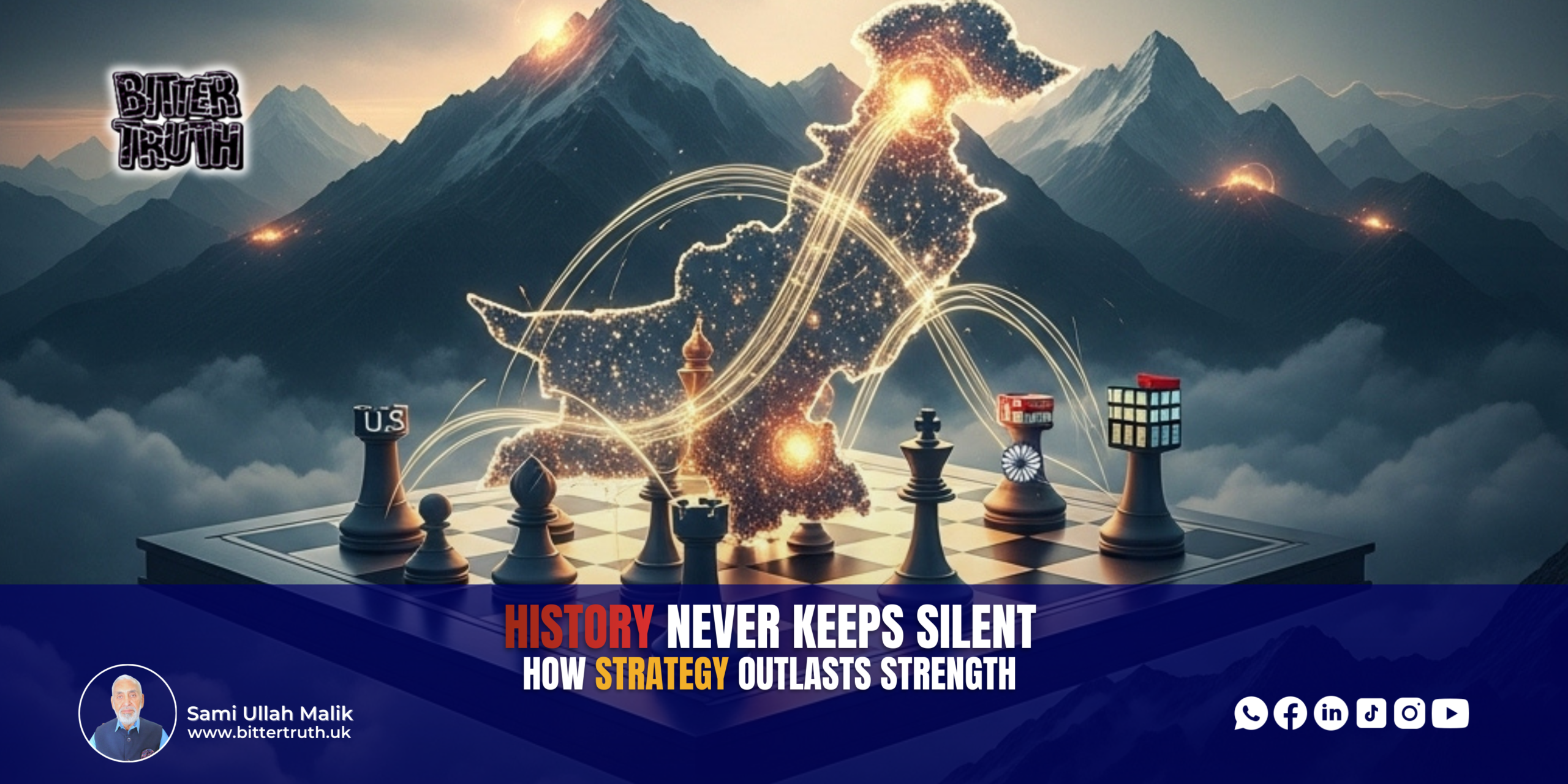
History Never Keeps Silent
How Strategy Outlasts Strength

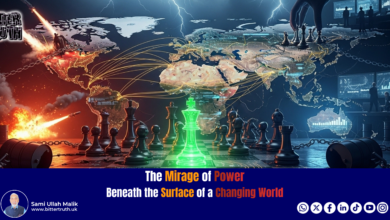
History is never mute. At every moment, it writes—patiently yet relentlessly—in the language of the pen, and at the hour appointed by time itself, its verdicts stand revealed. Today, the world finds itself poised at a perilous juncture, where professions of power, labyrinths of ideology, and the relentless pull of regional interests have unsettled the fragile equilibrium of global peace and security. History has taught us, time and again, that the steeds of power which gallop beyond their borders often meet their undoing through breaches within their own walls. No nation or state, however formidable it may appear, can claim enduring strength unless it is anchored in internal cohesion and guided by resolute leadership; without these, even the grandest foundations begin to tremble.
History does not merely record—it judges. Every instant echoes with the quiet scratch of its pen, inscribing human deeds whose consequences unfold with inexorable clarity. The rise and fall of nations lie preserved in its pages, while the manoeuvres of great powers endure as lessons etched into the collective memory of mankind. Along the long and intricate caravan of history, there come moments when peoples deemed weak confound expectation, inscribing tales of courage and resolve so striking that they crease the brows of superpowers and sow unease in their hearts.
Nor does history ever stand empty-handed. The centres of power cannot conceal the reckoning of their actions. Every step taken, every decision made, and every front opened is preserved in ink. In the South Asian expanse, Pakistan has not merely safeguarded its sovereignty; it has set before the world’s great powers a lesson that can be weighed only on the scales of knowledge and wisdom. This lesson was inscribed with particular force in the aftermath of the events of September the Eleventh—a chapter so compelling that even Western and American defence and political analysts now regard Pakistan’s strategy with a mixture of astonishment and reluctant admiration.
Power, it must be remembered, is not confined to the martial or the muscular alone. True power is a confluence of faith, prudence, and reason. This truth has found renewed expression in recent American international strategy, where the actions of Donald Trump sent fresh tremors through the architecture of global politics.
﴿وَأَعِدُّوا لَهُم مَا اسْتَطَعْتُم مِّن قُوَّةٍ وَمِن رِبَاطِ الْخَيْلِ تُرْهِبُونَ بِهِ عَدُوَّ اللَّهِ وَعَدُوَّكُمْ﴾
(Sūrat al-Anfāl, 8:60)
“And prepare against them whatever force you are able, and steeds of war, whereby you may deter the enemy of God and your enemy, and others besides them whom you do not know—God knows them.”
This verse encapsulates a principle that transcends mere armament: preparedness as a synthesis of material strength, moral resolve, and strategic foresight. It is precisely this synthesis that has shaped the historical trajectory of the Islamic Republic of Pakistan. Despite severe constraints of resources, the state has wielded determination, resolve, and calculated wisdom as instruments of power—sufficient to unsettle the carefully balanced ledgers of profit and loss drawn up by the world’s mightiest actors. In doing so, Pakistan has not only defended its independence but has etched upon the pages of history lessons that will endure, inscribed not in exaggeration, but in sober and enduring truth.
The Long Game of Power: Debt, Strategy, and the Quiet Arts of Statecraft
If China, by acquiring American bonds worth billions, succeeded in binding the United States in the cords of indebtedness, then one decisive chapter of that story was authored—silently yet decisively—by Pakistan’s establishment. This, too, was a triumph of Pakistan’s long game: a strategy measured not in months, but in decades. For nearly twenty years, across the barren plains and unforgiving mountains of Afghanistan, the chessboard of so-called “good” and “bad” Taliban entangled the United States so thoroughly that trillions of dollars were scattered from its coffers like autumn leaves in a cold wind. America remained ensnared; Pakistan imposed the burden; China reaped the advantage. Thus, each actor played his part, but Pakistan played for its national interest with singular composure and skill.
The United States poured vast fortunes into Afghanistan over two decades, yet Pakistan—by artfully confounding American designs—ensured that decisive victory remained elusive. America borrowed, China invested, and Pakistan extracted the greatest strategic and political dividend from this triangular contest. In time, the scales of power tilted. America entered the arena expecting to play with an open hand but found itself ensnared at every step by Pakistan’s stratagems, while Chinese capital quietly drew the ground from beneath American feet.
Within the United States itself, both public opinion and Congress began to debate the extent to which Pakistan and China had reshaped Washington’s global ambitions. International analysts observed that Pakistan had not merely consolidated its own position, but—by facilitating China’s rise as America’s principal creditor—had altered the very balance of global power. China’s vast investments in American bonds constrained Washington’s financial autonomy and narrowed its strategic room for manoeuvre.
As the Persian sage Saʿdī reminds us: even kings are compelled to heed the counsel of the wise; for contests of destiny are won not by force alone, but by intellect and foresight.
By the time America awoke to the reality, the economic landscape had irrevocably changed. The creditor had become the debtor, and China had risen on the horizon as an economic superpower in its own right. Almost simultaneously, another chapter unfolded in South Asia: India conducted nuclear tests, and Pakistan—undaunted by overwhelming international pressure—responded with confidence and resolve. Every instrument of coercion was deployed, yet Pakistan charted its own course, guided by a clear sense of national dignity.
At the height of American power in the early years of the new millennium, Pakistan’s strategy, combined with Chinese investment, reshaped the global equilibrium. The mounting burden of debt upon the American treasury imposed political and economic caution upon Washington, underscoring once more the enduring principle that power, to endure, must be tempered by restraint.
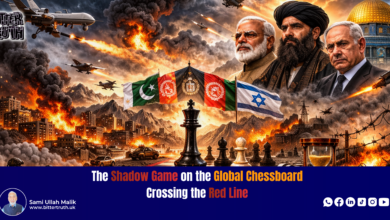
Global financial commentators warned that the coordinated strategies of Pakistan and China constituted a sobering signal for American global primacy. International media began to describe Pakistan as “the grandmaster of Asian chess”—a player advancing his pieces quietly, yet with devastating precision. Like a seasoned pupil discerning the concealed moves of his master, Pakistan demonstrated a mode of statecraft that was subtle, restrained, and profoundly effective.
Beneath the towering minarets of American power, Pakistan’s steady and unassuming strategy kept its own lamp alight. It neither sought spectacle nor proclamation, yet its impact was unmistakable.
Washington spared no effort to halt Pakistan’s nuclear ambitions: at times deploying the snares of the NPT, at others the inducements and threats of the CTBT. Yet Pakistan’s military and political minds proved no less astute. Each knot was undone with another knot; every pressure met with calculated resistance. Despite intimidation and coercion, Pakistan placed national interest above all else and held its ground with composure.
Following India’s nuclear detonations, Pakistan translated resolve into action. On 28 May 1998, the mountains of Chagai bore witness as Pakistan announced—through thunder and fire—that its sovereignty was not a negotiable commodity. It was not merely a military assertion, but a political triumph: a declaration that national honour would not be bartered, even amid the storms of global disapproval.
When pressure intensified beyond endurance, assent was offered in form—but mastery lay in the condition. Pakistan’s signature on the CTBT and NPT was adroitly tied to India’s own, ensuring that the initiative remained firmly in Islamabad’s grasp. The opponent’s move was returned, refined, and rendered harmless—a masterstroke of diplomatic craftsmanship.
The United States employed every lever to secure the extradition of Dr Shakil Afridi, yet Pakistan’s institutional resilience ensured failure at every turn. Likewise, American designs foundered in the absence of decisive action against the Quetta Shura and the Haqqani network. The snare was laid, but the threads were broken; national power prevailed through coherence and discipline.
Sanctions, threats, and campaigns of pressure swirled around Dr Abdul Qadeer Khan, yet the state shielded this strategic asset with such vigilance that Washington could only look on in frustration. Despite relentless pressure, Pakistan ensured his protection—demonstrating that national assets are safeguarded not merely by arms or resources, but by strategic discipline and internal order.
Even amid efforts to inflame instability and bend resolve, Pakistan’s establishment retained control of the board. Neither the Quetta Shura nor the Haqqani network was sacrificed at the altar of external demands. Like a lion guarding its young, the state revealed its teeth but yielded no ground.
During the tenure of Prime Minister Benazir Bhutto, Pakistan engaged in a strategic exchange with North Korea that subtly reshaped regional balances. Missile technology travelled one way; nuclear expertise the other. Blueprints were acquired, briefcases exchanged, and the world was once again reminded that Pakistan possessed not only resolve, but the deftness required to navigate the most intricate corridors of global power.
Thus, in silence rather than spectacle, Pakistan inscribed its presence upon the ledger of history—not as a pawn, but as a player who understood that endurance in the arena of nations belongs to those who master patience, calculation, and the quiet arts of statecraft.
Sovereignty Tested: Intelligence, Technology, and the Inner Architecture of Power
Whether it was the question of Dr Shakil Afridi’s extradition in the aftermath of intelligence surrounding Osama bin Laden, or the sustained pressure exerted by international powers, the United States knocked upon every conceivable door. Yet the state apparatus weighed the matter upon the scales of national dignity and resolved it in favour of sovereign honour. In doing so, Pakistan preserved the regional balance of power and blunted the edge of American coercion.
Pakistan possesses nuclear capability, advanced technology, and resolute leadership. It is not Syria, Iraq, or Libya—nor is it vulnerable to the chaos that befell those lands. Here, national-interest decisions are anchored in both domestic coherence and international order. Just as mountains endure tempests by virtue of deep and unyielding roots, Pakistan absorbs external shocks through the strength of its internal foundations.
Pakistan’s military strategy revealed another quiet mastery: by regulating the flow of America’s most advanced weaponry, it disrupted Washington’s operational designs. Containers laden with state-of-the-art arms travelled towards Afghanistan, yet along the routes Pakistan’s institutions remained vigilant. Checkpoints were alert, inspections thorough, and certain consignments quietly diverted. Dust gathered on the roads, and so too did stories—each convoy becoming, before its arrival, another chapter in the long chronicle of frustrated ambition.
Goods were halted, scrutinised, and where deemed illicit or “unreasonable”, withheld. This unseen discipline became a decisive factor in undermining American objectives. In Afghanistan, it was Pakistan alone that denied the United States success. Even the most sophisticated weaponry found itself rendered ineffective before a strategy rooted in internal control and calculated restraint.
American analysts were left perplexed: how could plans so lavishly resourced, so meticulously engineered, repeatedly fail? International observers, however, took note of Pakistan’s internal oversight and strategic finesse. Like a shrewd host observing every movement of his guest, Pakistan watched closely—and quietly redirected each step astray.
In 2011, the fall of a state-of-the-art American stealth helicopter in Abbottabad marked a moment of profound embarrassment for Washington. This aircraft, a symbol of technological pride, vanished into history. Every effort was made for its retrieval, yet history recorded—almost with a wry smile—that the helicopter disappeared, its trail untraced to this day.
All stratagems were deployed to reclaim it, but Pakistan’s internal vigilance prevailed. The incident became a lesson for global powers: technology, however advanced, falters without control of the internal domain. American strategy was widely judged to have failed, while Pakistan reaffirmed its strategic relevance on the world stage. Global media described the episode as both a “lesson in technology” and a striking Pakistani success—much like a fortified citadel repelling assault through the wisdom embedded in its walls.
Pakistan is neither Syria nor Iraq, neither Libya nor Venezuela. It possesses nuclear arms, missile technology, and—no less important—national resolve. Should time demand it, even long-range missile tests spanning thousands of miles would not lie beyond its capacity. Afghanistan, Iraq, and Syria could be undone; Pakistan could not—because here exist internal order, firm leadership, and public support. Like a tree whose roots run deep into the earth, it stands unmoved by the fiercest storms.
Pakistan persistently denied America success in Afghanistan. Advanced weapons were intercepted, convoys disrupted, and plans undone through internal surveillance. American citizens and analysts alike expressed astonishment at how supposedly foolproof designs collapsed. Internationally, this military and technical capacity came to be recognised as a hallmark of Pakistan’s strategic acumen—an invisible hand obstructing every hostile move, a reality acknowledged even by Western and American defence experts.
Pakistan not only secured its nuclear arsenal but consolidated its missile and technological programmes. If missile blueprints and expertise acquired from North Korea enhanced Pakistan’s defence posture, North Korea in turn came to regard Pakistan with appreciation—now standing capable of engaging the United States eye to eye. Global powers, particularly Washington, observed this posture with evident surprise. Pakistan demonstrated that without internal discipline, the application of power invariably fails. As with treasure secured within a fortified vault, no multitude of thieves can prevail if the defences are sound.
The protection of Dr Abdul Qadeer Khan and Dr Shakil Afridi, the calibrated execution of nuclear tests, and the acquisition of technology from North Korea all attest to one enduring truth: power without internal order lacks substance. Numerous American institutions remain perplexed at how Pakistan thwarted global designs despite relentless pressure. The lesson is now widely acknowledged—without coherence, transparency, and leadership, power dissipates.
Pakistan’s actions affirm that adherence to international law and respect for sovereignty are indispensable. Unilateral coercion endangers global peace. Analysts have observed that Pakistan demonstrated how power may be exercised within the bounds of law and ethics—beyond them, it becomes reckless and self-defeating. Like an experienced sea captain navigating storm-lashed waters, Pakistan found a safe passage through global turbulence.
True victory is not won through external coercion or aggression, but through the strengthening of public trust, national unity, and internal strength. Pakistan’s experience—historical and contemporary—shows that centres of power cannot endure without internal discipline, transparent leadership, and respect for law. The true victor is not merely one who triumphs on the battlefield, but one who secures allegiance in institutions, hearts, and national conscience.
In the aftermath of these measures, it is inconceivable that the United States, India, and other global powers have not absorbed the lesson: without firm internal foundations, all weapons and resources prove futile. Pakistan’s example demonstrates that real power flourishes only within the framework of order, leadership, transparency, and law. When internal roots are strong, even the fiercest global tempests fail.
It is enough, in closing, to observe that nations are not made great by size, but by resolve. Pakistan’s story is far from concluded; history’s pen is still in motion. This historical and analytical account affirms that global security, regional stability, and the safeguarding of human dignity cannot be achieved through force or intimidation alone. They require internal order, visionary leadership, law, and moral restraint.
States endure not by cannons, but by unity, institutional strength, and public trust. Pakistan’s history—particularly its engagement with the United States—stands as a luminous chapter for future generations. History does not fall silent. Today’s victors may yet stand before tomorrow’s reckoning, and true power is that which survives the scales of justice.
Viewed with impartial eyes, the conclusion is inescapable: the only state that consistently denied the United States success in Afghanistan was Pakistan. This is a chapter of history that will be debated for centuries to come.