Hearts Across Borders: Four Decades of Trial and Trust
A Glimmer of Peace Amid History’s Wounds

Echoes of Fraternity
If history were to inscribe the annals of nations distinguished by sacrifice and fidelity, Pakistan’s name would, beyond doubt, be etched in letters of gold. For over four decades, this blessed land has not dug trenches nor raised barricades against its Afghan brethren; rather, it opened the gates of its heart. Where once tents were pitched, homes blossomed; where refugees arrived, guests were received.
Pakistan flung open not merely its borders but its cities, its markets, its schools, its hospitals—indeed, the very doors of its people’s hearts—for those fleeing the ravages of war. It was a rare fraternity, the kind extolled in the timeless words of the Qur’an:
إِنَّمَا الْمُؤْمِنُونَ إِخْوَةٌ (الحجرات: 10)
“Indeed, the believers are but brothers.” (Al-Ḥujurāt, 10)
Yet alas, the river of fraternity now strikes the rocks of grievance. The very hands that once offered refuge are today sullied with the dust of accusation and ingratitude. Bullets fired from Afghan soil now echo toward the land that once cradled their orphans and nursed their wounded. And behind this tragic estrangement, the same familiar face emerges—the eternal adversary, India—ever eager to thrust its dagger into the body of Muslim unity. What wounds the heart most is that Afghanistan’s present regime appears content to serve as that dagger, wielded at the behest of Delhi.
Pakistan’s heart bleeds, yet its lips do not curse; rather, they counsel. Still, it hopes that its Afghan brethren will one day rise above the clouds of discord and return to the clear sky of faith and unity. For Pakistan has never regarded borders as walls, but as threads weaving together the hearts of believers.
Let it be remembered: when nations wander in the fog of strife and destruction, even a flicker of peace becomes the herald of a new dawn. The recent developments between Pakistan and the Afghan Taliban represent precisely such a flicker—fragile and trembling, like the first glimmer of light breaking through a shroud of smoke on the eastern horizon.
As the Qur’an declares:
وَإِن جَنَحُوا لِلسَّلْمِ فَاجْنَحْ لَهَا وَتَوَكَّلْ عَلَى اللَّهِ ۚ إِنَّهُ هُوَ السَّمِيعُ الْعَلِيمُ (الأنفال: 61)
“And if they incline toward peace, then incline toward it also, and place your trust in Allah; indeed, He is the All-Hearing, the All-Knowing.” (Al-Anfāl, 61)
Under this divine precept, Pakistan and the Afghan Taliban, with the benevolent mediation of two Muslim nations—Qatar and Turkey—have endeavoured to lay the cornerstone of a new covenant of peace.
According to the recent joint communiqué, both parties have agreed that any violation of the ceasefire shall invoke penalties upon the culpable side. The accord has been guaranteed by friendly nations, and its modalities are to be finalized on the sixth of November. It is, in essence, an undertaking wherein both law and conscience hold the signatories accountable—a document that opens a new chapter in the region’s history.
For decades, relations between Pakistan and Afghanistan have suffered from mistrust and
inconsistency; yet, for the first time, this declaration acknowledges that peace is not merely the fruit of goodwill, but the child of structure and system. It is a recognition that principles must be bound by process.
From the Islamic perspective, this moral obligation is grounded in the sacred injunction:
وَأَوْفُوا بِالْعَهْدِ ۖ إِنَّ الْعَهْدَ كَانَ مَسْئُولًا (بنی اسرائیل: 34)
“And fulfil every covenant; for verily the covenant shall be questioned about.” (Al-Isrā’, 34)
This verse, timeless in its moral majesty, endows every political agreement with an ethical soul.
Both nations have agreed to maintain the ceasefire, with detailed procedures to be defined in Istanbul on the sixth of November. Istanbul—the ancient bridge between East and West—may soon serve as the prelude to a new chapter of peace in South Asia. Its selection is profoundly symbolic: a city where the spirit of the East meets the intellect of the West, where history and hope intertwine. That very fusion—spiritual kinship and political prudence—is precisely what the Pakistan–Afghanistan relationship requires.
As the spokesman for the interim Afghan government, Zabihullah Mujahid, declared, both sides shall reconvene after the Istanbul talks to deliberate upon the remaining issues. The statement marks a subtle but significant shift—a dawning recognition that dialogue, not dominance, is the path to stability. For the first time, Afghanistan’s leadership seems to be evolving from revolution to institution, from resistance to governance. Peace, it appears, is no longer a destination—it is a journey.
The Turkish Ministry of Foreign Affairs announced that a joint mechanism for monitoring and verification would be established—empowered to impose sanctions upon any violator. This step signifies not only a commitment to transparency in the realm of diplomacy but also the emergence of an international moral guarantor. Turkey, long a pivot of balance within the Islamic world, has here assumed the mantle of an ethical arbiter. It is a testament to the truth that peace is not sustained by desire alone but strengthened through the scaffolding of trust.
The Burden of Peace and the Test of Power: Pakistan’s Moral Stand in an Age of Unrest
General Asim Munir, Pakistan’s Chief of Army Staff, declared with unwavering conviction that while Pakistan seeks peace, it shall never tolerate extremism. In that single pronouncement lies a fusion of moral restraint and political resolve — a doctrine where patience is not passivity, and strength is not aggression. It is a message addressed both within and without: a pledge of protection to the nation’s own citizens, and a sober warning to its neighbours.
It is the same eternal principle to which the Qur’an bears witness:
وَأَعِدُّوا لَهُم مَّا اسْتَطَعْتُم مِّن قُوَّةٍ (الأنفال: 60)
“And prepare against them whatever force you are able to muster.” (Al-Anfāl, 60)
Thus, peace must not rest upon weakness, but upon the dignity of deterrence. It was in this very spirit that Field Marshal Asim Munir, while addressing the people of Peshawar, affirmed that Pakistan desires peace with all its neighbours — yet it will brook no militancy. These words are not a threat but a covenant of honour: peace, when founded upon strength, becomes enduring; when born of fear, it perishes in its cradle.
The Army Chief lauded the unshaken loyalty of the tribal people and their cooperation with the security forces — a living emblem of national cohesion. This land, once scarred by war, now stands as a symbol of fidelity and sacrifice. The solidarity of the tribal belt is the sinew of Pakistan’s internal stability — a region where the virtues of honour, courage, and integrity have survived the centuries unblemished. The message, therefore, is not merely military; it is civilizational — a call to unity, echoing through the mountains where centre and frontier beat with one heart.
In his address to the tribal jirga, the Army Chief, acknowledging their trials and sacrifices, solemnly assured them that Pakistan will tolerate no terrorism emanating from Afghan soil. That statement is not a diplomatic note — it is a declaration of sovereign confidence. Pakistan has lost thousands of its sons and daughters to the inferno of terror; the time has come when patience must be accompanied by protection.
The message is plain: terrorism from Afghan soil shall not be endured. It is a reaffirmation of sovereignty, a cornerstone of mutual respect among nations, and a reminder to Afghanistan that non-interference is not a concession but the essence of coexistence.
General Munir observed that despite continuous aggression from across the Afghan border, Pakistan had, in recent years, chosen forbearance — pursuing improvement through diplomacy and commerce. This is not weakness; it is statesmanship. When a strong nation chooses prudence over anger, it exhibits not timidity but moral supremacy.
Through dialogue, trade, and humanitarian assistance, Pakistan has sought reconciliation — drawing upon the quiet power of patience, the hidden sword of compassion. Yet patience, though noble, must eventually bear fruit; and Pakistan now rightfully anticipates its harvest.
The Pakistani leadership, however, expressed grave concern that the Afghan government, instead of curbing Indian-sponsored factions, appears to be sheltering them. Pakistan placed before the mediators undeniable evidence that the Taliban administration has been assisting India-backed groups — a revelation that lays bare the region’s strategic turbulence. The host nations, recognising both the evidence and the evasion of Kabul, urged the Afghan side to amend its conduct.
For Pakistan, this is a moment of reckoning — that the very Taliban once considered allies now stand at the bar of trust. It is a time to ask whether this relationship is founded on fraternity or merely on expedience. It is not an accusation — it is the lament of eroded faith, and faith, after all, is the first pillar of peace.
Addressing the elders of Khyber Pakhtunkhwa, the Army Chief vowed that the province would be cleansed of all terrorists and their facilitators. This is more than a security pledge; it is a cornerstone of national stability — a covenant between state and people that peace shall not remain a dream but become destiny.
For the annihilation of terror demands not merely the rifle, but also the school, the plough, and the scales of justice. It is a struggle as moral as it is martial — a moment when nation and citizen must stand as one front, one faith, and one flame.
Once again, on the sixth of November, Istanbul shall host a new chapter of dialogue. Both sides are to meet again, to deliberate upon the remaining questions of discord. Zabihullah Mujahid, the Taliban spokesman, has confirmed that these dialogues shall continue — a recognition that peace is not an event, but a pilgrimage. It is a process requiring care at every step, and trust as its foundation. The Istanbul talks thus stand as the first stones of a yet unfinished temple of reconciliation.
The Islamic Emirate of Afghanistan, for its part, has expressed the desire for positive relations with Pakistan and all its neighbours — grounded upon mutual respect and non-interference. Should these principles find true embodiment, perhaps the politics of the region may turn a gentler page — a chapter where swords remain sheathed and tongues light the lamps of peace.
Such a stance, in the language of diplomacy, carries both acknowledgment and assurance: if the Taliban regime could harmonise word and deed, it might yet become the axis of regional stability. Should this relationship rest firmly upon non-intervention, history itself may find the courage to turn anew.
At this hour, the door of history once more hears the knock of peace. Every word and deed of both nations shall soon stand recorded upon its face — a mirror for generations yet unborn. It is a moment demanding that both Pakistan and Afghanistan choose trust over suspicion, prudence over provocation, and conciliation over conflict.
For the Qur’an reminds us:
وَاللّٰهُ يَدْعُو إِلَىٰ دَارِ السَّلَامِ (يونس: 25)
“And Allah invites to the Home of Peace.” (Yūnus, 25)
Let that divine call echo still — across mountains and borders, through the smoke of mistrust — reminding both nations that peace, once lost, can only be regained when courage is tempered with conscience.
If the knock at history’s door is to be heard rather than lost amid the clamour of bygone tumult, it is for these two nations (Pakistan and Afghanistan) to answer it — otherwise the noise of the past will simply swallow them anew. Were this peace to take root, it would signify more than the success of an agreement; it would be the salve for history’s old wounds.
إِنَّ اللَّهَ لَا يُغَيِّرُ مَا بِقَوْمٍ حَتَّىٰ يُغَيِّرُوا مَا بِأَنفُسِهِمْ (الرَّعْد: 11)
“Verily Allah does not change the condition of a people until they change what is within themselves.” (Ar-Ra‘d, 11)
Should this summons reach the hearts of men, then perhaps flowers of peace might once more bloom upon the borders that have known only the thunder of war.
At this juncture of history — where the sacrifices of yesteryear confront the wounds of the present — Pakistan still stands as an advocate for peace: not a brittle piece of humiliation, but one nurtured beneath the shelter of national dignity and honour. Four decades of hospitality upon Pakistani soil were never a mere exercise in charity; they were the living expression of Islamic brotherhood — a costly kindness paid for in blood, treasure and generations.
Yet it is a bitter irony that, at a time when this fraternal debt might be honoured, the Afghan authorities find themselves intoxicated by a certain intimacy with India — and, in that intoxication, level accusations at their erstwhile hosts. This is no simple political disagreement; it is a denial of a historical obligation. Is this not the same Afghanistan whose children were taught in our schools? Whose wounded were tended in our hospitals? Whose traders made a livelihood in our bazaars? And today that same soil sows seeds of terror, staining that very land with blood.
We still pray — that Afghan leadership might discern the deceits of their adversary and recall the moral cautions of scripture:
وَلَا تَكُونُوا كَالَّذِينَ نَسُوا اللَّهَ فَأَنسَاهُمْ أَنفُسَهُمْ (الحشْر: 19)
“And be not like those who forgot Allah, so He made them forget themselves.” (Al-Ḥashr, 19)
Pakistan holds the lamp of peace aloft, though its flame is tempered by the heat of grievance and yet warmed by the glow of hope. It speaks thus: O brother Afghanistan — we gave you our heart; you inflicted wounds upon us; yet the heart still beats, sustained by the hope that one day you will free yourselves from the designs of New Delhi and return, once more, to the embrace of fraternal Islam.
The wounds inflicted upon the bond of faith and the unpaid debts of history remain: they await the fulfilment of the promises once made but left half spoken. For forty years the pen that defended you — and the madrassas that upheld your cause in intellectual contests around the world — has stood ready, waiting for the moment when you will heed the injunctions of your own leaders. Recall the solemn pledge of one who spoke plainly: “We can never repay Pakistan’s beneficence in full; where their sweat falls, there our blood shall flow.” When, on the Day of Reckoning, those thousands of our martyrs rise in witness with their bloodied shrouds, where will you stand to answer?
Mullah Omar once vowed also to deliver the oppressed of Kashmir from the clutches of a brutal occupier. How must the hearts of those Kashmiris now ache to see their fate offered, under the rhetoric of rapprochement, into the lap of a partisan polity? How shall you answer them when the covenant of protection is bartered away in the corridors of diplomacy?
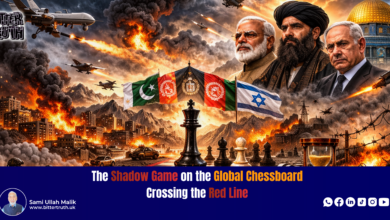
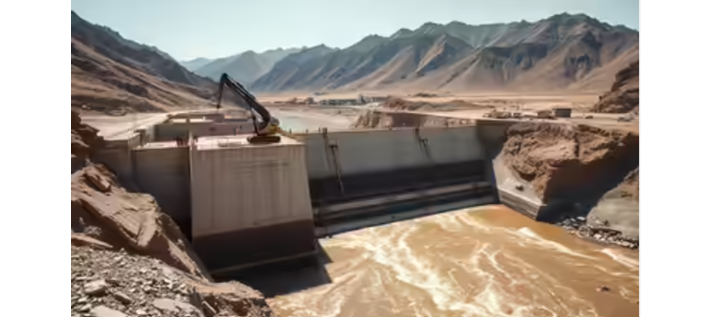
Pakistan’s perennial foe—Modi—has, through cunning manoeuvres, enticed your regime with promises even to reroute the waters of the Kabul River, proffering a bargain of a billion dollars to alter nature’s course. In entering into such transactions, in joining hands to thwart the natural order, what account will you render? The very man who has suffered ignominy at the hands of history now prepares to marshal drones and munitions upon your soil, to use your shoulders and your plains as a shield and a proxy for his retaliatory designs. He who cannot protect himself would make you his bulwark; he who would shepherd you into blind ravines schemes only to profit from your fall. This is no abstract stratagem — it is a conspiracy calculated to inflict grievous harm upon two Muslim nations.
There remains yet time to recover return, I say, and remember that the peacemakers on both sides still raise their voices in supplication before the Allah SWT for the gift of security and concord.