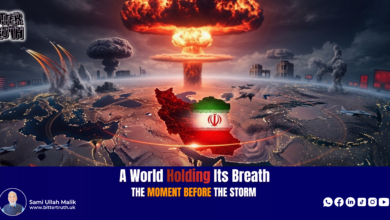

Gunpowder and the Lamp of Reason
From Water to Gunpowder

Shadow over the Subcontinent: A Reflection on Conflict and Conscience
The soil of the Indian subcontinent, ancient and venerable, bears upon its bosom the imprints of countless marching legions—empires risen and fallen, ambitions writ in steel and blood. At times, the clangour of the blade tore through the serene fabric of peace, while on other occasions, the quiet majesty of the spoken word averted the tempest of war. Today, as history once again stands poised at a fateful bend, the question looms: do the crimson shadows of yesteryear threaten to descend upon our present once more?
The simmering tension between India and Pakistan is not merely a regional quarrel; it is a persistent menace to the stability, progress, and very survival of South Asia. In the aftermath of the Pahalgam false-flag operation, the contours of the current balance of power stand starkly revealed. India finds itself mired in internal tumult, and Prime Minister Modi, true to form, appears once again to be scripting a grand narrative of external menace—casting Pakistan and China as lurking phantoms—in a bid to rally nationalist fervour and clinch electoral triumph. In doing so, he toys perilously with the volatile tinder of war, turning this blessed land into a theatre of potential cataclysm.
One must ask: what spectre does the future hold? This is no mere conjecture but a pursuit of historical and documentary evidence—an effort to place before the discerning reader a canvas painted with truth, not tribal prejudice. History, though often soaked in the crimson ink of sacrifice, offers on every page the quiet counsel of peace. While current rhetoric and manoeuvres from both capitals emit the acrid whiff of enmity, it would be premature to declare war a certainty. Yet, the clouds of confrontation gather—slowly, ominously.
Is another clash between these two nuclear-armed nations imminent? Common sense, that oft-silenced voice, declares war to be no game. It is not the duelling of sabres but a judgment upon the fate of two civilisations—their economies, their cultures, their collective souls. The scent of gunpowder hangs heavy in the air, much like hidden currents below a seemingly placid stream. And if Prime Minister Modi surrenders reason at the altar of populist vengeance, the descent into conflict may no longer remain a distant hypothesis.
The poet Iqbal, with prophetic melancholy, once mused:
سفینۂ اُمید کو ساحل نہ ملا، شاید
کہ موجِ حوادث سے کوئی طوفان نکلے
“Suffeenah-e-umeed ko saahil na mila, shayad
Ke mauj-e-hawaadis se koi toofaan nikle.”
“Perhaps the ship of hope found no shore, for fate itself may yet unleash a tempest.”
The incendiary rhetoric from New Delhi prompts an unavoidable inquiry: is India preparing to avenge its perceived humiliations? The evidence is manifold—political declarations steeped in hubris, soaring defence expenditures, and arms deals with Israel and the United States. These are not the gestures of a nation seeking conciliation, but of one intoxicated by the dream of regional hegemony. History teaches us: when wounded pride eclipses prudence, nations have often marched blindfolded into the abyss.
India’s posturing, its alliance with foreign war-mongers, and its unrelenting provocations suggest a dangerous eagerness to gamble once again with peace. As a poet once said:
جفا جو عشق میں ہوتی ہے وہ جفا ہی نہیں
ستم نہ ہو تو محبت میں کچھ مزا ہی نہیں
“Jafaa jo ishq mein hoti hai woh jafaa hi nahin,
Sitam na ho to mohabbat mein kuch maza hi nahin.”
Cruelty in love is no cruelty at all; for what is affection without the thrill of suffering. Yet, national honour demands that Pakistan remain vigilant, prepared, and steadfast—ever committed to peace, but never mistaken for weak.
President Donald Trump, ever eager for laurels, proudly proclaimed that he had averted nuclear war in South Asia through timely intervention—offering the twin lures of trade and diplomacy. But was it truly his outstretched hand, or was it rather the terrifying nearness of the precipice that sobered the actors? What transpired was no ordinary skirmish—it was a terrifying brush with atomic devastation. One misstep, one misjudgement, could have consigned millions to the ash-heap of oblivion. Diplomacy doused the flames, but in the embers, a deadly heat still simmers.
This moment in history is not a mere footnote. It is a dark scar upon the forehead of mankind, a warning inked in dread. Were such madness to return, neither history nor humanity may live to bear witness. Both nations stood at the precipice, their arsenals cocked beneath the nuclear shadow. A moment of reckoning, no less. Yet how lamentable that so few heed the lesson, and so many stand ready to repeat the folly.
اُٹھ کہ اب بزمِ جہاں کا اور ہی انداز ہے
مشرق و مغرب میں تیرے دور کا آغاز ہے
“Uth keh ab bazm-e-jahaan ka aur hi andaaz hai,
Mashriq o maghrib mein tere daur ka aaghaz hai.”
“Rise—for the world now bears a new countenance,
From East to West, your era dawns anew.”
The global response—United Nations, America, China, Russia—all called for restraint. Yet their declarations bore the hollow ring of diplomatic niceties. The world may feign a desire to prevent this region from descending into fire, but rarely does it act with resolve. When Pakistan retaliated to Indian aggression, alarm bells rang from Washington to Westminster, and urgent calls for ceasefire echoed across capitals. And lo! The Kashmir dispute was once again paraded, like a weary lollipop offered to a child in distress.
When India hurls bombs, the world watches in silence—like spectators at a blood-sport, content to murmur “grave concern” from cushioned seats. Only allies like China, Turkey, and a handful of principled voices stood by Pakistan in the first moments of peril. Thus:
زمانہ کہتا ہے کس کا ہے یہ فسانۂ درد
کوئی نہیں جو کہے: ‘یہ انسانیت کا زخم ہے
“Zamaana kehta hai kis ka hai yeh fasaana-e-dard,
Koi nahin jo kahe, yeh insaniyat ka zakhm hai.”
“The world wonders whose tale of sorrow this may be—
None dare proclaim it is humanity that bleeds.”
The world had a duty to mediate, but too often, power weighs peace against profit. Should nuclear calamity strike again, the world may offer nothing more than condemnatory platitudes—while corpses rot in Lahore and Delhi alike. But the poison will not halt at Wagah; it will ride the winds to London, New York, and Moscow.
نہ ہو طُغیانِ شمشیر و سناں میں کچھ اگر پیدا،
فقیری میں بھی ہے اک شانِ قیصری پنہاں
If no architecture for peace arises from this peril,
Then mankind’s dignity shall too be buried in dust.
The Second Shadow: A Storm Yet to Come
If, God forbid, the spectre of nuclear war should rear its head once again, then the world’s silence shall not merely be negligence, but an unforgivable moral complicity. The time has passed for perfunctory expressions of “concern”; what is now required is deliberate, resolute action. The hour compels the global conscience to make its choice — whether to continue as passive spectators or to awaken their moral compass and stand guard over the sanctity of peace.
Water — that ancient emblem of life — has now, in some quarters, been weaponised into a tool of silent siege. India’s breach of the Indus Waters Treaty stands not only as a violation of a legal pact, but as a calculated assault upon Pakistan’s agriculture, economy, and sovereignty. When the sacred flow of life is halted, it is not mere politics — it is sacrilege.
درِ نیل سے فرات تک، وطن کی یہ صدا ہے
کہ قطرہ قطرہ پانی بھی امانت ہے خدا کی
From the Nile to the Euphrates, the homeland whispers:
“Even a droplet of water is a trust from the Divine.”
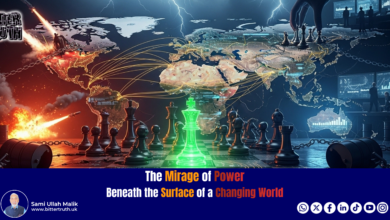
The question that echoes across the geopolitical hallways is this: shall the balance of power between India and Pakistan remain static, or are the winds of transformation already stirring? True might today is no longer measured in bayonets or battalions alone, but in national resolve, scientific advancement, economic autonomy, and civic coherence. The battlefield has extended far beyond the clang of steel; it now encompasses megabytes, banknotes, and media narratives.
Though India parades itself as a formidable regional force — boasting one of the world’s largest arsenals — this image belies an internal rot: widespread poverty, communal unrest, and social disrepair. According to the World Bank’s 2024 estimates, over 250 million Indians live below the poverty line. The UNFPA’s 2023 findings rank India among the highest globally for maternal mortality. UN AIDS data reveals over 2.5 million HIV cases, with entire villages living under the shadow of stigma — their gates marked with signs barring entry.
Meanwhile, over thirty active separatist movements — from Nagaland to Assam, from Manipur to Khalistan — undermine the illusion of Indian unity. It is an open secret that in some regions, the central government pays protection money just to run a railway line. What, then, is the true weight of military glitter, when it rests upon a fractured foundation?
فطرت افراد سے اغماض بھی کر لیتی ہے
کبھی کرتی نہیں ملت کے گناہوں کو معاف
Iqbal was prescient when he wrote:
“Nature may turn a blind eye to the sins of individuals,
But never does she forgive the transgressions of nations.”
India’s economic choices further betray its priorities. With a ballooning defence budget, New Delhi invests in Rafale jets from France, S-400 missile systems from Russia, and Harop drones from Israel — while millions of its own citizens lack clean water and basic healthcare. This is the true tragedy: a nation sacrificing nourishment at the altar of militarisation.
Warfare today is no longer a duel of swords, but a labyrinth of algorithms. Cyber war, AI-guided drones, satellite espionage, digital blackouts — these are the new phantoms of conflict. While India refashions its war doctrine around aggression, its real objective seems to be distraction — to divert global attention from its internal miseries and direct the spotlight towards an external adversary: Pakistan.
The Western military-industrial complex, meanwhile, does not view India as a partner in peace, but as a lucrative customer. From Lockheed Martin to Dassault Aviation, arms manufacturers do not thrive in the glow of diplomacy — they profit in the ashes of warfare. This is not a clash of civilisations, but a marketplace of militarism. And the product is devastation.
یہ عقل کا فساد ہے یا ہوس کی غلامی
سامان بارود کا ، روٹی سے بڑھ کر ہے
It is not wisdom, but the madness of greed,
That today values a missile more than a meal.
India’s Prime Minister Narendra Modi, in his bid to assume the mantle of regional hegemon, has chosen to pour vast national resources into arms deals and defence projects, rather than schools, hospitals, or rural development. With every Rafale order placed and every submarine acquired; the dreams of a hungry child are bartered for bullets.
And yet, in this morass of manufactured might, Pakistan must forge a path not only of preparedness but of prudence. It must respond not merely with weapons, but with wisdom; not solely with rhetoric, but with resolve. For the merchants of death — be they in Paris, Tel Aviv, or Washington — are less interested in borders and more in bottom lines. Their silence is not neutrality; it is complicity wrapped in commerce.
نہ ہو طُغیانِ شمشیر و سناں میں کچھ اگر پیدا،
فقیری میں بھی ہے اک شانِ قیصری پنہاں
Iqbal once more rings true:
“Even in ascetic poverty, there lies a hidden imperial dignity—
If only the soul be awake and the cause just.”
The Final Reckoning: In the Theatre of Shadows and Sovereignty
India’s belligerent enterprise against Pakistan transcends the crude mechanics of conventional warfare. What we are confronted with is a meticulously orchestrated hybrid war — a stealth offensive where media propaganda, cyber warfare, economic coercion, and diplomatic isolation are deployed not as isolated tactics, but as an integrated doctrine aimed at undermining Pakistan’s global standing and sowing seeds of internal disarray. It is, if one may say so, warfare by other means — waged not with muskets and mortars, but with misinformation and Machiavellian maneuvering.
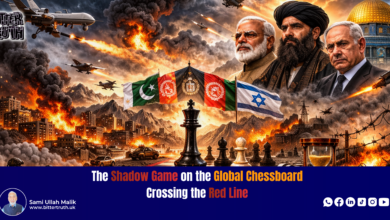
In the latest Indo-Pak confrontation, Israel has emerged not as a bystander but as a participant — actively engaged on India’s side through the deployment of Harop drones and precision-guided missile strikes. These actions constitute, in essence and in intent, acts of aggression. It is imperative that Israel’s allies and the international community at large take heed: Pakistan interprets such intervention as a direct assault upon its sovereignty. In such circumstances, not only does Pakistan retain the legitimate right to self-defence under international law, but the honour of the Muslim world, too, demands a resolute and calibrated response.
Should the world avert its gaze in apathy, it must be prepared to pay the price of its silence.
ہزاروں سال نرگس اپنی بے نُوری پہ روتی ہے
بڑی مشکل سے ہوتا ہے چمن میں دیدہ ور پیدا
“For a thousand years the narcissus weeps at its own darkness,
Only then is the garden graced by a visionary.” — Iqbal
Both India and Pakistan are nuclear powers — a sobering reality that casts a long shadow over South Asia. If Indian aggression and covert interference remain unchecked, what begins as low-intensity conflict could spiral into a full-scale war — a cataclysm the consequences of which would reverberate far beyond the subcontinent.
The Charter of the United Nations is unequivocal: no state may violate the territorial integrity or political independence of another. It is high time the United Nations initiated independent, transparent investigations into India’s activities, and imposed sanctions commensurate with the gravity of its offences.
Further, sustainable peace in South Asia necessitates the impartial engagement of major world powers —the United States, the United Kingdom, China, and Russia — not as partisans but as arbiters. These nations must abandon the hypocrisy of selective morality and embrace a foreign policy anchored in justice, not convenience.
If the world claims to stand against terrorism, it must also stand — with equal fervour — against state-sponsored terrorism. The hour is ripe for Pakistan to shed its reactionary posture and adopt a proactive grand strategy — one that encompasses not just military preparedness, but intellectual resilience, economic autonomy, and moral clarity.
Our adversary wages war not only on our borders but in our waters, our discourse, our economy, and our very consciousness. Our answer must be equally multidimensional: not merely with bullets, but with books, brains, and truth.
Should Pakistan present its case with eloquence and evidence on global platforms, it may succeed in awakening the conscience of the international community to the stark realities of Indian aggression — both military and hydrological. The day India’s internal decay begins to corrode its façade of might, the world shall be compelled to reconsider its silence.
Pakistan must embrace wisdom in policy-making, without ever compromising its vigilance in defence. Knowledge and economy are the twin pillars upon which the citadel of future strength must be built. Let diplomacy be not a ritual, but a reasoned and resonant voice — articulating to the world that India is not the guardian of peace in the region, but its gravest threat.
As of now, Western powers — the U.S., the U.K., and France — have confined themselves to anodyne statements. Russia’s conspicuous neutrality, too, is not without cause — India remains a primary buyer of Russian arms, and amidst the Ukraine conflict, a major recipient of Russian oil. This economic entanglement has bred a silent complicity, camouflaged as neutrality.
In such a geopolitical theatre, Pakistan must rapidly enhance its intellectual, scientific, and diplomatic capabilities. The answer to Indian military adventurism lies not only in a robust defence mechanism but in ideological resilience, economic stability, and recourse to international law.
It is imperative that Pakistan unmasks Indian falsehoods in the media and diplomatic sphere, countering every fiction with a fact, every narrative with nuance. The national discourse must evolve beyond mere militarism, rooted also in education, ethics, and epistemology — so that the remarkable unity displayed by the Pakistani people in the face of recent crises becomes not a fleeting moment, but a sustainable civic ethos.
افراد کے ہاتھوں میں ہے اقوام کی تقدیر
ہر فرد ہے ملت کے مقدر کا ستارہ
“The fate of nations lies in the hands of their individuals;
Each citizen is a star in the destiny of his nation.” — Iqbal
Where drums of war are heard, the voice of peace must be louder still. The international community must convey an unambiguous message to Indian leadership to lay down the dogma of hate and embrace the light of reason. If India continues on this bellicose path, history’s pen shall not pardon it, nor shall posterity.
The reckoning must not be rhetorical; it must be real — in the form of global sanctions and diplomatic censure so stern that India shall never again dare to trample upon the peace of nations.
Let us not be deluded: to expect peace or enlightenment from a regime that suppresses its own people’s hunger, poverty, disease, and dissent with bullets is to court a cruel illusion. Such a state, deaf to the cries of its own citizens, cannot be expected to heed the call of justice abroad.
جس قوم کے فقیہ کی معراج ہو سیاست
وہاں نہ علم بچے گا، نہ عشق، نہ حکمت
Where theology serves tyranny,
Neither wisdom, nor love, nor learning shall survive.
Recommendations in the Interest of Peace and Principle:
• The international community must demand an independent investigation into India’s state-sponsored terrorism.
• The United Nations must impose sanctions on India for its violations.
• The truth must be projected globally, countering misinformation with clarity.
• Pakistan’s diplomatic machinery must be revitalised, restructured, and redeployed with vigour.
• An international peace summit must be convened to restore calm in South Asia.