From Notion to Nation: Pakistan’s Quiet Leap
Silent Wings, Sovereign Will

The theatre of modern warfare has ascended—quite literally—from the smouldering chaos of cannon and musket to the ghostly grace of invisible waves, silent wings, and the clandestine brilliance of artificial intelligence. In an era where nations no longer contend solely over cartographic frontiers but rather assert dominance amidst the vast expanse of the skies, the contest for aerial supremacy emerges not merely as a military imperative, but as a profound declaration of civilisational consciousness, political foresight, and philosophical maturity.
Gone are the days when the outcome of war hinged upon the sheer number of soldiers. Those epochs gave way to times when the nature of weaponry redrew the balance of power. Today, we have entered an age where victory resides in the unseen — in the spectral potency of that which evades the eye but strikes with precision. This, indeed, is the ethos of the fifth-generation stealth fighter jet: aircraft that remain concealed while seeking and destroying with impunity. They are not merely instruments of war, but embodiments of a new martial philosophy — an art of invisibility whose silence is its very signature.
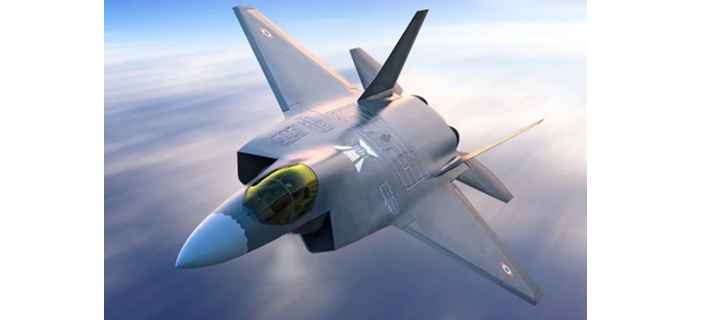
The recent aerial undercurrents between Pakistan and India are no longer the clamour of clashing swords, but the muted advance of those deadly “silent assassins” — the stealth-clad birds of prey that elude radar and rob adversaries of sleep. The J-35 jets offered by China to Pakistan are not just weapons of war; they are strategic metaphors — capable of delivering death unseen and altering the doctrine of defence without firing a shot in anger. These aircraft whisper a new truth into the wind: that silence, too, can speak volumes.
China’s offer of the J-35 is, on the surface, a military transaction. Yet beneath that pragmatic exterior lies a resonant echo of diplomatic fraternity — a message inscribed in the high winds over the Himalayas: we stand with you, not merely upon the battlefield, but in the heavens above. This is not merely the provision of technology; it is the affirmation of a friendship burnished by time and tempered by trust.
The recent four-day exchange of fire across the Line of Control was more than smoke and shelling — it was an unspoken communiqué, a whispered but unequivocal message: we are prepared; tread carefully. No longer do battles culminate in trenches and turrets. They unfold now on the polished surfaces of diplomatic tables, where files become fortresses and declarations assume the lethality of missiles.
Thus, China’s offer of the J-35 emerges as more than an armament deal — it is a strategic declaration, a civilisational proposition. The veiled message reads loud and clear: We are your defence partners, not just in rhetoric, but in resolve. The J-35 is not merely a machine; it is a harbinger of a new aerial paradigm for Pakistan, one that reshapes the horizon of deterrence.
To interpret this gesture solely as a matter of commerce is to fall prey to political naïveté. China’s timely and pointed proposal signifies not transactional convenience, but a subtle signal — a token of a friendship so steeled by history that it may well be called fraternal iron. The aircraft stand as both technological marvels and philosophical turning points in Pakistan’s evolving strategic consciousness.
The echoes of those four days’ engagements were not limited to the airwaves; they reverberated within the chambers of international diplomacy. These were not mere battles — they were diplomatic wails, seeking not merely to pierce the sky, but the conscience of the global order. The United Nations, long deaf to quieter crises, heard a different pitch: one of restrained preparedness laced with latent power.
Both nations now recognise that victory lies not only in troops, but in technology. Hence, the strategic equation between Pakistan and India has been redrawn — one in which aerial sophistication holds the upper hand. Perhaps nothing encapsulates this shift more than the Indian Chief of Defence Staff’s candid admission to foreign media: “Numbers don’t matter; reasons do.” This was more than a statement — it was a philosophical capitulation. Not merely a confession of failure, but an awakening to the futility of arrogance.
For when General Anil Chauhan finally addressed the downing of Indian aircraft, it was not a mere recounting of events — it was, in essence, a self-indictment of flawed strategic hubris. The crucial question — “Why were they shot down?” — demands not numerical analysis but intellectual introspection.
One must also recall the sobering voice that preceded the skirmish — the published view of a serving Indian general in The Hindu newspaper. His words remain etched as a moral compass amid the fog of war. General Manoj Mukund Naravane’s measured warning bore the weight of wisdom: “War is no romance; it is not a Bollywood fantasy. It brings ruin, suffering, and the death of innocents. It must remain the last resort, once diplomacy has failed.”
Alas, Prime Minister Modi, consumed by his own theatrical nationalism, wagered lives and stability for electoral spoils in Bihar — orchestrating the Pulwama false flag as a cruel gambit for domestic triumph.
But one calculated strike by the falcons of Pakistan — by its sentinels of land and sky — stripped the mask from the so-called butcher of Gujarat, exposing him to the raw, unyielding dust of geopolitical reality. The echo of that moment still resonates across chancelleries and command rooms alike.
In those fateful days of May, when both nations rumbled in aerial confrontation, the air was not filled solely with the acrid sting of gunpowder — it carried also the dirges of history. And those who listened heard not just recriminations, but the murmurs of wars yet to be waged — battles of narrative, of deterrence, and of civilisational poise.
The Silent Theatre of Skies: A New Geometry of Power and Perception
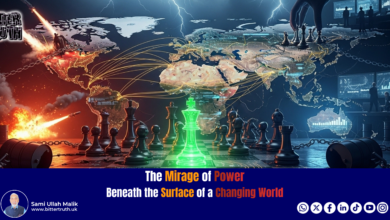
The cannons, once aimed squarely at the enemy’s manoeuvres, now pivot towards a new frontier — the chessboard of aerial supremacy. It is no longer sufficient for a nation to defend; it must transcend — leap not merely across generations of warfare but vault into realms that outpace rivals and arrest the admiration of allies. Today, the strategic discourse of the world finds itself gravitating skyward, where the race for air dominance unfolds not just as a matter of tactical necessity, but as a reflection of civilisational consciousness.
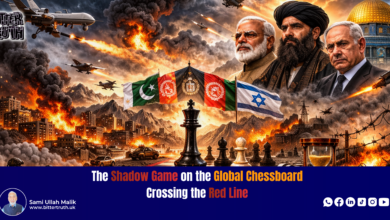
We now inhabit a time when the war in the skies casts a profound silhouette on the temperaments and ideologies of nations below. India, in a proclamation of strategic independence, signals its intent to indigenously craft fifth-generation fighter jets — even as it weighs the acquisition of cutting-edge American or Russian aviation technologies. By contrast, Pakistan appears poised to embrace China’s offer of stealth fighters — a gesture that transcends the realm of mere military commerce and enters the arena of global realignment.
This is no ordinary moment; it is a crossroads where the direction of civilisations is charted. Should India tilt towards Moscow, it will find itself among eastern alliances. Should it incline towards Washington, it shall nestle beneath the canopy of the West. Thus, the procurement of aircraft is not a mere technical transaction — it is a declaration of civilisational affiliation.
But what, then, are these so-called “silent assassins” — these fifth-generation stealth fighters that have captured the strategic imaginations of powers from East to West? They are, in essence, ghosts of the firmament — unseen, untraceable, unchallenged. Their very design renders them immune to traditional radar, their movements more whisper than roar. These jets do not wage war; they orchestrate it — with the finesse of a conductor guiding an unseen symphony of supremacy.
A fighter jet qualifies as “fifth-generation” when it embodies five cardinal virtues: stealth, super cruise, networked warfare, multi-role adaptability, and sensor fusion — a synchronisation so intricate, it mirrors the coordination of the human senses coalescing into unified cognition. Above all, stealth earns its name only when an enemy is struck before it even beholds the adversary’s approach — a victory of invisibility over anticipation.
Its first virtue, stealth, renders the aircraft a phantom — cloaked from radar, shrouded from surveillance, elusive to all detection systems. The second, super cruise, enables flight at velocities beyond the speed of sound, sustained over great distances with remarkable fuel efficiency. The third, its avionics and sensor fusion, unites diverse data streams into a coherent, singular operational consciousness. The fourth again — super cruise, this time emphasising the swift and fuel-economical delivery of lethal strikes. And the fifth: network-centric warfare — wherein the aircraft is not a solitary predator, but a node within an aerial web, intimately linked with drones, satellites, radars and ground forces alike.
At present, only a handful of nations command such winged phantoms. The United States boasts the F-22 Raptor and F-35 Lightning II; Russia unveils the Su-57; and China parades its J-20 and J-35. Others — the United Kingdom, Italy, France, Germany, Japan, Turkey, and Spain — strive to birth their own contenders: the Tempest, the FCAS, the KAAN. Yet it is the joint Sino-Pakistani endeavour, proven amidst recent Indo-Pakistani hostilities, that has vaulted Pakistan not merely to aerial prowess but to the annals of technological legitimacy.
According to international media, Pakistan has achieved more than battlefield resilience — it has orchestrated a diplomatic coup. The acquisition of the J-35, the HQ-19, and the KJ-500, along with deferred loan repayments and favourable terms from Beijing, speak of a deeper, long-term strategic calculus. Under the leadership of Prime Minister Shehbaz Sharif, such negotiations point not to momentary gain, but to a grand vision: one where military alignment, economic foresight, and diplomatic acumen form the trinity of national ascendancy.
These are not achievements forged on the battlefield alone, but at the negotiation table — with words as precise as missiles, and alliances as consequential as arsenals. The deferment of $3.7 billion in Chinese loans is not simply an economic reprieve; it is a symbol of strategic trust, a testament to the steel-bonded brotherhood of Islamabad and Beijing.
Indeed, Pakistan’s overt interest in Chinese military technology has rippled beyond defence — it has shaken the financial markets of Beijing into buoyant optimism. The AVIC (Aviation Industry Corporation of China) — long the silent giant of Eastern defence — surged with a jolt of vitality, ignited by Pakistan’s declared intent. A tremor in military preference became a quake in economic confidence. And in that tremor lies a message to the world: the axis of military dependency is tilting — from West to East.
When shares in Shenyang Aircraft Corporation soared by 9.3%, it was not merely a stock market statistic; it was a revelation — that warcraft now breathes life into capital, and stealth technology moves not only through the stratosphere but through the bloodstream of global finance. Defence, in our age, is not confined to trenches and tarmacs; it is entwined with the heartbeats of markets and the nerves of nations.
Of Silence Broken and Sovereignty Proclaimed: The Stealth Epoch Unveiled
Though whispers had lingered for years, it was only with the solemn pronouncement of the Pakistani state—at once firm and unflinching—that rumour was given robe and crown, and conjecture transfigured into commitment. A new chapter has thus been opened; a nation long vigilant, yet silent, now declares its resolve with unwavering clarity: the silence has been lifted, the veil cast aside. The pursuit of stealth technology—once a distant ambition—is now a sovereign imperative.
But what, one must ask, renders this technology so singular, so epochal? Why does stealth—so often spoken of in hushed reverence—command such pre-eminence in the theatre of modern warfare?
The answer lies not merely in aeronautics, but in the transformation of war itself. No longer fought amidst mud and trench, today’s battles are waged in the unseen realms of sensors and screens, in the quiet intelligence of data streams and digital ghosts. Stealth is not the art of aggression, but of disappearance—of deceiving the eye that sees, and eluding the strike before it is cast. To fly without stealth, in this new age, is to wage war with a lantern in hand and folly in heart.
This is not a technical curiosity—it is the inquiry of our time. These aircraft, draped in shadows, elude not only radar but reason. They strike before the enemy even thinks to defend. They do not simply fly through the air—they converse with it, become one with it, and render themselves inaudible to the very adversary they vanquish. In the calculus of contemporary conflict, visibility is death; concealment, victory. Stealth is not simply an advantage—it is the grammar of survival.
At present, only three great powers—America, Russia, and China—have mastered this rarefied discipline. These are not merely military titans, but nations whose political tongues weigh heavy upon the world’s deliberations. And now, others follow—Britain, Europe, Japan, Turkey—all forging the foundations of an aerial hegemony not yet dawned. The Tempest, the FCAS, and Turkey’s KAAN project signal not only technological ambition, but a struggle for narrative and prestige in the age to come.
Among Muslim nations, Turkey alone has pierced this veil, its drones now sought even by Moscow and Beijing. A new century’s dominion is being drawn not with swords or treaties, but with the hum of jet engines and the shimmer of electromagnetic silence.
In the coming age, war shall descend as an unseen storm—no thunder heard, no lightning seen— yet villages shall vanish in its wake. For nations like Pakistan, the acquisition of such capacity transcends the martial; it becomes a declaration of cultural dignity, of strategic autonomy, of existential necessity. In a region where a vainglorious neighbour rattles sabres and utters threats cloaked in arrogance, Pakistan’s resolve must be more than rhetorical—it must be material, manifest, and modern.
The interest in the Chinese J-35 is not an act of procurement; it is a leap toward self-sufficiency, a gesture akin to the partnership that gave birth to the JF-17 Thunder. Today, China’s J-20 and J-35 stand as formidable, cost-effective alternatives to America’s F-22 Raptor or F-35 Lightning, or Russia’s Su-57. And Pakistan, in considering them, casts its eye not merely on the skies, but on the arc of its future.
For these fifth-generation aircraft are not weapons merely—they are pre-emptive doctrines made flesh. They do not wait to repel the enemy; they seize him mid-flight, blind and bewildered. They bring with them not just firepower, but a psychological shroud, cloaking intentions and capabilities until it is too late to resist. In the recent Indo-Pak conflict, it was precisely this philosophy—strike unseen, strike first—that rendered India’s vaunted Rafales and Sukhoi’s impotent upon their own soil.
The moral of the modern battlefield is stark: he who is seen shall fall; he who remains hidden, shall endure. Stealth, like the solitude of a prophet’s cave, works not by noise, but by presence veiled in silence.
The wars of tomorrow may not require a pilot’s hand—only a machine’s mind. Autonomous aircraft, armed with artificial intelligence, shall find their mark unaided, evade detection, destroy, and return. There will be stillness in the sky, but ruin upon the earth. And no trumpet shall herald the attack, for the blow shall land before the bell is rung.
Pakistan’s intent to procure the J-35 is not a mere acquisition—it is a strategy inscribed in steel and silicon. It is a confluence of defence, diplomacy, and development. It is an entry not just into the battle, but into the narrative that shapes the battle’s meaning.
Whether Pakistan emerges as a bystander in this unfolding aerial epoch or as a protagonist will be revealed in time. But let it be known when a nation raises its intellect, its artillery fires with wisdom, and its silence becomes the echo of calculated might.
Thus, let us not behold aerial warfare as mere conflict—but as a dialogue between civilisations, spoken in the hush of wings and the grammar of deterrence.