From Cradle to Crisis: How Western Policy Fuels Africa’s Exodus
The Price of Exploitation: Migration's Tide

The Unfolding Paradox: Europe’s Migration Predicament and the Scars of Exploitation
Europe’s recent recourse to force in stemming the tide of migration, while seemingly a pragmatic solution, distracts from a more profound and enduring challenge: the relentless policy of economic exploitation that underpins this exodus. The burgeoning trend of migration from Africa is not a capricious phenomenon; it is, rather, a direct consequence of the unbridled exploitation of the continent’s vast resources. It has become imperative that this insidious trend be arrested.
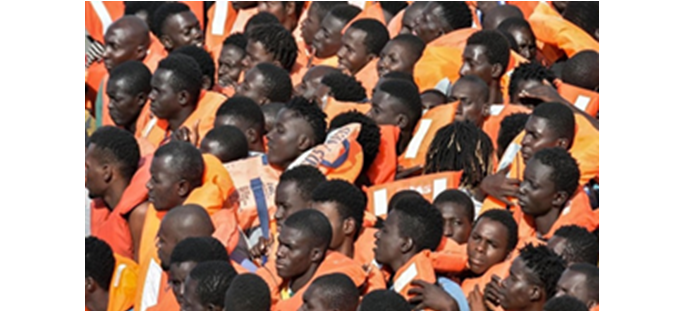
On January 17th, the Italian Parliament sanctioned the deployment of 470 troops to Niger, an African nation, with the explicit objective of curbing the flow of Nigerien citizens to Libya, from where they typically embark upon the perilous journey to Europe. This strategy has found echo in similar measures adopted by France, Germany, and Spain, indicative of a collective European struggle to devise alternative means of curtailing this demographic shift from Africa.
The resort to force in managing African migration is neither unprecedented nor an overnight development. It is the culmination of extensive deliberation within European intellectual circles, the subject of voluminous discourse, and the focus of numerous policy proposals formulated by various think tanks. The current endeavour is to physically obstruct African populations from reaching European shores. While governments have acted on the counsel of informed opinion, the outcomes of these measures have been, at best, mixed.
The migratory flow from Africa to Europe is a multifaceted phenomenon, propelled by the interplay of non-governmental organisations and, regrettably, the pervasive influence of organised criminal networks. This intricate web operates with disturbing efficiency. Europe’s attempts thus far to confine Africans to their native lands, though ostensibly well-intentioned, have demonstrably failed to yield lasting or positive effects. The very architecture of African economies, marked by an acute scarcity of opportunities, compels its populace to cast their gaze and aspirations towards more developed regions. A structured framework for the judicious utilisation of natural resources is conspicuously absent, while political stability remains a fleeting illusion. The recurring specter of political upheaval often manifests in a horrific maelstrom of violence, leaving citizens with little recourse but to contemplate escape from their homelands.
The efforts undertaken by European powers to curb African migration, while perhaps yielding some short-term gains, offer negligible long-term advantages. The present and future generations of Africa demand extraordinary interventions across their economic, political, and social fabric. Regrettably, such initiatives remain largely absent, and it is self-evident that desired outcomes will remain elusive until they are implemented. Many African nations are endowed with immense oil and gas wealth, with Nigeria standing as a pre-eminent example. A single major oil block in Nigeria, situated in a coastal region, holds an estimated nine billion barrels of oil. This same coastline bore witness to the horrific forced passage of twelve million enslaved Africans to the Americas in the fifteenth century and, remarkably, served as the primary departure point for the largest influx of migrants to Italy in 2016. Nigeria, it must be remembered, is Africa’s most populous nation.
European oil and gas conglomerates have invested billions of dollars in extracting Nigeria’s hydrocarbons. Yet, despite this colossal investment, Nigeria grapples with profound public health crises. Were European powers to allocate even a fraction of their extractive investments towards public health initiatives, the Nigerian populace could breathe a collective sigh of relief, finding greater solace and viability in their homeland. The absence of robust state structures and pervasive transparency ensures that the ordinary citizen derives little benefit from these lucrative oil and gas deals. Instead, the dividends of these arrangements are largely siphoned off by a select coterie of bureaucrats, politicians, and money launderers, leaving the lives of the Nigerian people largely unaltered.
It is an undeniable truth that institutions of wealthier nations are, in essence, devouring the natural resources of poorer countries. The OPL 245 oil block in Nigeria, for instance, serves as a stark illustration. Revelations from the Panama Papers have unequivocally demonstrated the pivotal role played by numerous entities, operating on behalf of major American and European corporations, in the unconscionable parcelling out of natural resources from Africa and the impoverished nations bordering the Mediterranean. Fuel, gold, and gas have been extracted with a rapaciousness that borders on outright plunder.
The prevailing notion that Europe is a benevolent and magnanimous host, readily embracing refugees from distressed nations, demands immediate debunking. While Europe grapples with the complexities of accommodating millions of refugees, one cannot ignore the undeniable truth that Europe itself has played a pivotal role in exacerbating the very conditions that compel such mass displacement. Furthermore, other pressing issues demand a similar degree of focused attention.
Europe must step forward with comprehensive and robust assistance for Africa’s impoverished nations. On one hand, the European Union must dismantle its trade barriers to African goods, while on the other, it must desist from the indiscriminate accumulation of Africa’s raw materials. The benefits Europe has accrued from Africa must now be redirected towards the continent’s suffering populations, millions of whom subsist in abject poverty. A fundamental restructuring of African economies is imperative to pave the way for sustainable development, thereby elevating the general standard of living and empowering individuals to lead more fulfilling lives. Paramount attention must be directed towards ensuring the sustainable development of Africa’s most disadvantaged nations.
A Shared Responsibility: The Arab Role and the Scars of Conflict
Beyond Europe’s immediate purview, the affluent Arab states also bear a significant responsibility in fostering opportunities for a better life for the peoples of Africa, particularly North Africa. Nations such as Saudi Arabia, Qatar, Kuwait, the United Arab Emirates, and Bahrain must now step forward and play their part in this crucial endeavour.
The ongoing fighting in Syria and Yemen has now stopped. Syria is once again busy in its struggle to regain its lost position in the international community. The war in Yemen has also stopped, but the division of groups still remains. Arab countries must play their full role to improve the situation in these two countries. Arms shipments are being sent to this region from Europe. The Balkan region is prominent in this regard. If the region, including Syria and Yemen, is to be truly peaceful, it is necessary for Saudi Arabia, Kuwait and other wealthy and influential countries to play their role. Until the fighting in these two countries ends, the number of refugees will not decrease. After 9/11, George Bush Jr., acting extremely unjustly, targeted Afghanistan and Iraq and devastated both countries. Since then, terrorism has not stopped in both countries.
Afghanistan, already a fractured state, saw its devastation amplified manifold after 9/11. Iraq, conversely, was by and large a nation enjoying a fragile peace until George W. Bush Junior, in concert with European allies, reduced it to rubble. The heart-breaking consequence was the transformation of a thriving nation into desolate ruins. Iraq’s undoing, in turn, paved the way for Libya’s tragic collapse, thereby expanding the arc of instability across the Middle East and simultaneously igniting a cascade of misfortunes across North Africa.
The Demographic Imperative: Investing in Africa’s Future
The pervasive underdevelopment and myriad afflictions plaguing Africa are stark. Given Europe’s geographical proximity, the migratory currents are bound to intensify in the coming decades. With Africa’s current population standing at 1.2 billion, projected to surge to 2.5 billion by 2050, the failure to address endemic poverty and to bolster nascent economies will inevitably perpetuate this mass exodus to Europe, giving rise to unending human tragedies. A compounding factor is Europe’s own declining birth rates.
Indeed, most European nations face the daunting challenge of shrinking populations. While Europe may find itself compelled to employ ever greater force to stem the flow from North Africa, this is far from the facile solution often posited. Europe’s paramount imperative must be to cease the unbridled appropriation of Africa’s natural resources. Currently, numerous European entities are exploiting African wealth with a brazen disregard, fostering a deeply unsettling sentiment among Africans: that migration is their only recourse towards those who have, paradoxically, contributed to their plight. Europe must significantly increase its investment in Africa and, simultaneously, open its markets to African goods, thereby enabling African economies to flourish meaningfully. For when economies strengthen within Africa and its people are afforded opportunities for a dignified life, their inclination to seek greener pastures elsewhere will naturally diminish.
Concurrently, Europe must address the ceaseless flow of armaments into conflict-ridden nations in the Middle East and North Africa, particularly halting the provision of weapons to the warring factions in Yemen. Furthermore, millions of Africans are displaced annually due to the escalating impact of climate change, seeking refuge in Europe. While six billion Euros have been earmarked to address this, these funds must be judiciously allocated towards seeking lawful and amicable solutions. This demands a pivot from mere crisis management to proactive crisis prevention. A truly effective deterrent to African migration lies in creating circumstances that render relocation unnecessary – to offer them the most promising prospects within their own homelands.
Rethinking Perceptions: A Call for Empathy and Historical Awareness
A profound and fundamental issue lies in the pervasive portrayal of the Middle East and Africa as inherently backward and barbaric societies in contrast to Europe. This perception is profoundly misguided. If a region lags in development, it is incumbent upon the international community to offer assistance rather than cast aspersions of backwardness. Labelling these societies as savage or ignorant will only exacerbate existing tensions. A fundamental shift in mindset is required. Talented regions must receive maximum support, enabling them to participate in global development and contribute to making this world a more habitable place for all.
The policy of European isolationism must be abandoned. While Europe has achieved unparalleled progress, much has been conveniently forgotten. There is a pervasive illusion that Europe has existed in its current advanced state for millennia; this is simply not the case. Numerous countries in the Middle East and Africa were once epicentres of knowledge and art. There was a time when Europe was steeped in darkness, while the Middle East shone brightly as a beacon of learning and artistic endeavour. This historical truth cannot, under any circumstances, be ignored. Five centuries ago, Europe too was shrouded in the darkness of ignorance. Europe must alter its demeanour, shedding the notion of its inherent superiority and the concomitant belief that all others are inferior and unlettered. When casting a disdainful eye upon weaker regions, it would do well to remember that they themselves were once in a similar plight, and that such a time is not so very long ago in the grand sweep of history.