Borders, Conscience, and the Tragedy of Political Faith
The Mirror of Time and the Trial of the Ummah

The Doha Discourse: A Historical Meditation
This writing is both an inquiry and a declaration — a deliberate confluence of research and reflection. Its purpose is not merely to recount events, but to capture their resonances — the tides of meaning, the echoes of history — within the cadence of prose, to render not a chronicle but a tableau. In this study, we shall unfold the moments of the Doha negotiations, the utterances of the Taliban leadership, and the subtle tremors of Pakistan’s national sensibility within a contemplative frame of thought.
When the destinies of nations are inscribed upon the tablet of history, it is not mere words that speak, but eras themselves. These are the moments when the conscience of the Ummah passes through its trial — when every utterance becomes a trust, and every promise a covenant. The Doha dialogue was such a moment: where the wounds of the past, the anxieties of the present, and the fragile hopes of the future gathered upon a single table. Beneath the banner of Islamic fraternity, the conversation gave birth not only to political fervour but to a stirring within the intellectual soul of the Ummah.
It was, in truth, a test of unity, sincerity, and fidelity — a crucible wherein history herself stood as judge. As the Holy Qur’an reminds us:
وَاعْتَصِمُوا بِحَبْلِ اللَّهِ جَمِيعًا وَلَا تَفَرَّقُوا
“And hold fast, all together, to the rope of Allah, and be not divided.” — (Āl ʿImrān 3:103)
The border that divides Pakistan and Afghanistan — the Durand Line — remains one of South Asia’s most consequential yet contested frontiers. It was drawn in 1893 through an agreement between the British Government of India and Amir Abdur Rahman Khan of Afghanistan. This boundary, more than a line upon the map, has long cast its shadow upon the politics of the region, shaping the destinies of tribes, the temper of diplomacy, and the very grammar of geography itself.
From the moment of its conception, the Durand Line carried within it the seeds of discord. Its legal status, its demarcation, and the socio-political fractures it engendered have remained a source of contention between Kabul and Islamabad. Historical records and international archives affirm its existence; yet, successive Afghan regimes have, at various junctures, sought to challenge its legitimacy.
To comprehend its genesis, one must return to the twilight of the nineteenth century — an age dominated by the Great Game between the British Empire and Tsarist Russia. In that grand contest for influence across Central Asia, Afghanistan emerged as a buffer state — a living rampart against Russian advance toward the jewel of the British Crown, India. Its eastern boundaries were, at that time, fluid, uncertain, undefined — the frontier not yet a line but a zone, a breathing expanse of tribal autonomy and imperial intrigue.
It was in this crucible of empires that Sir Mortimer Durand, Foreign Secretary to the Government of India, journeyed to Kabul. On the 12th of November 1893, he concluded an accord with Amir Abdur Rahman Khan — an agreement that would carve the mountains and deserts of the frontier into the neat geometry of empire. The Durand Agreement thus established a formal boundary between Afghanistan and British India, delineating their respective spheres of influence and bringing into
imperial order the lands that had long known only the law of the tribe.
The terms of this treaty were duly recorded in British and later American archives, cited in subsequent international instruments. The line — stretching some 1,640 miles (approximately 2,640 kilometres) — traverses from the rugged peaks of Chitral and Waziristan to the arid plains of Baluchistan, cutting across peoples who once knew no boundary save that of kinship.
The agreement recognised these territories east of the line as falling under British dominion, while acknowledging Afghanistan’s sovereignty to the west. Yet in doing so, it bisected the Pashtun tribes — sundering a social fabric that had for centuries defied the confines of statecraft. Tribal bonds endured, but political authority was forever altered. History bears witness: the Rawalpindi and Anglo-Afghan Treaties of 1919 and 1921 both reaffirmed the existence of this frontier, attesting to its recognised and recorded status in international law.
In return, Amir Abdur Rahman Khan received the assurance of British financial and political support — a compact of pragmatism beneath the veil of diplomacy.
Thus the Durand Line, stretching unbroken from the northern mountains to the southern sands, stands as both a geographical demarcation and a living symbol of imperial legacy. It is Pakistan’s position that the Agreement of 1893 constitutes a legally binding treaty between two sovereign entities; hence, as the successor state to British India, Pakistan holds that the frontier remains valid and operative under international law.
As history reminds us, boundaries once drawn by empire often outlive the empires themselves — their shadows stretching across centuries, shaping not only maps but the destinies of men.
The Durand Line: Between History and the Burden of Geography
With the Treaty of Rawalpindi in 1919, Afghanistan concluded peace with Great Britain — an act that, though indirect, amounted to an implicit recognition of the Durand Line. When Pakistan emerged in 1947 as the legal successor to British India, it inherited not only the rights but also the obligations enshrined in that treaty. Upon this foundation rests Pakistan’s consistent position: that the frontier is a legitimate and internationally recognised boundary, requiring no renegotiation nor revision.
Afghanistan, however, holds to a different creed. Kabul has long contended that the 1893 accord was extracted under duress, signed by Amir Abdur Rahman Khan under the shadow of imperial compulsion — an agreement, therefore, unjust, unlawful, and transient. In the Afghan reading of history, the pact was void of popular consent, bereft of the people’s mandate, and thus constitutionally infirm. It follows, they argue, that the matter demands renegotiation, not remembrance.
To Kabul, the Durand Line is more than a boundary — it is a wound. It cleaves the Pashtun nation in twain: one part dwelling within Afghanistan, the other within Pakistan. This partition, arbitrary in cartography but enduring in consequence, became the seedbed of Pashtun nationalism. From the Khudai Khidmatgar movement to later Afghan regimes, the refrain has been the same — that the border is disputed, a remnant of imperial injustice. Yet, for all the rhetoric, the line remains in fact a de facto frontier, functioning as the operative boundary between two sovereign states.
Successive Afghan governments nurtured the notion of Pashtunistan, while Pakistan, with gradual prudence, integrated its tribal regions into the constitutional framework of the state. The Durand frontier is unlike most others: for centuries, tribes on both sides moved freely, bound by blood and trade rather than by the sanction of passports.
But in the shadow of terrorism and smuggling, the old fluidity gave way to new fortifications. In 2017, Pakistan commenced the fencing of its western frontier — a project born not of hostility but of necessity. The once-porous boundary now stands fenced and fortified, a visible assertion of state sovereignty. Afghanistan may still dispute the line in principle, but in practice it endures — a frontier shaped by history, affirmed by circumstance, and sanctified by the logic of geography itself.
After 2021, under Taliban rule, this ambiguity deepened. The Taliban government, though reluctant to acknowledge the Durand Line formally, tacitly accepted Pakistani control across most sectors. Fencing operations met with silence, not resistance. Pakistan, for its part, regards the boundary as sacrosanct — a pillar of national security and territorial integrity. Occasional clashes erupt, particularly in Chaman and Torkham, yet the broader reality remains unchanged: the Durand Line endures as the line of fact, if not of friendship.
Its significance transcends the two nations it divides. The Durand Line is a hinge upon which the geopolitical equilibrium of South and Central Asia still turns. It is a relic of empire that has outlived the empire itself — a scar drawn across mountains and hearts alike.
Afghanistan continues to view it as a colonial imposition; Pakistan upholds it as a boundary rooted in law, history, and international recognition. The truth, perhaps, lies in the paradox — that a line once drawn by force has become a necessity of peace. The future stability of the region, its commerce and tranquillity, may well depend upon the mutual acceptance of what geography long ago decreed.
Yet the recent turbulence has rekindled old embers. In October 2025, as border skirmishes escalated, Pakistan and Afghanistan turned once again to diplomacy. Under Qatari and Turkish mediation, a ceasefire was brokered in Doha, to be followed by a peace dialogue in Istanbul the following month. Islamic nations collectively urged Kabul to honour its pledge: that Afghan soil would never again be used for acts of terror.
This was not a new vow. At the Moscow Format Conference, too, regional powers had spoken with one voice, demanding that Afghanistan sever all ties with terrorist sanctuaries. Taliban Foreign Minister Mullah Muttaqi had affirmed the same — yet scarcely had the ink of commitment dried when Pakistan was struck by coordinated assaults from across the border. The perpetrators — militants of the Khawārij and proxies of foreign intrigue — left behind not only their dead and their weapons but also the wreckage of Afghanistan’s own credibility.
وَلَا تَرْكَنُوا إِلَى الَّذِينَ ظَلَمُوا فَتَمَسَّكُمُ النَّارُ
“And do not incline toward those who wrong themselves, lest the Fire touch you.” — (Hūd 11:113)
In response, Pakistan intensified its border management efforts. The fencing, documented in reports between 2021 and 2024, transformed the western frontier from a passage of peril into a barrier of order. The Taliban, under increasing diplomatic scrutiny, acknowledged in Doha the need to prevent militant sanctuaries within Afghan territory.
The October 2025 ceasefire, brokered through Qatar and Turkey, remains provisional — its
endurance contingent upon Kabul’s ability and willingness to restrain groups such as Tehrik-e-Taliban Pakistan (TTP) and Baluchistan Liberation Army (BLA). Pakistan’s demand is unambiguous: that no foreign or militant group be permitted to exploit Afghan soil for violence against its neighbour.
Thus, the Durand Line — drawn in the ink of empire, tempered by the storms of war, and sustained by the pragmatism of statehood — stands today not merely as a geographical frontier but as the emblem of a larger truth: that history, however burdensome, cannot be wished away. It must be understood, managed, and, at last, reconciled. For as the Qur’an reminds us:
إِنَّ اللَّهَ لَا يُغَيِّرُ مَا بِقَوْمٍ حَتَّىٰ يُغَيِّرُوا مَا بِأَنْفُسِهِمْ
“Indeed, Allah does not change the condition of a people until they change what is within themselves.” — (Ar-Raʿd 13:11)
Shadows of History, Echoes of Conscience
Historically, the existence of the Durand Line is beyond dispute; it stands documented in the annals of empire. Yet its political and social acceptance has long remained contentious — a fault line not merely of territory, but of trust.
In the present landscape, three perils loom with peculiar urgency:
(1) the operations of groups such as the Tehrik-e-Taliban Pakistan (TTP) launched from Afghan soil;
(2) the absence of administrative cohesion within the Taliban, fractured by internal rivalries and the growing influence of the Haqqani network; and
(3) the frail implementation of ceasefire accords, whose failure could ignite fresh cycles of confrontation.
The convergence of these factors has elevated the region’s risk of violence, foreign interference, and human loss from a potential to a near probability — a storm gathering in slow motion.
The Doha convocation began with an ordeal of patience: fifteen hours of waiting — a vigil in which every temperament was tested and every conviction weighed. The hosts, the diplomats of Qatar, with their characteristic poise, sought to cool tempers as though tending a fragile glass vessel, evenly distributing the heat lest it shatter.
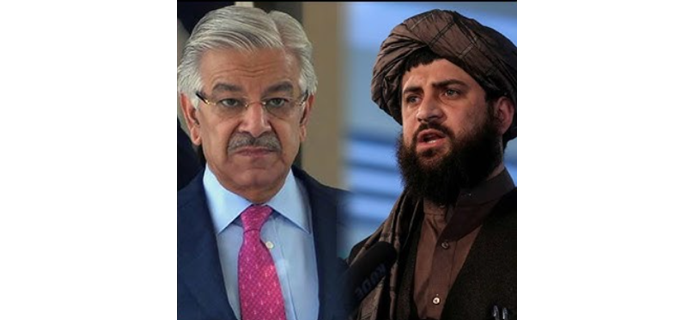
Yet, when at last the dialogue began, what should have been clarity was clouded by bitterness. Mullah Yaqub, son of Mullah Omar, opened with a thunderous tone — the kind of force that shakes branches but cannot strengthen roots. His warnings to “pressure” Pakistan, as though fear might move the compass of policy, proved futile. The Pakistani delegation, composed and dignified, offered a single, restrained rejoinder:
“We can depart if you so wish; you may then pursue another course.”
That response, calm yet resolute, was a masterstroke of moral equilibrium — a firmness born not of anger but of principle. It left the other side momentarily unmoored; the ground beneath their rhetoric gave way.
Sensing their hand slipping, the Taliban swiftly appealed for mediation — calling upon the Prime Minister of Malaysia to intervene. At times, a third party’s presence can serve as a balm; the Malaysian initiative aimed to restrict the agenda to ceasefire arrangements and transit issues, while dismissing concerns such as the TTP and cross-border incursions as Pakistan’s “internal matters.” But Islamabad refused to accept the narrowing of the frame. For Pakistan, the roots of the conflict lay precisely there — and to prune the branches while ignoring the root was to court failure.
Prime Minister Shehbaz Sharif and his delegation stood firm: no truce could precede justice. The war, they argued, began with incursions by the TTP and BLA; until these aggressions ceased, peace would remain a mirage. This stance was not mere diplomacy — it was an affirmation of sovereignty, a declaration that security is not negotiable. The table, including the hosts, found the logic unassailable.
Then came a curious turn of conscience. Mullah Yaqub — who but two days earlier had refused to recognise the Durand Line — now conceded, “Our soil shall not be used against Pakistan, and we shall respect the borders.” In that admission lay both the softening of passion and the first glimmer of political maturity. The dialogue would resume, it was agreed, in Turkey — a new theatre, perhaps, but the same moral play.
Within Pakistan, certain religious factions, sympathetic to the Taliban, have sought to frame Islamabad as subservient to the United States — a narrative potent in sentiment but frail in reason. For history bears witness to a telling irony: the Taliban’s political office in Doha was established in the very state that hosts Al-Udeid, the largest American airbase in the region — from which sorties over Afghanistan were once commanded. If fraternity among Muslim nations were the measure, then silence over such proximity to power renders the rhetoric of purity somewhat hollow.
يَا أَيُّهَا الَّذِينَ آمَنُوا لِمَ تَقُولُونَ مَا لَا تَفْعَلُونَ
“O you who believe! Why do you say what you do not do?” — (Al-Ṣaff 61:2)
Turkey, itself a member of NATO and a former host of international forces in Afghanistan, now stands as the next venue of dialogue. Strikingly, neither the Taliban have accused Ankara of “fraternising with unbelievers,” nor have Pakistani clerics turned their tongues against President Erdoğan. The paradox is instructive: in regional politics, indignation is seldom uniform — it is calibrated by circumstance, measured by interest, and dressed in the garments of virtue.
And yet, amid these shifting sands of diplomacy, memory lingers. I cannot help but recall, from three decades past, those solemn words spoken by Amir Mullah Omar in Kandahar — words that were not mere promises, but vows of the soul itself:
“My Pakistani brothers! We shall never forget your kindness until the Day of Judgment… Where your sweat falls, there shall our blood fall.”
That declaration was more than sentiment; it was a covenant of honour, a moral testament that bound two nations in the fraternity of faith. The Pakistani people, to this day, guard those words as one guards a relic of sacred trust.
And now, one must wonder whether Hibatullah Akhundzada, then a youth of eighteen, remembers those pledges that once lit the moral horizon of his people. As he now stands between the glare of internal discontent and the weight of external expectation, does that memory still burn within him — or has it dimmed in the chill of power?
For every leader, there comes a night when conscience whispers its question:
هَلْ أَتَى عَلَى الْإِنسَانِ حِينٌ مِنَ الدَّهْرِ
“Has there not come upon man a period of time when he was nothing to be mentioned?” — (Al-Insān 76:1)
Surely, in some sleepless hour of the night, that question must come to him too. The only mystery that remains is — can he answer it?
Mullah Yaqub stands today as the living countenance of that delicate contrast between past and present. When, as a child of five, he may have overheard his father’s solemn vows of fraternity and faith, he could scarcely have known that one day history would summon him to answer for them. Now seated upon the chair of authority, the question that shadows him is not one of politics but of conscience: can he speak truth to the promise once uttered in his father’s name, or has power shown him a different horizon?
History, ever the final arbiter, will render its judgment. Yet before her verdict, there remains the tribunal of the human soul — that quiet chamber where no plea for evasion is heard. Surely, as he rose from the table of pledges and turned to face the cameras of Al Jazeera, a tremor of unease must have crossed his heart — that subtle pang which betrays the distance between oath and action.
Soon after the accords of Doha, the flicker of media illumination — or perhaps its hidden hand — rekindled the moment, as though Providence itself wished to remind the world that between promise and interest, the interval is brief. For the press, like a polished mirror, reflects not merely the shape of events but the shimmer of intent behind them; and in this instance, history has already recorded the reflection, to await the judgment of generations yet unborn.
It is worth recalling that the former Afghan Vice President, Amrullah Saleh, asserted openly that in the Doha negotiations the Taliban were left with no genuine right to refuse or impose conditions. Pakistan, by diplomatic gravity rather than coercion, exerted such pressure that an unmistakable global perception emerged: either the Taliban were patrons of fitna al-khawārij — the rebellion of those who turn their swords upon the faithful — or they had lost command over them altogether.
Mullah Yaqub, as Defence Minister, had given assurances of restraint; yet his later remarks — aired upon platforms such as Al Jazeera — cast long shadows of doubt, revealing fractures within the state itself. That discord may well become the stumbling block of future reconciliations, where every word uttered at Doha shall echo as an unanswered question.
This dialogue was never merely a diplomatic episode; it was a mirror wherein the moral character of the region, its tangled geography of interests, its haunted memories, and its unkept promises stood side by side. In the end, the reckoning shall not come from conference halls or communiqués — it shall come from the people and from time itself, when words are weighed against deeds, and vows either fulfilled or buried beneath the dust of expedience.
For in the court of history, promises do not perish; they linger, alive within the conscience of nations. The Doha narrative, far from conclusion, is but the prologue to the next chapter of the Muslim world — a chapter whose lines shall be inscribed by our own conduct. The window of time has been flung open; whether we cast into it the light of truth or the shadow of hypocrisy remains our choice.
وَأَوْفُوا بِالْعَهْدِ ۖ إِنَّ الْعَهْدَ كَانَ مَسْئُولًا
“And fulfil every covenant, for verily, every covenant shall be questioned.” — Sūrah Al-Isrāʾ (17:34)
When a people stand steadfast upon their covenants, Divine grace adorns their enterprise; but when they betray them, history itself withdraws the earth from beneath their feet.
Such is the solemn admonition Doha has once more set before us — that the destiny of nations is not written in ink upon paper, but in the integrity of the hearts that sign them.