Between Noise and Stillness: The Politics of Power in a Fractured World
Silence as Strategy: Trump, Putin, and the New Balance of Global Power

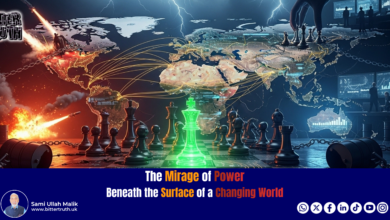
At the present juncture of international politics, the exercise of power is no longer confined to military deployments or economic coercion. Silence itself—calculated delay, studied restraint, and the deliberate refusal to react—has emerged as one of the most potent instruments of statecraft. Global politics has never been merely a theatre of proclamations, treaties, or battlefronts; it is equally a chronicle of pauses, unspoken signals, and decisions taken beyond the reach of public utterance. As the year 2026 dawns, silence has once again asserted itself as the loudest voice among the great powers.
It is within this charged stillness that the contrast between President Donald Trump’s aggressively declarative foreign policy and President Vladimir Putin’s conspicuous quiet must be understood. At first glance, the juxtaposition appears paradoxical: bluster set against muteness, assertion against absence. Yet in truth, both represent different expressions of the same evolving global order—one in which power is exercised as much through restraint as through display, and where control over reaction has become as decisive as the capacity for force. This chapter, therefore, seeks to read silence not as an omission, but as policy.
Historically, the overt projection of power has almost invariably provoked response. The annals of international politics bear witness to a familiar rhythm: whenever American power extended its claws with conspicuous aggression, Moscow’s reply followed with the unmistakable clang of steel. From the Cold War through the crises of Iraq and Syria, American interventions—whether in the Middle East or Latin America—were habitually met by swift and emphatic resistance from the Kremlin, articulated across both diplomatic and rhetorical fronts.
Yet the early months of 2026 present a tableau draped in an unfamiliar hush. Regime change in Venezuela, the seizure of a Russian-flagged oil tanker, and belligerent pronouncements regarding Greenland—each an unmistakable signal that Washington now seeks to reorder the international system not by juridical norms, but by the blunt arithmetic of power. These acts collectively suggest an America intent on redefining global order through dominance rather than consensus.
And yet, despite the provocation, Moscow has remained silent.
This silence, far from signalling weakness, reveals a recalibrated political temperament—one that privileges interests over impulses. Trump’s onslaught unfolded in full view: celebratory arrests in Venezuela, the detention of a Russian-flagged vessel, and even rhetoric hinting at territorial acquisition. All transpired without a single sharp rejoinder from the Kremlin, as though time itself had been momentarily arrested. Such comprehensive quietude marks a decisive departure from the politics of reflexive retaliation and announces Russia’s entry into a colder, more calculating realm: the politics of interest.
Unlike in earlier episodes, there was no immediate condemnation, no sabre-rattling, no martial posturing. This silence is neither accidental nor involuntary; it is a considered policy choice, rooted in the conviction that transient outrage must not be permitted to imperil long-term strategic objectives. Russia—long accustomed to denouncing Western interventions as conspiracies of regime change—now appears cast in the role of restraint itself.
President Putin’s absence from the public stage is thus not coincidence but design. His refusal to issue formal statements, his withdrawal from the daily spectacle of political commentary, signals a Kremlin that places greater faith in closed-door deliberation than in public rhetoric. Putin’s temporary disappearance from view is not political inattentiveness, but a deliberate pause—one that history suggests often precedes consequential decisions.
Indeed, the record shows that Putin’s silences have frequently served as preludes to strategic pivots and diplomatic recalibrations. His retreat from public visibility following the Orthodox Christmas was less a matter of ceremony than a signal: decisions, at this juncture, are not being forged in speeches, but in negotiating rooms. The parallel quiet of Kremlin spokesperson Dmitry Peskov and state broadcasters is not holiday lethargy, but a conscious act of diplomatic stewardship.
Negotiations with Washington over Ukraine have entered an existential and perilously delicate phase—one in which a single intemperate phrase could unravel months of painstaking effort. In such circumstances, silence becomes a shield. Moscow is acutely aware that any harsh response to American actions in Venezuela or at sea might ignite a spark capable of severing the fragile diplomatic thread. The Kremlin’s restraint, therefore, is an attempt to preserve equilibrium at a moment when balance is everything.
President Trump, by contrast, inaugurated 2026 with a declaration of power that echoes the imperial instincts of the twentieth century. The arrest of Nicolás Maduro and his transfer to New York was not merely a legal manoeuvre; it was a message—an announcement that diplomacy has yielded to detention, and that force now claims primacy over persuasion. In effect, it amounted to a contemporary reinterpretation of the Monroe Doctrine: power, once again, asserts itself as law.
Trump has made plain that the interpretation of international law now lies in the hands of the powerful—a notion Russia once dismissed as Western imperialism. For Moscow, however, Ukraine remains not a peripheral dispute but the central pillar of its foreign policy: a question bound up with national security, historical identity, and the legacy of the post-Soviet space. At this critical juncture, Russia has no interest in escalating confrontation with the United States.
According to prominent analysts, the emerging narrative within Russian state media reflects a calculated reading of American assertiveness—not as a threat, but as a precedent. If Washington reserves for itself the right to impose dominance within its sphere through unrestrained power, then Moscow, by the same logic, acquires both moral and political justification to act likewise within its own neighbourhood. The silence, therefore, is not born of indecision, but of timing.
Ultimately, Putin’s restraint is dictated by one overriding consideration: the Ukraine negotiations stand at a knife-edge. A forceful reaction to events in Venezuela or maritime seizures could have sabotaged talks whose collapse would inflict direct strategic loss upon Russia. These American actions have thus been interpreted in Moscow as the operational expression of a new U.S. national security doctrine—one that tacitly acknowledges spheres of influence and the delimitation of power among global actors. It is, ironically, a doctrine Russia has long advocated. Silence, in this moment, is not retreat. It is positioning.
One further explanation for Russia’s tacit acquiescence lies in the substance of America’s revised National Security Strategy itself. The document’s explicit recognition of regional spheres of influence aligns, at least in principle, with a position Moscow has articulated for years. It is this underlying consonance that has inclined Russia not towards open criticism, but towards a posture of restrained, almost silent endorsement.
The Trump Doctrine, crystallised most starkly in the arrest of Nicolás Maduro, delivered an unambiguous message: within the contemporary international system, legitimacy is contingent upon power. This episode was widely interpreted as the operational manifestation of America’s new national security thinking—a strategy Russian officials had previously welcomed precisely because it signalled the revival of regional politics. While the principle itself does not offend Russian strategic thought, Moscow is determined to retain sovereign discretion over when, where, and how such logic is applied, subordinating its execution firmly to Russian interests.
According to Fyodor Lukyanov, the Trump Doctrine marks a decisive turn away from universalist pretensions and a return to a world ordered by regions. Global politics, once again, is being reorganised around spheres rather than ideals. This observation is more than descriptive; it is diagnostic. It acknowledges that the liberal international order erected after the Cold War has entered an advanced stage of dissolution. In this sense, Lukyanov’s remark functions not merely as analysis, but as a portent—an intimation of future global confrontations shaped less by norms than by geography and power.
Within Russian state media, the American action has been framed as a “precedent”—one that may, in time, furnish Moscow with moral and political justification for adopting firmer measures within its own neighbourhood. Analysts such as Yevgeny Popov argue that global disorder, far from imperilling Russia, offers it an opportunity: pressure is diffused, diplomatic space expands, and amid the rivalry of great powers, secondary actors find unexpected pathways forward.
At first glance, the American strategy’s acknowledgement of regional influence appears to mirror long-standing Russian positions, if only partially. It is precisely this overlap—this strategic resonance—that constitutes one of the principal reasons for Russia’s silence. Popov himself characterises the present moment as temporarily uncomfortable but strategically advantageous. What appears in the short term as an erosion of influence may, over time, be converted into diplomatic leverage. Global turbulence, in this reading, grants Russia room to breathe—a pause in which pressure eases and options multiply.
Even among pro-Kremlin circles, one detects a curious mixture of resentment and reluctant admiration towards American assertiveness. This ambivalence reflects an unspoken truth: Russia itself has become ensnared in the same logic of power it now observes elsewhere. The method Washington employs abroad mirrors the approach Moscow sought to impose in Ukraine. The difference lies not in principle, but in outcome—where Russia’s exertion of force became mired in a protracted war, American aggression on the global stage has instead widened the fissures between Europe and the United States. That widening gap, in turn, reduces diplomatic pressure on Moscow and opens new corridors of manoeuvre.
The envy voiced by figures such as Margarita Simonyan is not merely personal pique; it is a symbolic acknowledgement of state-level limitation, even of strategic defeat. Decades of Russian investment in Venezuela—once a marker of Moscow’s global reach—have faded into the background under the weight of the Ukraine war. Maduro’s arrest has given formal expression to that decline, transforming a slow erosion into an undeniable fact. Moscow, with a realism born of necessity, appears prepared to accept it.
As Hanna Notte observes, Russia is presently in no position to antagonise Donald Trump, let alone challenge him directly. The logic is straightforward: Trump’s attention is fixed on the central issue—Ukraine. American posture on Ukraine is of decisive importance to Russia, where even neutrality, or a softened stance, constitutes a strategic asset of considerable value.
Moscow’s overriding objective has therefore been to draw Trump either into tacit alignment on Ukraine or, at the very least, to prevent the United States from assuming leadership of an overtly anti-Russian coalition. Thus far, this strategy has been largely successful. It explains why Russia refrained from a military response following the seizure of the Russian-flagged vessel Marinara, limiting itself instead to a formal objection grounded in violations of international law. This marks a notable return of legal rhetoric within Russian foreign policy.
Despite the presence of Russian naval assets in the vicinity, no force was employed. The decision to avoid escalation was deliberate, designed to contain tension rather than inflame it. Lukyanov, for his part, regards Venezuela as a secondary theatre. The true axis of concern remains Ukraine—a matter not only of geography, but of history, identity, and civilisation. Venezuela may carry political significance, but Ukraine, in Russian strategic thought, permits little room for compromise.
Hardline nationalist voices called for a military response, yet the Kremlin declined to elevate such sentiment into policy. Here, the distinction between statecraft and emotion becomes starkly visible. Moscow’s acceptance of the new interim administration reflects a preference for stability over ideological contention. The Russian Foreign Ministry’s welcome of the transitional government sent a clear signal: stability—even when achieved under external pressure—is preferable to chaos.
Russia’s reaction to the seizure of the Marinara was marked by restraint. There were no threats, no martial proclamations—only a measured invocation of the law of the sea. Moscow spoke the language of legality rather than force. Although a military response was entirely feasible, Russia neither demanded the tanker’s return nor hinted at retaliation. Instead, it chose patience over power, a posture indicative of diplomatic maturity.
Finally, Trump’s obstinacy has laid bare the fragility of European unity—a weakness from which Russia stands to derive tangible diplomatic benefit. In a world increasingly governed by fractures rather than alliances, silence, once again, proves to be not the absence of power, but its most disciplined expression.
The Arctic occupies a position of decisive importance for Russia—strategically, militarily, economically, and symbolically. It is a region where energy security, military presence, and claims to global leadership converge. Whether American interest in Greenland intensifies, or Denmark’s formal sovereignty remains intact, Moscow has, for the moment, characterised the matter as a bilateral issue between Washington and Copenhagen. By doing so, Russia has deliberately distanced itself from direct confrontation, signalling caution rather than indifference. Its measured stance on Greenland is, above all, an attempt to avoid premature escalation.
Hardline voices, as ever, have not been absent. Yet state policy is not forged in the furnace of emotion, but shaped by the calculus of interest. Figures such as Alexei Zhuravlyov may articulate public anger and nationalist fervour, but such utterances are no substitute for statecraft. Their rhetoric reflects sentiment, not strategy. At this juncture, Moscow’s use of irony and restrained sarcasm has proved a more effective instrument—conveying displeasure without incurring the costs of outright confrontation. This is diplomacy in its modern form: subtle, indirect, yet far from innocuous.
Nationalist factions have described recent developments as tantamount to maritime piracy or even an act of war. The Kremlin, however, has carefully declined to elevate such language into official doctrine. The refusal to adopt a martial vocabulary underscores a deliberate distance from war rhetoric. Russia may acknowledge the logic of power in principle, but only insofar as it does not collide with its strategic interests.
Among pro-Kremlin circles, the faint smile elicited by Trump’s obstinacy over Greenland is less admiration than irony—an unspoken commentary on European weakness and the visible strain within Western unity. Trump’s insistence is interpreted as a symptom of European fragility and a widening crack in the Atlantic alliance. Yet this indulgent tolerance has limits. Should the United States move towards establishing a permanent military infrastructure in Greenland, Russian silence would almost certainly give way to response.
Kirill Dmitriev’s sardonic remarks exemplify a refined diplomatic strike—soft in tone, but sharp in effect. They hold up a mirror to the European Union’s double standards and deliver a blow without the discharge of a single round. With the conclusion of Russia’s holiday period, a more comprehensive position from President Putin is widely anticipated—one that may formalise this silence into an explicit strategic doctrine.
Russia accepts the principle of power—but only to the extent that it serves Russian interests. The maxim “might makes right” is not alien to Russian strategic culture; indeed, it holds a certain appeal. Yet when that same principle threatens Russian interests, it becomes unacceptable. In the context of Greenland, an expanded American military presence could cross precisely that threshold.
Accordingly, Russia has reduced its reactions to short-term provocations, privileging long-term strategic objectives instead. Silence has ceased to be passive; it has become an active policy. The Arctic, in this regard, is not merely a geographical expanse. It is central to Russia’s military posture, economic future, and symbolic claim to great-power status. President Putin has repeatedly identified the Arctic as a pillar of Russia’s global leadership. It is not simply territory—it is a cornerstone of future power.
The Arctic is poised to become the epicentre of Russia’s economic and military strategy in the decades ahead, and potentially a prelude to future conflict. This evolving posture is nudging the international system towards a new equilibrium—one in which power, silence, and opportunism are increasingly interwoven.
As Hanna Notte observes, the growing rift between Europe and the United States serves Russian interests, but any significant expansion of American military presence does not. A strengthened U.S. military infrastructure in Greenland would represent a clear red line—one beyond which Russian silence would no longer be sustainable. For middle powers, the lesson is unmistakable: not every act of aggression demands immediate resistance; sometimes, waiting is the more profitable course.
Attention now turns to President Putin’s anticipated address following the end of the holiday period. A comprehensive statement—perhaps among his most consequential—is expected. Yet for the present, silence remains Russia’s most effective narrative and its most eloquent form of diplomacy. History teaches that, at times, silence speaks louder than any proclamation.
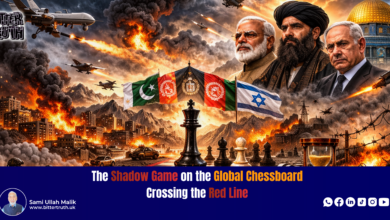
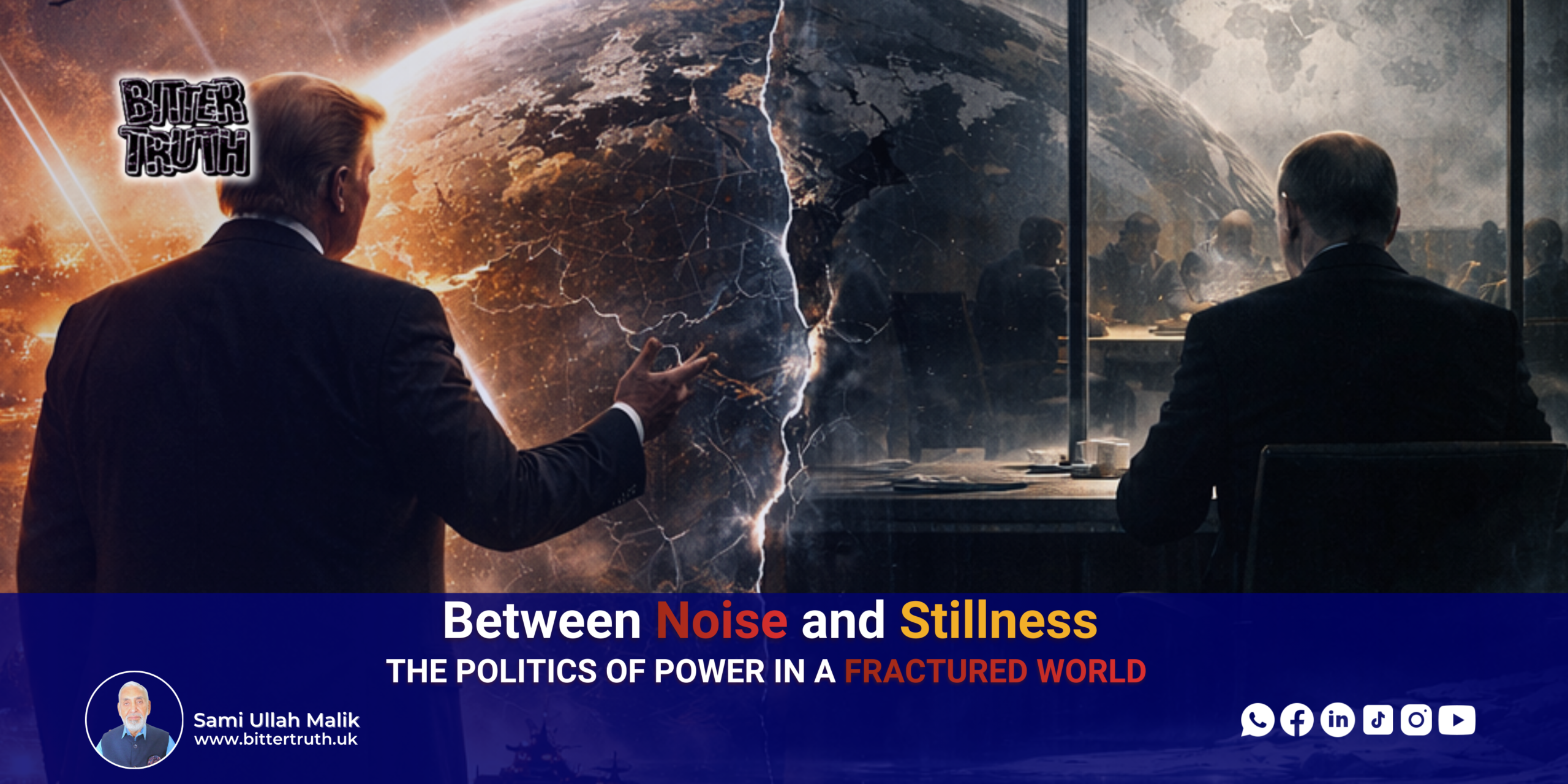
Trump’s foreign policy announces itself in noise; Putin’s strategy unfolds in stillness. One seeks power through volume, the other through restraint. And history, more often than not, remembers—and decides—in favour of that restraint. For there are moments when silence outweighs artillery, and this may well be such a moment—when politics stands poised on the threshold of history.
This chapter thus concludes that Russia’s silence is not a temporary expedient, but a deliberate and organised strategic choice—one that signals the opening of a new chapter in the politics of global power.