Ashes of War, Shadows of Peace
Diplomacy or Deceit?

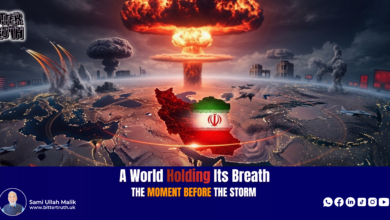
A Night of Ashes and Iron: When the Sky Over Tehran Burned
When Dusk Fell Over Tehran: The Spark That Lit the Inferno
As the veil of night slowly descended upon the skyline of Tehran, and the solemn strains of the Maghrib adhan still hovered in the evening air—half prayer, half prophecy—the heavens were abruptly torn asunder. What followed was not mere aerial warfare, but a calculated conflagration, executed with the cold efficiency of a state that wields its firepower as both sword and sermon.
The Israeli Defence Forces, under the darkened skies of a region long tethered to tension, unleashed an assault of staggering magnitude. The strikes were not merely directed at buildings or bunkers, but at an idea—a vision nurtured by Iran for decades in the form of its nuclear ambitions. Ministries, research centres, and fuel reserves were not just destroyed—they were symbolically unmade, consumed in the furnace of a larger, more ominous intent.
This was not war in its conventional garb; it was theatre—strategic, psychological, and surgical. The ostensible target was Iran’s nuclear capability, but the subtext, like a Shakespearean aside, spoke of regime recalibration, perhaps even replacement. Israel’s bombardment, swift and surgical, was as much an exercise in geopolitics as it was in military doctrine
The Cost of Flame: A Nation’s Honour in Ashes
In the smouldering wake of these strikes, Iran counted not just the physical cost, but the tragic toll of lost commanders—men who were not merely officers, but the living embodiment of a nation’s martial self-regard. Their deaths were not footnotes in military communiqués; they were ruptures in the nation’s soul.
In Azerbaijan province—once a land of verdant stories and mountain winds—the very air now reeked of sorrow. Thirty-one bodies, laid side by side: thirty soldiers, sons of the soil, and one Red Cross volunteer—a silent witness to the impartial cruelty of war. These are not numbers; they are the lamentations of a nation, turned into the grim prose of history.
But Iran did not retreat into lamentation. With the resolve of an empire that once echoed the conquests of Cyrus and Darius, it responded—not with apologies, but with arsenals. Over one hundred missiles, each a courier of vengeance, tore across the night skies and descended upon Tel Aviv, Haifa, and the heartlands of Israel. The earth shuddered not merely with impact, but with historical resonance—the kind that reminds civilisations of their mortality.
Haifa’s oil refinery blazed like a modern-day Tower of Babel, visible not only to satellite and surveillance but to history itself. The BBC’s validation of the destruction was more than reportage—it was the sealing of a chapter in the annals of twenty-first-century conflict.
Reckonings and Reverberations: The Psychological Front
The cost to Israel was more than infrastructural. It was psychic. Civilians perished, dozens were wounded, and the façade of security was shattered. The Israeli polity, long accustomed to existential threats, found itself confronting not merely missiles, but meaning. Sleep fled from homes like a fugitive, and calm became a contraband dream.
Prime Minister Netanyahu, once the immovable anchor of Israeli resolve, now found himself issuing commands from afar—like a general stranded beyond the reach of his own legions. The distance was not just geographical—it was moral, strategic, and symbolic.
Iran’s ambassador to the United Nations placed the civilian death toll from the Israeli strikes at seventy-eight—a number that wounds the conscience and challenges the legality of modern warfare. Particularly devastating were the deaths in Azerbaijan province—thirty soldiers, one humanitarian, all now chapters in an unfolding epic of anguish.
Warnings were issued by the Israeli military to the Iranian public: avoid military installations. But such alerts are little more than theatre when the battlefield is a cityscape and the theatre of war bleeds into living rooms. What was once confined to borders and battlefields now marches, unannounced, into civilian life.
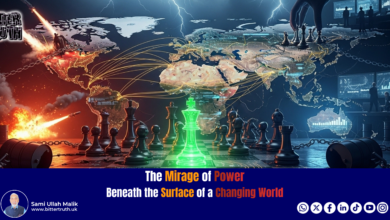
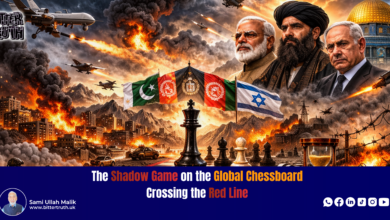
A Wider Chessboard: Shadows, Spies, and Sovereignty
Yet this is no mere duel between two nations—it is a slow-burning regional crisis with global undertones. The Houthis, never ones to remain idle in a theatre of shifting allegiances, confirmed that Iran’s response came after coordinated consultation—a grim signal that the Middle East is now a mosaic of embattled alliances.
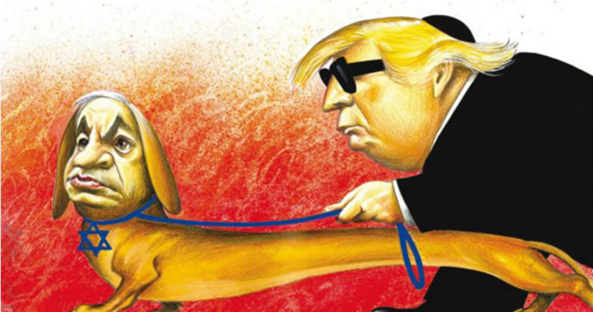
President Trump, in typical rhetorical bravado, declared America’s detachment from the fray—while simultaneously promising vengeance of Biblical proportions should Iran err. The paradox was not lost on the world: neutrality wrapped in threat; diplomacy laced with dynamite.
Israel, meanwhile, claimed the attack was executed with the help of Mossad’s embedded networks within Iran. These clandestine tendrils, previously used to eliminate Hamas leaders abroad, had now seemingly turned inwards, striking deep within the Islamic Republic. Iran responded swiftly, arresting seventy-three alleged operatives—many of them Indian nationals—thus dragging New Delhi, however reluctantly, onto this geopolitical stage.
The implications are grave. Tensions between Iran and India, already simmering, may now spill over—drawing in Pakistan, a nation with its own bruises. For years, Islamabad has accused India’s intelligence agency, RAW, of conducting operations via Iranian territory, igniting unrest in Balochistan. The arrest of Kulbhushan Jadhav remains a thunderclap in Pakistan’s diplomatic memory.
Meanwhile, accusations against Tehran persist: that it facilitated dialogue between India and the Taliban, inadvertently or otherwise fuelling TTP operations in Pakistan. But recent developments hint at a changing wind. In a rare moment of regional unity, a trilateral summit between Pakistan, China, and Afghanistan culminated in a fatwa by Taliban leader Mullah Akhund—condemning terrorism within Pakistan’s borders. A flicker of hope, perhaps, in a gathering storm.
“The Volcano Beneath the Mountain: Iran’s Missile Doctrine and the Echoes of Empire”
Despite international sanctions that sought to clip its wings, Iran’s missile programme has, paradoxically, taken flight in a manner that has startled even its most seasoned adversaries. The revelation of hypersonic missiles, brazenly heralded with slogans such as “Tel Aviv in 400 seconds,” struck the global imagination like a thunderbolt—less a threat and more a declaration from a nation long determined to speak in the grammar of power.
Through a blend of reverse engineering and indigenous innovation, Iran has achieved feats which, in the realm of modern military technology, may be described as nothing short of alchemical. Its claim of downing an American F-35—an aircraft once considered the vanguard of stealth and superiority—stirred waves of disbelief and apprehension. Whispers in diplomatic corridors suggest that this capability may not be homegrown alone but perhaps supplemented through clandestine alliances with unnamed neighbours. If true, it would mark not merely a technical leap but a geopolitical realignment with far-reaching consequences.
The “Khaybar Shekan” missile, named evocatively after an ancient fortress felled in a legendary
Islamic campaign, has been reported to unleash destruction in a tri-phased detonation pattern—leaving nothing but scorched earth in its wake. The impact upon Israeli targets has been more than symbolic; it has been strategic. Yet Iran, with its traditional penchant for opaqueness, shrouds the full extent of its arsenal’s capabilities behind veils of religious rhetoric and revolutionary pride.
The Islamic Revolutionary Guard Corps (IRGC) claims, with no small measure of gravitas, that its missile bases lie buried deep beneath Iran’s rugged mountain ranges. These subterranean arsenals—referred to in hushed tones as “missile cities”—are the offspring of decades of strategic foresight and engineering ingenuity. Far from being monolithic, these installations are scattered across provinces like silent sentinels: Kermanshah, Khorramabad, Hajji Abad, and the shrine city of Qom among them. Some of these lie as deep as 500 meters underground and are equipped with automated launch systems mounted on rail networks, capable of discharging up to five Emad missiles in swift succession.
Iran has, in effect, turned its geography into a weapon. Its tunnel networks, draped in secrecy and reinforced against aerial assault, are not merely storage facilities but launch pads for reprisal—designed to ensure survivability and strategic surprise. Each of these installations, cradled in the bosom of the earth, is a volcano in waiting.
Although Israel has claimed to have struck several western Iranian bases, including Kermanshah and Tabriz, in its recent aerial offensive, independent verification remains elusive. That Iran continues to retaliate from these very sites has led defence analysts to posit that the lion’s share of Iran’s deterrent capability remains intact—and may yet prove decisive in a protracted conflict.
The arsenal stockpiled within these bases reads like a roster of vengeance: the Khaybar Shikan, Qadr, Sejjil, Emad, Haj Qasem, and the Pouya series of ballistic and cruise missiles. Along Iran’s southern littoral, underground naval missile sites have also emerged—housing systems like the Ghadr-380, a short-range anti-ship missile poised to contest Israel’s maritime reach.
These weapons are not mere instruments of war; they are, in the lexicon of Tehran’s strategic mind, tools of equilibrium. The IRGC’s high command, ever theatrical in its pronouncements, asserts that their arsenal can erupt like a chain of volcanoes across enemy terrain—instantaneous and irrevocable. Long before the drums of war began to beat in earnest, the Guard had warned: its network stands ready, its purpose does not revenge, but justice—its enemy not merely Israel or America, but impunity itself.
Iran’s missile doctrine is, therefore, more than a military policy. It is a manifesto—a declaration of ideological autonomy in a region where sovereignty is often negotiated at gunpoint. It offers, simultaneously, a warning and an invitation: that beneath the crust of visible power lies a defiance that cannot be occupied or erased.
The intelligence war is no less dramatic. Israel’s recent claim that it had established a clandestine drone base within Iranian territory—used to disable missile launchers and air defences in preparation for its June 13th air raids—is a tale of espionage worthy of John le Carré. Mossad’s covert operatives, it seems, are not merely gathering intelligence but actively shaping the theatre of war.
Iran’s response has been swift and pointed. The arrest of seventy-three individuals, including several Indian nationals, allegedly tied to this Mossad network, adds a volatile Indo-Iranian-Pakistani dimension to this geopolitical conflagration. It is no longer a duel between states—it is a chess game played over a minefield, where even pawns are armed.
And what of the ordinary citizen? In such secret wars, where missile silos burrow beneath homes and spy rings thrive in coffee houses, the lines between civilian and combatant dissolve. The people, unwittingly, become the silent weapons of statecraft—a grim commentary on modern conflict where invisibility is often a greater threat than firepower.
There is a peculiar cadence to Iran’s rhetoric—at once elegiac and defiant. When Tehran proclaims that it held onto patience, but now unsheathes the “Sword of Truth,” it is not mere theatre. It is the voice of a state whose military declarations are inseparable from its spiritual imagination. Each missile, each underground base, each intercepted drone, becomes a verse in the epic of Shi’ite martyrdom—a contemporary Karbala where resistance is sanctified, and technology is transmuted into theology.
So arises the enduring question: from whence came this power? Whispers abound that the Khaybar Shekan’s might is not merely born of reverse engineering, but of subterranean experiments carried out beneath the impenetrable stone of Iran’s geological fortress. These are not merely military assets; they are the catacombs of modern resistance, hewn not by mere steel, but by centuries of siege and survival.
Israel’s voice, though bold, bears the tremble of nervous triumph. When its generals boast of having stabbed the Persian lion “from within,” they betray a certain desperation clothed in pride. This is not the confidence of conquest—it is the anxiety of encirclement. Mossad’s claims of internal networks within Iran herald not just victory, but vulnerability: a theatre of war that now includes cyberspace, psychological warfare, and the strategic mind.
Indeed, Israel’s pursuit of pre-emptive dominance may mask a deeper ambition—the dream of Greater Israel. Yet in so doing, it may ignite the very fire it seeks to extinguish. Beneath the battlefield lies a truth more unsettling than missiles or drones: the enduring resolve of a people who have learned not only to endure siege, but to weaponise it.
The Hidden Hands and the Chiaroscuro of Power
It is worth recalling that in the previous year, during the Iranian presidential inauguration ceremony, where leaders of Hamas were in attendance as honoured guests of the Islamic Republic, tragedy struck from the shadows. Mossad, operating through its clandestine network within Tehran, is believed to have orchestrated the assassination of these dignitaries—a deed later followed by a string of eliminations targeting other senior Hamas figures. The Israeli intelligence service, ever elusive yet audacious, claimed responsibility for these operations with the bravado of a seasoned puppeteer pulling strings behind velvet curtains.
In the aftermath, the Iranian state—caught between outrage and resolve—launched a decisive countermeasure, announcing the apprehension of 24 individuals, including senior officials, who were allegedly involved in compromising national security. Among those detained, it has been reported from certain unofficial quarters that several Indian nationals were included. More recent disclosures suggest the arrest of over seventy individuals of Indian origin, purportedly members of a Mossad-affiliated espionage ring embedded within Iran. While New Delhi and Tel Aviv maintain a studied silence, the thunderous implications of these revelations reverberate far beyond Iran’s borders.
For Pakistan, the development has been a grim vindication. Islamabad had, with considerable gravitas, previously warned Tehran of precisely such covert collaborations between Israeli and Indian intelligence agencies—warnings that, at the time, fell on diplomatically deaf ears. Today, the reckoning seems to be at Iran’s own doorstep.
Meanwhile, the United States occupies a peculiar perch—neither combatant nor conciliator, but rather a theatrical observer, draped in the robes of ambiguity. Former President Trump, with his characteristic bombast, has asserted that while America shall not embroil itself in this war, should Iran dare lay a finger upon the Stars and Stripes, then the response shall be cataclysmic—“like nothing the world has ever seen.” Such declarations, cloaked in disclaimers, are nevertheless marinated in menace.
Though Mr. Trump disavowed direct involvement in the recent Israeli offensive, his administration’s persistent exhortations to stymie Iran’s nuclear ambitions tell a different tale. His carefully crafted narrative—we are not in the war, yet we shall strike with unbridled fury—serves less as a disclaimer than as a tacit endorsement of Israeli manoeuvres. It is, as it were, the diplomatic equivalent of lighting the fuse while pretending to avert one’s gaze.
The rhetoric from Washington is not mere sabre-rattling; it is a siren wail of prelude, echoing the apocalyptic lexicon of Hiroshima and Nagasaki. The language deployed—“at levels never seen before”—is not simply dramatic flourish; it is psychological warfare by other means. It is a message addressed not only to Tehran, but to Beijing, to Moscow, and to Pyongyang: that Pax Americana, for all its protestations of peace, still holds in reserve the fury of Jupiter.
Mr. Trump’s statements constitute a curious quadrangle of strategic posturing: a veneer of non-intervention, a veiled threat of disproportionate retaliation, a disingenuous nod to diplomacy, and a backdrop of military readiness. It is a chess move writ large—where the knight may yet gallop, and the bishop’s diagonal gaze surveys the battlefield.
The so-called political “shield” of non-involvement—Trump’s initial declaration that America had no hand in the Israeli strike—was less an armour of peace than a cloak of plausible deniability. It was crafted for consumption not merely abroad, but at home: a message to Capitol Hill, to the American electorate, to NATO, and to the corridors of the United Nations—that the United States was not the architect of war, only its inevitable arbiter.
And yet, it is that one small word—“if”—that swings open the trapdoor of consequence.
“If we are attacked in any way… the full strength and might of the US Armed Forces will come down on you at levels never seen before.”
This is no empty gesture; it is a linguistic grenade. The spectre of “unseen levels” conjures mushroom clouds in the imagination—an allusion as much to historical trauma as to futuristic threat.
It must be noted that this is no isolated bravado. The spectre of American “shock and awe” has long been the invisible hand in many a theatre of war. Mr. Trump’s threats, whether of striking 52 sites or rendering nuclear facilities to dust, are not merely speculative—they are strategic. They represent a doctrine in chiaroscuro: diplomacy and destruction seated at the same table.
Ultimately, his rhetoric captures four cardinal vectors: the shield of stated neutrality; the sabre of deterrence; the olive branch of a potential “deal”; and the drumbeat of military readiness. This is not policy—it is orchestration.
It is a delicate dance upon a tightrope strung between measured restraint and total war. One step forward is peace; another, cataclysm. And as history reminds us, in every Pax there lurks a shadow—awaiting its hour.
The Final Act on the Middle Eastern Stage — Between Ashes and Embers
President Trump’s words—
“We can easily get a deal done between Iran and Israel and end this bloody conflict!”
— are as audacious as they are paradoxical. Here is a statesman who declares non-involvement with one breath, and with the next, offers himself as a broker of peace in a firestorm not yet of his making. This, indeed, is the American dialectic—where the olive branch and the thunderbolt share the same hand.
Clad in the vernacular of boardroom bargaining, the term “deal” is scarcely a synonym for peace—it is a cipher for strategic equilibrium, a ledger of geopolitical gains and concessions. Each syllable of the President’s pronouncement unfolds like a blueprint of deliberate ambiguity, wherein war is not merely deterred, but paradoxically proclaimed in order to be avoided.
This is diplomacy writ in the language of dread—showing not one’s own vulnerabilities, but a chilling portrait of the devastation one could unleash. It is a variant of that old American doctrine: “Peace through strength”, rendered anew in the lexicon of corporate brinkmanship.
Taken as a whole, Trump’s posture suggests a fourfold strategy: to parade moral superiority under the banner of non-intervention; to deploy deterrence masked as defence; to extend a hand for mediation while tightening the grip of hegemony; and finally, to shape global perception as the indispensable arbiter between conflagration and calm. Yet, Iran’s outright refusal to engage with intermediaries bearing America’s proposals has left the West not only rebuffed but rattled.
This recalls the Cold War choreography—when Ronald Reagan famously preached harmony through might, and doves flew only under the shadow of cruise missiles. If one were to borrow the lens of historical metaphor, this is peace stitched with gunpowder thread, a lullaby sung over powder kegs.
The world has seen enough to discern the masquerade: Trump’s strategy is less a diplomatic overture and more a theatre of calculated paradox—projecting pacifism while polishing swords. It is language laced with lead; charm laced with charge. Such is the peculiar alchemy of power that speaks softly while resting a hand on the hilt.
Even the demure tones of British Prime Minister Sir Keir Starmer cannot fully cloak the imperial echo beneath. His ambivalent declaration—“No decision yet on military aid to Israel”—is the language of Empire in diplomatic attire. Neither affirmation nor denial, it hangs like a thundercloud poised before the deluge.
It is the old British habit—of murmuring neutrality whilst mapping influence; of stepping back from the fire whilst selling the flint. Though the Empire has crumbled, its shadows linger, cast long over the sands of the East. Starmer’s entreaty to “reduce tensions” is less a verdict and more a sigh—an acknowledgment that in this theatre, no actor is blameless, and no victim pure.
This unfolding drama is no mere skirmish of armies—it is a tapestry stitched with bloodied threads, where every knot is tied with the twine of creed, ambition, and old wounds unhealed. The Middle East today stands not at a crossroad but upon the brink—a precipice from which the next step may summon either phoenix or firestorm.
Russia, though momentarily receded into the wings, watches with the cold calculation of a chess grandmaster. It is not in Moscow’s nature to endure the growing intimacy of Israel and America, nor Iran’s military rise, without response. Its silence is that of a lion at rest, not peace. Provoked at its Ukrainian threshold, the bear now eyes another theatre where its growl may resonate with renewed menace.
This stage is set for more than bombs and borders. It is a clash of doctrines—each armed with its own truth. For Iran, martyrdom and resistance are the crucibles of sovereignty; for Israel, intelligence supremacy and existential defence are shields sharpened by memory and fear. For America, the theatre offers a chance to assert global primacy through the threat of fire, while Britain seeks to reassert waning influence with gloved diplomacy. And in the shadows, Russia bides its hour, poised to rebalance the scales beneath the veil of strategic calm.
All these voices form a grim symphony—not merely of rhetoric, but of rival visions of order. This is no longer a regional crisis; it is the overture to a possible global reckoning.
The question no longer is if the volcano will erupt, but whether its ashes will nourish peace or smother the world in another age of war.