Against Tyranny, With Justice: Pakistan’s Diplomatic Testament
Faith, Politics, and History Intertwined in the Question of Palestine

Today we find ourselves standing at the threshold of a trial whose weight is not to be taken lightly upon the scales of history. There are wounds inscribed upon the pages of time which the dust of ages cannot efface; rather, with each passing century, they grow deeper, more pronounced, and more agonisingly visible. Amongst these enduring scars stands the Question of Palestine—that hallowed land sanctified by the footsteps of prophets, adorned with the sacredness of the First Qiblah, and yet drenched in the innocent blood shed by the sharpened sword of oppression.
In the air of Jerusalem, the call to prayer still resounds, but the thunder of cannon and the clamour of gunfire have long sought to drown its sacred melody. The desolation of Palestine is not a barren expanse of geography alone; it is the dimming light of our faith, the fragile lantern of our history, and the tear of our collective soul—unwillingly shed in the eyes of our ummah. In the dust of al-Quds lie embedded the footprints of the Prophets; upon that very soil history has inscribed its testimony with every rising call to prayer.
Nor is this matter divorced from the conscience of Pakistan. The history of our nation reflects this very awareness. The words of the Quaid-i-Azam still illumine our path like a lamp in darkness: “So long as the Palestinians are denied their rightful due, we shall never bear the crime of recognition. Pakistan cannot, and shall not, recognise Israel.” These were not the casual utterances of diplomacy; they were the echo of the ummah’s anguish, the charter of a moral covenant, the pledge of a conscience unbroken. If we desire to step into the embrace of peace, then we must first lay the foundation of justice. For peace without justice is but a palace erected on sand—its walls crumbling with the first tremor.
Indeed, in the theatre of world politics, there are decisions of fate which do not fade with time but only deepen in their tragic resonance. The Palestinian dilemma is one such verdict of destiny. More than seven decades have elapsed, and still the storm of bombardments, the deluge of innocent blood, continues unabated. It was against this grim backdrop that President Donald Trump, with much ceremony in Washington, unveiled a so-called peace plan—twenty points intended to redraw the map of the Middle East. The world received it with a mixture of surprise and scepticism. Pakistan, while extending diplomatic courtesies of welcome, reiterated that the only just and lasting peace rests upon the “two-state solution.”
Such words of welcome were not mere gestures of politeness. They reflected the delicate manoeuvring of a political chessboard upon which every piece is moved with both calculation and caution. Yet, when global powers proffer maps and blueprints for peace whose lines are drawn over the blood of martyrs, the wombs of mothers, and the bodies of fallen youth, the question inevitably arises: are these schemes truly founded upon justice—or upon the sacrifice of the weak at the altar of the strong? Do these outlines reveal the face of the oppressed—or merely that of the conqueror, enthroned upon the servitude of nations less fortunate?
Here one recalls the Divine Command:
وَلَا تَرْكَنُوا إِلَى ٱلَّذِينَ ظَلَمُوا فَتَمَسَّكُمُ ٱلنَّارُ ۖ
“Do not incline towards those who have committed oppression, lest the Fire seize you.” (Qur’an 11:113)
We must, therefore, recall our principles, heed the voice of our people, and examine the mirror of our own history. We are not foes of peace; we are servants of justice. And where justice reigns, peace shall blossom of its own accord. Otherwise, words of welcome will prove but fragile threads, severed by the cold hand of betrayal.
When President Trump, flanked by Israeli Prime Minister Netanyahu, announced his plan in Washington, the intention was presented as nothing less than the silencing of Gaza’s guns and the inauguration of a new age of regional peace. Pakistan responded by acknowledging this “glimmer of possibility,” yet in the same breath reaffirmed that peace must rest upon a sovereign Palestine—based on the pre-1967 frontiers, with al-Quds al-Sharif as its capital. This stance is not rhetoric; it is a reflection of Pakistan’s very identity, its ideological foundation, and the heartbeat of its people.
But the announcement gave rise to grave questions. In Islamabad, Foreign Minister Ishaq Dar declared the intention of forming a joint Islamic Peace Force with eight Muslim nations, in alignment with the proposed plan. At once, this ignited both hope and anxiety: hope of a united front for peace, and anxiety that Pakistan might be retreating from the principled stand enshrined in the words of its founder.
For Pakistan, Palestine is not a matter of mere diplomacy. It is a question of creed and conscience. From the inception of our state, the solemn declaration of Muhammad Ali Jinnah—that Pakistan shall never recognise Israel until the Palestinians are restored to their rights—remains not simply a historical utterance, but a binding standard by which every act of foreign policy is measured.
Thus, as bombs continue to rain upon Gaza, the cry arises from our people: does this cautious welcome mark a departure from principle? Has Pakistan, however subtly, altered its course? These fears are not born of idle speculation but of the pressure of public sentiment and the continuity of our past. Between political calculation and the conscience of the people yawns a chasm that cannot be bridged by equivocation.
وَتِلْكَ ٱلۡأَيَّامُ نُدَاوِلُهَا بَيۡنَ ٱلنَّاسِ
“Such are the days: We give them to men by turns.” (Qur’an 3:140)
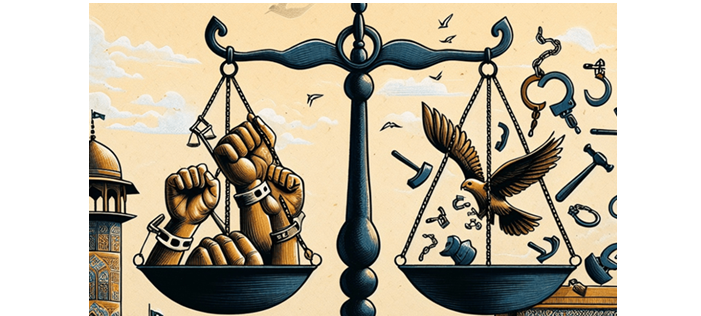
History itself is the arbiter, and upon its scales shall our fidelity to principle be weighed.
The intensity of public sentiment may be gauged from the clamour that rose across social media: “How could the Prime Minister take such a decision without taking the people into confidence?” Some former diplomats went so far as to denounce the joint declaration of Muslim states as a “surrender,” for it made no explicit mention of East Jerusalem or of a sovereign Palestinian state. The question arises: is the act of welcome itself a tacit recognition, or merely a constructive gesture to keep negotiations alive? Herein lies a perennial tension, almost dialectical in nature—between the passions of the populace and the constraints of foreign policy.
Pakistan has ever maintained that the Palestinian struggle for self-determination is both legitimate and just. This position is not only a matter of moral principle but also one deeply rooted in ideology and history. From its inception, the State of Pakistan has repeatedly declared its support for a sovereign and contiguous Palestine, based on the pre-1967 frontiers, with al-Quds al-Sharif as its rightful capital. This position is widely regarded as an extension of the very words of Muhammad Ali Jinnah: until the rights of the Palestinians are fully restored, Israel cannot be recognised. The roots of this stance lie not only in the Lahore Resolution but also in the moral compass set by Jinnah’s pronouncements.
In June 1967, Israel, through its lightning Six-Day War against Egypt, Jordan, and Syria, seized Gaza, the West Bank, East Jerusalem, and the Golan Heights. In the aftermath, Israel’s territory tripled in size. Gaza and the West Bank remain the epicentre of dispute to this day. The United Nations and the wider international community have never accorded legality to these occupations. Yet recent American decisions—recognising Jerusalem as Israel’s capital and endorsing the annexation of the Golan Heights—have further enmeshed the conflict in new complexities.
Pakistan, in response, has consistently condemned these actions as “unilateral, unjust, and contrary to international law.” To this day, Pakistan has withheld recognition from Israel, affirming time and again that supporting peace and recognising Israel are two fundamentally distinct matters. This distinction reflects not merely the calculus of diplomacy, but the echo of the nation’s religious and ideological sentiments. For while temporary measures such as ceasefires, the release of hostages, and the provision of humanitarian aid may alleviate suffering, recognition of Israel would constitute a foundational shift in policy—a change tantamount, in the eyes of many, to political suicide. Recognition, after all, is not merely a diplomatic act; it is an act of moral and political legitimation.
Thus the Foreign Minister’s reassurance—“Pakistan’s policy is clear and remains unchanged”—was no idle statement, but a deliberate attempt to restore public confidence. For the traditional line of Pakistan’s diplomacy has been resolute: Israel shall not be recognised until a just and sovereign Palestine comes into being. Yet herein lies a subtlety. The “two-state solution,” if it implies recognition of Palestine, also implies—at least obliquely—the eventual recognition of Israel. The crucial question therefore arises: does Pakistan’s endorsement of a Palestinian state presuppose direct recognition of Israel, or only an indirect accommodation that might follow from a broader settlement?
This is the quandary haunting every Pakistani mind. The so-called 20-point plan refers to an “independent Palestinian state,” yet is shrouded in ambiguity regarding Israel’s ultimate status. For Pakistan, the balance is delicate: to welcome the promise of peace, while refusing to advance towards the peril of recognition.
In Pakistan, Palestine is not a matter of abstract diplomacy. It is bound up with faith, conscience, and identity. For the masses, it is not merely foreign policy but a matter of īmān and honour. Religious parties openly denounce Israel as illegitimate, some even rejecting the two-state paradigm altogether. For this reason, successive governments have hesitated before committing to any decisive shift.
The matter is grave and objective. The 20-point plan does mention the creation of a Palestinian state “without annexation,” a phrase clearly designed to reduce the sting of conflict. Yet Pakistan’s orbit of action is shaped not by expediency alone but by public sentiment, ideological heritage, religious sensibility, and fidelity to international law. Hence to interpret Pakistan’s cautious welcome as tacit recognition is premature at best.
The official position, displayed upon the website of the Ministry of Foreign Affairs, remains firm: Pakistan supports the establishment of an independent Palestinian state, with al-Quds al-Sharif as its capital. In diplomatic parlance, this is a “state pledge,” reiterated by every government, irrespective of party or persuasion. Pakistan continues to insist that supporting peace and recognising Israel are two wholly separate matters.
وَلَا تَهِنُوا وَلَا تَحْزَنُوا وَأَنتُمُ ٱلۡأَعۡلَوۡنَ إِن كُنتُم مُّؤۡمِنِينَ
“Do not lose heart, nor fall into despair; for you shall have the upper hand if you are true in faith.” (Qur’an 3:139)
Meanwhile, under the American plan, Hamas was enjoined to release hostages within 72 hours, in
return for Israel suspending its operations. Such a proposal might yield momentary respite, but no guarantee of lasting peace. Critics contend that the plan’s true objective is to place pressure upon Hamas and thereby strengthen Israel’s political hand.
When questioned in Islamabad whether Pakistan had in fact recognised Israel, the Foreign Minister replied with clarity: “Pakistan’s policy is clear, and it has not changed.” This statement projected continuity and strategic caution—keeping the door to negotiations ajar, without crossing the threshold of recognition. In politics, such pronouncements often serve the purpose of “damage control.”
The fundamental question for Pakistan, however, remains this: how to reconcile support for peace with loyalty to principle. If it supports the plan, it risks the suspicion of recognition; if it rejects it, it risks diplomatic isolation. Thus, the present stance is carefully balanced: Palestine must come into being, its frontiers restored to their pre-1967 lines, and Jerusalem must be its capital. This position is not merely a diplomatic formula but an alignment with the resolutions of the United Nations and the historic demands of the Muslim world.
إِنَّ ٱللَّهَ يَأۡمُرُكُمۡ أَن تُؤَدُّوا ٱلۡأَمَـٰنَـٰتِ إِلَىٰٓ أَهۡلِهَا
“Indeed, Allah commands you to render trusts to whom they are due.” (Qur’an 4:58)
Such is the trust reposed upon Pakistan: to uphold justice while navigating the labyrinth of diplomacy, and to ensure that in the scales of history, its hand does not tremble when the cause of truth is weighed.
Pakistan’s position is unambiguous: the borders of a free Palestinian state must be those that existed prior to June 1967 — a precise datum of history and geography. It is from this very reference-point that international law and United Nations resolutions take their bearings; Pakistan regards that point of departure as the bedrock upon which any legitimate settlement must be constructed, in accordance with the charters of the United Nations and the Organisation of Islamic Cooperation.
In the brief, thunderous days of June 1967, Israel seized control of Gaza, the Sinai, the West Bank, East Jerusalem and the Golan Heights. From that moment the Palestinian question became framed, irreversibly, by occupation and the denial of self-determination. Those altered boundaries have hardened into the structural background of the dispute; history changed the map and therein lies the enduring nature of the problem. For Pakistan, that war constitutes a reference-point — a historical hinge upon which subsequent policy and sentiment have continued to turn.
For decades the international community refused to validate Israel’s annexations; yet the unilateral moves of recent years — the American recognition of Jerusalem as Israel’s capital in 2017 and the endorsement of Israeli sovereignty over the Golan Heights in 2019 — have introduced new complications and deepened Pakistani anxieties. Pakistan has consistently condemned such decisions as unilateral and unjust, seeing in them an erosion of the norms that have underpinned any conceivable just settlement.
Within Pakistan a very real fear arose: that under external pressure the government might relent and extend recognition. Political parties have found themselves caught in a nettle of ambiguity because public sentiment rests upon firm religious and moral foundations. In Pakistan the Palestinian cause is not treated as a mere item of foreign policy; it is woven into the cloth of faith. Citizens regard it as a matter of conscience. Therefore, governments have, understandably, been reluctant to make any abrupt or irreversible decision. According to well-placed sources, Pakistan’s policy towards Israel is considered non-negotiable — a red line akin to others that have shaped the nation’s strategic posture.
There are those who argue that the plan in question is, in essence, a device to exert pressure upon Hamas. Once hostages are released, Israel might be said to gain tactical breathing room to resume operations. Such a reading casts doubt upon the plan’s professed motives. Some analysts have described it as an illustration of the Muslim world’s weakness; if it omits explicit reference to Jerusalem or to a Palestinian state, then it constitutes an injustice to the Palestinian people. The omission of East Jerusalem and the conception of a sovereign Palestine from the joint Muslim communiqué have been denounced by many as a form of surrender, thereby amplifying the public’s unease. The apprehension is that the plan could be used to cajole Arab and Muslim states into pressuring Palestinian actors, to secure short-term concessions at the cost of long-term justice — a dynamic that might pave the way for renewed military operations against civilians once immediate objectives have been met.
In Pakistan the immediate effects of the government’s apparent endorsement were unmistakable: (a) an emotional backlash and the sharpening of rhetoric from religious parties; (b) confusion among political factions; (c) a torrent of denunciation across social media; and (d) disquiet in certain diplomatic circles that the step might represent a turning point from the country’s historic posture. All of these responses coalesce around a central apprehension: that decisions of profound consequence should not be taken without securing the public’s trust.
A joint communiqué that neglects to articulate, unambiguously, the status of East Jerusalem and the contours of a Palestinian state may legally and politically be read as feeble; in the eyes of many it is tantamount to capitulation. The plan, critics argue, functions primarily as leverage against Hamas — and once hostage-release is accomplished, the prospect of continued military action by Israel cannot be discounted. Rhetoric of Muslim unity sometimes dissolves into acquiescence before internal pressures and particular interests; on the map of geopolitics what appears as solidarity can, in practice, be brittle.
The reality in Pakistan is that several religious parties decline not only to recognise Israel’s legitimacy but to accept the two-state schema itself. Under such conditions political actors — mindful of electoral sentiment and of communal temper — are inclined to proceed with caution. The pivotal question becomes: how will the government restore popular confidence? Can it present its position to the nation in such a way as to command an unequivocal majority?
It must be underscored that short-term measures — a ceasefire, the release of hostages, the corridoring of humanitarian aid — are distinct from a sovereign recognition of a state. Pakistan’s posture, steadfastly maintained, distinguishes between supporting a peace process and extending recognition. The present priority, the official line insists, is a cessation of hostilities in Gaza; yet any durable policy must secure domestic consensus.
Certain authoritative sources assert that Pakistan’s policy on Israel is immutable — that no prime minister or government may unilaterally alter it. Such a claim reflects the constitutional and emotive substratum of the nation. To render such a position persuasive, however, will require moral authority, cogent argumentation, broad public legitimacy and an appreciation of the international balance.
Pakistan’s two-state commitment demands recognition of an independent Palestinian state; it views the two-state solution as the guarantor of Palestinian self-determination, not as an act of endorsement for Israel’s conduct. It is essential to communicate this distinction publicly so as to avoid misconception. This does not mean Pakistan will instantly or implicitly recognise Israel: the two-state solution, as Pakistan conceives it, is the path to securing Palestinian rights and ending the cycle of domination — a long road, to be sure, but one grounded in moral necessity.
Domestic opinion in Pakistan is clear and unequivocal in its support for Palestinian rights; speeches and declarations from political and religious quarters reinforce the conviction that the nation will not embrace any proposal that grants impunity to leaders accused of war crimes. Such a measure would be rejected by the public and would lack legitimacy. Consequently, governmental decisions of this gravity should pass through the sieve of public consultation and parliamentary deliberation.
Questions have been raised—vociferously—on social media and in public fora: how could the Prime Minister welcome the American plan without consulting the people? In a democracy, public policy of such consequence must be informed by parliament, by civic discourse, and by learned counsel. The clamour of voices — “Has the ummah died?” and the like — manifests the depth of anguish and disappointment. These outcries remind us that international politics must not silence humanity’s moral voice; justice, principle and conscience are the foundations upon which any true peace must rest.
Finally, it should be recalled that under the Charter of the United Nations a people deprived of their land retain rights, and that the question of resistance and the legitimacy of struggle remain contested in international discourse. That debate complicates Pakistan’s diplomatic calculus: while some forms of armed resistance are condemned as terrorism on the world stage, popular conscience in Pakistan often views resistance through a different moral lens. The peril is that, in yielding to external pressures, states may be coaxed into abandoning legitimate claims for the sake of a dubious expediency.
يَا أَيُّهَا الَّذِينَ آمَنُواْ كُونُواْ قَوَّامِينَ بِالْقِسْطِ شُهَدَاءَ لِلَّهِ
“O you who have believed, be persistently standing firm in justice, witnesses for Allah…” (Qur’an 4:135)
The test before Pakistan, therefore, is to remain steadfast in justice while navigating the treacherous shoals of diplomacy; to keep the public’s trust; and to ensure that, when history reviews our conduct, our hands will be found steady upon the scales of principle.
The so-called peace initiative offered Hamas a ceasefire in exchange for the release of hostages. Yet such an offer is but temporary, and no guarantee of enduring peace. President Trump and Prime Minister Netanyahu announced their agreement on a new plan, warning Hamas that acceptance was mandatory. The terms required Hamas, within seventy-two hours, to release twenty living hostages and hand over the remains of dozens of others to Israel, in return for a suspension of military operations in Gaza. Trump accompanied this with a threat: that if Hamas refused, it must prepare itself for confrontation with Israel.
But has not Israel already, for over two years, been granted by the world — and armed by America’s terrible weaponry — a licence to kill Hamas and the people of Gaza? Against such threats, many moral and practical objections remain.
For Pakistan, the central trial is how to sustain balance between “supporting peace” and maintaining its principled stance. Support for a Palestinian state, grounded in the two-state solution, remains indispensable; yet the direct recognition of Israel is not, for the present, conceivable. Preserving this equilibrium is the supreme test of Pakistan’s diplomacy.
The foundations of Pakistani policy remain those laid by the Quaid-i-Azam himself: a settlement
based upon justice, the defence of the Palestinian people’s right to self-determination, and the refusal to condone Israel’s unlawful aggression. To welcome peace initiatives is part of diplomatic etiquette; to recognise Israel is to cross a line Pakistan cannot, and must not, traverse. True peace can only come when justice is done. To sacrifice Palestinian rights in the name of peace is diplomacy perhaps, but it is not justice.
Thus, the urgent priorities for Pakistan in this moment are:
(a) ceasefire and humanitarian relief as immediate imperatives;
(b) national consultation and parliamentary approval before any long-term political decision;
(c) the preservation of Pakistan’s historic position — based on the 1967 borders and the sanctity of Jerusalem;
(d) the pursuit of a just, transparent and law-bound solution at the international level.
In short: in the quest for peace, justice must never be bartered away. This is the moral and political compass by which a nation may be guided.
This report not only organises the facts without distortion but also carries within it a civilisational tone — drawing strength from intellectual dignity, the courtesies of political speech, and the reasoning of Islam. History is a mirror: and a mirror does not merely show the face; it reflects the intensity and the angle of the light in which truth emerges. For Pakistan, the desired path is the one in which national honour, international law, and humanitarian conscience are held in equal esteem.
Now is the hour of testing. History itself asks of us: shall we abandon our foundations, or shall we keep alight the lamp of justice and fairness lit by our forebears? The innocent children of Palestine, the tears of wounded mothers, and the blood of martyrs all demand of us that we remain steadfast to principle.
Pakistan’s true honour lies in refusing to bow before oppression and in bearing witness to the truth. To recognise Israeli aggression would not be a mere political decision: it would be a betrayal of history. Peace without justice is but an illusion.
Undoubtedly Pakistan must navigate the subtleties of diplomacy; yet its basis must always be that which the Qur’an enjoins:
وَلاَ تَرْكَنُوا إِلَى الَّذِينَ ظَلَمُوا فَتَمَسَّكُمُ النَّارُ
“And do not incline toward those who have wronged, lest the Fire touch you.” (Qur’an 11:113)
We have heard, we have seen, and we have felt — every tear, every cry, every barren field has left a mark upon our national conscience. The dignity of the Muslim ummah resides in standing with the oppressed, not in silent acquiescence to the powerful. The Qur’an reminds us:
إِنَّمَا الْمُؤْمِنُونَ إِخْوَةٌ
“Indeed, the believers are but brothers.” (Qur’an 49:10)
If we abandon our brothers in pursuit of narrow interests, we forfeit both our faith and our honour. Therefore, I call, from this chamber of national representation, upon all: let us deliberate in parliament, foster consultation with the people, and frame a clear national policy — one that satisfies not only international balance but also accords with the conscience of our people and the principles of Islam. Let us demand a ceasefire now, extend humanitarian aid, and press for the release of hostages; but let us remember always: no peace is durable if it fails to guarantee justice.
In this hour of trial, let us bequeath to our nation the honour of having raised our voice against tyranny, of having stood with the oppressed, and of not having sold our principles in mid-journey. When history questions us, let us have no shame but pride — that we gave justice primacy.
Pakistan’s dignity, the survival of the Muslim ummah, and the dictates of human conscience all require this: that we frame peace but never abandon justice. Let us declare with one voice that peace without justice is no peace at all.
This is Pakistan’s message: that it stands with the oppressed, not with the oppressor. And this is the message we must hand down to our generations — that the liberation of Jerusalem is not solely the struggle of Palestinians but the trial of the honour of the entire Muslim ummah.
Let us therefore proclaim, united: Pakistan will remain with justice, with the oppressed, and with principle. We shall play our part in international reconciliation — but never at the cost of our foundational values.
May Allah grant us guidance, discernment, and wisdom, and may He bring swift deliverance to the oppressed.