A Clarion Call to Intellectual Leadership
Pakistan Amidst the Clash of Powers

Within the great ledger of history there come rare and fleeting instants which, to the untrained eye, may pass for little more than casual encounters — yet to those endowed with a more discerning eye, they are revealed as the pivot-points upon which the very course of empires and civilisations swings. Today, as the world traverses a dark and uncertain interregnum, we find ourselves caught in just such a pivotal hour. Even as the embers of the Russian–Ukrainian conflagration yet glow with ominous heat, a new and more perilous tempest has gathered over the Middle East, bringing with it questions that will not easily be answered.
That grand theory of a ‘clash of civilisations’ — long confined to scholarly debate — now unfurls its sombre banners across a landscape already scarred by strife. The mounting tension between Iran and Israel raises a pall of smoke so dense that its dark fingers stretch far beyond the Persian Gulf — reaching into the marble halls of Washington, the strategic nerve-centres of Tel Aviv and Tehran, the steel-and-glass towers of Beijing, the austere corridors of Moscow, and the restless heart of New Delhi. Iran’s bold strikes upon Haifa and Tel Aviv are no mere martial engagements; they are harbingers of a deeper struggle — a kind of civilisational contest fought as much with symbols and ideals as with rockets and artillery.
Upon this grim stage, the world’s great powers shift and stir. America, steadfast in its unwavering embrace of Israel, tramples heedlessly across the solemn dictates of international law and moral convention. Iran, robed in the fiery rhetoric of “Islamic resistance,” girds itself for a trial by fire. Russia, ever suspicious of American ambition, raises its voice in dissent, even as China — with the inscrutable patience of an elder statesman — extends its quiet influence across the region. Europe, for all its moral anxieties and lofty ideals, seems chained by its own indecision, its hands bound by history and circumstance.
The monarchies of the Gulf, caught between Scylla and Charybdis, peer anxiously into an uncertain future. Saudi Arabia, forever the cautious strategist, inclines toward conciliation; the Emirates adopt a wary prudence; and Qatar, poised most delicately upon the knife’s edge of fortune, bears the heaviest burden of all. Having spent treasure beyond counting to weave its alliances with distant protectors — making of its sandy wastes a sanctuary for foreign fleets — Qatar now must reckon with the bitter possibility that one incendiary spark could turn years of careful statecraft into ashes.
And in this theatre of veiled anxieties and shifting sands, it is Pakistan that commands a peculiar gravity — Pakistan, that stoic sentinel of South Asia, forever balancing on the fine edge between resolve and restraint. For as history’s winds howl and civilisations exchange their fiery salvos across the firmament, a single quiet meeting in the capital of America resonates with more meaning than a hundred proclamations.
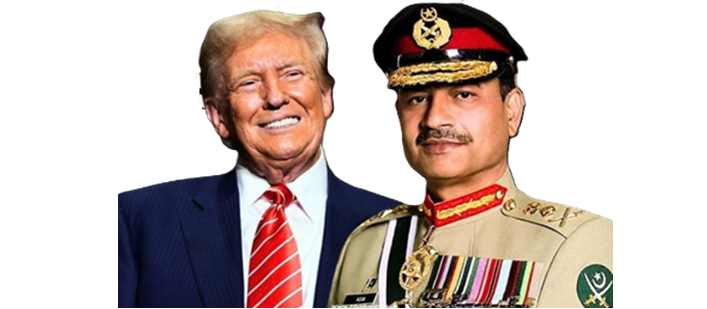
When General Asim Munir — that stern custodian of Pakistan’s martial tradition — crossed the stately threshold of the White House beneath Washington’s grave skies, it was far more than an exchange of courtesies. It was an unspoken accord between worlds, a measured overture to powers as distant in geography as they are entangled in destiny. Pakistan’s position is as intricate as it is indispensable. A nuclear-armed Muslim state steeped in its own proud legacy, it treads a path that few others dare to follow — forever vigilant, forever poised.
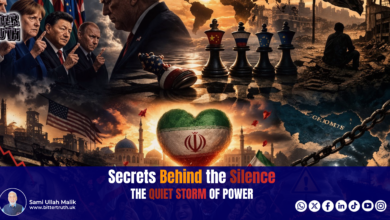
That the general should meet former President Donald Trump in such an extraordinary, unscheduled parley speaks volumes. This was no polite cameo upon a diplomatic stage. It was a discreet overture rich in subtlety and significance — part of a grander design upon the chessboardof global politics. Even as rockets scream across Middle Eastern skies and the spectre of a broader war looms large, this dialogue in Washington hinted at calculations more profound than any public spectacle could reveal.
And it was in this very light that President Trump’s remarks acquired their deeper resonance. His tribute to Pakistan’s role in averting a disastrous clash with India was not a mere flourish of courtesy; it was a tacit recognition of Pakistan’s enduring capacity for statecraft under duress. When he observed that General Munir “knows Iran very well — perhaps better than most,” these were not idle words but a nuanced signal that America’s interest in Iran is more than passing, its understanding less than transparent, and its intentions tempered by quiet respect for Pakistan’s insight.
Such utterances, framed in the velvet glove of diplomacy, conceal as much as they reveal. Beneath their polished exterior lies a deeper calculus — a recognition that Pakistan, poised upon history’s precipice, is neither pawn nor bystander. It is a nation that must steer its course with an unfailing sense of proportion and principle, marrying judicious restraint to steadfast courage.
Thus, as the world awaits the unfolding of this volatile chapter, Pakistan must again demonstrate that rare blend of sagacity and resolve. Untroubled by transient passions, unbent by external pressure, it must light its own path — guided by the lantern of prudence and sustained by the quiet strength of its national character. And in so doing, Pakistan may yet prove that in the grand narrative of civilisations, true power resides not merely in arms or alliances, but in the measured dignity of a people who will bow neither to fear nor to hubris.
It cannot be overlooked that, only a few days before this fateful meeting, General Asim Munir undertook an official visit to Iran, engaging in substantive dialogue with the Iranian military leadership. Seen against this backdrop, his conversation with President Trump can scarcely be dismissed as a mere formal exchange of pleasantries. Pakistan — the sole nuclear power of the Muslim world — has historically played the role of an intermediary between Iran and Saudi Arabia. And while at present there is no overt indication of its enlistment in any belligerent alliance, one cannot ignore that intense consultations and careful calibrations are underway in the corridors of power.
As Ghalib so aptly lamented:
ہزاروں خواہشیں ایسی کہ ہر خواہش پہ دم نکلے
بہت نکلے میرے ارماں، لیکن پھر بھی کم نکلے
“A thousand desires such that each one takes my breath away;
How often my hopes have blossomed — yet how few have been fulfilled!”
And it is precisely this measured poise — this “silent balance,” if you will — that Pakistan now strives to maintain amid the tempests that rage across the Middle East.
The presence of figures such as Marco Rubio, the Secretary of State, and Steve Witkoff, the special envoy for the Middle East, elevated the meeting far beyond the mundane sphere of diplomatic formality. Rather, it assumed the gravitas of a strategic conclave. The participation of the Director-General of Pakistan’s Inter-Services Intelligence on the Pakistani side similarly bespoke a deeper undercurrent — one suggesting that intelligence-sharing and collaborative assessments were also on the agenda. Iran was explicitly acknowledged; Israel only obliquely alluded to — a telling feature of the diplomatic choreography carefully orchestrated.
Those assembled faces, lips sealed yet eyes burning with unspoken questions — would Pakistan, as a prominent Muslim nuclear state, rise to the occasion as a mediator, or content itself with being a bystander to unfolding history? Some commentators have brushed off General Munir’s sojourn to Iran as a conventional goodwill visit; yet in the light of this White House encounter, new and profound meanings shimmer just beneath the surface.
As Iqbal wrote:
زمانہ آیا ہے بے حجابی کا، عام دیدارِ یار ہوگا
سکُوت تھا پردہ دار جس کا، وہ راز اب آشکار ہوگا
“The era of concealment has passed; the Beloved shall now be seen without a veil.
That which silence once shrouded shall now emerge in unvarnished light.”
And so, amidst the conflagrations between Iran and Israel, General Munir’s warm reception at the White House — and Mr. Trump’s generous acknowledgment that meeting him was “an honour” — inevitably revive old memories of America’s past duplicities. Pakistanis, who have long watched Washington from a wary distance, cannot help but remember those earlier chapters of “faithful service,” followed by bitter wounds inflicted by the very hands that once clasped theirs in friendship.
And this raises an unnerving question: might Pakistan once again be co-opted into a conflict not of its choosing?
This is a deceptively simple query, yet its roots run deep into the soil of history and the heart of national interest. Pakistan cannot, by any stretch of imagination, accede to a military alliance with Israel — its ideological underpinnings, public sentiment, and parliamentary tradition all stand firmly against such a course. Yet one cannot overlook the fine and fragile lattice of its alliance with America.
Thus, Pakistan’s policy rests on three carefully balanced pillars.
First is neutrality — to eschew any open partisanship in this incendiary struggle.
Second is the role of a mediator — to offer its good offices to Iran and Saudi Arabia, as well as, perhaps one day, between Iran and Israel.
And third is the imperative of preserving domestic harmony — avoiding any overt gesture that might inflame sectarian passions at home.
But will this sword of neutrality — sharpened on both edges — truly cut its way through these gathering storms? Especially after Prime Minister Netanyahu’s baleful pronouncement, in which he made plain his resolve to “extinguish” Pakistan’s nuclear programme after Iran’s, one wonders whether any subsequent apology or retraction would suffice to stay this dagger. Only time will yield its verdict.
Meanwhile, in the shadowed background of this geopolitical chessboard sits Russia — a silent player meticulously studying every move. Moscow has already made plain its warning to Washington: keep aloof from the Iran-Israel contest or face the spectre of a region plunged into chaos. Russia’s word is not to be taken lightly, for if this Middle Eastern conflict flames up unchecked, it will hardly remain a local inferno; it will draw every major power into its vortex — and in so doing, may transform this proxy war into one fought directly by global giants.
And then there is China. Foreign Ministry spokesperson Lin Jian spoke unambiguously of Beijing’s “grave concern” at Israel’s strikes against Iran, calling upon all parties to hold the line against further escalation. China has made plain that the only acceptable solution lies along the avenues of diplomacy and politics, not force of arms. Indeed, Beijing’s interest is not merely rhetorical. Its Belt and Road Initiative has intertwined its fortunes with Iran’s — from oilfields to infrastructure — and thus China’s call for restraint is one driven as much by economic prudence as by the dictates of peace.
The Chinese president, Xi Jinping, has outlined a four-pronged proposal to soothe this tempest:
That Israel implements an immediate and unconditional ceasefire to halt this descent into further devastation;
That all parties — with China and Russia together urging this most strongly — eschew military solutions to the Iranian nuclear question and return to the negotiating table;
That safe passage be assured for all foreign nationals wishing to leave these embattled lands; and That major global powers, especially the United States, engage constructively and exercise positive influence so as to ease tensions and clear a path toward enduring peace.
Thus do these events unfurl across the grand stage of history — every meeting more than mere handshake, every utterance laden with consequence, and every unspoken glance bearing witness to a world balanced upon the cusp of war and the brink of conciliation.
It cannot be overlooked that China and Russia, in concert, have condemned Israel’s strikes as a “flagrant breach of the UN Charter,” warning with measured solemnity that any further military intervention would come at a grievous cost. Indeed, were global forces to stride into this maelstrom, the sparks of war in the region could ignite a conflagration engulfing the world entire.
The international press, tracking Beijing’s every nuanced gesture, acknowledges that China has deftly cast itself as a “diplomatic guarantor of peace.” Even America’s own Newsweek has conceded that Beijing, with statesmanlike finesse, has seized the diplomatic initiative while Washington’s gaze has been distracted elsewhere. Al Jazeera too has reported that both China and Russia have jointly insisted that this crisis admits of neither bayonet nor bullet but only of political settlement and diplomatic cure. Time and Reuters, for their part, have sounded the tocsin, relaying Beijing’s stark warning that any American strike would plunge the region into an abyss of instability that would respect no borders and unsettle the international order itself.
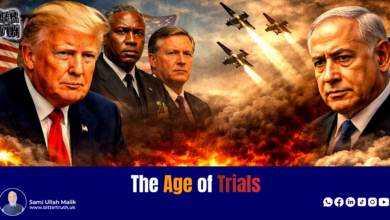
And so the question hangs in the air like a sword on a single hair: can this coordinated Sino-Russian posture give pause to American designs? The steadfast common front erected by Moscow and Beijing has undoubtedly created a formidable counterpoise to any thoughtless military adventurism. It is whispered that President Trump might, within a fortnight, reach his fateful decision to strike. Yet, under the weight of mounting global pressure — including appeals from the United Nations and capitals across Europe — the White House may think twice before unleashing a storm that cannot easily be contained. Without Washington’s full-throated support, an Israeli offensive may prove not only perilous but ruinously so.
Herein lies the crux of the matter. The calibrated firmness of Beijing and Moscow, coupled with the discreet yet insistent entreaties of European chanceries, has visibly stayed the American hand. Political and diplomatic solutions, long derided as mere platitudes, now appear to hold firmer ground. The prospect of unchecked war has been paused — not by force of arms, but by a deft application of international pressure.
China, Iran’s quiet but consequential partner, observes these tremors with studied caution, urging all parties toward the avenues of negotiation. And in this tense tableau, Pakistan must tread as though upon glass, measuring every stride with the utmost care.
China, by voicing deep concern at the Iran–Israel conflagration and advocating for a diplomatic resolution, has burnished its credentials as an international arbiter. The world’s media, attentive and alert, have seen in the Sino-Russian démarche the lineaments of a new global balance — one that imposes a check upon American belligerence and tempers the steel of its military options. Indeed, whatever decision Washington ultimately reaches, it must now reckon with the weight of this opposing coalition.
Nor is Europe wholly united on these questions. The British Prime Minister, Sir Keir Starmer, himself counselled restraint to President Trump, urging him to eschew rash action against Iran. Starmer’s intervention carries its own significance, suggesting that even among Western allies there is scant appetite for painting Iran as an irredeemable foe. Throughout Europe, one hears cautious voices hoping to avert the spectre of a new war in the Gulf — entreaties that, though couched in diplomatic civility, conceal a sober calculation of the continent’s own security and economic stakes.
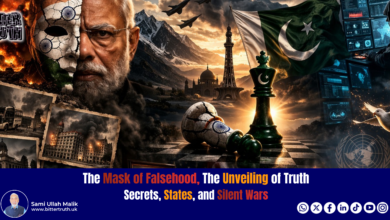
And, hovering in the background like a spectral chorus, stands India — an unspoken actor upon this stage. Haifa, the storied port long intertwined with Britain’s Indian Empire, is once again cast into prominence as Iranian missiles streak toward its shores. The attack on Haifa, so redolent with historical allusion, is more than a tactical gesture; it is a symbolic reckoning reaching back through the corridors of time to a past that Tel Aviv cannot wish away.
Here lies a deeper resonance still: the old imperial entanglements that tethered subcontinent and Levant together, the Indian soldiers who fell upon Haifa’s soil during the Great War, and the modern alliance between Hindu nationalism and Israel that seeks to redraw the map of the Middle East. It is plain that this is not merely a contest over territory, but a clash steeped in history — a warning, too, to those who presume that ancient grievances may be ignored in pursuit of contemporary ambitions.
And as this complex tableau unfolds, even distant Canada finds itself pulled into the slipstream. Its Prime Minister, Mark Carney, attempted a deft diplomatic overture by inviting Mr. Modi to the G7, only to provoke fierce backlash from the Sikh community at home. Indeed, the tensions surrounding the murder of Sikh leader Hardeep Singh Nijjar have cast a long shadow over Ottawa–Delhi relations, forcing Canada to take a sterner view of Indian affairs. Should Ottawa press its inquiries further, the resulting diplomatic fallout could intensify pressure upon Mr. Modi’s government — one already buffeted by rising domestic dissent.
Within India itself, the tide is turning against Mr. Modi. The domestic press, especially social media, has witnessed a crescendo of satire and censure. Even Trump’s offhand quip — that he had spared India and Pakistan the calamity of mutual destruction — has fuelled public derision, provoking a sharp backlash. Chants of “Surrender Modi” ripple across the Indian digital landscape, as political commentators surmise that these embers of discontent could kindle into a larger conflagration. Should opposition leaders harness this groundswell of criticism, and should some unforeseen crisis further expose Mr. Modi’s vulnerabilities, the days of his unchallenged reign may well be numbered.
Thus, we stand upon a threshold strewn with perils and possibilities. The decisions of a few statesmen — whether in Washington, Beijing, Moscow, London, or New Delhi — will not only determine the course of this crisis but will shape the destiny of peoples across continents. And in this delicate balance of power and principle, one cannot help but recall Burke’s admonition that “the use of force is but a confession of failure in the art of governance.” Let diplomacy prevail, then, before the world is consumed by a fire from which none shall emerge unscathed.
In these grave and testing circumstances, this encounter cannot be dismissed as a mere colloquy between two men; it is, rather, a harbinger of civilisations in flux, of the aspirations of the Islamic world, and of new alignments upon the grand chessboard of power. Pakistan now stands poised upon a fateful cusp of history, where every stride must reflect sagacity and discernment — where even the slightest misstep may herald undoing. It falls, then, to Pakistan to summon the weight of its ideological moorings, the subtlety of its diplomatic craft, and the necessities of regional concord, that it may assume a role which not only stays the hand of war but also carves a fresh chapter of leadership — moral as much as strategic — for the ummah and the world at large.
At this hour, Pakistan is no mere point upon the map; it is a keystone in the arch of history itself. Its silence rings not of indecision but of deliberation — a silence steeped in prudence, dignity, and resolve. Shall Pakistan set its foot upon this burning sand, or shall it, guided by wisdom, patience, and studied neutrality, embark upon a new course worthy of its higher destiny? That is a reckoning not for its generals alone, but for the judgement and conscience of an entire nation — a summons to intellect and fortitude alike.
And let it be proclaimed to all — to civilisations, to rival powers, and to the chronicles of time itself — that Pakistan is no mere onlooker, but an actor of thought and principle.
Mark well: this was not simply a meeting… it was a great message!